🌸🌹2ck 🌱🐇 @2ck@social.cleverlibre.org
A capable software engineer and aspirating (sic) cook. Also posting about space stuff (mostly NASA) occasionally
pronouns: he, him
Joined Apr 2020
Saw a pair of barn swallows outside my house just a little while ago. I don't usually see them I think, so it was nice. Sadly, my video of their activity was pretty short and not very good :(
🌸🌹2ck 🌱🐇
boosted

I'm giving a short intro to #openscience (very broadly defined) to PhD students this week.
What are the things you wish you had been told as a PhD about how to practice Open Science?
What still confuses you to this day?
🌸🌹2ck 🌱🐇
boosted

 :BlobhajTransPrideHeart:
just had a badass dream
programmer named amalgia
climbs a mountain, a big one
not evererst but it's snowy
when he gets to the top he has a moment of ... clarity? inspiration?
"we may be able to make games and calculating tools but they will never have any significant effect on the real world"
so he climbs down the mountain and starts building (a? the first?) 3D printer
p sure that's not how it happened but I thought it was a neat story
programmer named amalgia
climbs a mountain, a big one
not evererst but it's snowy
when he gets to the top he has a moment of ... clarity? inspiration?
"we may be able to make games and calculating tools but they will never have any significant effect on the real world"
so he climbs down the mountain and starts building (a? the first?) 3D printer
p sure that's not how it happened but I thought it was a neat story
🌸🌹2ck 🌱🐇
boosted

My #webdev skills may be stuck in the past, but I maintain that to make a truly accessible internet—in both the #accessibility sense and also the ease of access sense—pure HTML+CSS websites should be the norm.
IMO Javascript should be for full-featured web apps, not for link hover effects and other normal stuff.
Case in point: my homepage across
1. a "normal" browser (Safari desktop)
2. a text-based browser (Lynx)
3. a hybrid terminal browser (Browsh, a headless Firefox wrapper for minimal data usage)
How many modern websites hold up to such a thing? 🤔
🌸🌹2ck 🌱🐇
boosted

"Don't worry, it's just a warning"
submitted by decimalturn
https://reddit.com/r/ProgrammerHumor/comments/uhjahy/dont_worry_its_just_a_warning/
🌸🌹2ck 🌱🐇
boosted

Out-Of-Office (European)
I’m away camping for the summer. Please email back in September.
Out-Of-Office (American)
I have left the office for two hours to undergo kidney surgery, but you can reach me on my cell any time.
🌸🌹2ck 🌱🐇
boosted

Death of an early internet implementor
Rest in peace Dave Walden. He was an early ARPANET and Internet pioneer and Iwas incredibly helpful to me when I set out to blog about the first 365 RFCs. A kind and funny man.
Obituary: https://www.olsonparent.com/obituary/David-Walden
His wonderful website: https://walden-family.com/dave/
The book he edited on the history of BBN: https://walden-family.com/bbn/
He was also an important figure in the TeX community: https://walden-family.com/texland/
🌸🌹2ck 🌱🐇
boosted

#Introduction Hi folks!
I'm Maren, a nonbinary designer, 3D artist and illustrator. Experimental is one of my favorite words! I love making colorful, unexpected pieces that explore mediums, materials, textures, and complex feelings. I love ethical art and tech. I post a lot about human rights and activism. I love using #Blender and I'm studying #Houdini.
These are some of my artworks and me ✨
#art #design #3dArt #climate #environment #politics #astrophotography #nature #photography #poetry
🌸🌹2ck 🌱🐇
boosted

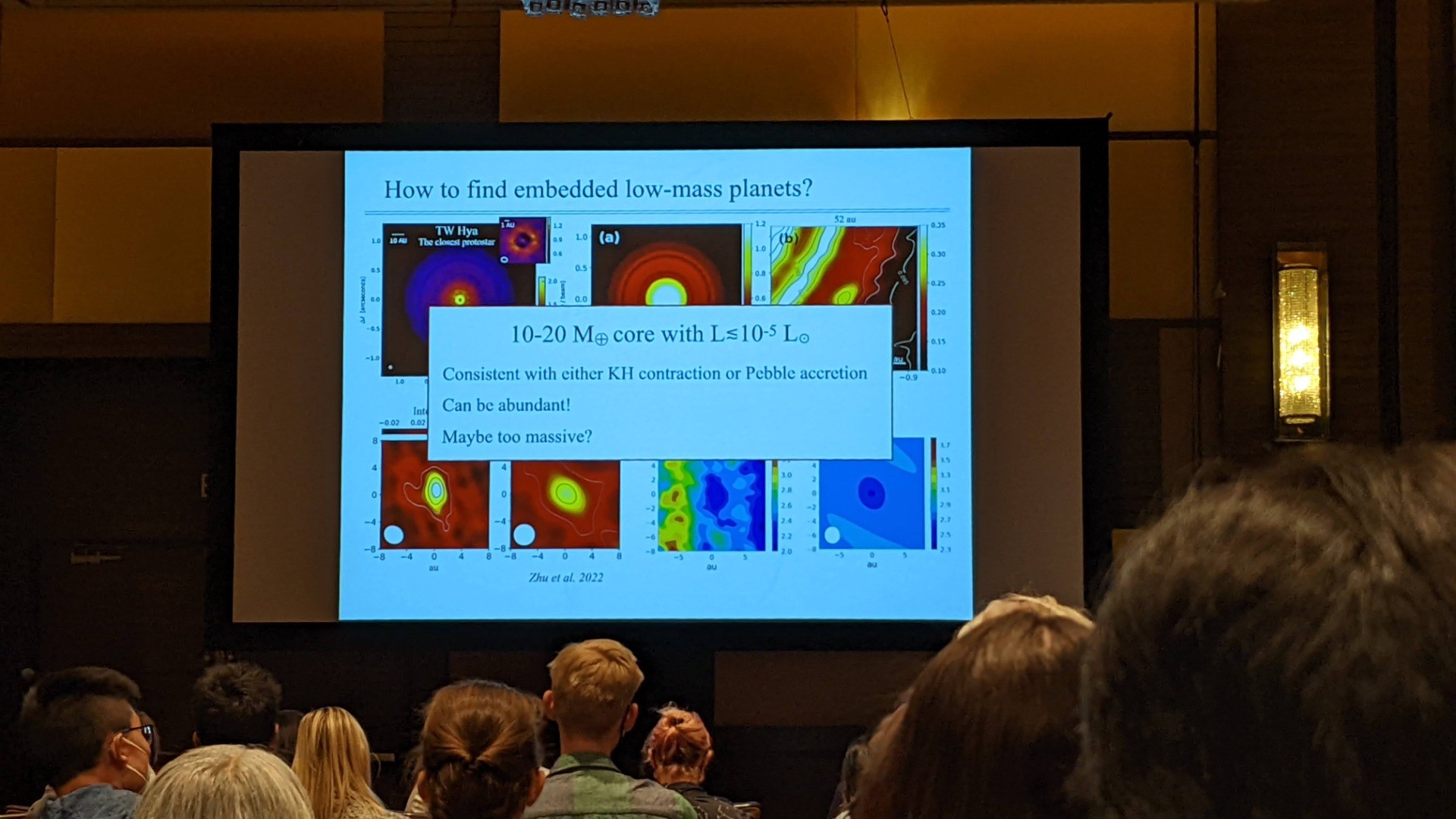
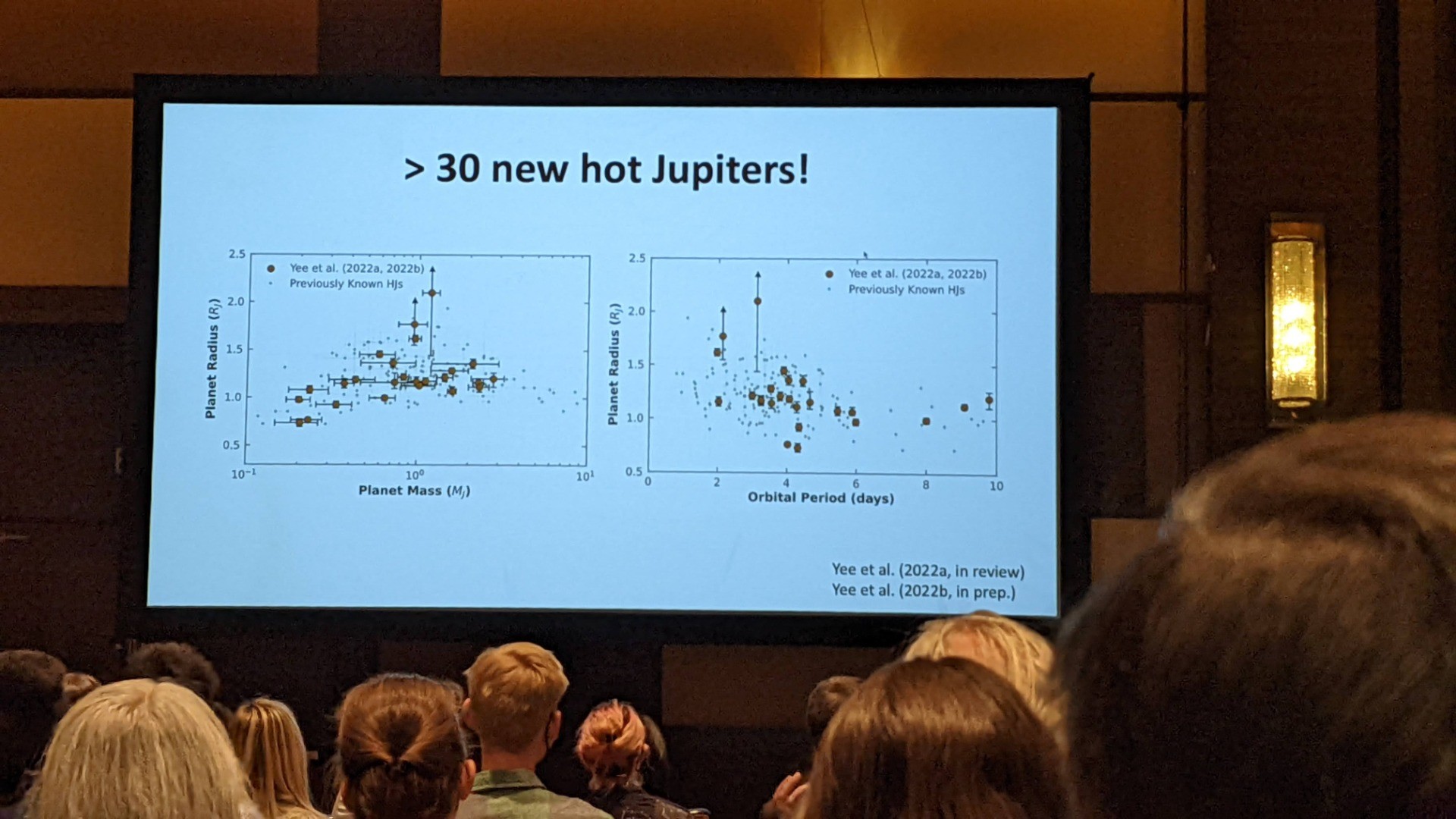
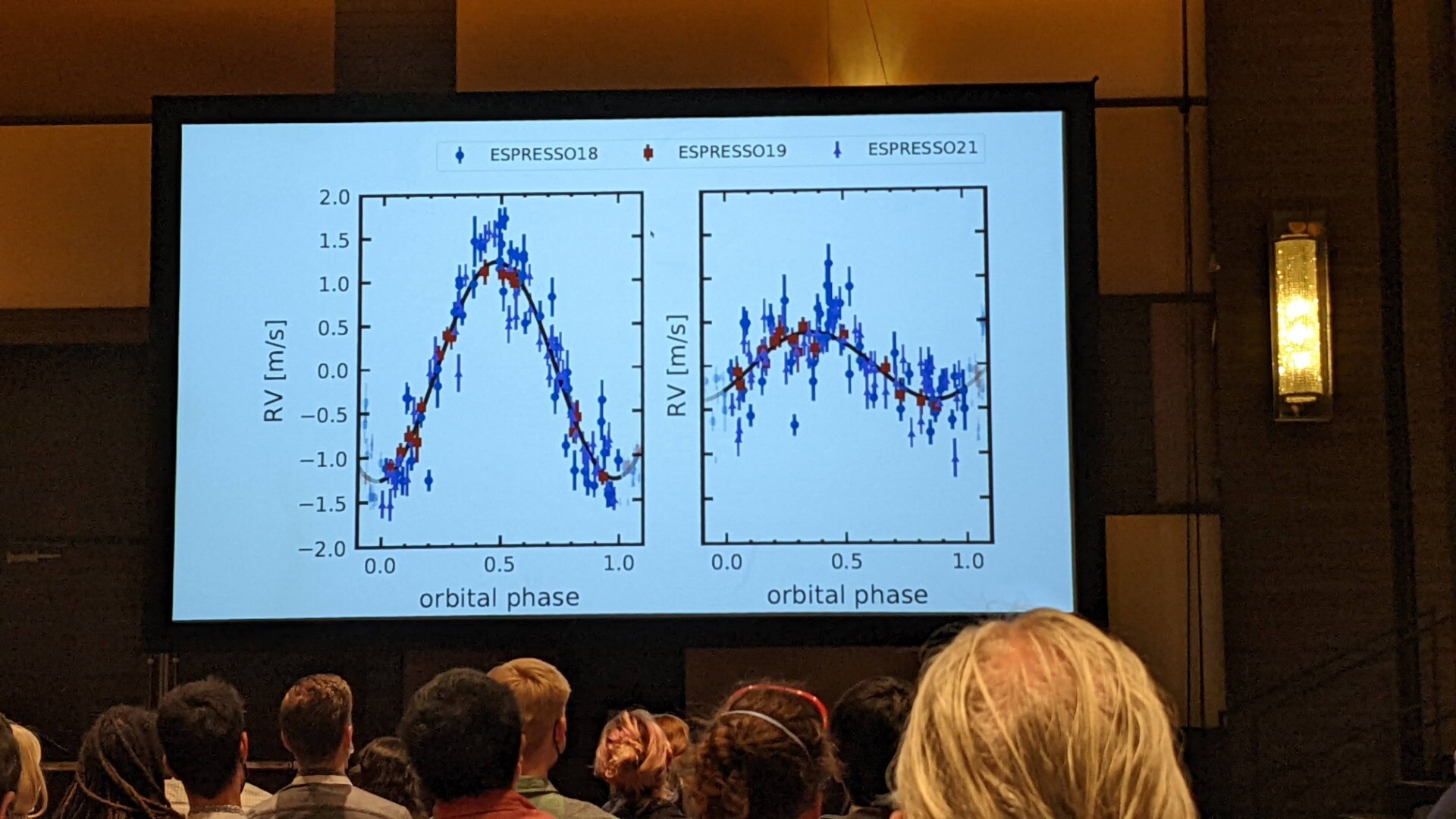
Taking a break from the afternoon break to bring you some of the most exciting new #science results from the #Exo4 #Exoplanets conference! I'll tell you why I'm excited about these in a thread!
⬇️⬇️⬇️⬇️⬇️
(1) A detection of a proto-planet in the TW Hya Disk. It's currently somewhere around the size of Neptune, but still growing!
(2) 30 new Hot Jupiters from TESS! (Transiting Exoplanet Survey Satellite)
(3) a sub-Earth planet around Proxima Centauri, our nearest neighbor! @asmasca
what does a memoirist plant in their garden?
forget-me-nots!
kind of a wild idea, but if it works, it works. I'm curious how the launch affects payload packaging or if you have to change how your payload is designed at a deeper level.
also would like to know how big they can go https://www.businesswire.com/news/home/20220406005185/en/SpinLaunch-and-NASA-Sign-Space-Act-Agreement-to-Test-Innovative-Mass-Accelerator-Launch-System
#space #engineering #NASA
🌸🌹2ck 🌱🐇
boosted

Yay! My edits are done for my Bridges art!
http://gallery.bridgesmathart.org/exhibitions/2022-bridges-conference/rashmis
I hadn't known who had first determined that hydrogen was the main part of the stars, but apparently it was Gaposchkin. Pretty cool.
https://en.wikipedia.org/wiki/Cecilia_Payne-Gaposchkin
🌸🌹2ck 🌱🐇
boosted

Anyone aware of good mastodon servers for 13 year olds interested in gaming and programming games?
🌸🌹2ck 🌱🐇
boosted

Hi folks. Looking for a recommendation of a friendly instance that is into any/all of the following:
-writing/composing/creating video game music
-contemporary classical music
-writing about music
For someone I know in real life who wants a new place to go. Any suggestions?
🌸🌹2ck 🌱🐇
boosted

On Thursdays I do the space/astronomy news -- this week featuring:
○ Hubble's 32nd anniversary!
○ JWST is allllmost entirely cooled (4 primary mirror segments to go!)
○ all DNA/RNA building blocks have now been found in meteorites
○ good-bye Axiom-1, hello Crew-4!
○ β Pic exocomets are similar to ours
○ Ingenuity investigates landing debris

🌸🌹2ck 🌱🐇
boosted

Please enjoy this awesome video of the HR 8799 system made by Jason Wang, for anyone who hadn't seen it yet.
(See: https://jasonwang.space/orbits.html)
The star itself was blocked by the telescope so we can see the planets, though some of the light still scatters around the edges. All four known planets are visible. The orbital motion is interpolated from a series of images taken by the Keck Telescope in Hawaii.
As for the planets themselves...
🌸🌹2ck 🌱🐇
boosted

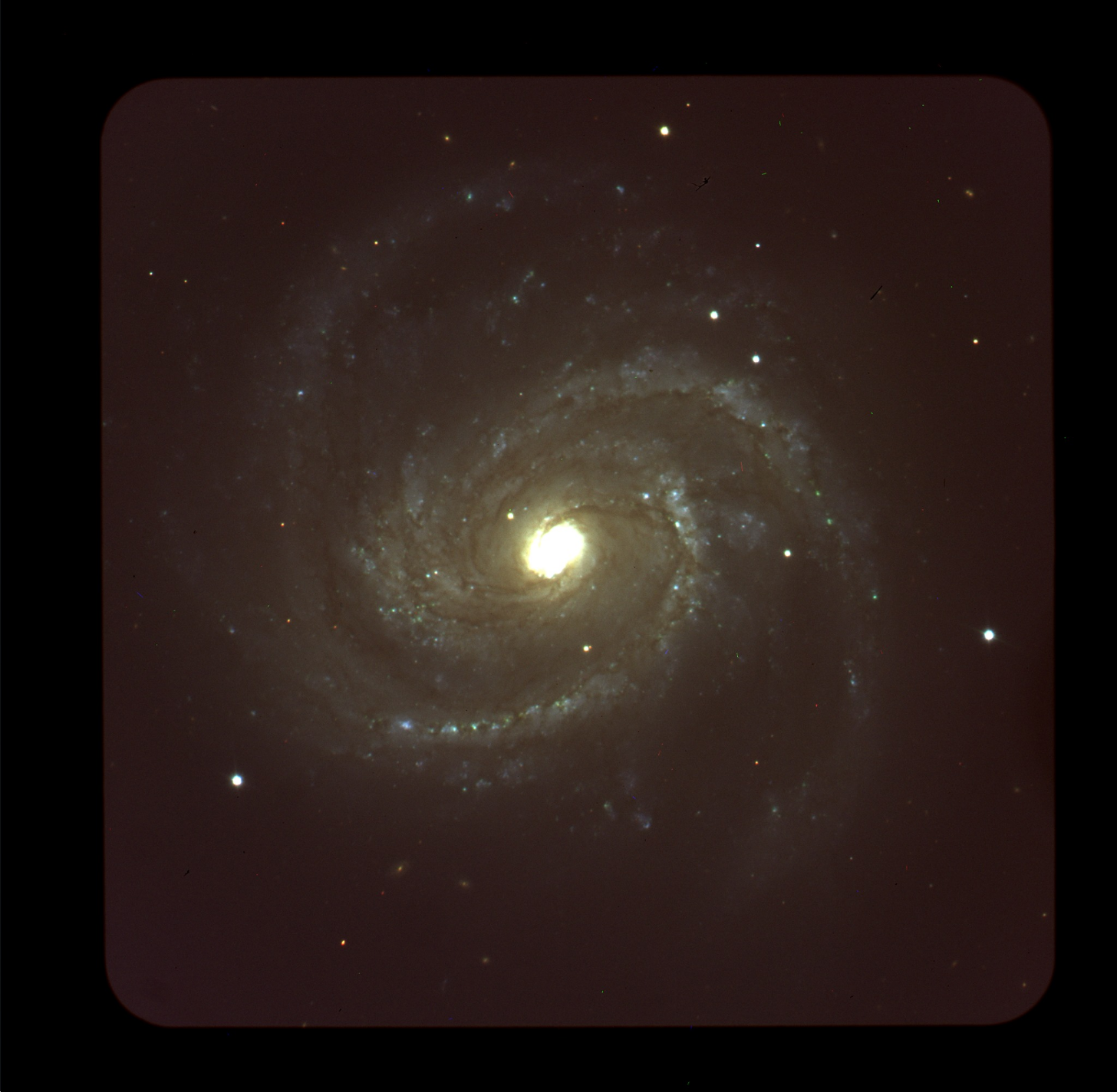
Good evening #Astronomy and #AstroPhotography Mastodon (#Astrodon?)
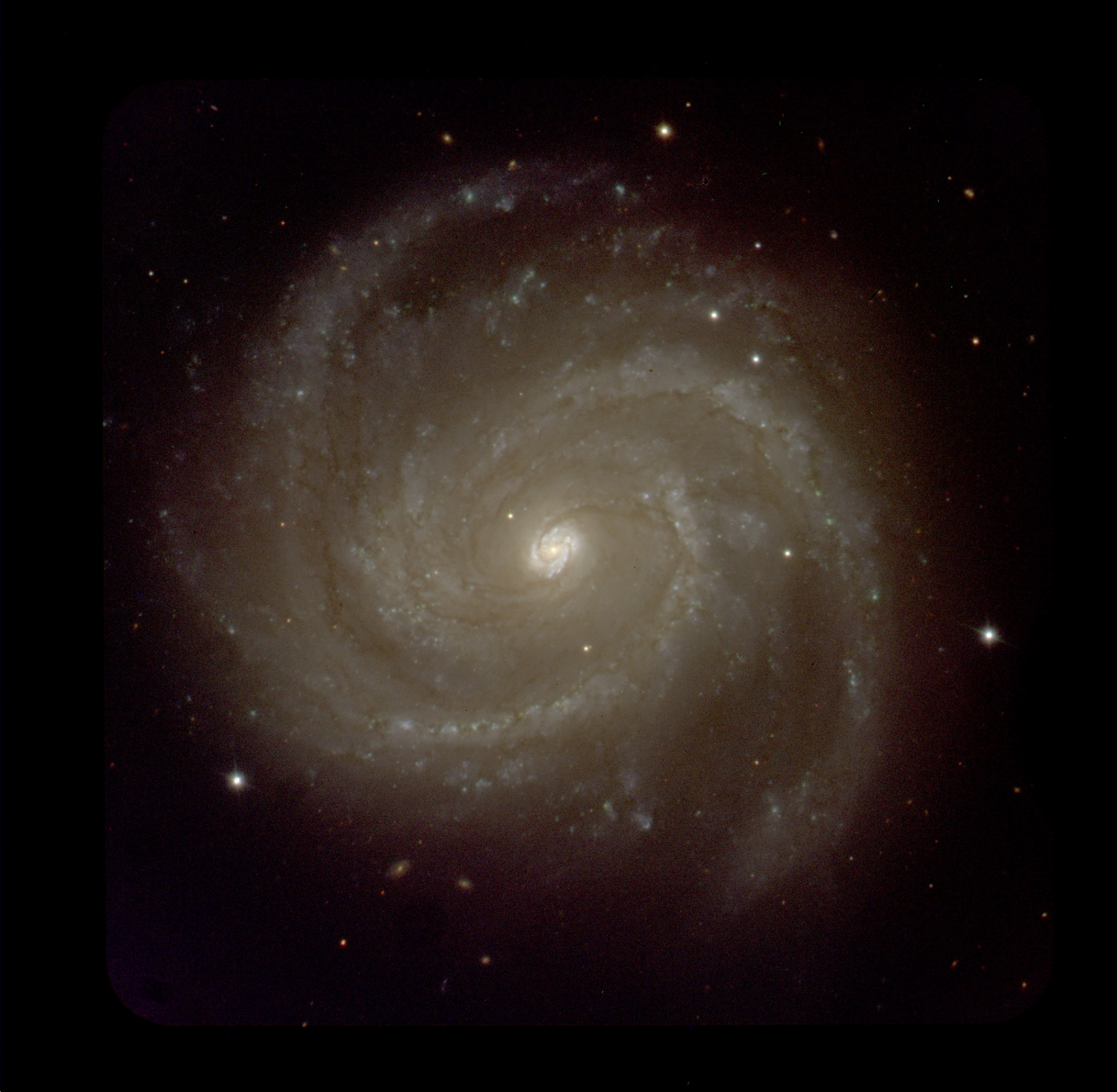
Here's two pictures of the spiral #galaxy Messier 100, taken by my colleague and myself on the Nordic Optical Telescope in La Palma, Canary Islands, by myself and my colleague Håkon.
The galaxy is very bright in the central region, so it is hard to get the color scaling right and show detail both in the center and outskirts without getting parts saturated or too dark. Here is an attempt in logarithmic scaling and linear scaling. I also tried making one in square-root scaling but that did not turn out so well.
As a little bonus, we managed to catch the galaxy while a supernova was going off. Can you spot it?
🌸🌹2ck 🌱🐇
boosted

This is Lotta.
Lotta was pregnant and became stressed, so was given a ball to play with.
Lotta loves playing football and now refuses to quit.
Lotta is a cow.
A Swedish mountain-cow (fjällko) from Gothenburg.
Video via SVT.
A capable software engineer and aspirating (sic) cook. Also posting about space stuff (mostly NASA) occasionally
pronouns: he, him
Joined Apr 2020
🌸🌹2ck 🌱🐇's choices: