

Cerstin Mahlow @CerstinMahlow@social.cleverlibre.org
Writing Researcher and Computational Linguist | Lives in Vaud, Zurich, and Uckermark | «Isch no schön – hamers aber e chli grösser vorgstellt.»
Joined Nov 2022
Cerstin Mahlow
boosted

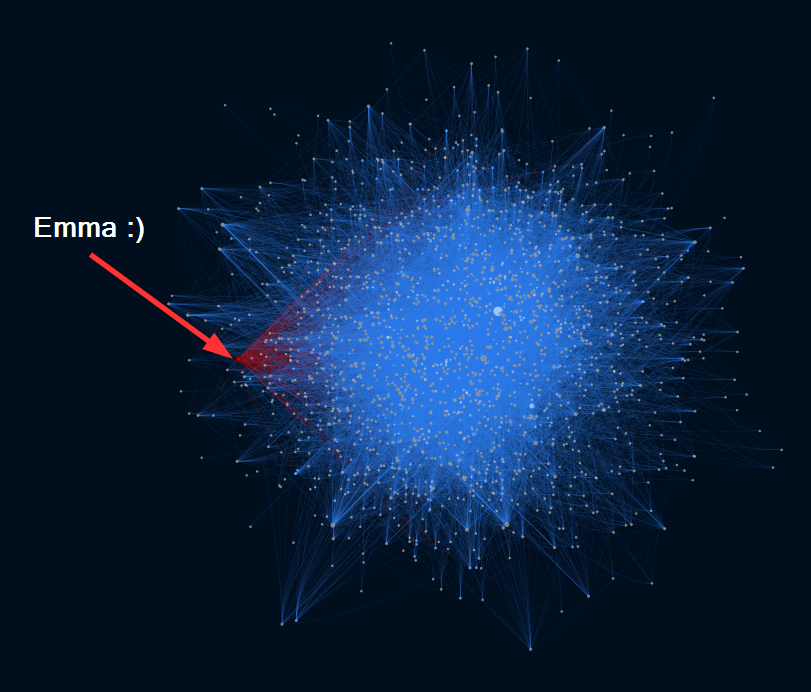
Totally by accident. I just clicked on some dot, @firefoxx66. 🤣
#MastodonScience #ScienceMastodon #MastodonAcademia #MedMastodon
Cerstin Mahlow
boosted
@firefoxx66 Hi Emma, that cloud is a representation of the Twitter followers/follows of scientists including the ORCID ID. If you don't know it, than you maybe did not add yourself and the visible connections are from others to you.
https://twitter.com/OpenCheckNet/status/1591847350397734912
You can add yourself to the list:
https://opencheck.is/scitwitter
And the cloud is from @LeonDLotter
Cerstin Mahlow
boosted

I also saw comments by artists of various kinds that most if not all of their audience and thus clients and thus income came from/via Twitter and they now have to re-start this side of their "business"
Similarly: When the airport BER did not open as announced but ~~months~~ years later, several small businesses selling food or flowers got bancrupt as they had already moved from Tegel to Schönefeld but without passengers no income
Last week I paid a small fee to be able to download PDF from Threadreader App. Which is really comfortable and makes archiving relevant threads or discussions super easy—and the PDFs look nice, too.
Anyway, it got me thinking about all these maybe rather small things/tools for/around Twitter people/startups produce and sell for little money as a side income or maybe even as main income. Most probably Twitter will nod disappear over night. But when people leave or use it differently, they don't have a need for these apps any longer. So they stop paying (if it is a monthly/yearly fee and not a one-time price) resulting in reduced income for those developers. Or in them losing all of their income.
Are there any intuitions or even data on the impact of a massive change in Twitter audience and use on the surrounding eco-system?
Merkwürdige Zeiten: Statt nach Schnee riecht es draussen nach frischgeschnittenem Gras. Und es sieht auch nicht so aus, als wäre das das letzte Mal in diesem Jahr, dass die Abwarte Rasen mähen. Gefühlt könnten jetzt bitte sofort Weihnachts- und Semesterferien sein, stattdessen ist eher goldiger Oktober und ich geh nachher Tanne für Adventskranz besorgen.
Liegt sicher alles nur daran, dass ich den Herrnhuter Stern nicht abgebaut hatte und der schon ein ganzes Jahr munter vor sich hinleuchtet
Cerstin Mahlow
boosted

9/ This is the problem with "language" discussions. We need *curriculum* discussions. If someone asks you "what language should I use", please don't provide answers. Please ask questions. Good questions. The right questions.
10/ A lot of people reading this are techies who are sometimes asked to help out in schools. I beg you, please watch at least until 8m30s into this talk, "Curriculum Design as an Engineering Problem". You'll get it. It's written for you.
Cerstin Mahlow
boosted
7/ For a long time, educators found curricula like SICP hard. (Now, they've just stopped talking about it.) This got translated to "Scheme is hard", because people can only see things through the overly simplistic lens of programming. But:
8/ What they missed is that SICP and other curricula, typically coming out of FP, had gone well past the "rubbing two rocks to get sparks" to the "igniting boosters" stage. It was blub all over again, at the level of curriculum, not language features. ↵
Cerstin Mahlow
boosted
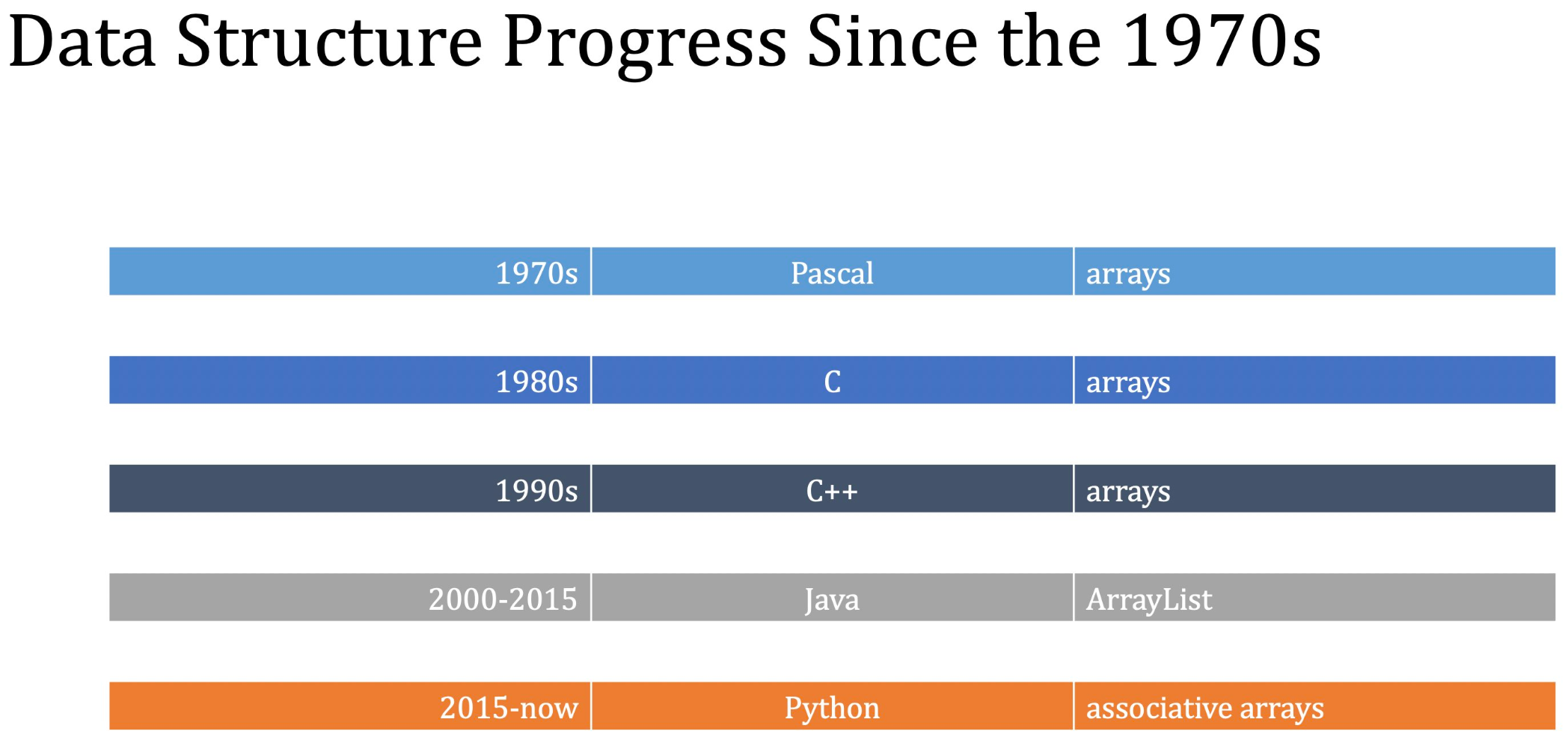
5/ The real problem in CS Ed is we don't think enough about how we can relax constraints, widen the space of methods, future-proof goals, etc. So we go from one blub language to another per decade: Pascal, C, C++, Java, Python…
6/ Here is my highly scientific visualization of the progress we've made in computing education. Whatever languages make easy become the default & determine lot other things. What languages make hard get ignored because folks are afraid to make CS hard for students. ↵
Cerstin Mahlow
boosted
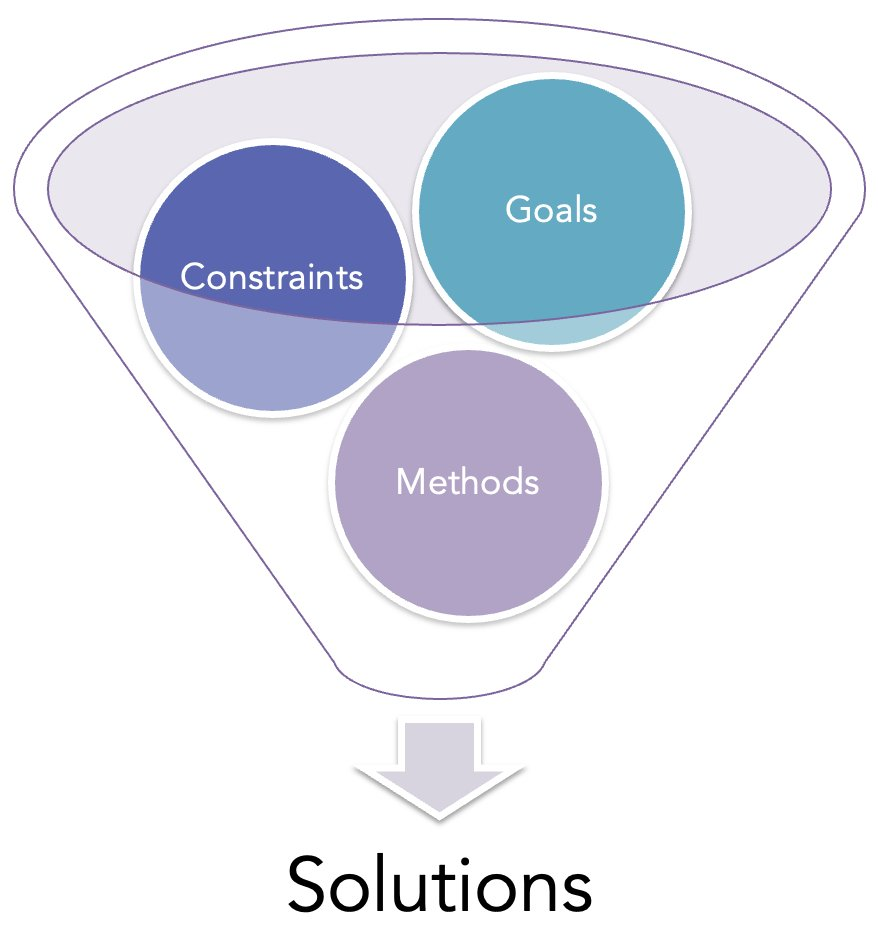
3/ Also, constraints. The constraints dictate what the admissible set of solutions is. Constraints vary across both space (different places) and time (different years). Without stating constraints, finding solutions is meaningless.
4/ Also, methods. Whereas, programming languages are a solution-space artifact. You don't *start* with them, you *end* with them, relative to everything else. So starting with the "which PL" question is guaranteed to lead to talking at cross-purposes. ↵
Cerstin Mahlow
boosted
1/ "What programming language should I teach?" is the least productive question to ask in computing. There's a good reason: it's the wrong question to ask. The reason language wars feel pointless is that they're a symptom of this problem. Here's why:
2/ Curricula are never designed in isolation. All curricula, for anything, have to consider at least two things. First: goals. These include learning objectives, but often go farther (like "students must eventually get jobs"). ↵
Cerstin Mahlow
boosted

Und wir lassen hier gleich mal die Sonne aufgehen - mit einem Livebild des Satelliten SDO.
Cerstin Mahlow
boosted
3 … 2 … 1 … Und damit starten wir auch hier zu einer spannenden Reise durchs Weltall! Willkommen an Bord dieses als Mastodon-Account getarnten Raumschiffs!
Cerstin Mahlow
boosted


Seit heute ist Igor Levit auch im #Fediverse bei #Mastodon @igorpianist
https://mastodon.world/@igorpianist
Cerstin Mahlow
boosted

Two Documentaries Introduce Delia Derbyshire, the Pioneer in Electronic Music
Cerstin Mahlow
boosted

Eine Flasche Humor (extra trocken, im Holzkopf gereift). Forschungslabor für Granatapfelkernspaltung. Trainingsplan „5 Minuten Kopfschütteln ohne Muskelkater – in nur 5 Tagen“. Erleuchtmittel für Kurzfassungen, 3 Stück 11,99. 6-gängiges Gourmet-Menno. Ein Flitzstift für Notizen in Lichtgeschwindigkeit.
Cerstin Mahlow
boosted

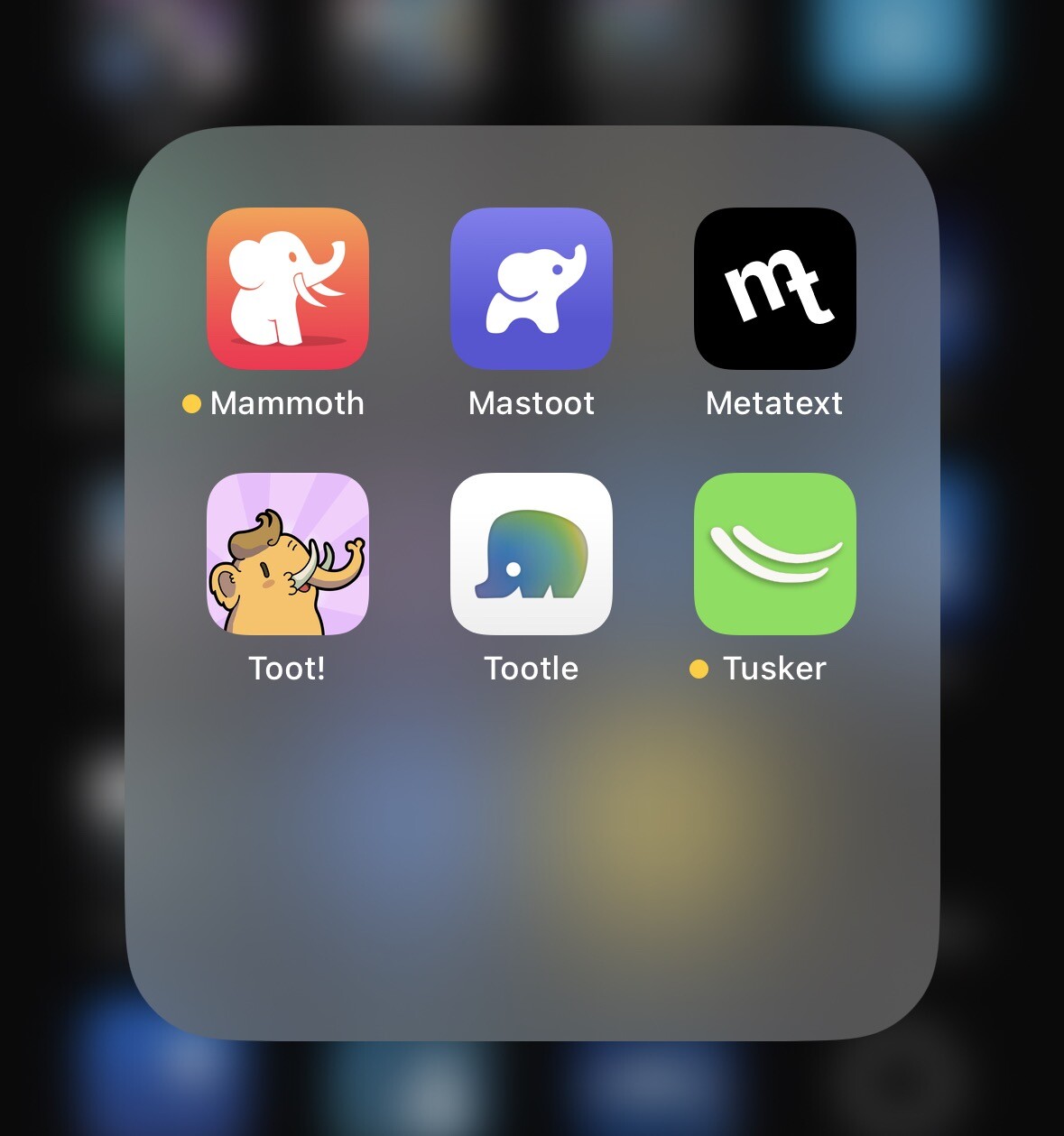
I’m building up my collection of Mastodon apps. So far, I haven’t found one that implements a Twitterrific-style “unified timeline” that shows (in Twitter parlance) tweets and retweets from people I follow *and* all my @-mentions in a single, reverse-chronological timeline. Does anyone know if this exists anywhere?
Cerstin Mahlow
boosted

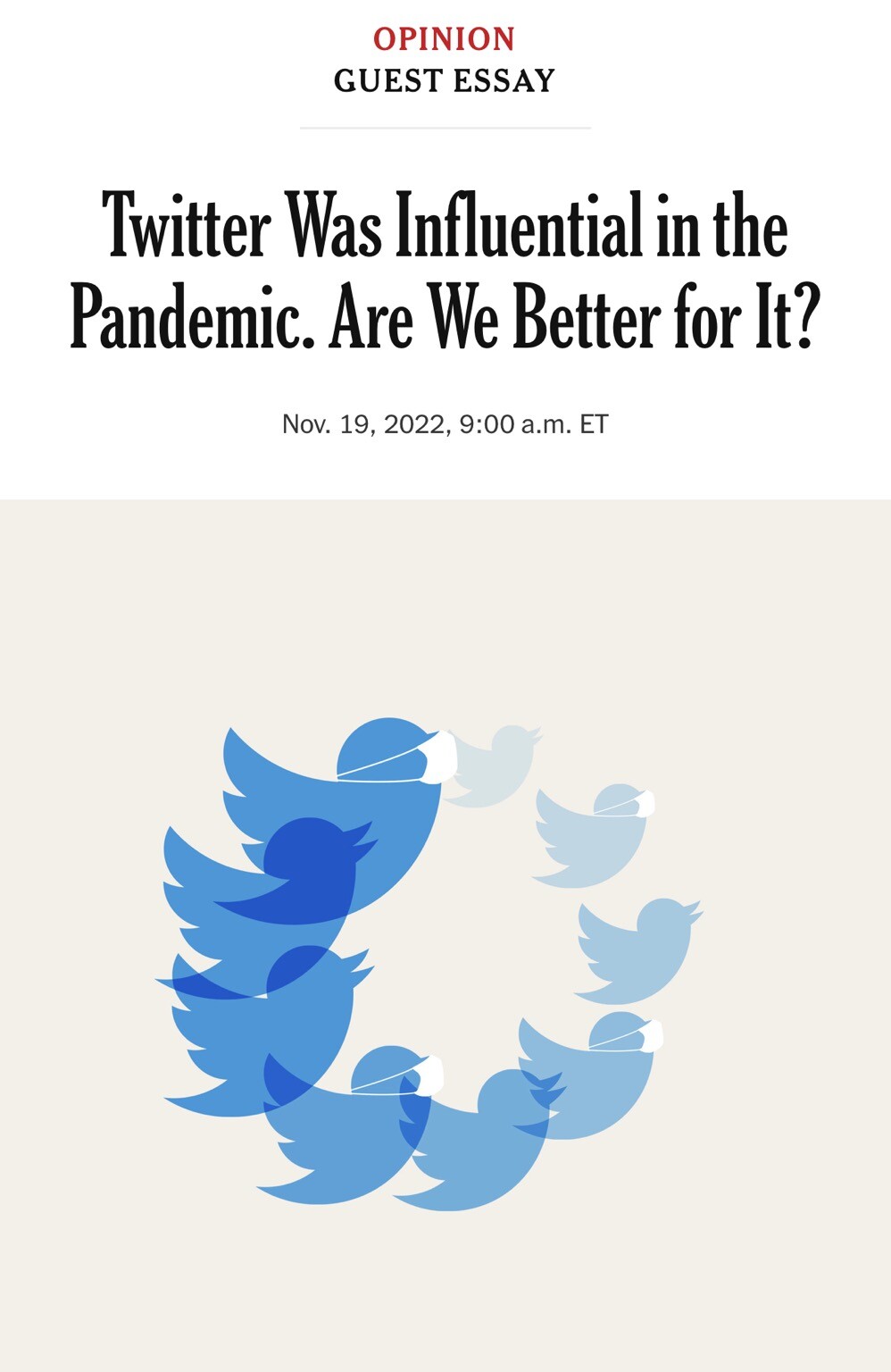
I wrote a piece for the New York Times about how scientists used Twitter during the Covid pandemic and about what comes next.
Cerstin Mahlow
boosted

20,000+ followers here at #Mastodon after less than three days is a huge encouragement.
Thank you for welcoming us in #fediverse and for your incredible support. We need it. The #memory needs it.
#NeverForget #Auschwitz #history
@histodons
Cerstin Mahlow
boosted

“This article processing charge is to cover the costs of peer review, copyediting, typesetting, long-term archiving, and journal management.”
OK, it’s good that MDPI explicitly say what the #APCs are (supposedly) needed for. However:
– #peerreview is done for free, only the *management* of the peer review is done by the #publisher.
– Copyediting? What copyediting?
– Typesetting? There are LaTeX and Word templates, the #typesetting is done by the authors, for free.
– Long-term archiving is done by the national library.
So, what remains is “journal management,” i.e., counting the money.




Writing Researcher and Computational Linguist | Lives in Vaud, Zurich, and Uckermark | «Isch no schön – hamers aber e chli grösser vorgstellt.»
Joined Nov 2022
