

FailForward @FailForward@social.cleverlibre.org
Exploring, failing, backtracking, just to identify the only viable path forward. And then scarred, stumbling forward into the future. Learning.
Boring and steady. Knowing little and questioning a lot. Mostly harmless.
***
This is an experimental scrapbook space. A collection of stuff I want to keep in a form somewhere on the spectrum between a blog and a shoe-box full of scraps, cut-outs, quotes, links and reading notes and sometimes my own silly thoughts about them.
Perhaps it might be of marginal interest to others too, but I don't care that much.
Joined Jan 2021
FailForward
boosted

RT @SeattleSloth_
My guy hit me up and said "I got some shit that will take you to the next level" and gave me this
I find it interesting what happens when somebody blocks you on fediverse.
1. I send something
2. Somebody calls it bs
3. I point out it's actually reality and try to engage in a conversation
4. The person send a flurry of toots, calls me names and blocks me as I am still reading them.
And then fun starts.
1. I see the person's replies disappear, but my client still shows some of them in a chaotic order
2. I try to reply, but my toots are orphans
3. The person follows me, so I think they still engage
4. I try to speak to him/her, to no avail
5. My client shows I cannot follow them, while they follow me
6. On their local timeline, the whole conversation is still intact, toots which seem deleted to me are still there
7. After a while I realise the person probably blocked me without me understanding why that happened and I am speaking into a black hole.
I very well understand why blocking is there and why the sender had no way to know what's going on. I would still prefer the person at least telling me they block me so that I know what's going on.
Either way I think it's very impolite do block people in as civilised conversation, just because they disagree without finishing it. That we are in a digital world does not mean we shall behave like jerks. Nobody is forcing that person to read my stuff and I certainly am not asking anybody to respond to whatever I have in mind. I learn something every day. Just today I learned something about strange behaviours of others.
FailForward
boosted
# Western warships invade South China Sea as tensions escalate with Beijing
> Britain. France. Germany. Holland. Canada. All are sending warships to the South China Sea in growing “pushback” against Beijing.
Interesting developments in South China Sea: https://www.news.com.au/technology/innovation/military/british-and-canadian-warships-invade-south-china-sea-as-tensions-escalate-with-beijing/news-story/41cc91af2af8b5ec3126712d09fef454
Thought about feminism, traditional-roles dynamics and meta-emotion.
## Some observations on public discourse about gender roles
Recently I came in more contact with people speaking a lot about feminism and traditional roles in families and household organisation, etc. I noticed, in this domain, there's a lot of attitudes which go approximately like this: "Everything is fine with me, it's their fault anyway, so they should give me (our gender) what we want, or need, and it should go without me saying anything. And if they don't deliver, we'll be angry and call it oppression."
Now, I am not saying that there are not significant problems with for instance division of work in households between men and women, or gender pay gaps. These phenomena absolutely exist and we need to solve them for the good of our societies. But I doubt that calling that a problem exists and then silently expecting others to solve it for us will work. What might work instead, is an open dialogue. But I am digressing, so let's get back on track.
Thinking about this (relatively loud) group of feminists who complain, but are not ready to enter a dialogue reminded me of something I learned in couples therapy literature: meta-emotion and specifically ability to ask for what you need and resolving conflicts related to that.
## Meta-emotion and assertiveness to get what you need
In relationships psychology, Gottman therapy and Attachment theory they generally identify 2 types of attitudes to emotions (meta-emotion) in individuals:
1. emotion coaching/secure attachment
2. "screwed-up attachment"/anxious/avoidant meta-emotion
Emotion coaching people are free in their expression of emotions and generally speaking have no problem to ask what they want and resolve situations (often conflicts) when they don't get it. People with other types of meta-emotion would typically have problems doing so. This is not to say, something is wrong with the second group. Personally, I just think they have a somewhat harder time interacting with others, especially when they need something from them. But that is not a character problem as such, just a logistical difficulty - although many try to resolve such problems by (conscious, or unconscious) use of psychological manipulation. And that is of course problematic.
## Hypothesis
Could it be that this loud and (perhaps even ineffective) group of activists on feminist issues is statistically more on the side anxious/avoidant meta-emotion?
The intuition is that if they were on the emotion coaching/secure attachment spectrum, they would probably (in aggregate) be able to resolve their individual household troubles with their partner easier and thus would be very open to a dialogue.
On the positive side, though, these people are loud and point a finger to a real issue, while those who resolve it silently at home maybe would not be - and the problem would persist unresolved. And if it so, I am curious how large would this silent group be?
Observing these discussions about roles and issue in shifts away from traditional roles division, I realised there are plenty of people there who have a very healthy understanding of what actually goes on. Typically they are able to see that the problems feminism speak about are not women-only, but are shared problems which can only be resolved together with participation of men and women alike in an open dialogue. Very often, these people would express something like this: "I recognise this as a problem in our society, but I am lucky to have a partner/friends around me who are working/ready to work on this too." Maybe it's not luck what they speak about, but their secure meta-emotion attitude and their own strength and ability to speak about these topics freely without negative emotions and resolving them with their partners and friends.
And continuing on this, if at least something is correct in the above hypothesis, I would be curious about relationship dynamics there. The prevalence of secure attachment is reported at about 50-60% of population. Assuming random coupling (which is not exactly true, but let's keep it simple), we get that about 25-40% of couples are secure-secure attachment pair. So it's fair to say that about 30% of each gender are happy with their relationship and are able to resolve their gender roles at home.
If this little hypothesis above is correct, these would form the mostly silent (at least not loud) group and the radicals would be recruited from the remaining 70% of population.
Now if the statistical division of meta-emotion is stable and does not change over time (which I sincerely hope is not the case!), then it means the amount of people who are unhappy with the division of household chores and roles in their relationships will remain stable somewhat stable (or at least unsatisfactory) too and the issues of feminists won't get ever resolved. That would be a sad future indeed.
Just to wrap it up, in a consequence, this whole speculation I wrote here would lead to a proposal how to resolve many issues feminists point their fingers to: **we need to move as many people to emotional coaching/secure attachment mode of meta-emotion in the first place, and then many of these gender roles problems canbe easier to solve**.
I am curious to hear from all sides how wrong I am. Let;s how much emotion coaching we get in the discussion - if there will be any...
#feminism #meta-emotion #relationships
* Flucht nach Vorn
* Vluchten naar voren
* Escape forward
* Fail forward
# Sweet Dreams (Eurythmics cover) / Patty Gurdy
https://www.youtube.com/watch?v=e7B15v51Ro4

This Hurdy Gurdy instrument is really fun.
# Over the Hills and Far Away - Patty Gurdy
A nice Nightwish cover.
FailForward
boosted
# RUSSIAN CYBERPUNK FARM
https://www.youtube.com/watch?v=8HZ4DnVfWYQ

Great parody, very much fitting into this whole thread.
FailForward
boosted

Lindy-Fay Hella - Seafarer
# Anna Ternheim - What Have I Done
https://www.youtube.com/watch?v=H2GpHZsI5Fc
Anna Ternheim, the Swedish expert on never-ending melancholic moods.
# Schwache Führung, wenig Vertrauen und eine Mutation: weshalb das Coronavirus in Tschechien und der Slowakei besonders schlimm wütet
Not good.
A cover of Riccardo Cocciante's Margherita.
https://www.youtube.com/watch?v=DJgQm9z_O90
The lyrics meaning shift from the original is significant.
# Marco Borsato - Margherita
Soundtrack for a break-up or a divorce.
https://www.youtube.com/watch?v=vFrAP6sviL8

Lyrics (NL/EN): https://www.musixmatch.com/lyrics/Marco-Borsato/Margherita/translation/english
# The Bizarre Behavior of Rotating Bodies, Explained
https://www.youtube.com/watch?v=1VPfZ_XzisU

- Dzhanibekov effect
- Tennis racket theorem
- intermediate axis theorem
Video of the Veritasium guy. Very well done.
Now, I am not a physicist, so discovering these is fascinating.
FailForward
boosted


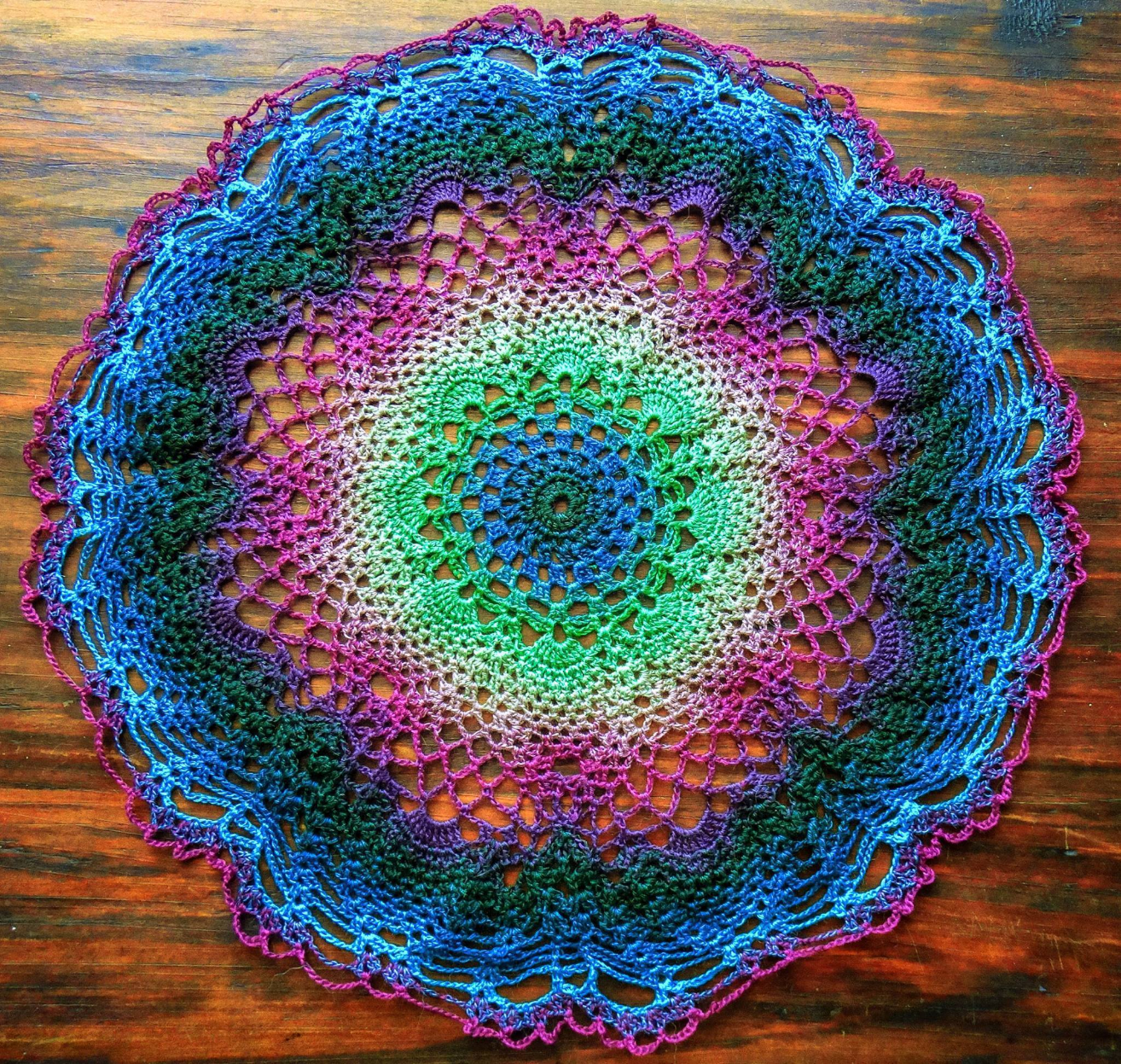
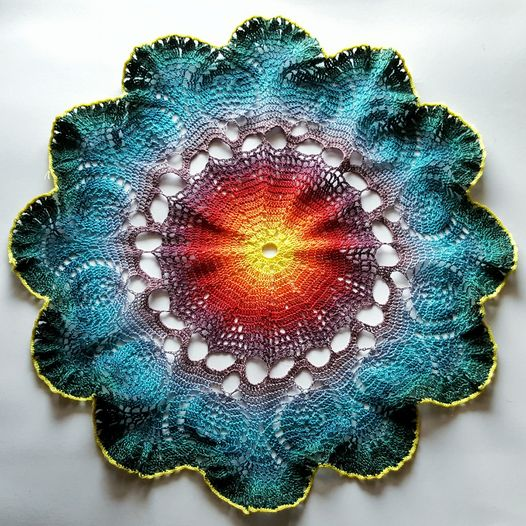
Gosh, you all seem very shy about sharing your yarnybits :D
Fine, here's some of mine! On the odd occasion when the mood strikes me I like crocheting vintage doily patterns, but with sewing thread in bright colours and a 1.5mm crochet hook. These are all about 40cm diameter.
You can find loads of these patterns for free here:




# Terminal lucidity
Terminal lucidity is a phenomenon, when people shortly before dying, often after a long period (even years) of dementia, or other cognitive disability "snap into" their consciousness and become perfectly aware of their surroundings, their mental world and people around. They start to take part in conversations with their relatives/caregivers and their memory refreshes.
This is quite fascinating. Also, it provided a data point: if a dying relative with dementia, or a similar conditions suddenly becomes lucid, it well might be the last few days.
There is a link to a journal paper:
> **Paradoxical lucidity: A potential paradigm shift for the neurobiology and treatment of severe dementias**
> Mashour et al.
> _Alzheimer's & Dementia_ Volume 15, Issue 8, August 2019, Pages 1107-1114
## Abstract
> Unexpected cognitive lucidity and communication in patients with severe dementias, especially around the time of death, have been observed and reported anecdotally. Here, we review what is known about this phenomenon, related phenomena that provide insight into potential mechanisms, ethical implications, and methodologic considerations for systematic investigation. We conclude that paradoxical lucidity, if systematically confirmed, challenges current assumptions and highlights the possibility of network-level return of cognitive function in cases of severe dementias, which can provide insight into both underlying neurobiology and future therapeutic possibilities.
# Gravitrax is just fun
I hope to never get too old to be bored by these things...
BTW, the whole channel of this guy is full of great stuff. Again and again I am amazed why I never heard of such amazing things before. There's so much interesting stuff out there...
# Why Machines That Bend Are Better

Procrastinating again... Anyway, this is cool. A series of mechanical devices (either 3D printed, or made of plastic/extruded) which have no hinges and typically a monopiece. Great mechanics and great engineering. I did not even knew such stuff existed.
Exploring, failing, backtracking, just to identify the only viable path forward. And then scarred, stumbling forward into the future. Learning.
Boring and steady. Knowing little and questioning a lot. Mostly harmless.
***
This is an experimental scrapbook space. A collection of stuff I want to keep in a form somewhere on the spectrum between a blog and a shoe-box full of scraps, cut-outs, quotes, links and reading notes and sometimes my own silly thoughts about them.
Perhaps it might be of marginal interest to others too, but I don't care that much.
Joined Jan 2021
