

Shamar
boosted


Chi vuole legittimare il proprio cattivismo delegittimando chi pratica il soccorso umanitario può passare la vita tra calunnie, insulti, menzogne e complotti, ma sappia che tutte le predicazioni d'odio del mondo valgono meno di una vita salvata e di un migrante portato a riva.
Shamar
boosted
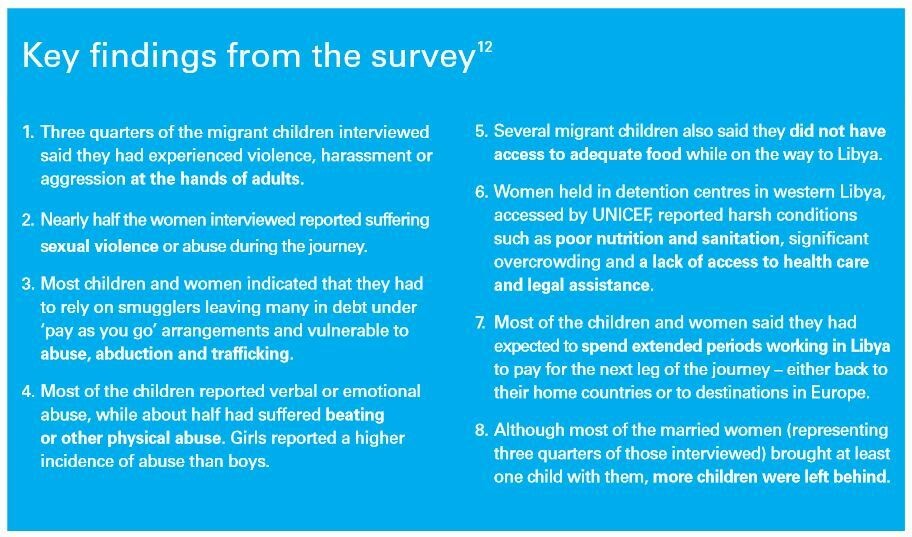
Gli scafisti esistono perchè manca un #Safepassage legale, nei lager libici donne e bambini in condizioni disumane vengono sistematicamente abusati, sfruttati e uccisi. Lo certifica l'Unicef, ma si preferisce guardare altrove. https://ift.tt/2lmf6ia
Uhm... maybe @entreprecariat might contribute to this conversation too.
(but feel free to ignore all of this if you feel so inclined... I'm very curious about your perspectives, but I do not want to annoy you...)
Hi @shusha, just read your introduction and found it very interesting.
Let me present myself: I'm can be described in several ways, but for sure I'm father of three wonderful daughters I love most and I'm a hacker.
You can read something about me on my website http://www.tesio.it and on my operating system http://jehanne.io
Why I annoy you, you ask?
In your introduction you mention topics I care a lot: programming as expression (see http://www.tesio.it/2019/06/03/what-is-informatics.html ), epistemology, data (you find a lot in my site), politics ( see http://www.tesio.it/2020/09/03/not_all_hackers_are_americans.html ) and so on...
I would like to know your take about this: https://qoto.org/@Vectorfield/106028146945688229
Not much about the attacks against RMS and FSF (unless you want to talk about that too, obviously), but about the epistemic approach that @Vectorfield described and that, as far as I can say, describe quite well the activists I've talked with.
To be fair, they argue that "manifacturing" truths is what the hegemonic class ("the whites", "the males", "the straights"... curiously, never "the rich") do all the time with marketing and all other forms of propaganda, so they perceive themselves as fighting back on the same ground.
They argue that people won't try to understand long explanations or deep and complex models of reality anyway, so trying to argue with facts won't change things for the better.
Yet models that misdescribe reality on purpose, an epistemology not based on the search for truth but in the search for changes, is doomed to be abused by the oppressors who have better means and more resources to meld the public opinion (and even turn it to a weapon to enforce their own interests, as RMS story shows)
Anyway, sorry for this wall of text linking several other wall of texts.
If you'd like to talk about this, I'd like to access your perspective (dialogue is always a way to access and understand perspectives that are preclused to us by our limits).
Otherwise... just let me say nice to meet you! 😉
Shamar
boosted
Cambridge Analytica didn't *abuse* Facebook, they *used* Facebook - used the services that FB had set up and marketed to political dirty tricksters to disseminate disinformation. That was the system working as intended.
FB used the we-fight-arson wheeze to come out of the Cambridge Analytica scandal stronger and more powerful than ever: they shut down the APIs that potential future Facebook competitors used to help people escape its walled garden, claiming it was an act of firefighting.
7/
Shamar
boosted

@freemo There is a deeper reason why the woke tend to believe absurdity and lie about people:The postmodern philosophy underlying their ideology is anti-realist
<br>
For most of us, the concept of “truth” doesn’t seem terribly complicated until we try to define it. Truth is… what’s true—this is actually the first definition for “truth,” paraphrasing a bit, in some dictionaries. Truth is that which is in accordance with reality is another. Philosophers understand that “truth” is a more complicated topic, and people in different schools of thought have different understandings of what truth is. Some, for example, hold that truths must be in some way transcendent of all human contingencies—that which absolutely holds for all people in all times (sometimes in all possible universes). Scientists tend to use a more pragmatic understanding (sometimes called “provisional truths”) that could be rendered as statements about reality upon which we can bet and reliably win. Most people, including nearly all scientists and many philosophers, generally agree that for something to be a “truth” means its having something to do with accurately describing reality.
<br>
The postmodern school of thought, which profoundly informs the Theory of Critical Social Justice, however, does not see truth this way. In fact, it is openly hostile and radically skeptical of these understandings of truth, which might generally be described as being “realist” in orientation because they see some correspondence between truth and reality. Postmodernism is generally anti-realist in orientation, meaning that it does not necessarily see a connection between “truths” and reality. Truths might happen to describe reality, say as the Earth and the Sun describing a dynamic system in which both travel along eliptical orbits around their common center of mass (which is inside the Sun), or not, say as the Sun going around the Earth. Under postmodern thought, both of these understandings are “true” in the cultures that consider them true. That is, postmodern thought sees truth as entirely a matter of human (social) contingencies. This is what the American postmodern philosopher Richard Rorty meant when he wrote, “We need to make a distinction between the claim that the world is out there and the claim that the truth is out there.”
<br>
Truths, in postmodern Theory, are socially validated statements about reality, which means that they are, ultimately, products of not just the cultures that produce them but of power within those cultures. The French postmodern philosopher Michel Foucault described this as power-knowledge, insisting that knowledge claims (truths) are ultimately only expressions of power. This sound strange, but the logic is accessible. What is considered true is decided by people by some social process of validation, the thinking goes, so “truth” is a social and political status conferred to certain ideas, which is then reinforced by their acceptance as true. Simultaneously, “truths” confer (political) power, as “knowledge is power” implies, because if it is accepted that a proposition is true, then people who accept it as such will behave accordingly. Thus, Foucault Theorized that “truths” are socially constructed by the systems of power (and the powerful within them) in society and then used to dominate, particularly in the attempt to maintain their power and exclusive status (see also, hegemony, episteme, and biopower).
<br>
Most of this anti-realist, political understanding of truth (and knowledge) has been imported more or less intact into Critical Social Justice.
<br>
In Critical Social Justice, “truth” is still considered culturally contingent, but because of the strong influence of identity politics at the core of the Critical Social Justice project (which could be said to use critical and postmodern Theories to do identity politics – see also intersectionality and positionality), the relevant cultures are ones rooted in various identities Theorized to be “minoritized.” Thus, “knowledge” and “truth” as we generally conceive of them are considered shorthand for “cis, straight, white, Western, male knowledge” or “cis, straight, white, Western, male truth” (see also, white science, white mathematics, and white empiricism, and also feminist empiricism), which are just one way of knowing. In fact, they’re a particularly bad one because these dominant groups not at all aware of their self-serving biases or limitations of their own knowing system (see also, internalized dominance and meritocracy).
<br>
Thus, on the other hand, Critical Social Justice generally believes in cultural knowledges (e.g., racial knowledge) that have been marginalized by “dominant discourses,” which are deemed to be straight, white, male, able-bodied, thin, Western, Eurocentric, etc. These are believed to arise because different identity-based cultures have different ways of knowing (epistemologies) thus recognize different knowledges, and dominant ways of knowing (e.g., science, reason, logic, dialectic – see also, master’s tools) are believed to have utilized their greater power to unjustly exclude them from the range of “acceptable” ways of knowing and knowledges (see also, epistemic injustice, epistemic oppression, and epistemic violence).
https://newdiscourses.com/tftw-truth/
Shamar
boosted

@BrodieOnLinux @yisraeldov There is a problem, some persons and organizations, I used to respect up to now, signed the letter against #Stallman. Amongst them are #Mozilla and the #Tor Project, also some important persons of #Debian.
See my previous saying:
https://linuxrocks.online/@gamliel/105995475008977928
#Facebook: cancel #Stallman because of his disgusting opinions
#GCC Steering Committee: Ok!
Me: now that I look at the remaining members of GCC Steering Committee, all I see are #US corporations with long ties with the #USA DoD. Please, fix it.
#Google: don't worry, we shall do no evil!
#GCC developer: go away, you concern troll! We are inclusive!
Me: 🥺
Beware if you live outside the #USA.
Do not rely on software built with #GCC.
https://gcc.gnu.org/pipermail/gcc/2021-April/235285.html
https://gcc.gnu.org/pipermail/gcc/2021-April/235303.html
We need to rebuild literally everything from scratch.
#RMS has been removed from the #GCC Steering Committee.
But now a more serious reason to NOT contribute to GCC (or rely on it) emerges.
https://gcc.gnu.org/pipermail/gcc/2021-March/235246.html
The fix is just as easy, through.
https://gcc.gnu.org/pipermail/gcc/2021-April/235248.html
Will they address this issue as fast as they joined the mob against #Stallman and #FSF?
Shamar
boosted

In support of Richard M. Stallman
I have signed an open letter in support of Richard M. Stallman. While I would have preferred different phrasing, I agree with the message and wish to voice my support in face of the ongoing cyberbullying campaign.
For those who don’t know, Richard Stallman, founder of the free software movement and foundation, has resigned from his position of the latter’s president in 2019, following a rather ugly medial campaign against him. Now, in 2021, he has announced his return to the foundation’s board of directors, which has prompted massive outrage of people calling for his removal, as best seen in this open letter against him.
While I don’t find anyone’s removal necessary, I believe that some valid concerns are being raised, in regard to both Stallman and the foundation’s handling of the issue, and I hope to see them addressed. However, the letter against him does not give these concerns the clear voice they deserve; instead, it gives voice to specious accusations based on lies and deliberate misinterpretations.
For example, it accuses him of ableism for stating that people with Down’s syndrome should not be treated as pets, and accuses him of transphobia for writing guidelines where he encourages contributors to ‘treat other participants with respect’, ‘call them by the names they use, and honor their preferences about their gender identity’, using his favourite neopronoun as an example. (There’s no other mention of these guidelines as something good he’s done.)
This is not factual criticism; this is just misleading libel, and using it to call others out for ‘impropriety’, or even ‘hurtful and dangerous ideology’, is simple hypocrisy. Reading the list of signatures has made me lose a lot of respect for many individuals and organisations I used to look up to (in particular Mozilla and Tor Project).
Some individuals told me they have signed the letter in spite of the libel, since they had more legitimate reasons of their own. While it’s comforting to learn of those motivations, I don’t think they’ve made the right decision. When you sign a letter, you’re not just expressing support for its stated, intended effect; you’re expressing support for the whole message, which lends it more weight to achieve the intended effect, as well as any other effects the letter may have.
Please don’t lend your support to libel and misinformation: nothing good can come from those, they don’t deserve your name underneath them, and surely your name deserves better, too. The end can not justify the means when the means are supposed to justify the end. It is for this reason I wish to oppose the ongoing campaign and support Richard Stallman.

Shamar
boosted
Hi Brian, nice to meet you.
Before you mute me, I just want to point you a few facts:
1) the authors of the open letter against #RMS and the #FSF had to rectify the appendix several times to reduce legal risks for the signers (#defamation is a crime in many countries), see https://rms-open-letter.github.io/appendix
2) the same authors deleted thousands of issues opened in their repos, _most_ of which were constructive criticism in either the form or the contents https://github.com/rms-support-letter/rms-support-letter.github.io/issues/175
3) on the merit of what happened 2 years ago: https://jorgemorais.gitlab.io/justice-for-rms/
4) if you want to know who inspired so many organization to sign the attackers letter, just follow the money and look if most of them share the same sponsors
For example, since 2013, the #FSFE receive more than 10% of its whole incomes (but less than 20%, they are proud to note) from a single sponsor. Check for yourself.
I'm sorry you are now going to mute or block me, but you'll be welcome had you to change your mind later.
@polezaivsani@chaos.social
Shamar
boosted

 🇳🇱
🇳🇱
A chart showing the signature count as a graph comparing the #rms open support letter vs the anti-stallman letter... yay the letter in support of stallman is not just winning, but it seems to be growing in support where the other letter has lost steam and stopped growing.
The link below includes the script used to generate the chart
Shamar
boosted

If you are not familiar with the background of the witch-hunt on Richard Stallman, read this carefully, check the articles that lead the campaign to cancel him in 2019: Low grade "journalists" and internet mob attack #RMS with lies. In-depth review. https://sterling-archermedes.github.io/
Shamar
boosted

Richard #Stallman a.k.a. #RMS is the founder of the Free Software Foundation (#FSF), author of the original versions of **gcc** and **Emacs**, and perhaps best known for his creation of the GNU Public Licence a.k.a. #GPL.
Thanks to the pioneering work of Richard Stallman, Android has a freely available kernel that can boot it, and companies like Samsung are forced to release their augmented kernel source code to us every month, so that we can build — using Stallman's compiler — a working custom recovery like TWRP.
Richard Stallman is currently under coordinated attack by the cancel culture mob. They have him firmly in their sights and have set their hearts on trying to get him removed from the board of the organisation he founded in 1985, and which has been his life's work.
The reason for the attack is that Stallman is alleged to hold views that are "problematic" in the eyes of his detractors.
My own stance is that to even engage in debate of Stallman's views would be to lend credence to the notion that they are somehow germane to the work that Stallman does in support of free software. I contend that they are not, which is not to imply that the accusations leveled at Stallman would otherwise require intellectual or moral contortion to refute. They would not. Stallman's views, even if they were relevant, have been grossly misrepresented.
The attempted silencing of free speech is always painful to behold, but this ill-conceived attack on Stallman is particularly stomach-turning, given how much of his life he has devoted to the freedom of others, including those who accuse him now.
His contributions to free software and his consistent, uncompromising commitment to his beliefs regarding software freedom have made millionaires of others, including many among his accusers now, while Stallman himself continues to lead a life of subsistence.
#Android would not exist if it hadn't been for Stallman.
Without Stallman, we would not have the assurance that important software like #Magisk will continue to exist long after the project's creator has moved on.
Without Stallman, #TWRP would not now exist.
Were it not for Richard Stallman, most of the cheap electronic appliances and gadgets in your home would simply not exist.
Without Richard Stallman's groundbreaking work, the world would be a different and much worse place.
Now you can do something in return. Richard Stallman needs your support.
Please consider signing the petition below:
https://github.com/rms-support-letter/rms-support-letter.github.io
If you need more background before signing, please take the time to do your own research and reach your own conclusions.
Shamar
boosted
“La chiusura delle scuole è un danno per tutti, ma il danno non è uguale per tutti” https://ift.tt/3cnZcRW
Shamar
boosted

Funny how all reports about the #RMS drama say that a letter asking for his removal has been signed by "hundreds of members of the free software community", without mentioning that there's also a letter supporting him that's been signed by "hundreds of members of the free software community".
The letter: https://rms-support-letter.github.io
Shamar
boosted

 🇨🇦
🇨🇦
"An intellectually curious person is a heat-seeking missile
programmed to seek out failures in existing epistemic paradigms."
https://slatestarcodex.com/2017/10/23/kolmogorov-complicity-and-the-parable-of-lightning/
Shamar
boosted


Cultura #STEM e cultura #umanistica devono dialogare. Anzi, bisognerebbe evitare di continuare a considerarle culture diverse. Il sapere scientifico/tecnologico deve innestarsi su un pensiero di base umanistico che consenta di fare scelte più consapevoli dei problemi e dei valori in gioco.
Giovanni #Pascuzzi su L'Adige
https://www.giovannipascuzzi.eu/2021/03/20/competenze-stem-e-pensiero-umanistico/
Shamar
boosted


In response to the open letter calling for the removal of #RMS a new open letter calling for the #FSF to approach the situation like adults rather than just complying to an angry mob was formed. #RichardStallman #Uninstallman https://rms-support-letter.github.io/
- O.S.
- http://jehanne.io
Joined May 2019
