

Albert Cardona @albertcardona@social.cleverlibre.org
- Personal website
- https://albert.rierol.net
How does the brain work? Someday, we'll figure it out.
Group Leader, MRC LMB, and Professor, University of Cambridge, UK.
#neuroscience #Drosophila #TrakEM2 #FijiSc #CATMAID #connectomics #vEM
Born at 335 ppm.
Brains, signal processing, software and entomology: there will be bugs.
Joined Oct 2022
Albert Cardona
boosted

Registration for the drosophila research conference:
https://genetics-gsa.org/drosophila-2023/abstract-submission/
Love the fact that organisations can take ownership of their social media conmunications with a #mastodon server while simultaneously interfacing very conveniently with the rest of the world via the #fediverse. A great model.

#OnThisDay in 2016, the Paris Agreement entered into force. The EU has been instrumental in brokering this major international agreement to fight ...

"Neuroscientists accept foundationally that the brain represents every distinct thought, feeling, and behavior as some sort of neural ripple: a sad...
Albert Cardona
boosted
Applications are open for the 2023 Wellcome Optical Biology PhD Programme at UCL. Deadline is January 9, 2023 (https://opticalbiology.org/apply).
Albert Cardona
boosted

Can someone induce forgetting of an unpleasant memory without knowing it? YES!! With Zijian Zhu and Yingying Wang, we report a method that induces forgetting without drugs, brain stimulation or awareness #PTSD #forgetting #memory.
@mrccbu https://www.nature.com/articles/s41467-022-34091-1
Albert Cardona
boosted
@WorldImagining @albertcardona
Or is it? We just published this article proposing that fear extinction, at least in mammals, is actually mediated by active forgetting. https://www.nature.com/articles/s41386-021-01131-1
Albert Cardona
boosted

In my course MCB111 "mathematics in biology", we just learned about Hopfield networks and the Hebbian learning. Can anyone give a critical reading of this paper for us?
On theoretical neural circuits for counting, and their biological implementation in the #Drosophila brain: "Our second model uses anti-Hebbian plas...
"Post-embryonic remodeling of the C. elegans motor circuit" by Ben Mulcahy et al. 2022 (Mei Zhen's lab https://zhenlab.com/)
... in which the authors show, using #vEM and #connectomics, that while the nematode #celegans nervous system grows from ~200 neurons in the hatchling to ~300 in the adult, the addition of new neurons doesn't disrupt existing motor function, but new circuits are formed that endow the animal with new behaviors such as bending.
Interestingly, in the course of larval maturation one neuron type inverts its polarity: what was the dendrite becomes the axon, and viceversa. And this is accomplished not with retraction and regrowth of the arbor, but rather, by flipping the synapses in situ.
And now Michael Eisen @mbeisen enters the chat.
Albert Cardona
boosted
Another one is The B Lane Swimmer (HT @KaraLMarshall@twitter.com): https://holly.witteman.ca/the-b-lane-swimmer/
Albert Cardona
boosted

Hi all #introduction
I’m a graduate student at max planck institute for biological cybernetics Tübingen working at the intersection of behavior, systems and computational neuroscience. Our model organism of interest is zebrafish. For now I am here to connect/ interact with people from #neuroscience and #ml ..
Albert Cardona
boosted

C++ Core Guidelines: "guidelines for using C++ well" (Bjarne Stroustrup)
https://isocpp.github.io/CppCoreGuidelines/CppCoreGuidelines
Albert Cardona
boosted

#introduction post! My name is Sonia Roberts (she/her) and I'm a postdoc at Northeastern University developing knitted sensors that could be used to make soft, fully knitted robots. My PhD work was on legged robots running around in the desert -- and if you've ever gone on a beach run, you know why that's hard. I have also done some science and technology policy work. I like to learn about what's going on in other fields so I try to follow a lot of academics in different areas!
Albert Cardona
boosted

Checked the #Patreon page for #Mastodon again just now. We are tantalizingly close to the current fundraising goal, with $11,375 of $12,000 raised. Join me in donating. We can hit the target easily if enough of the #twittermigration #twexit #influx chip in. Let's get @Gargron and team to $12k per month.
https://www.patreon.com/mastodon
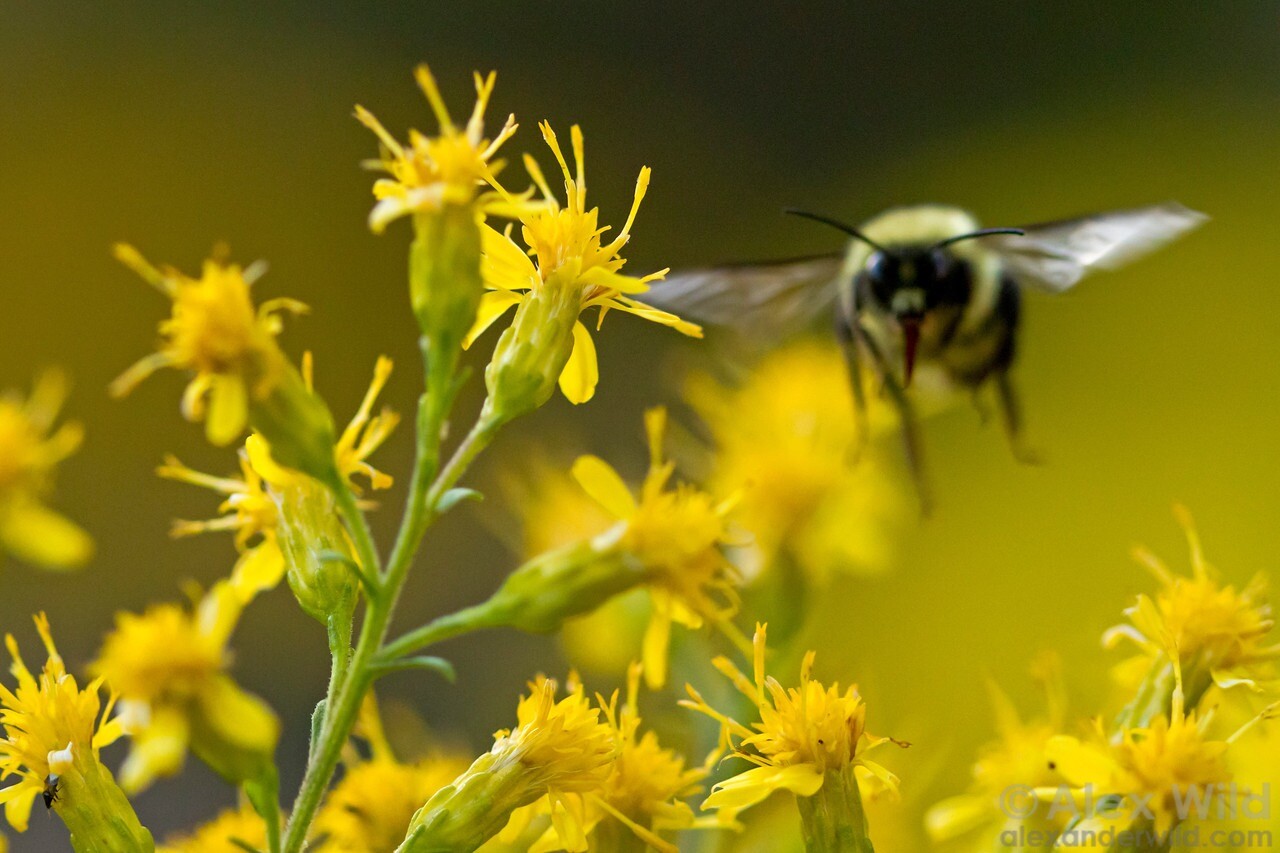
Bumblebees, on the other hand, won’t hesitate to rob nectar—a robbery because, by not entering a flower the expected way, they won’t contribute to pollination.
Being big and bulky and strong has disdvantages, but also advantages: bumblebees can bite plants, leaves in particular, to induce flowering. Quite the superpower! https://www.nationalgeographic.com/animals/article/bumblebees-bite-plants-flower-early
#bees #insects #inaturalist #entomology
http://www.inaturalist.org/observations/138859501
Honeybees don’t seem to mind which flowers they harvest nectar and pollen from. All goes.
#bees #entomology #insects #inaturalist
http://www.inaturalist.org/observations/140710590
http://www.inaturalist.org/observations/139904648
Albert Cardona
boosted

A spooky specimen from the London Natural History Museum: a fish forever entombed inside a pearl! This fish, perhaps a pearlfish, known to parasitize bivalves, tried to make a home in a pearl oyster and died. The oyster dutifully set about encasing it in nacre (mother of pearl, a form of aragonite). Natural pearls are fairly rare, and are essentially an immune response by bivalves to encase a foreign object and protect themselves from infection. #clamfacts
Albert Cardona
boosted

On theoretical neural circuits for counting, and their biological implementation in the #Drosophila brain:
"Our second model uses anti-Hebbian plasticity and only tracks frequencies within four count categories (“1-2-3-many”) ... we show that an implementation of the “1-2-3-many” count sketch exists in the insect mushroom body."
From: "A neural theory for counting memories" by Dasgupta et al. 2022 https://www.nature.com/articles/s41467-022-33577-2
Meanwhile, cellophane bees (genus Colletes) keep going strong here in Cambridge, UK, despite having arrived at what ought to be the end of their flight season. Will find out next weekend whether they are still around.
#iNaturalist #bee #nativebee #entomology https://www.inaturalist.org/observations/140696242




- Personal website
- https://albert.rierol.net
How does the brain work? Someday, we'll figure it out.
Group Leader, MRC LMB, and Professor, University of Cambridge, UK.
#neuroscience #Drosophila #TrakEM2 #FijiSc #CATMAID #connectomics #vEM
Born at 335 ppm.
Brains, signal processing, software and entomology: there will be bugs.
Joined Oct 2022
