

Albert Cardona @albertcardona@social.cleverlibre.org
- Personal website
- https://albert.rierol.net
How does the brain work? Someday, we'll figure it out.
Group Leader, MRC LMB, and Professor, University of Cambridge, UK.
#neuroscience #Drosophila #TrakEM2 #FijiSc #CATMAID #connectomics #vEM
Born at 335 ppm.
Brains, signal processing, software and entomology: there will be bugs.
Joined Oct 2022
Albert Cardona
boosted

Paper *accepted* in @eLife! Stellar job by Casper Kerrén, with support from dream team Sander van Bree & @b_j_griffiths.
https://www.biorxiv.org/node/2534276.external-links.html
I wanna use this opportunity to say this. Sure, I will miss the kick you get from an acceptance email. May future generations of scientists smile at the silly things (like acceptance letters) that made us happy in 2022…
That said, I am very ready for trying out the new @eLife system.
1/2 (trying first thread here)
Albert Cardona
boosted

#introduction I am a professor at Penn and also co-director of the CIFAR Learning in Machines and Brains program. I like to think about neuroscience, AI, and science in general. Neuromatch. Recently, much of my thinking is about Rigor in science and I just started leading a large NIH funded initiative community for rigor (C4R) that aims at teaching scientific rigor.
My interests are broad: Causality, ANNs, Logic of Neuroscience, Neurotech, Data analysis, AI, community, science of science
That's a lot of bees and wasps for November.
Yes, some of these, like the cellophane bees (Colletes), have a late flight season, and the garden bumblebees (Bombus terrestis) seem indestructible and adapted to human-altered environments, but the mining bees (Andrena) and sweat bees (Lasioglossum) ought to have been long gone for this season, rather than easy to spot on a leisure walk across the Cambridge Botanic Garden, UK.
#nativebee #wasplove #entomology #climatechange https://www.inaturalist.org/lifelists/albertcardona?view=tree&details_view=observations&taxon_id=47201
Albert Cardona
boosted

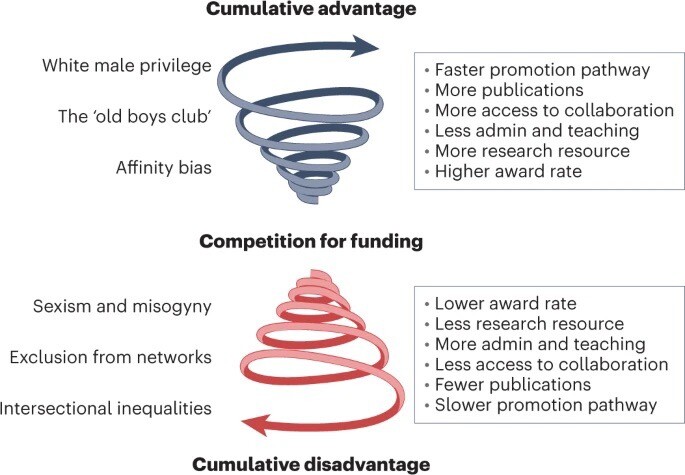
‘Tis the festive season of new faculty recruitments in many unis. It's a great reminder that women in academia, especially women belonging to intersectional minorities, still have it tough. What are you  going to do to dismantle the barriers standing in our way? See what my colleagues (soon joining Mastodon) & I have to say. #academicmastodon
https://www.nature.com/articles/s41557-022-01072-2
https://twitter.com/ProfRachelGaN/status/1585668176712540161?s=20&t=xNmQsHBoocBK8eAW9oDOhA
Albert Cardona
boosted

In terms of #introduction, I am a researcher in computational
Neuroscience and biomimetic AI with a background in theoretical
physics. I have worked on insect brain models to understand olfaction and related to this, how the insect mushroom body is a prototypic motive for classification circuits.
Albert Cardona
boosted

The collapse of Twitter is a system breakdown. Mastodon and the fediverse represent something different: _system change_. From for-profit "Big Tech" to nonprofit, open source, community-owned public spaces.
System change is always harder than you think. It always incurs short-term costs, with hoped for long-term benefits.
The next few weeks will be really tough for the fediverse. Stick around, vibe with it, and you just might help us put a huge part of the web back in community hands. <3
Undeterred by my previous reply to pay me first, the Times Higher Education once again emailed me requesting that I "take part in the next Times Higher Education World University Rankings by completing THE's Global Academic Reputation Survey."
What could one reply this time, to an organization unable to understand that such rankings are useless, even harmful, considering that their income gains depend on not understanding this?
Have you visited the #FlyWire website yet? Both for helping proofread and analyze the whole #Drosophila brain #connectome, or simply to admire the beautiful renderings of neuronal arbors: https://join.flywire.ai
(See also the #VirtualFlyBrain for #ontology-driven navigation of the fly brain, and access to images of genetic driver lines, and more: https://v2.virtualflybrain.org/org.geppetto.frontend/geppetto?id=VFB_00101567&i=VFB_00101567 )
Wish I had time or resources to create such a beautiful landing page for the larval central nervous system. The #connectome of the whole larval brain is coming soon. For now, see the #vEM images and some ~3,000 published neurons in this #CATMAID server: https://l1em.catmaid.virtualflybrain.org/?pid=1&zp=108250&yp=82961.59999999999&xp=54210.799999999996&tool=tracingtool&sid0=1&s0=2.4999999999999996&help=true&layout=h(XY,%20%7B%20type:%20%22neuron-search%22,%20id:%20%22neuron-search-1%22,%20options:%20%7B%22annotation-name%22:%20%22papers%22%7D%7D,%200.6)
Albert Cardona
boosted

My #introduction to #ScienceMastodon:
I am a #Cell #Biologist and research group leader at IRB Barcelona, Spain.
In my lab we observe the #microtubule #cytoskeleton and try to make sense of what we see, what an awesome job!
We also like hashtags that start with C:
#cell #cytoskeleton #centrosome #centrioles #cilia
Can we call them "contacts" instead of "followers". The latter has a cultish feel to it I always found creepy. Now that we can edit the source code and define our own perspectives, it's time for a rethink.
Albert Cardona
boosted

#introduction
Hi everyone,
I am Nila. I am a neuroscientist & currently a Postdoc in Rainer Friedrich's lab at FMI. I study the circuit of the olfactory bulb in the adult zebrafish using a connectomic approach. Recently I have been a bit sidetracked by telencephalic temptations...
I am here to keep up to date and exchange with the scientific community. But I love to have my mind blown by anything nature. So, I am hoping to learn many fun facts outside of my horizons (& to see many beautiful images as well).
I am a first-gen academic which has sometimes been a struggle (mostly in my mind). Topics of open access, social mobility & justice are important to me, and I do have to learn a lot there.
Parenting 3 little humans doesn't leave much energy for hobbies but running is my lifeline.
Albert Cardona
boosted

It's really quite exciting starting up on Mastodon.
Rather like opening a door in a wall and suddenly finding you are in a party with some old friends and lots of new interesting people.
As one who was an early adopter of Twitter, it also is very reminiscent of the old days when I first realised how useful social media could be for meeting new people and learning new stuff.
"Banburismus": find out what it is, how it relates to the breaking of the Enigma code in WWII, where the name comes from, and what does it have to do with #neuroscience:

@lakens Thank you for sharing this chapter! I didn't know the word "likelihoodist" and now I know I am one. Btw the brain is a likelihoodist too! I...
Albert Cardona
boosted
@lakens Thank you for sharing this chapter! I didn't know the word "likelihoodist" and now I know I am one. Btw the brain is a likelihoodist too! It's how we make decisions. This is described in various papers but the most interesting is arguably this one (which shows that Turing was a likelihoodist and considered a ratio of 10 to be meaningful evidence, calling it a "deciBan"): https://www.sciencedirect.com/science/article/pii/S0896627302009716
Albert Cardona
boosted

Continuing this monday with my favorite fact from Chapter 3 of my textbook: The probability of observing mixed results, and how mixed results can be strong evidence for a true effect. https://lakens.github.io/statistical_inferences/likelihoods.html#mixedresults
I remember once performing 4 studies, close replications. There was no effect in 1 out of 3. So I started discussing with my collaborator: What is so special about this study that makes the effect disappear? My collaborator replied: or it is just random variation, as expected.
Albert Cardona
boosted

First toot #ScienceMastodon
I am a #devbio Group Leader at the Babraham Institute. 🐭⌛️👤⏳
Likely to highlight papers on dev bio. Specially timing, stem cells and mammalian #development.
Sometimes I post about research culture, academic progression and women in science
Trying to keep up in SMM as twitter has been useful so far.
Albert Cardona
boosted

Why Wikipedia? Because it’s the largest, most widely used, non-partisan democratised platform for sharing knowledge. Every day Wikipedia users include high school students, parents, teachers, journalists, policy makers and academics. It’s not behind a paywall and it’s not full of technical jargon. But like all encyclopaedias, Wikipedia has huge gaps – especially in biographies of women of people from other historically excluded groups.
Albert Cardona
boosted
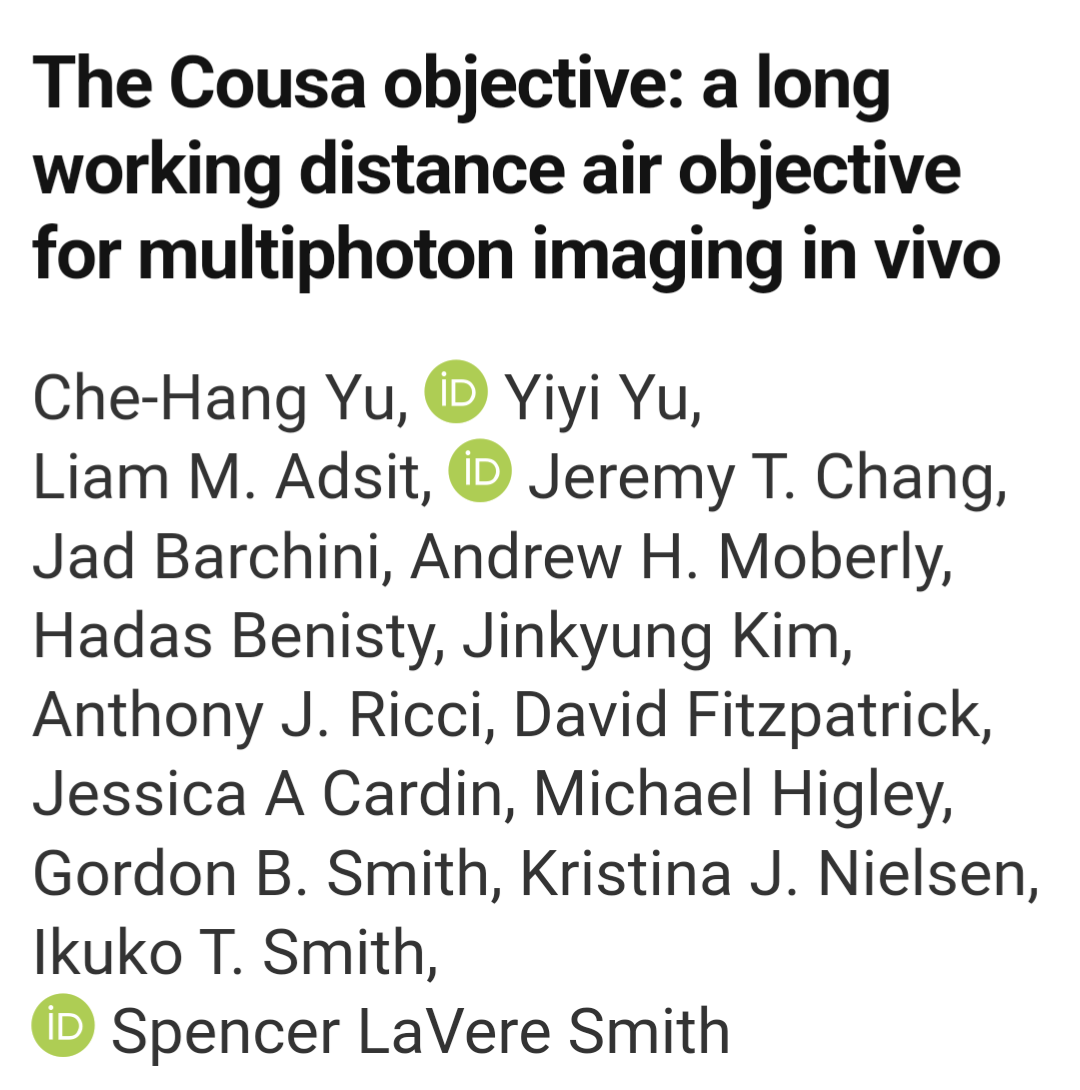
This seems like a step improvement in 2-photon microscopy
https://www.biorxiv.org/content/10.1101/2022.11.06.515343v1
Spencer has a nice thread on it on Twitter (I don't think he's on Mastodon yet?): https://mobile.twitter.com/Labrigger/status/1589471340356333568
Albert Cardona
boosted

Just because it is Monday morning and the #TwitterMigration is still going on, it may be worth repeating that #science would do well to replace their antique journals with modern technology:
https://doi.org/10.5281/zenodo.5526634
The three most important reasons why:
- The most prestigious journals publish the least reliable science:
https://www.frontiersin.org/articles/10.3389/fnhum.2018.00037/full
- Journal prices are tenfold inflated:
https://f1000research.com/articles/10-20/v2
- Open infrastructures for research data, code, models, software, etc. are sorely missing.
Albert Cardona
boosted

I'm new to Mastodon! Still getting used to this new platform. I'm Dan Nomura, a Professor of Chemical Biology at UC Berkeley! My lab uses chemical biology approaches to tackle "undruggable" proteins and to develop new therapeutic modalities to develop next-generation disease therapies!



- Personal website
- https://albert.rierol.net
How does the brain work? Someday, we'll figure it out.
Group Leader, MRC LMB, and Professor, University of Cambridge, UK.
#neuroscience #Drosophila #TrakEM2 #FijiSc #CATMAID #connectomics #vEM
Born at 335 ppm.
Brains, signal processing, software and entomology: there will be bugs.
Joined Oct 2022
