

 @angelobottone@social.cleverlibre.org
I teach #philosophy and work as a researcher for the Iona Institute (www.ionainstitute.ie) Abruzzese. #Distributism
Joined Jul 2019
Marriage in Ireland still declining despite a bumper 2022 https://familysolidarity.org/marriage-in-ireland-still-declining-despite-a-bumper-2022/
Bénédicte Colin on the European Certificate of Parenthood https://familysolidarity.org/benedicte-colin-on-the-european-certificate-of-parenthood/
boosted

This visual deep dive into one of the largest AI language datasets is nonstop fascinating, jaw-dropping, and troubling, and anyone who is remotely interested in how LLMs really work, their biases, or intellectual property should read it. https://www.washingtonpost.com/technology/interactive/2023/ai-chatbot-learning/
Webinar on the European Certificate of Parenthood https://familysolidarity.org/webinar-on-the-european-certificate-of-parenthood/
boosted

@bookstodon Today, my librarian told me about a good place to buy books online: Better World Books. Many of the books are library discards in very good condition. The shipping is free, and the proceeds go toward libraries, literacy programs (worldwide) and education. #books #bookstodon #library
FAFCE calls the European Commission to include surrogacy in the review of its EU Directive on human trafficking https://familysolidarity.org/fafce-calls-the-european-commission-to-include-surrogacy-in-the-review-of-its-eu-directive-on-human-trafficking/
boosted
Webinar: A special family https://familysolidarity.org/webinar-a-special-family/
boosted

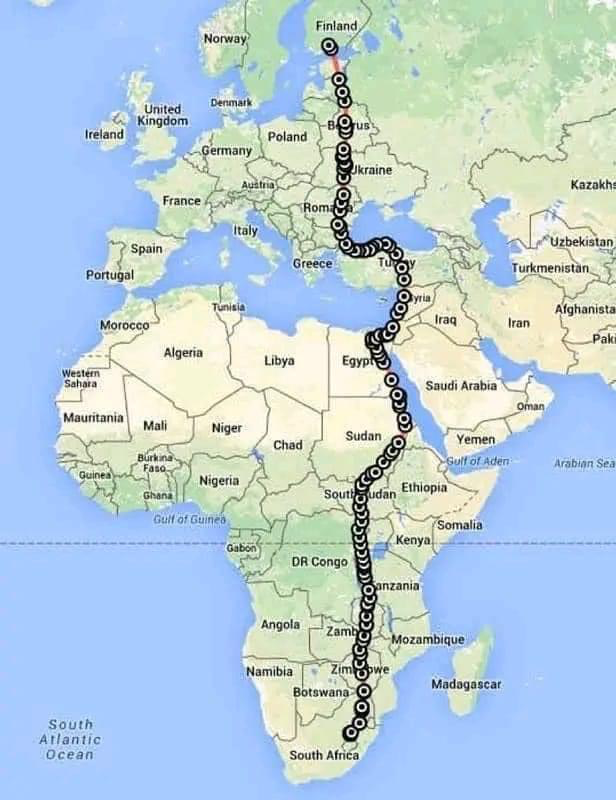
Incredible. A female falcon was equipped with a satellite tracking system in South Africa before migrating to Finland. Image shows tracker data. In just 42 days she flew over 10.000km at an incredible average of 230 km per day and almost in a straight line.
📷via reddit@ChemBioJ
boosted

Pet birds on the loose are teaching wild birds to talk... in English...
From my friend Erika.
https://www.treehugger.com/escaped-pet-birds-are-teaching-wild-birds-to-speak-english-4855721
Webinar: A special family https://familysolidarity.org/webinar-a-special-family/
Children are left unprotected against extreme pornography https://familysolidarity.org/children-are-left-unprotected-against-extreme-pornography/
NCCA confirms worst suspicions of parents about gender ideology https://familysolidarity.org/ncca-confirms-worst-suspicions-of-parents-about-gender-ideology/
boosted
 boosted

@angelobottone This is a crime against humanity! No other words can describe this madness!
boosted




Capitalism has convinced you RSS is antiquated. The real reason it's fading is because it doesn't have ads and tracking. You going to tell me the news article is truly better on a browser with ads than on a little program you can open any time, on or offline?
A hundred of experts from all over the world, will work this Friday, March 3 to publish the #CasablancaDeclaration for the abolition of surrogacy, draw the attention of States and convince them that it is necessary to stop #reproductiveexploitation
#surrogacyabolition #surrogacy
CW LONG POST ORIGINAL CONTENT
A new organ donor bill is ethically questionable
If a proposed new law is passed, after you die your organs can be removed from your body for medical purposes unless you expressly say beforehand that you do not want this to happen. Consent is otherwise assumed. As usual, the law is going through the various parliamentary stages without proper debate, even though the proposal is ethically questionable. An Organ Donor Register, instead, should be established.
The proposed law is called the ‘Human Tissue 2022 Bill’. It covers issues such as the donation and transplantation of organs from deceased persons.
At present, an opt-in system exists. This means that only those who have expressly declared their intention to donate organs after they die will have them removed from their bodies, and even then only with the final approval of the family.
The new regime will mean consent is assumed, although final authorisation from a designated family member will still be needed.
The proposed regime is motivated by the good intention of addressing the problem of a shortage of organs for transplant in Ireland, but it is still ethically questionable as donation should arise only from an informed and deliberate decision on a person’s part.
Presumed consent is based instead on the assumption that we are all aware that our organs are available for transplantation upon death and we are happy with that. But what is this assumption really based on?
The HSE’s own consent policy says: “Consent involves a process of communication about the proposed intervention in which the person has received sufficient information to enable them to understand the nature, potential risks and benefits of the proposed intervention”.
It is very unlikely that the new system of presumed consent will meet these criteria.
To make the new system more ethical, patients should be explicitly asked to express their opinion on the matter when attending a hospital or their GP. This will prompt awareness and provoke conversation about donation, which must remain a choice freely and explicitly made and not assumed. Taking without asking is not giving.
As suggested by the Irish Kidney Association, there should be an Organ Donor Register, where all wishes – to opt in or out – are explicitly recorded. “Knowing that a loved one had proactively recorded their wish to be an organ donor makes the family decision to consent a much easier proposition”, a representative of the Irish Kidney Association told the Oireachtas.
What is positive in this new Bill is that it is not inspired by a principle of absolute bodily autonomy of the patients, but it requires the involvement of their families, who could even overrule the decision of the deceased and veto the donation.
There are many reasons why the ultimate word should be with the families rather than with the individual.
While it is important to honour the wish of the deceased, we need to consider that personal decisions affect others, particularly the family. Some cultures place special importance on respecting the integrity of the body after death. Moreover, when organ donation happens against the wish of the family, they might refuse to cooperate, or their discontent could also affect the work of the health-care staff.
A proper ethical system in this area should follow two basic principles: explicit (not presumed) consent from the individual, and approval from the family following the death of the person. The second principle is still followed, but not the first and more important one.
Photo by Robina Weermeijer on Unsplash

A record of how eugenics has taken hold in Ireland
https://ionainstitute.ie/a-record-of-how-eugenics-has-taken-hold-in-ireland/
CW Long post. Original content.
How parents of DS children are subtly directed toward abortion
There has been little reaction to the news that 95pc of babies diagnosed with Down Syndrome before birth at the Rotunda hospital are subsequently aborted in England.
The response to these horrendous figures has been silence or fatalism. For some, it is an individual “choice” to be respected. There is nothing to be worried about or, even when people find the figures regrettable, little can be done.
“I don’t have a view on whether that is the right thing. We don’t advocate for it, that is just the lived experience”, said prof Fergal Malone, master of the Rotunda.
Is it true? Is it really a purely personal choice, without outside influence or expectations from others? Two recent studies on the experience of parents of children with DS indicate otherwise.
Irish research published last year interviewed eight people following the birth of a child with DS. Some praised the doctors and nurses, but others said the information they received was too medically focused and too negative. It is very hard to believe the same does not happen to couples who are told their baby has DS before it is born.
“Don’t come in with a list of negatives, all the negatives that were put in your head initially we never expected her to be this good now”, said one of the interviewed mothers.
She recalls: “We received purely negative information that she could have this or that, …”
A father said, “Doctors should show compassion when they are delivering the news, have patience and don’t be rushing in and out”.
A Danish study spoke to parents who were told their babies had Down Syndrome before they were born. In Denmark, almost all children with DS are aborted.
The study notes: “Following the diagnosis, the couples were generally critical of the information provided by the hospital. Some felt that the health professionals had painted an unnecessarily grim picture of Down Syndrome based on what couples perceived as outdated information. … Some felt that there was an unnecessary focus on potential diseases and additional diagnoses when the couple was more interested in their potential for living a fulfilling life.”
Participants in the study report feeling pressure from health professionals they encountered to abort, or else that they were presented with overly negative information about their babies.
The research found that “couples felt that termination of pregnancy had been taken for granted following the diagnosis: ‘As the obstetrician sat down, she put those abortion application forms on the table in front of her’”, recalls a mother.
Even conveying apparently neutral information, such as presenting what other couples generally do, can condition parents. We tend to imitate others. Social expectations can be subtle and unconscious.
“Maybe there’s something wrong with me since I don’t just do what 98pc of all people would do”, said a Danish mother in the study, who decided to have the baby.
“The high percentage of terminations in Denmark was a source of doubt and uncertainty during the decision-making process. This left the couples feeling vulnerable”, it notes.
“Why is Down Syndrome the disability [considered] socially acceptable to terminate? And how do we come back from that?”, asks actress Sally Phillips in her documentary “Prenatal Genetic Testing” where she investigates how Non-Invasive Prenatal Tests have increased the number of babies with DS, and other genetic or chromosomal anomalies, who are being aborted. Phillips has a son with Down Syndrome.
These tests, which can take place in the first trimester of pregnancy, are becoming more affordable and available. They can be used to prepare families to welcome a child with medical anomalies, or they can be used to get rid of them, as almost always happens when a diagnosis of DS is given. A proper ethical debate about those prenatal tests has still to happen in Ireland.
In a society that has normalised abortion, the main way to fight the progressive elimination of children with DS is for doctors to portray life with the condition, and life for the parents of such a child, in far more positive terms than seems to be the case at the moment. The medical professionals claim to be neutral about their use, but being not directive isn’t enough when society goes in one direction only.
Certainly, a national debate is called for.

I teach #philosophy and work as a researcher for the Iona Institute (www.ionainstitute.ie) Abruzzese. #Distributism
Joined Jul 2019
