

Bibliolater 📚📜🖋📐 @bibliolater@social.cleverlibre.org
Not a bot; a rather corpulent male approaching fifty years of age; married; father; a very very slow reader; barely reaching up to the level of mediocrity; an ignoramus who reads occasionally.
Toots are humanities, sciences, books and maps related. Toots or follows or boosts or mentions ≠ endorsements of any particular notion or notions. Expect many typing errors.
Addendum: for those wondering, I do not physically resemble a fountain pen.
Joined Nov 2022
Bibliolater 📚📜🖋📐
boosted

Early modern European paper is made with a mould, at a vat. So a hand-made paper sheet depends on the size of the mould. #paperhistory
And here it gets tricky. Moulds varied, and the size of the manufactured sheet may also change due to subsequent trimming and binding etc.
As a beginner's guide to early modern paper sizes used in Europe (the rest of the paper world used other sizes!), I recommend the "Needham Calculator", honoring paper expert Paul Needham: http://needhamcalculator.net
3/x
Bibliolater 📚📜🖋📐
boosted
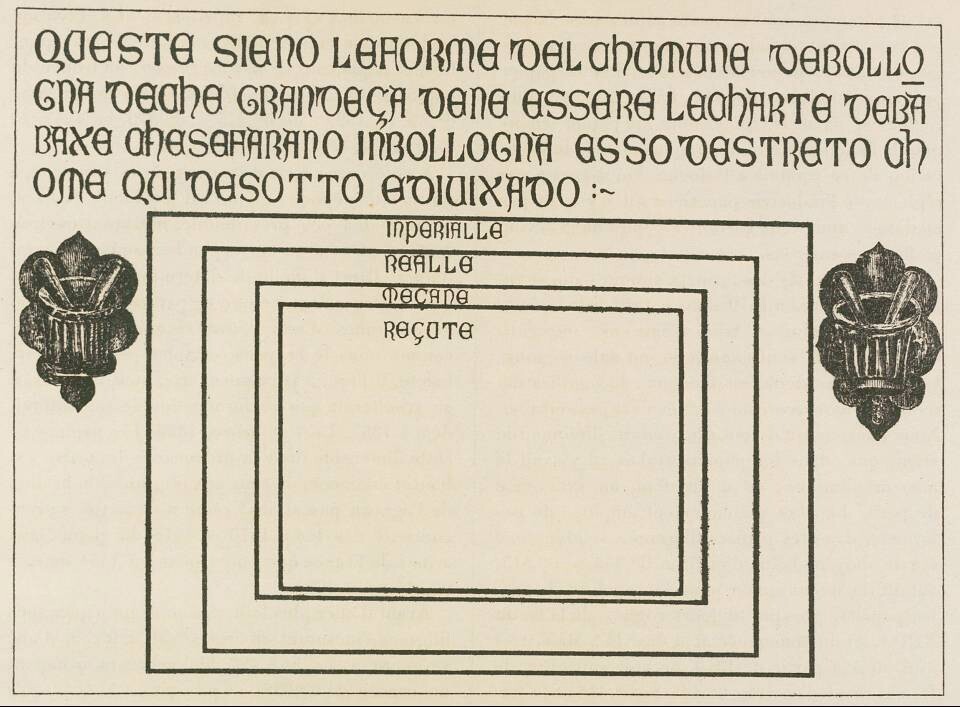
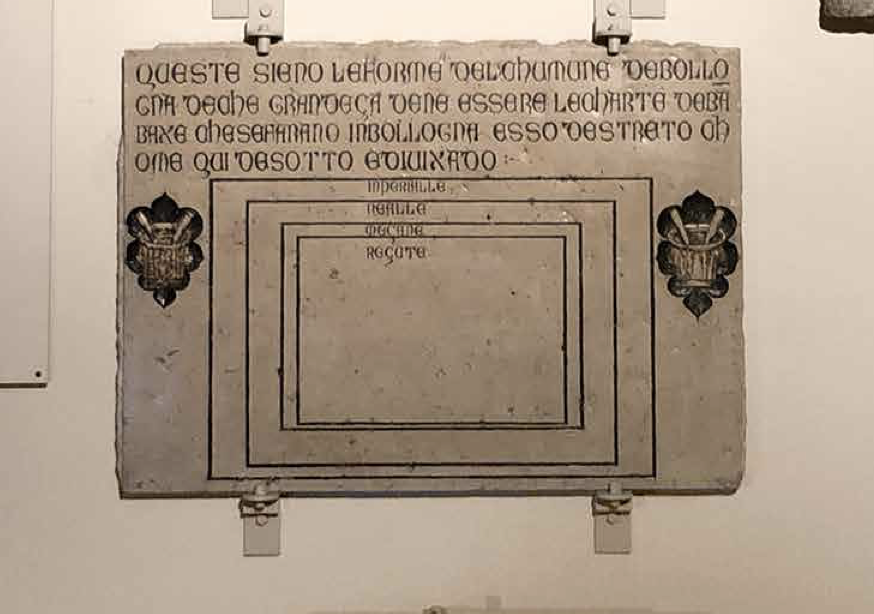
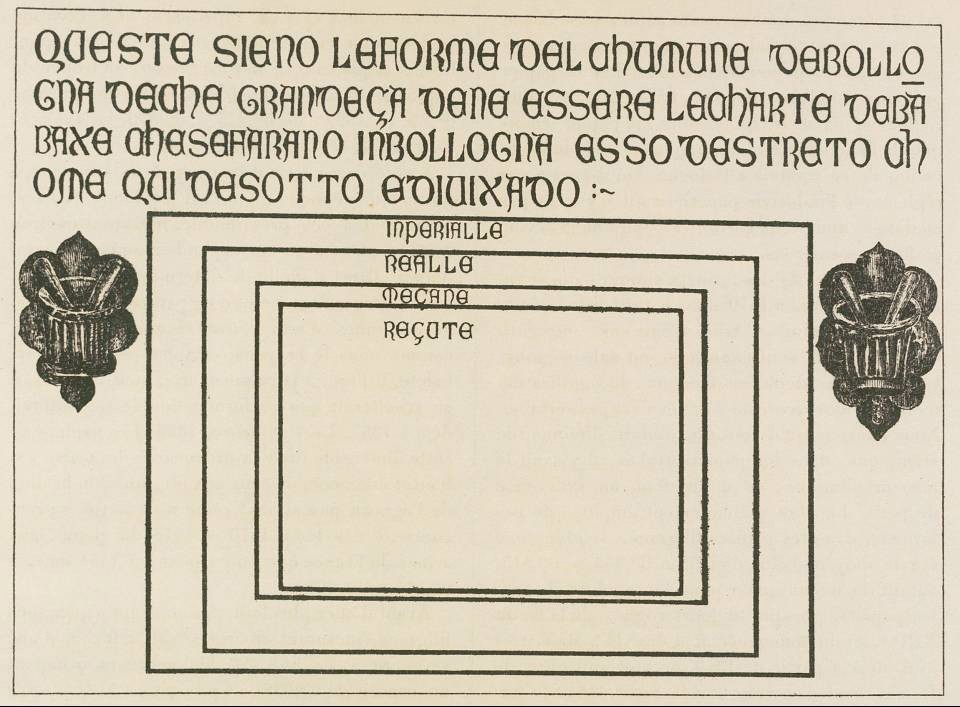
The inscription of the stone goes like this:
These are the moulds of the city of Bologna, which say what the sizes of the sheets of cotton paper must be, which are made in Bologna and the surrounding area, as is set out here below. #PaperHistory
2/x
Bibliolater 📚📜🖋📐
boosted
Meet the "Bologna stone" of 1389, #paperhistory and #bookhistory folks. The stone appears today in the Museo Civico Medievale, Bologna, Italy, and carries the oldest known European paper sizes:
»Imperialle« (500 x 740 Millimeter),
»Realle« (445 x 615 Millimeter),
»Meçane« (345 x 515 Millimeter) and
»Reçute« (315 x 450 Millimeter).
1/x
@BornAnOnlyChild Thank you for following.
Frederik Muller (2018) Was Lorenz Fries’s 1525 Strasbourg Ptolemy Atlas Complete? Or Were Two Maps Omitted?, Imago Mundi, 70:1, 1-26, https://doi.org/10.1080/03085694.2018.1382099 #openaccess #research #article #history #cartography #maps
@kahyrn Thank you for following.
@adbeh Thank you for following.
@BaleyOlivaw Thank you for following.
Buckland, A. (2021). Charles Dickens, Man of Science. Victorian Literature and Culture, 49(3), 423-455. doi: https://doi.org/10.1017/S1060150319000457 #OpenAccess #Article #Victorian #Literature #Science
Bibliolater 📚📜🖋📐
boosted

Bibliolater 📚📜🖋📐
boosted
Bibliolater 📚📜🖋📐
boosted

Replace these “wireless telegraphs” with smartphones, update the dress a little, and this vision of "isolating technology" from a 1906 issue of Punch magazine could easily be from today: https://publicdomainreview.org/collection/a-vision-of-isolating-technology-from-1906 #history #technology #illustration #histodon
Bibliolater 📚📜🖋📐
boosted


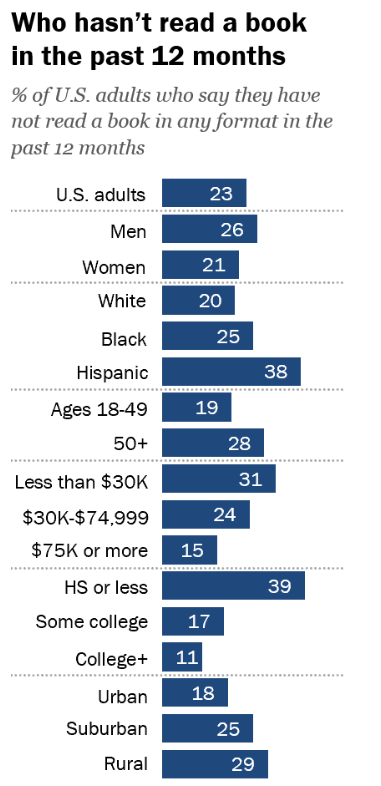
1 out of 4 U.S. men (26%) say they haven't read a single book in any format in the last year
https://www.pewresearch.org/fact-tank/2021/09/21/who-doesnt-read-books-in-america/ #PewResearch
Bibliolater 📚📜🖋📐
boosted

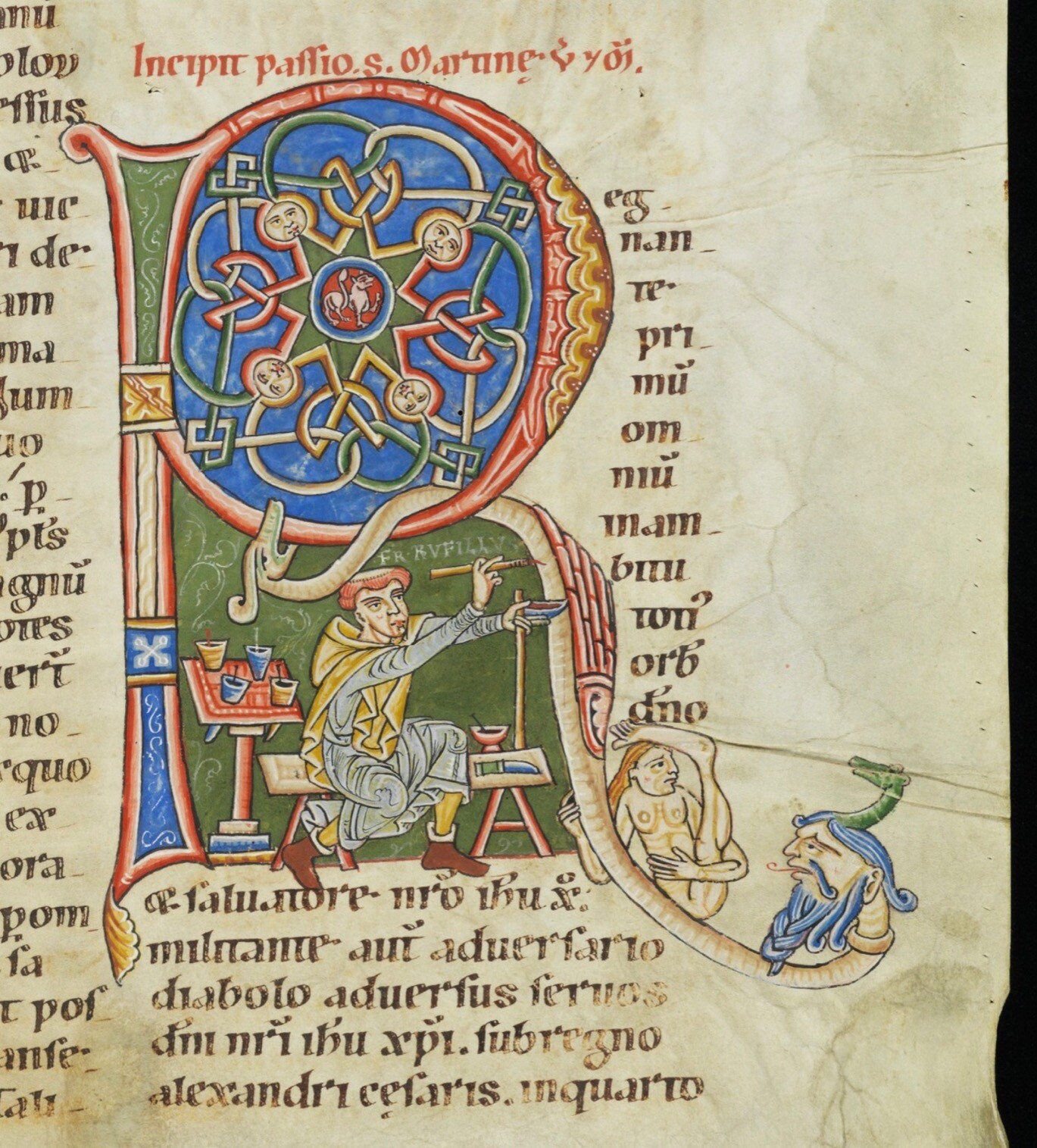
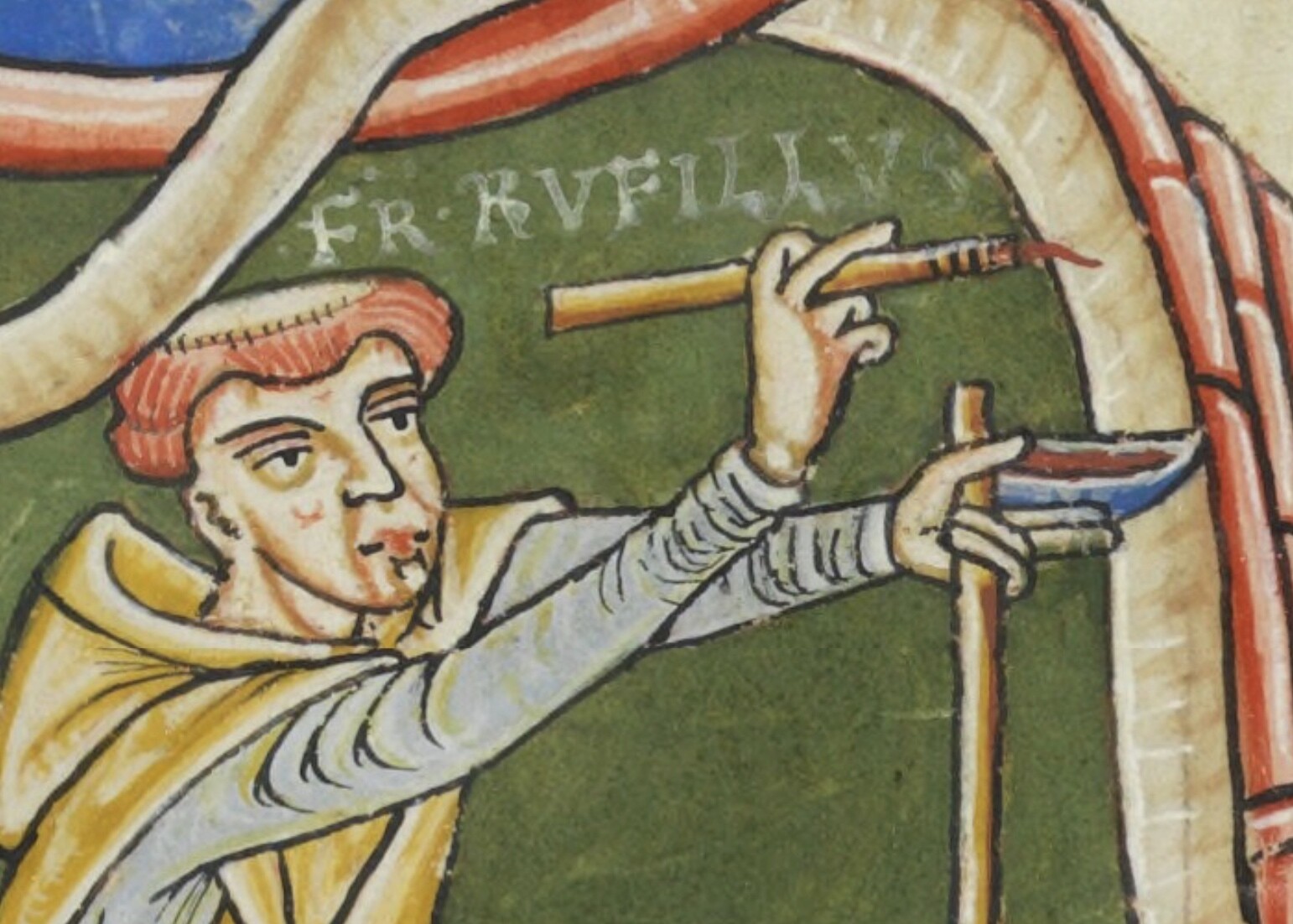
Hello new followers! Here is why medieval books are so cool and modern: their makers already included selfies, this one is 700-years old and by "Rufillus".
Cologny, Bodmer, 127, 12th century). Full page zoomable: https://www.e-codices.unifr.ch/en/fmb/cb-0127/244r.
More in this blog post: https://medievalbooks.nl/2018/09/20/me-myself-and-i/.
Bibliolater 📚📜🖋📐
boosted

Well, finally after all these years, someone's got an intuitive explanation of the moves required for Rubik's cube!
RT @jagarikin@twitter.com
あの伝説のルービックキューブをさらにわかりやすくしました
🐦🔗: https://twitter.com/jagarikin/status/1593771091738374144
Cohen, H. F. (2010). How Modern Science Came into the World: Four Civilizations, One 17th-Century Breakthrough. Amsterdam University Press. https://doi.org/10.2307/j.ctt45kddd #History #Science #Book #OpenAccess
A dead #language comes to life: Early #medieval Old #English in the 21st century https://www.universiteitleiden.nl/en/news/2022/11/a-dead-language-comes-to-life-early-medieval-old-english-in-the-21st-century #book
Source: https://twitter.com/thijsporck/status/1595095422539816963?s=20&t=uijlJuicA8ysK-i4R__8IQ
Bibliolater 📚📜🖋📐
boosted


#introduction We are The Conversation UK. You may have seen our US, Australian and Spanish news outlets come to #mastodon:
@TheConversationUS @theconversationes
@theconversationau
We believe in news by experts. Free to read. No paywalls: https://theconversation.com/uk

Grazioso Benincasa, 1466
Chart of the western coast of Europe, and the British Isles. Bibliothèque nationale de France https://medea.fc.ul.pt/view/chart/647 #maps #c15th #europe #britain
Source: https://twitter.com/MedeaChartERC/status/1595068867935862784?s=20&t=uijlJuicA8ysK-i4R__8IQ
Not a bot; a rather corpulent male approaching fifty years of age; married; father; a very very slow reader; barely reaching up to the level of mediocrity; an ignoramus who reads occasionally.
Toots are humanities, sciences, books and maps related. Toots or follows or boosts or mentions ≠ endorsements of any particular notion or notions. Expect many typing errors.
Addendum: for those wondering, I do not physically resemble a fountain pen.
Joined Nov 2022
