

Bibliolater 📚📜🖋📐 @bibliolater@social.cleverlibre.org
Not a bot; a rather corpulent male approaching fifty years of age; married; father; a very very slow reader; barely reaching up to the level of mediocrity; an ignoramus who reads occasionally.
Toots are humanities, sciences, books and maps related. Toots or follows or boosts or mentions ≠ endorsements of any particular notion or notions. Expect many typing errors.
Addendum: for those wondering, I do not physically resemble a fountain pen.
Joined Nov 2022
Septentrionalium Terrarum descriptio. Per Gerardum Mercatorem Cum Privilegio : Mercator, Gerhard, 1512-1594 : Free Download, Borrow, and Streaming : Internet Archive https://archive.org/details/dr_septentrionalium-terrarum-descriptio-per-gerardum-mercatorem-cum-privilegi-10805001 ~via @internetarchive #Map #Maps #MapHistory #History #Histodon #Histodons #Cartography #C16th #17thcentury @histodon @histodons
The travels of Marco Polo the Venetian : Polo, Marco, 1254-1323? : Free Download, Borrow, and Streaming : Internet Archive https://archive.org/details/marcopolo00polouoft ~via @internetarchive #Book #Books #Bookstodon #Ebook #Ebooks #Travel #History #Asia @bookstodon
Robbeets, M., Bouckaert, R., Conte, M. et al. Triangulation supports agricultural spread of the Transeurasian languages. Nature 599, 616–621 (2021). https://doi.org/10.1038/s41586-021-04108-8 #OpenAccess #OA #Academia #Academic #Academics #Language #Languages #Archaeology #History #Linguistics #Anthropology #Science #Biology #Genomics #Culture #Asia @linguistics @archaeodons @anthropology
Borrell, F., Clemente, I., Cubas, M., Ibáñez, J., Mazzucco, N., Nieto-Espinet, A., Portillo, M., Valenzuela-Lamas, S. & Terradas, X. (2022). From Anatolia to Algarve: Assessing the Early Stages of Neolithisation Processes in Europe. Open Archaeology, 8(1), 287-295. https://doi.org/10.1515/opar-2022-0234 #OpenAccess #OA #Journal #Article #Academia #Academic #Academics #Neolithic #Europe #Archaeology #Archaeodons #Anthropology #History #Histodon #Histodons @anthropology @archaeodons @histodon @histodons
Article Source: Indian genetic heritage in Southeast Asian populations Changmai P, Jaisamut K, Kampuansai J, Kutanan W, Altınışık NE, et al. (2022) Indian genetic heritage in Southeast Asian populations. PLOS Genetics 18(2): e1010036. https://doi.org/10.1371/journal.pgen.1010036 #OpenAccess #OA #Research #Article #Academica #Academic #Academics #Thailand #Graphs #PopulationGenetics #Population #Genetics #Language #Haplotypes #Languages #Cambodia #India #Asia #Biology #Science #Anthropology @science @anthropology
MITHEN, S. (2022). How Long was the Mesolithic–Neolithic Overlap in Western Scotland? Evidence from the 4th Millennium bc on the Isle of Islay and the Evaluation of Three Scenarios for Mesolithic–Neolithic Interaction. Proceedings of the Prehistoric Society, 88, 53-77. doi: https://doi.org/10.1017/ppr.2022.3 #OpenAccess #OA #Journal #Article #Mesolithic #Neolithic #Neomesolithic #Scotland #DNA #Archaeology #Science #Academia #Academic #Academics #Archaeodons #History #Europe @archaeodons @science
‘A certain danger lurks there’: how the inventor of the first chatbot turned against AI https://www.theguardian.com/technology/2023/jul/25/joseph-weizenbaum-inventor-eliza-chatbot-turned-against-artificial-intelligence-ai #AI #ArtificalIntelligence #ChatBot #ChatBots #ChatGPT #MIT #Internet #LongReads
Is it me or is the #federated #timeline more lively than usual this evening? #SocialMedia #Mastodon #Fediverse
#Question: should one '#boost' their own #toots? #SocialMedia #Mastodon #Fediverse #Etiquette
Nicolas Broccard, Nuno Miguel Silva, Mathias Currat. "Simulated patterns of mitochondrial diversity are consistent with partial population turnover in Bronze Age Central Europe." American Journal of Biological Anthropology 177.1 (2021) 134-146 https://doi.org/10.1002/ajpa.24431 #OpenAccess #OA #Research #Article #Ancient #ancientDNA #DNA #Genetics #Haplogroup #Plague #Yamnaya #Biology #Anthropology #Science #Europe #BronzeAge #Demography #Academia #Academic #Academics @anthropology @science
Bibliolater 📚📜🖋📐
boosted


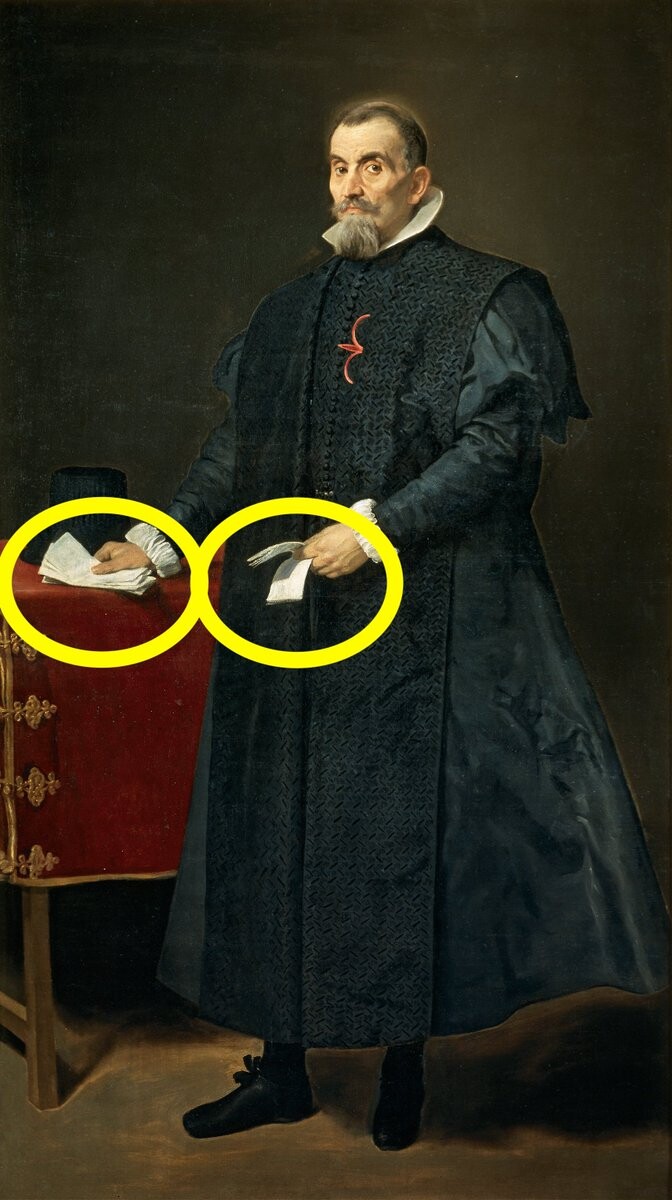
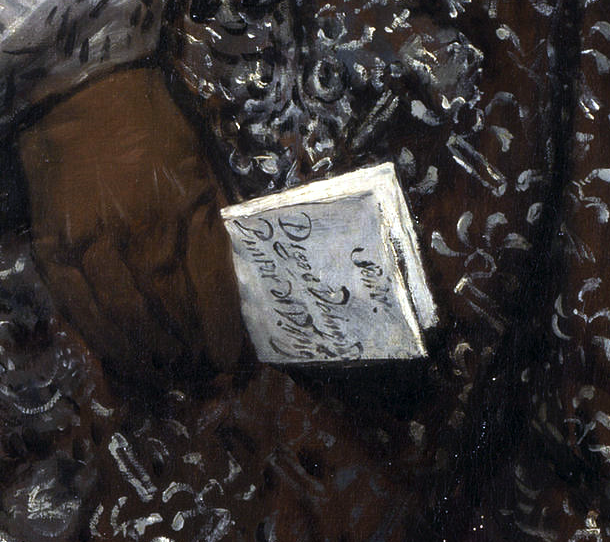
Well, and there is always this one character, that needs to escalate things. Meet Don Diego de Corral y Arellano in 1631, holding more than just one letter. This power move is called the ultimate paper practice: signaling multitasking excellence by dealing with more than one news flow simultaneously. Eat my dust, you losers. I am the cosmos. These are my paper letters!
13
Bibliolater 📚📜🖋📐
boosted
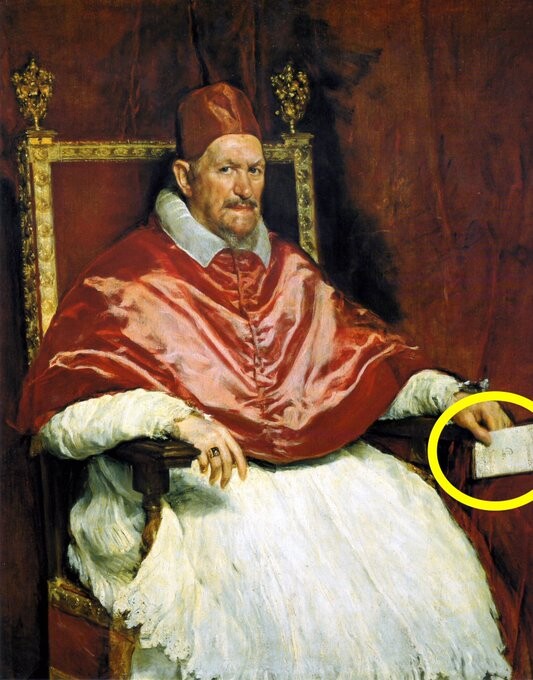
Next common power move with a paper letter: Demonstrate your strength of constantly receiving troublesome news, and still keep on doing your thing (and lead Christianity). In this image, Pope Innocent X is doing his job, but it is hard work to cope with these paper flows of news reports from all over Christianity. Alas, receiving bad news is part of my job, and this is why holding the damn paper letter on a portrait is an important detail. I am a paper Pope, ruling with letters.
12
Bibliolater 📚📜🖋📐
boosted
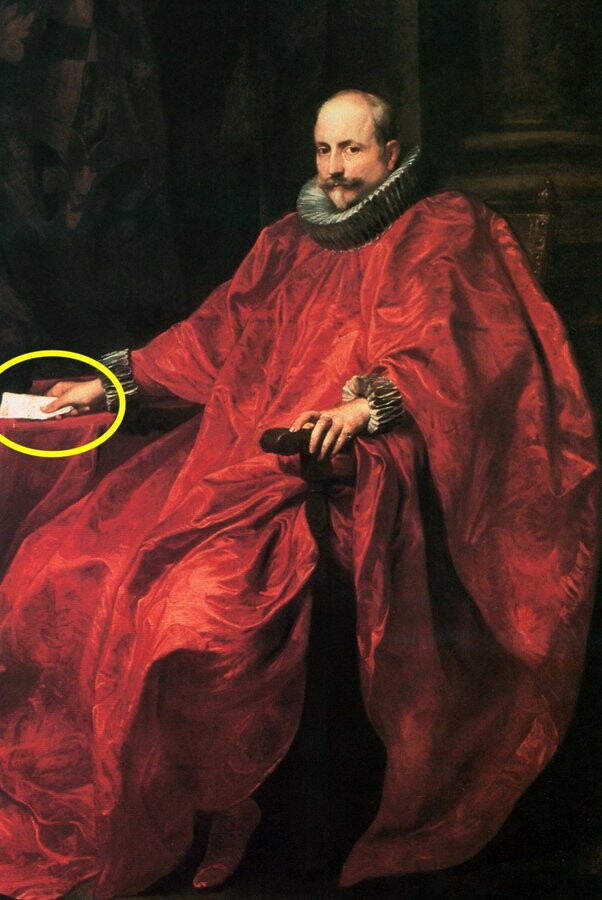
There are a few variations of the mentioned power move of holding a letter to signal your own importance.
One could, like Agostino Pallavicini in 1621 is doing in this painting, use the paper letter as a tool to signal: I am overworked but pleased, still dressed in business clothes, and after a long day of the usual multitasking and decision making, I am taking my time to relax near a desk with an important letter still in my hand.
11
Guarino-Vignon, P., Marchi, N., Bendezu-Sarmiento, J. et al. Genetic continuity of Indo-Iranian speakers since the Iron Age in southern Central Asia. Sci Rep 12, 733 (2022). https://doi.org/10.1038/s41598-021-04144-4 #OpenAccess #OA #Science #Article #Anthropology #CentralAsia #IronAge #Genetics #PopulationGenetics #Academia #Academic #academics @anthropology @science
Bibliolater 📚📜🖋📐
boosted
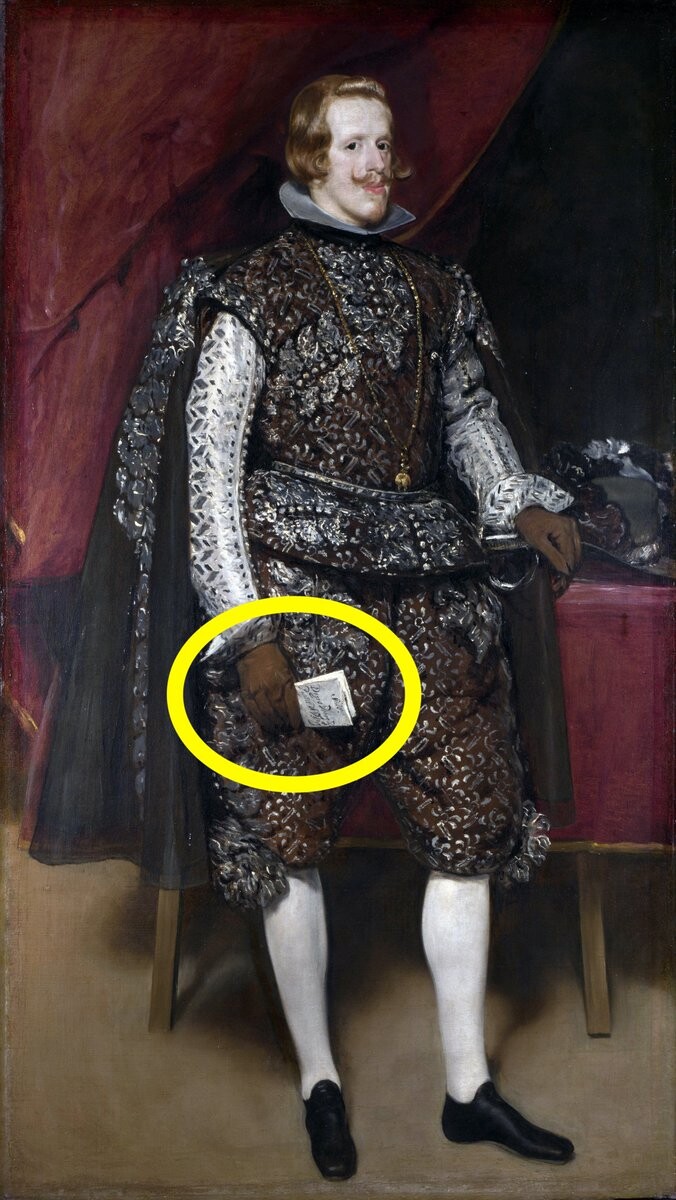
And last but not least, the most important question when receiving a letter in early modern Europe: How to hold the damn paper letter adequately?
As paper letter were special things, signaling quite a lot, you could always go for the power move. Show your received letter like the really important person you were. Like Philip IV of Spain in 1643, signaling with the letter: I am being informed and part of every communication network there is. Fear me! Behave!
10
Bibliolater 📚📜🖋📐
boosted

Our March 2023 special issue "Living with Coasts," honoring John Gillis, is still 100% open access / no paywall for the next couple weeks. https://journals.sagepub.com/toc/clsa/2/1 #EnvHist #CoastalStudies #CoastalHistory #histodons #interdisciplinary
Bibliolater 📚📜🖋📐
boosted
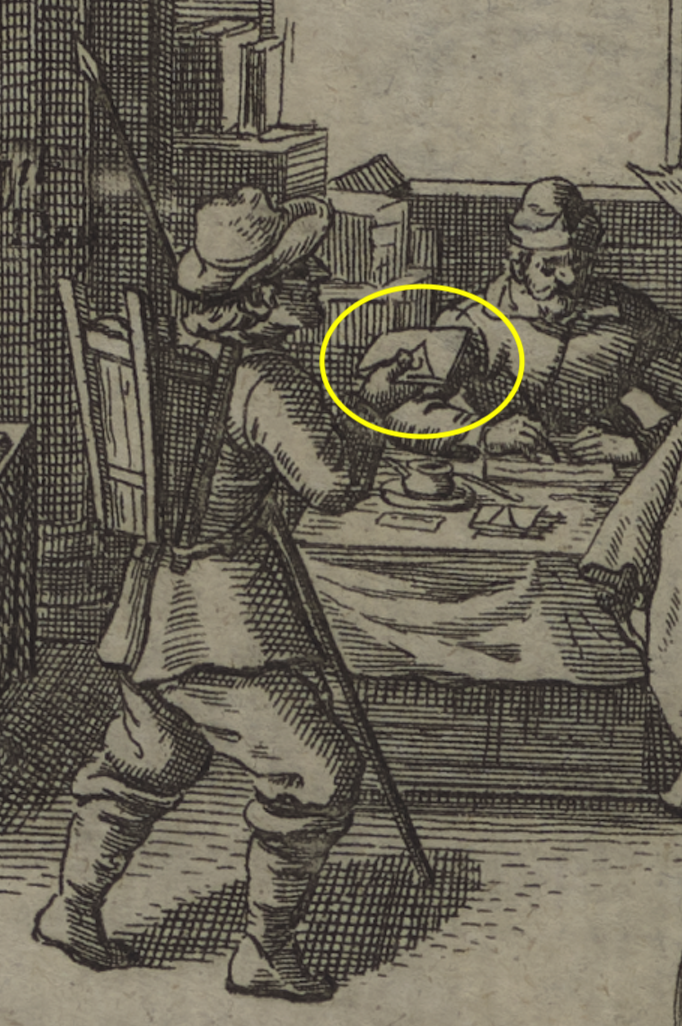
Transporting letters was in early modern Europe a business, and the development of postal services is deeply connected to the emergence of an early modern news system. In this image, a messenger in 1632 is bringing and taking handwritten newsletters: the textual components of every news publication of the period. These are handwritten observations, packed in units, sealed in letters. News in printed form were very often handwritten news. Until enough printed news very available to copy from.
9
Bibliolater 📚📜🖋📐
boosted
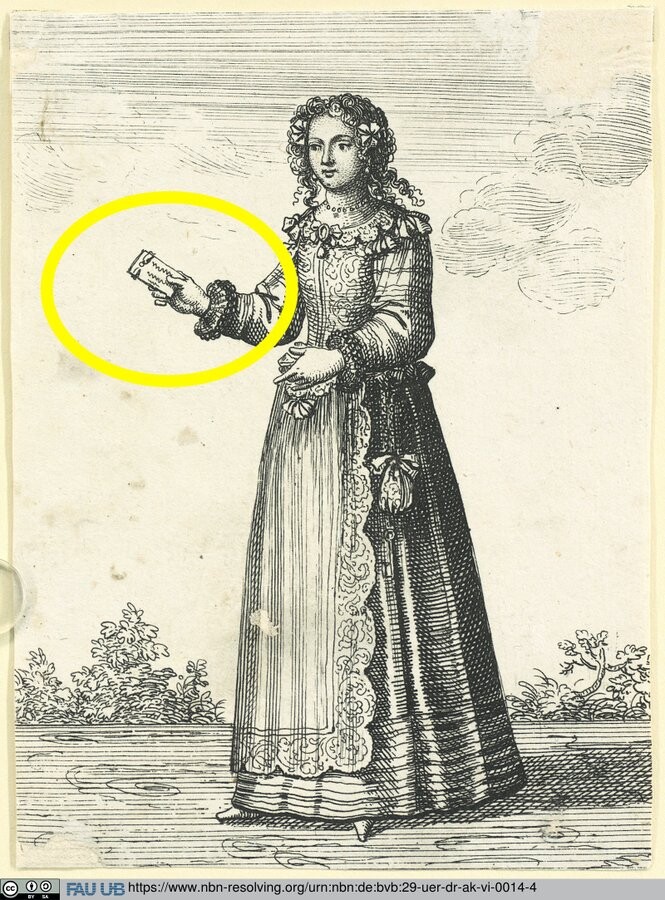
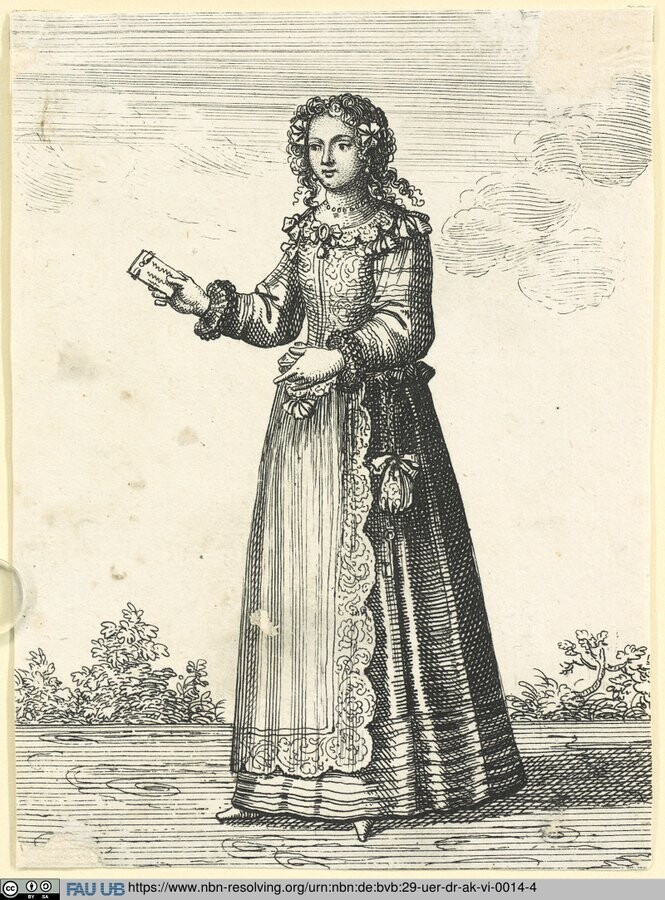
Reading and writing letters is only one part of the story, as #bookhistory and #newshistory experts already know. Receiving a letter, a locked letter, like this lady in 1670 Paris, is one step of a complex communication process around moving ideas , stories and data connected to paper sheets. However, receiving a letter was and still is an important thing. In early modern Europe, this paper letter made you a witness, a news participator, a networker, an important person worth of news flows.
8
Bibliolater 📚📜🖋📐
boosted
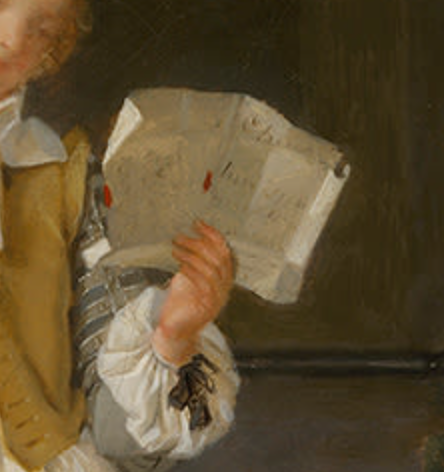
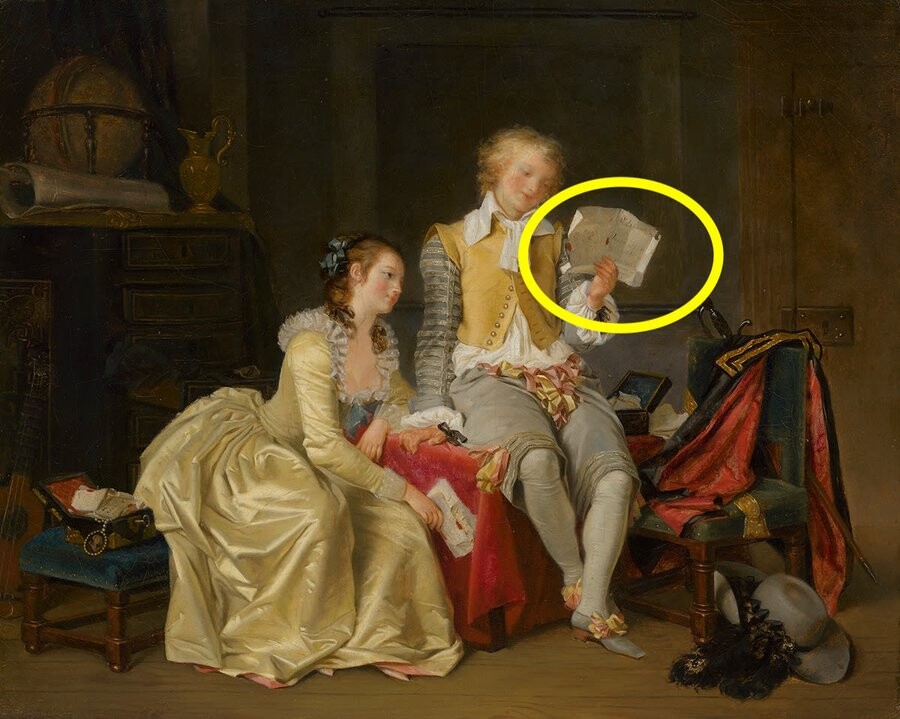
Written, folded, and moved (within postal system), is one part of the story. At the other end, the #historyofreading starts. Letters were popular goods bringing news, and emotions, and new data. The contents were read, reread, read aloud and silent, alone and in company. Important letters were even stored.
Among the many established and common paper practices in early modern Europe, rereading letters was a thing. Especially private letters were among the most read, and re-read, texts.
7
Bibliolater 📚📜🖋📐
boosted
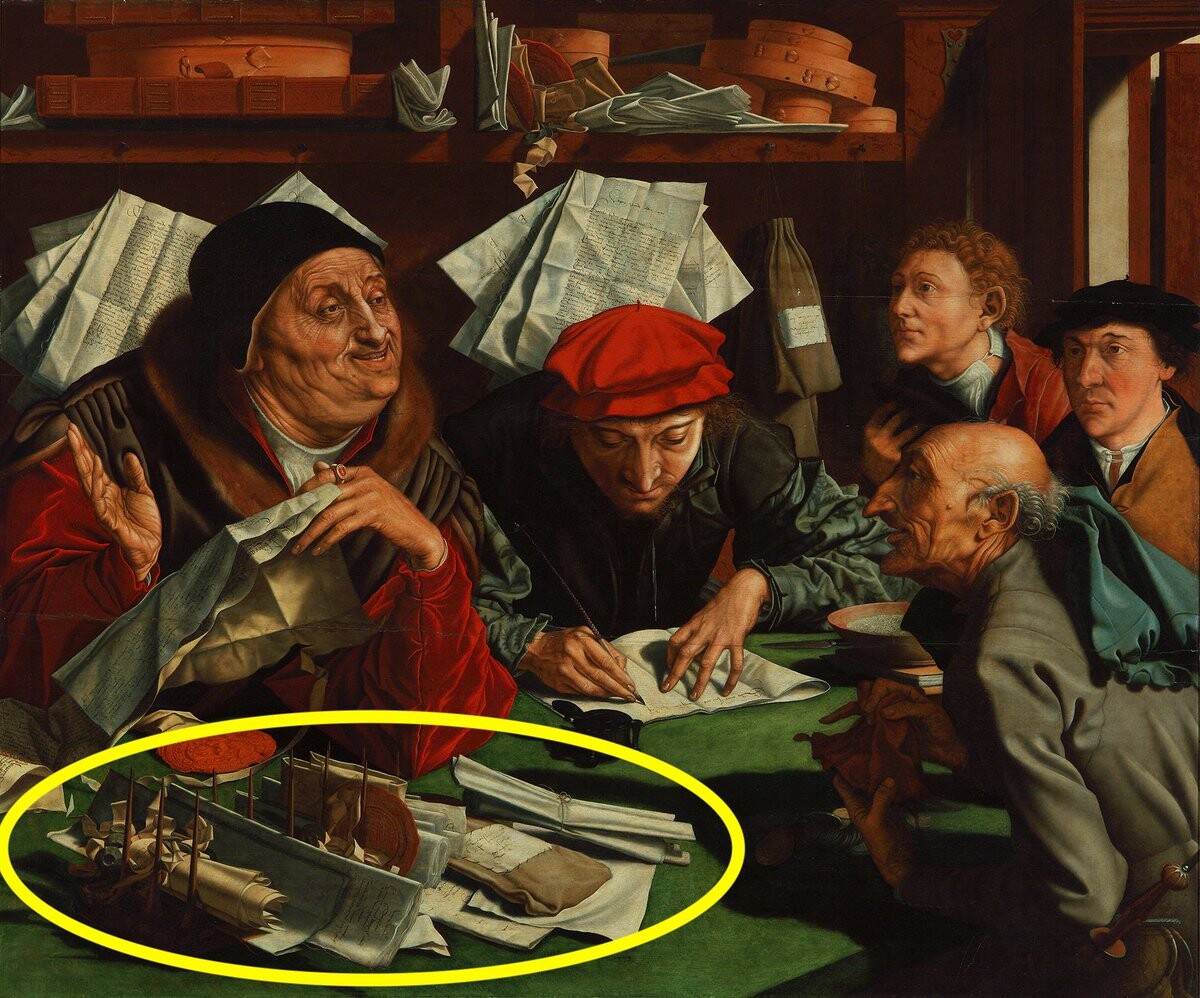
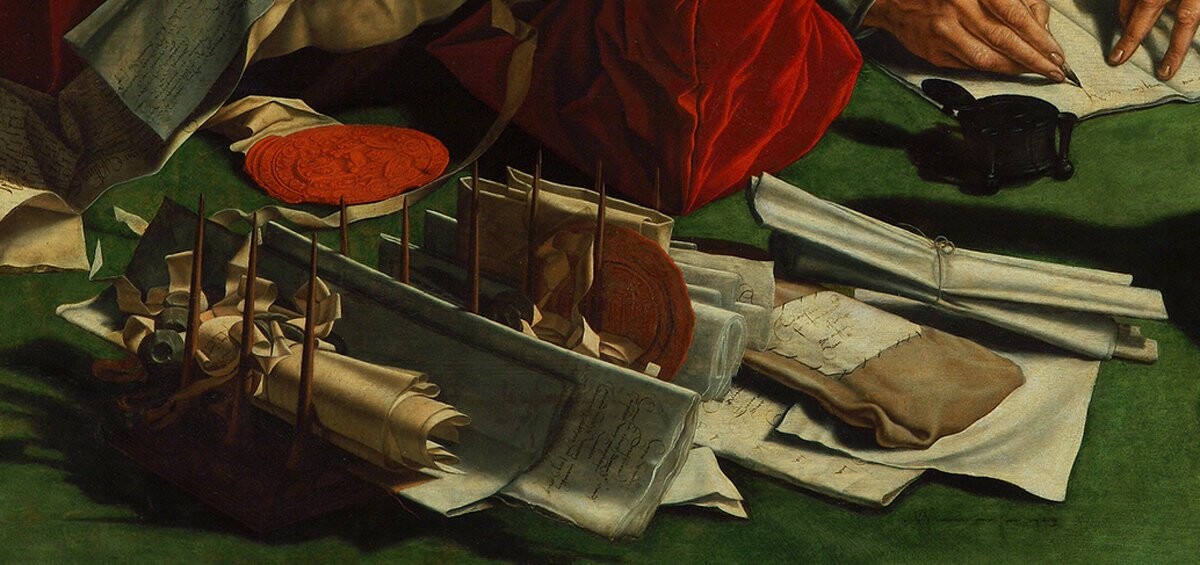
Apropos, letter writing. This could be a messy business, as this painting of an early modern lawyer and his secretary work demonstrates. Among the many used papers are letters, for correspondences, and a letter rack. This highlighted letter rack was used for storing documents that needed more future work (and storing decisions). Again, writing, compiling, re-writing, etc. , all these were letter practices that needed patience - and paper, and stories to be written down.
Not a bot; a rather corpulent male approaching fifty years of age; married; father; a very very slow reader; barely reaching up to the level of mediocrity; an ignoramus who reads occasionally.
Toots are humanities, sciences, books and maps related. Toots or follows or boosts or mentions ≠ endorsements of any particular notion or notions. Expect many typing errors.
Addendum: for those wondering, I do not physically resemble a fountain pen.
Joined Nov 2022
