

Bibliolater 📚📜🖋📐 @bibliolater@social.cleverlibre.org
Not a bot; a rather corpulent male approaching fifty years of age; married; father; a very very slow reader; barely reaching up to the level of mediocrity; an ignoramus who reads occasionally.
Toots are humanities, sciences, books and maps related. Toots or follows or boosts or mentions ≠ endorsements of any particular notion or notions. Expect many typing errors.
Addendum: for those wondering, I do not physically resemble a fountain pen.
Joined Nov 2022
Bibliolater 📚📜🖋📐
boosted

18th-century feminist, Italian Newtonian, Laura Bassi, was born 31 October 1711 #histsci
https://thonyc.wordpress.com/2012/10/16/another-feminist-newtonian/
"We present 14 new ancient mitogenome sequences from pre-Phoenician (~1800 BCE) and Phoenician (~700–400 BCE) samples from Lebanon (n = 4) and Sardinia (n = 10) and compare these with 87 new complete mitogenomes from modern Lebanese and 21 recently published pre-Phoenician ancient mitogenomes from Sardinia to investigate the population dynamics of the Phoenician (Punic) site of Monte Sirai, in southern Sardinia."
Matisoo-Smith E, Gosling AL, Platt D, Kardailsky O, Prost S, et al. (2018) Ancient mitogenomes of Phoenicians from Sardinia and Lebanon: A story of settlement, integration, and female mobility. PLOS ONE 13(1): e0190169. https://doi.org/10.1371/journal.pone.0190169 #OpenAccess #OA #Research #Article #Science #Neolithic #Archaeology #Lebanon #Europe #Genomics #Biology #Genetics #Academia #Academic #Academics @science
"Here, using an experimental paradigm able to separate variation within a language from variation between languages, we tested the use of spatial demonstratives—the most fundamental and frequent spatial terms across languages."
Coventry, K.R., Gudde, H.B., Diessel, H. et al. Spatial communication systems across languages reflect universal action constraints. Nat Hum Behav (2023). https://doi.org/10.1038/s41562-023-01697-4 #OpenAccess #OA #Article #Psychology #Language #Languages #Philology #Linguistics #Academia #Academic #Academics @psychology @psycholinguistics @linguistics
#Image attribution: naturalearthdata.com, offered to the Public Domain per Terms of Use, CC0, via Wikimedia Commons. https://commons.wikimedia.org/wiki/File:World_map_geographical_(drab).png
Bibliolater 📚📜🖋📐
boosted

Not so simple question: What is the time difference between Houston and London?
#Mastodon: good afternoon, I hope you have a relaxing #reading day. #Book #Books #Bookstodon @bookstodon
#Image attribution: Benoît Prieur, CC0, via Wikimedia Commons.
Page URL: https://commons.wikimedia.org/wiki/File:Acad%C3%A9mie_de_Lyon_(septembre_2021)_-_biblioth%C3%A8que_(1).jpg
Bibliolater 📚📜🖋📐
boosted

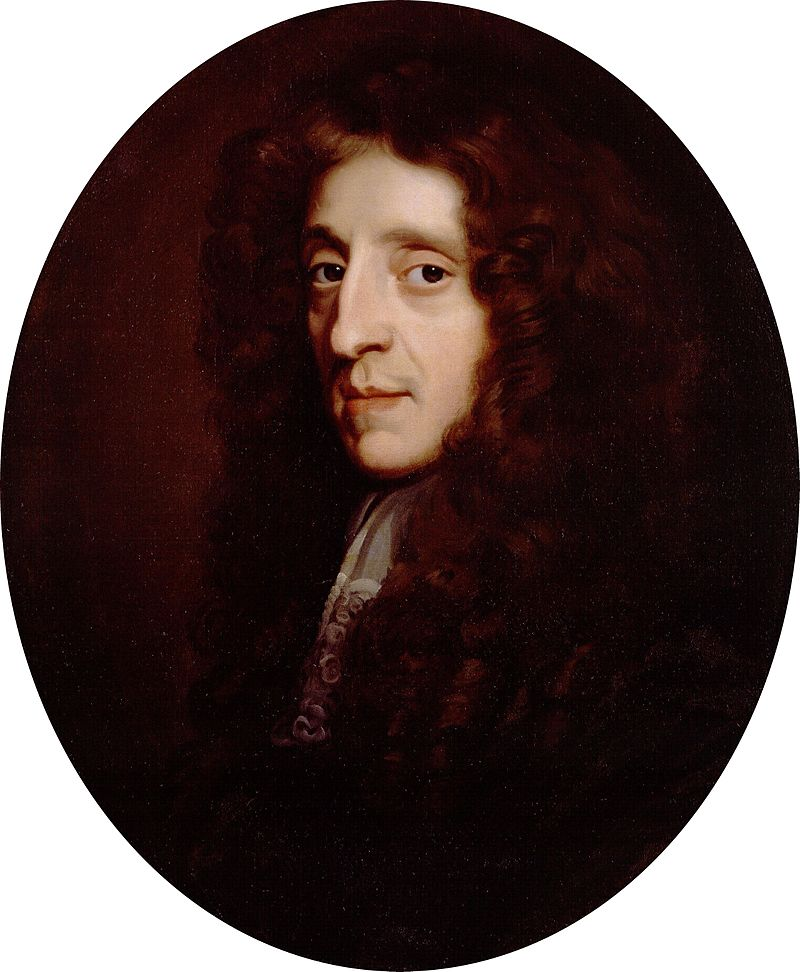
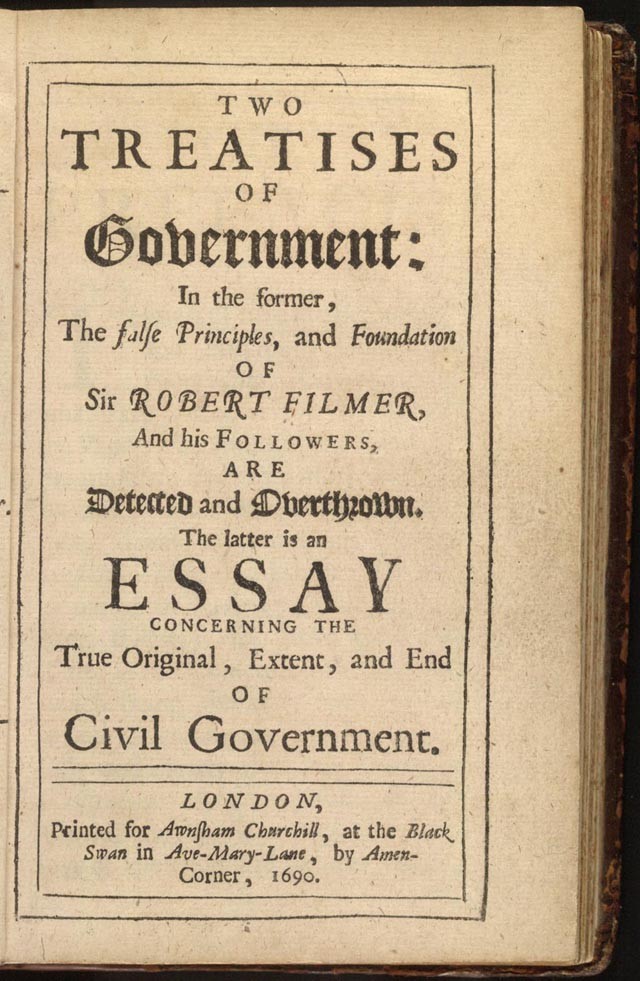
"But there is only one thing which gathers people into seditious commotion, and that is oppression."
A Letter Concerning Toleration
English Philosopher John Locke died #OTD in 1704. He developed an alternative to the Hobbesian state of nature and asserted a government could be good only if it received the consent of the governed and protected the natural rights of life, liberty, and estate. via @wikipedia
Books by John Locke at PG:
https://www.gutenberg.org/ebooks/author/2447
Bibliolater 📚📜🖋📐
boosted
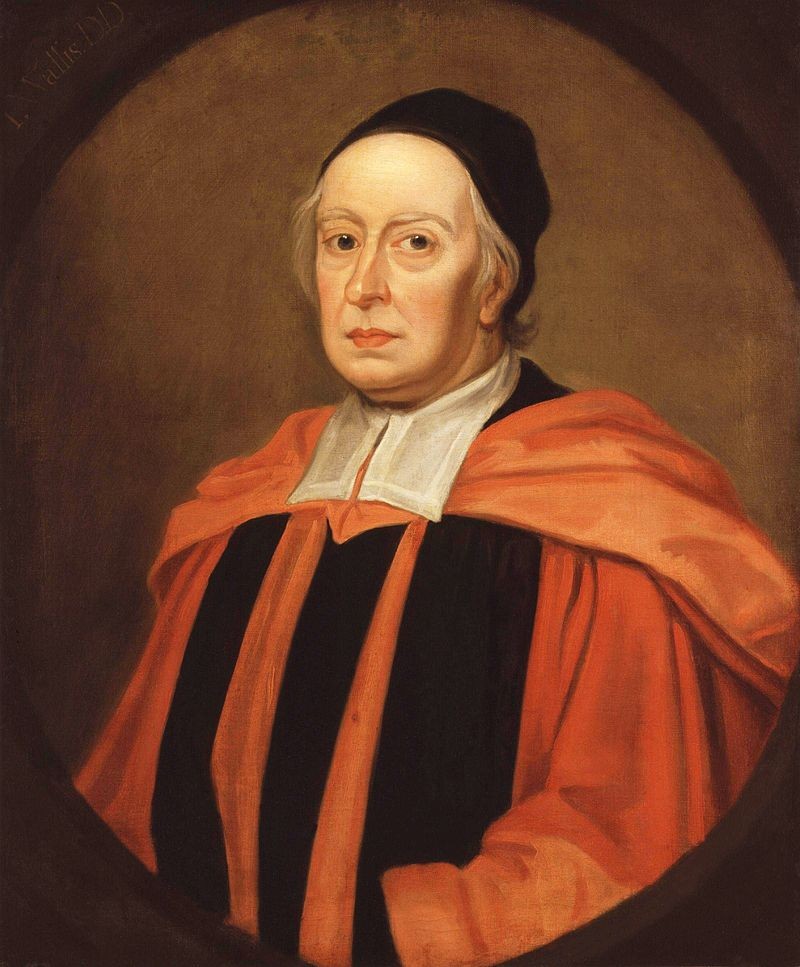
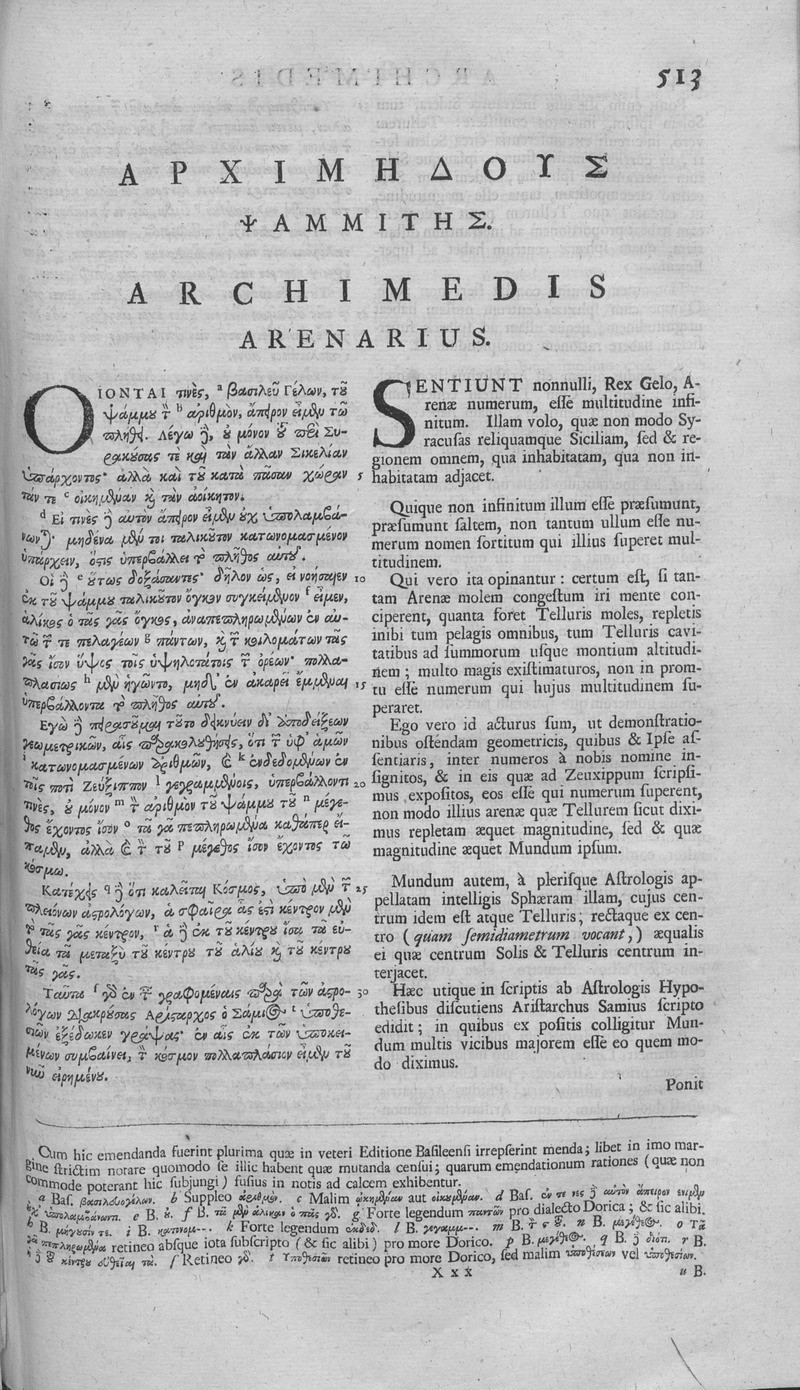
English Mathematician John Wallis died #OTD in 1703.
In 1657 Wallis published the Mathesis Universalis (“Universal Mathematics”), on algebra, arithmetic, and geometry, in which he further developed notation. He invented and introduced the symbol ∞ for infinity. He similarly used 1/∞ for an infinitesimal. John Wallis was a contemporary of Newton and one of the greatest intellectuals of the early renaissance of mathematics. via @wikipedia and @Britannica
"We have combined a detailed, high-resolution mitogenome analysis with summaries of autosomal data and Y-chromosome lineages to establish a settlement chronology for the Indian Subcontinent."
Silva, M., Oliveira, M., Vieira, D. et al. A genetic chronology for the Indian Subcontinent points to heavily sex-biased dispersals. BMC Evol Biol 17, 88 (2017). https://doi.org/10.1186/s12862-017-0936-9 #OpenAccess #OA #Research #Article #Science #Biology #DNA #India #Neolithic #IndoEuropean #Genetics #Academia #Academic #Academics @science
"In the context of European populations, and particularly in Iberia, this haplogroup stands out for its high frequency and its demographic history. Current evidence indicates that the diffusion of this haplogroup is related to the population movements that mark the cultural Bronze Age transition, making it remarkably interesting for population geneticists."
García-Fernández, C., Lizano, E., Telford, M. et al. Y-chromosome target enrichment reveals rapid expansion of haplogroup R1b-DF27 in Iberia during the Bronze Age transition. Sci Rep 12, 20708 (2022). https://doi.org/10.1038/s41598-022-25200-7 #OpenAccess #OA #Article #Science #Biology #Anthropology #Genomics #Phylogenomics #Population #Genetics #PopulationGenetics #Iberia #Europe #BronzeAge #Academia #Academic #Academics @science @anthropology
Currently #AmReading Barry Cunliffe's 'By Steppe, Desert, & Ocean: The Birth Of Eurasia'. The illustrated #maps are so helpful for understanding and contextualising the written material in the #book. Trying to keep a track of the content without the #maps would be difficult. The #book covers 10,000 years of #history and a land mass encompassing both #Europe and #Asia. #Archaeology #Eurasia #Books #Bookstodon @archaeodons @bookstodon
"This article offers the examples from Sintashta SM and Kamennyj Ambar-5, along with Bayesian modelling of radiocarbon dates from KA-5's kurgan burials, as new information for debate over both the timing of the introduction of light vehicles on the Eurasian Steppe and, more generally, technological innovations across Eurasia."
Lindner, S. (2020). Chariots in the Eurasian Steppe: A Bayesian approach to the emergence of horse-drawn transport in the early second millennium BC. Antiquity, 94(374), 361-380. doi: https://doi.org/10.15184/aqy.2020.37 #OpenAccess #OA #Journal #Article #Eurasia #BronzeAge #Sintashta #Culture #Antiquity #Transport #Prehistory #Archaeology @archaeodons
"We focus specifically on the ongoing debates relating to (1) the independent invention and innovation of different metals and metal production techniques; (2) the analysis and interpretation of early metallurgical production cores and peripheries, and their collapses; and (3) the relationships between metals, metallurgy and society."
Radivojević, M., Roberts, B.W. Early Balkan Metallurgy: Origins, Evolution and Society, 6200–3700 BC. J World Prehist 34, 195–278 (2021). https://doi.org/10.1007/s10963-021-09155-7 #OpenAccess #OA #Journal #Article #Prehistory #Metallurgy #Archaeology #Europe @archaeodons
"Here, we survey the genomic evidence for human dispersals during the Holocene in various geographic regions of the world, focusing on proposed expansions linked to agriculture."
Stoneking, M. et al. (2023) 'Genomic perspectives on human dispersals during the Holocene,' Proceedings of the National Academy of Sciences of the United States of America, 120(4). https://doi.org/10.1073/pnas.2209475119. #OpenAccess #OA #Anthropology #Science #Genomics #Holocene #Humans #Genetics #Academia #Academic #Academics @anthropology @science
"Here we employ a sample of ancient Near Eastern cities dated between about 6000 BC and AD 1000 using settled area as a proxy for city population and relate this to estimates of regional population and prevailing climate to examine their long-term relationship."
Lawrence D, Philip G, Hunt H, Snape-Kennedy L, Wilkinson TJ (2016) Long Term Population, City Size and Climate Trends in the Fertile Crescent: A First Approximation. PLOS ONE 11(3): e0152563. https://doi.org/10.1371/journal.pone.0152563 #OpenAccess #OA #Research #Article #Archaeology #Ancient #FertileCrescent #NearEast #Turkey #Population #Climate #Academia #Academic #Academics @archaeodons
"Our study demonstrates a direct genetic link between Mediterranean and Central European early farmers and those of Greece and Anatolia, extending the European Neolithic migratory chain all the way back to southwestern Asia."
Hofmanová, Z. et al. (2016) 'Early farmers from across Europe directly descended from Neolithic Aegeans,' Proceedings of the National Academy of Sciences of the United States of America, 113(25), pp. 6886–6891. https://doi.org/10.1073/pnas.1523951113. #OpenAccess #OA #Research #Article #Science #Anthropology #Palaeogenetics #Genetics #Biology #Population #PopulationGenetics #Archaeology #Europe #Greece #Neolithic #Asia #Academia #Academic #Academics @anthropology @science @archaeodons
@jared Welcome, thank you for following.
"We analyzed a comprehensive autosomal and Y-chromosome dataset of Eurasian and African populations identifying genetic signals of regional LGP population isolation, and contrasted expansion time estimates and dispersal routes in the region with archaeological, palaeontological, palaeobotanical, and climate data."
Platt, D., Haber, M., Dagher-Kharrat, M. et al. Mapping Post-Glacial expansions: The Peopling of Southwest Asia. Sci Rep 7, 40338 (2017). https://doi.org/10.1038/srep40338 #OpenAccess #OA #Article #Science #Genetics #Population #PopulationGenetics #Biology #Archaeology #Asia #Academia #Academic #Academics @science @archaeodons
Bibliolater 📚📜🖋📐
boosted





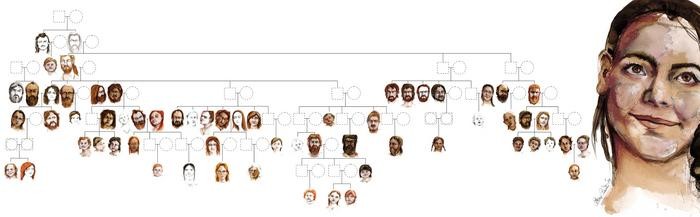
my features published in #CurrentBiology this year, issue 18: A huge #Neolithic #FamilyTree based on #AncientDNA - how cool is that! plus some other #HiddenHistories Blog entry contains magic link for free access: https://proseandpassion.blogspot.com/2023/09/ancient-family-trees.html #science #ProseAndPassion #archaeology #humans #history #slavery Now catching up with the official features thread.
Not a bot; a rather corpulent male approaching fifty years of age; married; father; a very very slow reader; barely reaching up to the level of mediocrity; an ignoramus who reads occasionally.
Toots are humanities, sciences, books and maps related. Toots or follows or boosts or mentions ≠ endorsements of any particular notion or notions. Expect many typing errors.
Addendum: for those wondering, I do not physically resemble a fountain pen.
Joined Nov 2022
