

Bibliolater 📚📜🖋📐 @bibliolater@social.cleverlibre.org
Not a bot; a rather corpulent male approaching fifty years of age; married; father; a very very slow reader; barely reaching up to the level of mediocrity; an ignoramus who reads occasionally.
Toots are humanities, sciences, books and maps related. Toots or follows or boosts or mentions ≠ endorsements of any particular notion or notions. Expect many typing errors.
Addendum: for those wondering, I do not physically resemble a fountain pen.
Joined Nov 2022
"Byzantine Ideas of Persia, 650–1461 focusses on the enduring position of ancient Persia in Byzantine cultural memory, encompassing both in the ‘religious’ and the ‘secular’ significance. By analysing a wide range of historical sources – from church literature to belles- lettres – this book examines the intricate relationship between ancient Persia and Byzantine cultural memory, as well as the integration and function of Persian motifs in the Byzantine mentality."
Shukurov, R. (2023). Byzantine Ideas of Persia, 650–1461 (1st ed.). Routledge. https://doi.org/10.4324/9781003205197 #OpenAccess #OA #History #Byzantinum #Persia #Culture #Read #Reading #Academia #Academic #Academics #NonFiction #Book #Books #Ebook #Ebooks #Bookstodon @bookstodon (74)
Bibliolater 📚📜🖋📐
boosted

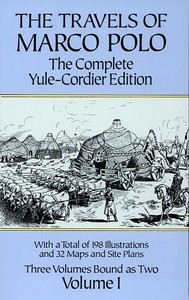
Venetian merchant, explorer & writer who travelled through Asia along the Silk Road between 1271 & 1295 Marco Polo died #OTD in 1324. His travels are recorded in The Travels of Marco Polo, a book that described to Europeans the then mysterious culture & inner workings of the Eastern world, including the wealth and great size of the Mongol Empire and China in the Yuan Dynasty, giving their first comprehensive look into China, Persia, India, Japan and other Asian cities and countries.
#books
1/
"Artificial intelligence is playing an ever-increasing role in our lives. But will this prove to be a blessing for humanity, or have we created a monster? We talk to leading futurists and experts to find out the impact they believe AI will have on our personal potential, jobs, and even safety." https://youtu.be/bhvK-K98h4Q #Youtube #Video #FT #ArtificialIntelligence #AI #STEM #Technology #Tech
Bibliolater 📚📜🖋📐
boosted

@bibliolater @freemo if the aim is "make it work with all Tusky features" that'd be a win
Bibliolater 📚📜🖋📐
boosted

Go gallant ship, and be thy fortune fair!
Myles Birket Foster, from "Odes and Sonnets, Illustrated," collective work, Boston: 1866 #art illustration https://www.oldbookillustrations.com/illustrations/stately-vessel/
Bibliolater 📚📜🖋📐
boosted

"We argue that during the Late Iron IIA, the Kingdom of Israel, probably under the Omrides, replaced a small Phoenician village with a fortified casemate enclosure in order to control and institutionalise the production of the dye and other industries. These peaked under Jeroboam II, and subsequently the fort was ravaged during the period of unrest in Israel after this monarch’s reign."
Golan Shalvi & Ayelet Gilboa (2023) Between Israel and Phoenicia: The Iron IIA–B Fortified Purple-dye Production Centre at Tel Shiqmona, Tel Aviv, 50:1, 75-110, DOI: https://doi.org/10.1080/03344355.2023.2190283 #OpenAccess #OA #Research #Article #Archaeology #Archaeodons #TelShiqmona #Israel #Phoenicia #History #Academia #Academic #Academics #Purple #Dye @archaeodons
"While much has been written about the passive voice in scientific writing, similar interest involving humanities writing in general has been more modest. A paucity of diachronic studies also raises the need to understand more about how passive use has changed over time and what such changes imply for the norms in academic writing."
Leong, P. A. (2021) “The passive voice in scholarly writing: A diachronic look at science and history”, Finnish Journal of Linguistics, 34, pp. 77–102. Available at: https://journal.fi/finjol/article/view/103168 (Accessed: 8January2024). #OpenAccess #OA #Article #Linguistics #Academic #Writing #Science #History #PingAlvinLeong #Academia #Academics #Humanities #SocialSciences @linguistics @writing
Bibliolater 📚📜🖋📐
boosted

Friendly reminder: the Finnish Journal of Linguistics is accepting submissions for its 2024 volume 🇫🇮 The deadline is 31 January.
Languages: English, Finnish, French, German, Swedish.
Fully open access, no article processing fees. All areas of (general) #linguistics welcome.
https://journal.fi/finjol/about
"This interdisciplinary study at the intersection of biology and mathematics involves numerous real experiments to demonstrate the capability of the proposed method in detecting biologically relevant information and its reliable signals while avoiding false positives. The outcome provides a coherent theoretical framework for analyzing biological networks." https://www.mpg.de/21284358/a-new-mathematical-language-for-biological-networks #STEM #Science #Biology #Maths #Math #Mathematics #Analysis #Genetics #Geometry #Modeling #News #Academia #Academic #Academics @science @biology
Bibliolater 📚📜🖋📐
boosted

New open-access publication:
Gabriel Harvey and the History of Reading
Essays by Lisa Jardine and others
Edited by Anthony Grafton, Nicholas Popper, and William H. Sherman
London: UCL Press, 2024
Free download:
https://www.uclpress.co.uk/products/182702
#earlymodern #renaissance #bookhistory #bibliography #bookstodon
Bibliolater 📚📜🖋📐
boosted
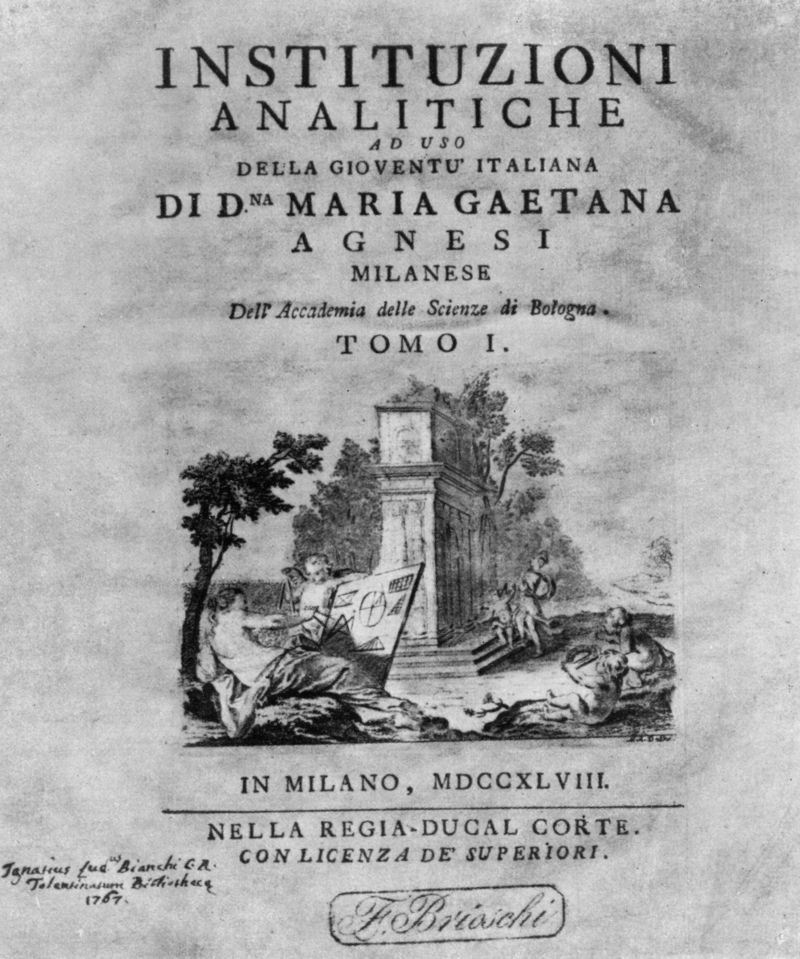
Italian mathematician, philosopher, theologian, and humanitarian Maria Gaetana Agnesi died #OTD in 1799.
She was the first woman to write a mathematics handbook. The most valuable result of her works was the Instituzioni analitiche ad uso della gioventù italiana (1748) and "was regarded as the best introduction extant to the works of Euler". The goal of this work was to give a systematic illustration of the different results and theorems of infinitesimal calculus.
Bibliolater 📚📜🖋📐
boosted
1,500-year-old gold buckles depicting ruler 'majestically sitting on a throne' discovered in Kazakhstan
Bibliolater 📚📜🖋📐
boosted

On the origin of synapses:
"The pre-synaptic machinery emerged through modification of calcium-regulated large vesicle release, while the postsynaptic machinery has different origins: the glutamatergic postsynapse originated through the fusion of a sensory signaling module and a module for filopodial outgrowth, while the GABAergic postsynapse incorporated an ancient actin regulatory module. The synaptic junction, in turn, is built around two adhesion modules controlled by phosphorylation, which resemble septate and adherens junctions."
by Arendt, 2020 https://www.sciencedirect.com/science/article/pii/S0960982220304887
Bibliolater 📚📜🖋📐
boosted

@bibliolater old school! I like it. :)
Subutai: Genghis Khan’s Demon Dog of War https://youtu.be/UGOT36kbdME #Youtube #Video #Biography #History #Mongolia #Mongol #MongolEmpire #Empire
Bibliolater 📚📜🖋📐
boosted

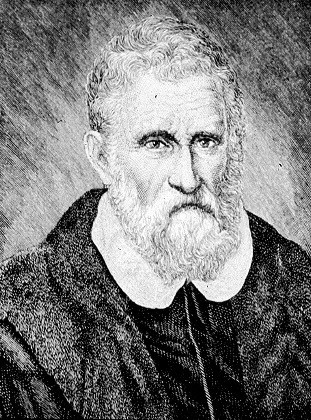



The Nag Hammadi Codices and their Ancient Readers (Open Access)
https://www.cambridge.org/core/books/nag-hammadi-codices-and-their-ancient-readers/9B2AEA9141B7E747BA33277AE8D9D187
"Linjamaa's research supports the hypothesis that the Nag Hammadi texts had their origins in Pachomian monasticism. He shows how Pachomian monks used the texts for textual edification, spiritual development and pedagogical practices."
h/t @bibliolater
"He explores the practical implementation of the texts in their ancient setting through analyses of codicological aspects, paratextual elements, and scribal features. Linjamaa's research supports the hypothesis that the Nag Hammadi texts had their origins in Pachomian monasticism. He shows how Pachomian monks used the texts for textual edification, spiritual development and pedagogical practices."
Linjamaa P. The Nag Hammadi Codices and Their Ancient Readers: Exploring Textual Materiality and Reading Practice. Cambridge University Press; 2024. DOI: https://doi.org/10.1017/9781009441483 #OpenAccess #OA #Bible #History #Religion #Christianity #Gnostic #Ancient #Read #Reading #Academia #Academic #Academic #NonFiction #Book #Books #Ebook #Ebooks #Bookstodon @religion @bookstodon (73)
Bibliolater 📚📜🖋📐
boosted
#OTD in 1610. Galileo Galilei makes his first observation of the 4 Galilean moons: Ganymede, Callisto, Io and Europa, although he is not able to distinguish the last two until the following night.
As a result of improvements Galileo made to the telescope, with a magnifying capability of 20×, he was able to see celestial bodies more distinctly than was previously possible. This allowed him to observe in either December 1609 or January 1610 what came to be known as the Galilean moons.
1/


Not a bot; a rather corpulent male approaching fifty years of age; married; father; a very very slow reader; barely reaching up to the level of mediocrity; an ignoramus who reads occasionally.
Toots are humanities, sciences, books and maps related. Toots or follows or boosts or mentions ≠ endorsements of any particular notion or notions. Expect many typing errors.
Addendum: for those wondering, I do not physically resemble a fountain pen.
Joined Nov 2022
