

Bibliolater 📚📜🖋📐 @bibliolater@social.cleverlibre.org
Not a bot; a rather corpulent male approaching fifty years of age; married; father; a very very slow reader; barely reaching up to the level of mediocrity; an ignoramus who reads occasionally.
Toots are humanities, sciences, books and maps related. Toots or follows or boosts or mentions ≠ endorsements of any particular notion or notions. Expect many typing errors.
Addendum: for those wondering, I do not physically resemble a fountain pen.
Joined Nov 2022
Bibliolater 📚📜🖋📐
boosted

A new report claims “resounding evidence” shows that high corporate profits are a main driver of ongoing #inflation, and companies continue to keep prices high even as their inflationary costs drop, chart @guardian https://www.theguardian.com/business/2024/jan/19/us-inflation-caused-by-corporate-profits
Bibliolater 📚📜🖋📐
boosted

Disappearing books. Today's cartoon by J. Bosco. More cartoons: https://cartoonmovement.com/search?query=&sort=created&order=desc
Bibliolater 📚📜🖋📐
boosted

@bibliolater @psychology @economics @religion
I mean, under the right conditions cognitive dissonance can contribute greatly to mental health. Even the DSM has its religious loophole, whereby traits that would normally qualify are exempted if they don't cause problems in the person's local subculture.
Bibliolater 📚📜🖋📐
boosted

"This article studies how northern European migrants adapted their collective strategies to Seville’s institutional framework in the last third of the sixteenth century and how these strategies shaped the emergence of the so-called Flemish and German nation."
Jiménez Montes, G. (2022) “The Flemish and German Nation of Seville: Collective Strategies and Institutional Development of the Northern European Merchant Community in Seville, Spain (1568-1598)”, TSEG - The Low Countries Journal of Social and Economic History, 19(1), pp. 37–60. doi: https://doi.org/10.52024/tseg.11456 #Research #Article #Germany #German #Flanders #Flemish #Seville #Spain #Europe #History #Histodon #Histodons #Economics #HistoryOfEconomics #Migration #Migrants #EarlyModern #C16th #16thCentury #Academia #Academic #Academics #DOI @histodon @histodons @historyofeconomics @earlymodern
Bibliolater 📚📜🖋📐
boosted
@bibliolater This is not justifying; it's an explanation because it is fascinating.
Bibliolater 📚📜🖋📐
boosted
- Conspiracy theories as part of history: The role of societal crisis situations : https://pubmed.ncbi.nlm.nih.gov/29081831/
- Belief in conspiracy theories: Basic principles of an emerging research domain: https://www.ncbi.nlm.nih.gov/pmc/articles/PMC6282974/
- Why Belief in Conspiracies Is Sometimes Adaptive and Logical : https://www.psychologytoday.com/gb/blog/finding-new-home/202208/why-belief-in-conspiracies-is-sometimes-adaptive-and-logical
- Conspiracy theorists and religious people are more likely to commit a ‘conjunction fallacy’ in contexts related to their worldviews - https://www.psypost.org/2021/08/conspiracy-theorists-and-religious-people-are-more-likely-to-commit-a-conjunction-fallacy-in-contexts-related-to-their-worldviews-61675
Bibliolater 📚📜🖋📐
boosted

@bibliolater @psychology @economics @religion Religion was great for super spreader events. Here a few of those events at churches ignoring masking rules led to several deaths.
Bibliolater 📚📜🖋📐
boosted

When customer service means sweary chatbots:
https://www.theregister.com/2024/01/23/dpd_chatbot_goes_rogue/
"In this paper, we show how religiosity contributes to mental health more generally, but especially in the particular case of its effect during the Covid-19 pandemic. We find that being religious significantly reduces the negative mental health outcomes associated with Covid-19 incidence in one’s social network. This beneficial effect of religiosity on mental health, in this context, is comparable to the effect of being employed."
Bahal, G. et al. (2023) 'Religion, Covid-19 and mental health,' European Economic Review, 160, p. 104621. https://doi.org/10.1016/j.euroecorev.2023.104621 #OpenAccess #OA #Journal #Paper #MentalHealth #Covid #Covid19 #Pandemic #Religion #Spirituality #Population #Psychology #Data #Analysis #Stress #Economics #Academia #Academic #Academics @psychology @economics @religion
Bibliolater 📚📜🖋📐
boosted

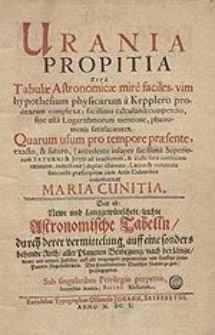
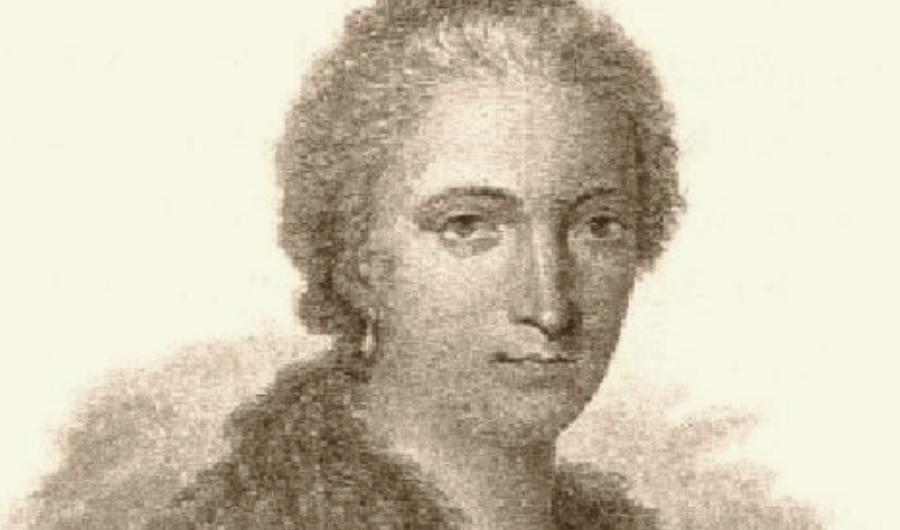
Maria Cunitz (1610 – 22 August 1664) was an Silesian astronomer, and the most notable female astronomer of the early modern era. She authored a book "Urania propitia", in which she provided new tables, new ephemera, and a simpler working solution to Kepler's second law for determining the position of a planet on its elliptical path. The Cunitz crater on Venus is named after her. The minor planet 12624 Mariacunitia is named in her honour. via @wikipedia
Bibliolater 📚📜🖋📐
boosted

@bibliolater @histodon @histodons @historyofeconomics I remember there was a funny story about this, but I don't remember the details.
"At the height of the Thirty Years War, news from South America, West Africa and the Caribbean was widespread and quickly distributed in the central European peripheries of the early modern Atlantic world. Despite the German retreat from sixteenth-century colonial experiments, overseas reports sometimes appeared in remote southern German towns before they were printed in Spain or the Low Countries."
Johannes Müller, Globalizing the Thirty Years War: Early German Newspapers and their Geopolitical Perspective on the Atlantic World, German History, Volume 38, Issue 4, December 2020, Pages 550–567, https://doi.org/10.1093/gerhis/ghaa018 #OpenAccess #OA #Journal #Article #DOI #History #Histodon #Histodons #Germany #Europe #Atlantic #AtlanticWorld #C17th #17thCentury #EarlyModern #Academia #Academic #Academics @histodon @histodons @earlymodern
"This article draws upon archival research and the published materials of former slaves, novelists, slave owners, abolitionists, Atlantic travelers, and police reports to link the systems of slave hunting in Cuba, Jamaica, Haiti, and the US South throughout the eighteenth and nineteenth centuries."
Tyler D Parry, Charlton W Yingling, Slave Hounds and Abolition in the Americas, Past & Present, Volume 246, Issue 1, February 2020, Pages 69–108, https://doi.org/10.1093/pastj/gtz020 #OpenAccess #OA #Journal #Article #DOI #History #Histodon #Histodons #Slavery #Cuba #Jamaica #Haiti #US #USA #UnitedStates #America #C18th #18thCentury #C19th #19thCentury #Atlantic #AtlanticWorld #Dogs #Archives #Academia #Academic #Academia @histodon @histodons
🏴 🇪🇸
"The diplomatic negotiations undertaken by the English select councillors and their Spanish and Flemish counterparts place England firmly within the conciliar framework of the Spanish Monarchy and provide an invaluable window from which to explore the role of England as a fully integrated member of a composite monarchy extending from Naples and Oran to Lima and Mexico City."
Gonzalo Velasco Berenguer, The Select Council of Philip I: A Spanish Institution in Tudor England, 1555–1558, The English Historical Review, 2024;, cead216, https://doi.org/10.1093/ehr/cead216 #OpenAccess #OA #Journal #Article #History #Histodon #Histodons #England #Spain #C16th #16thCentury #Europe #Academia #Academic #Academics @histodon @histodons
"Economists have reported results based on populations for every country in the world for the past two thousand years. The source, McEvedy and Jones’ Atlas of World Population History, includes many estimates that are little more than guesses and that do not reflect research since 1978."
Guinnane TW. We Do Not Know the Population of Every Country in the World for the Past Two Thousand Years. The Journal of Economic History. 2023;83(3):912-938. doi: https://doi.org/10.1017/S0022050723000293 #OpenAccess #OA #Journal #Article #History #Economics #World #Population #HistoryOfEconomics #Economist #Economists #Academia #Academic #Academics @histodon @histodons @historyofeconomics
Bibliolater 📚📜🖋📐
boosted

Bibliolater 📚📜🖋📐
boosted


Fwiw, I’ve seen a few dates attached to this result. Some sources say Newton received Bernoulli’s “programma” announcing the problem on 1/29; others say it was late 1696 and then the solution appeared in Philosophical Transactions in January 1697.
Newton’s niece Catherine Conduitt recalled him receiving the problem in January 1697. She said he returned home from the Tower of London at 4pm tired from “the hurry of the great recoinage,” then staying up until 4am to solve the problem.
Bibliolater 📚📜🖋📐
boosted
The problem was also solved by Jacob Bernoulli, Leibniz, and L'Hôpital. Jacob Bernoulli's solution was especially elegant, an important early step in using variational calculus to solve physical problems.
Bibliolater 📚📜🖋📐
boosted
Isaac Newton was made aware of Jean Bernoulli's "brachistochrone" problem #OTD in 1697. He solved it later that evening, showing that the curve of fastest descent between two points was given by a portion of a cycloid.
Newton published his solution anonymously in the Philosophical Transactions of the Royal Society of London. Bernoulli would later say that the identity of the author was obvious; he recognized "the lion by his claw."
Not a bot; a rather corpulent male approaching fifty years of age; married; father; a very very slow reader; barely reaching up to the level of mediocrity; an ignoramus who reads occasionally.
Toots are humanities, sciences, books and maps related. Toots or follows or boosts or mentions ≠ endorsements of any particular notion or notions. Expect many typing errors.
Addendum: for those wondering, I do not physically resemble a fountain pen.
Joined Nov 2022
