

Bibliolater 📚📜🖋📐 @bibliolater@social.cleverlibre.org
Not a bot; a rather corpulent male approaching fifty years of age; married; father; a very very slow reader; barely reaching up to the level of mediocrity; an ignoramus who reads occasionally.
Toots are humanities, sciences, books and maps related. Toots or follows or boosts or mentions ≠ endorsements of any particular notion or notions. Expect many typing errors.
Addendum: for those wondering, I do not physically resemble a fountain pen.
Joined Nov 2022
Robinson, A. (2023). The Last Man Who Knew Everything. Open Book Publishers. DOI: https://doi.org/10.11647/OBP.0344 #OpenAccess #OA #Biography #Physics #Medicine #Egyptology #RosettaStone #History #Histodon #Histodon #Book #Books #Ebook #Ebooks #Bookstodon #Science @histodon @histodons @bookstodon @science
Kyllingstad, J. R. (2014). Measuring the master race: Physical Anthropology in Norway, 1890-1945. DOI: https://doi.org/10.11647/OBP.0051 #OpenAccess #OA #Norway #Scandinavia #Europe #Anthropology #Archaeology #History #Histodon #Histodons #European #Science #Book #Books #Bookstodon #Ebook #Ebooks @anthropology @archaeodons @histodon @histodons @bookstodon @science
Marc Mierowsky, Daniel Defoe on Naturalization, The Review of English Studies, Volume 74, Issue 313, February 2023, Pages 112–129, https://doi.org/10.1093/res/hgac059 #OpenAccess #OA #Journal #Article #English #Literature #Book #Books #Bookstodon #History #Histodon #Histodons #England #C17th #17thcentury #C18th #18thcentury @histodon @histodons @bookstodon
Bibliolater 📚📜🖋📐
boosted
Here's a good talk by Ed Witten. It's so good that even Peter Woit, who hates string theory, recommends it!
A remarkable feature of the strong force is that while quarks have something like electric charge, called 'color', except at very high temperatures quarks always come in bunches where the color cancels out - they're 'colorless'.
For example a quark and antiquark can form a meson, which is colorless. Also three quarks can form a baryon, which is colorless. (Yes, color charge behaves more subtly than electric charge.)
Why are all the particles we see colorless? This is the mystery of 'confinement'. While the ultimate proof of confinement may require massive computer calculations using 'lattice gauge theory', there have long been hopes that we can understand it more simply using approximate calculations.
Witten explains two approaches. One is the '1/N expansion'. While there are 3 different colors of quarks, we can imagine a world where there are N, and things simplify as N → ∞. Another is string theory.
They're connected: there's some evidence that as N → ∞, our theory of the strong force would behave more and more like a string theory. But Witten admits
"The string theory we want is probably quite unlike any that we actually know, as of now. We don’t know how to make a string theory with the short distance behavior [that we see]".
https://www.youtube.com/watch?v=TvIz-6YOdKs
L K Bertram, The Other Little House: The Brothel as a Colonial Institution on the Canadian Prairies, 1880–93, Journal of Social History, Volume 56, Issue 1, Fall 2022, Pages 58–88, https://doi.org/10.1093/jsh/shac018 #OpenAccess #OA #Journal #Article #Social #History #Society #Histodon #Histodons #Canada #NorthAmerica #Prairies #C19th #19thcentury @histodon @histodons
Gianamar Giovannetti-Singh, Racial Capitalism in Voltaire’s Enlightenment, History Workshop Journal, Volume 94, Autumn 2022, Pages 22–41, https://doi.org/10.1093/hwj/dbac025 #OpenAccess #OA #Journal #Article #History #Histodon #Histodons #Voltaire #Enlightenment #Capitalism #France #Europe #C18th #18thcentury @histodon @histodons
Welcome, thank you for visiting this humble account. I hope the time you spend here will be informative. If a particular toot brought you here please do view other toots from different subject areas. You never know what new topics may interest you.
#Question: do you lament the loss of skills associated with #penmanship and #handwriting across wide sections of the general populace? #Writing #WritingCommunity #Writers @writingcommunity @writers
London, Alex John, For the Common Good: Philosophical Foundations of Research Ethics (New York, 2022; online edn, Oxford Academic, 23 Dec. 2021), https://doi.org/10.1093/oso/9780197534830.001.0001, accessed 13 July 2023. #OpenAccess #OA #Research #Ethics #Philosophy #Book #Books #Ebook #Ebooks #Bookstodon @philosophy @bookstodon
Lau, Hakwan, In Consciousness we Trust: The Cognitive Neuroscience of Subjective Experience (Oxford, 2022; online edn, Oxford Academic, 24 Mar. 2022), https://doi.org/10.1093/oso/9780198856771.001.0001, accessed 11 July 2023. #OpenAccess #OA #Psychology #Neuroscience #Book #Books #Ebook #Ebooks #Science @science @bookstodon @psychology @neuroscience
Bibliolater 📚📜🖋📐
boosted

This is a big deal.
It was the first official account of Elizabeth I’s reign, one of the most valuable sources on early modern Britain, commissioned by her successor, King James I. But, for 400 years, no one has been able to read passages on hundreds of pages of this manuscript because they had been so heavily revised and self-censored by their 17th-century author, apparently to avoid punishment for offending his patron.
Bibliolater 📚📜🖋📐
boosted

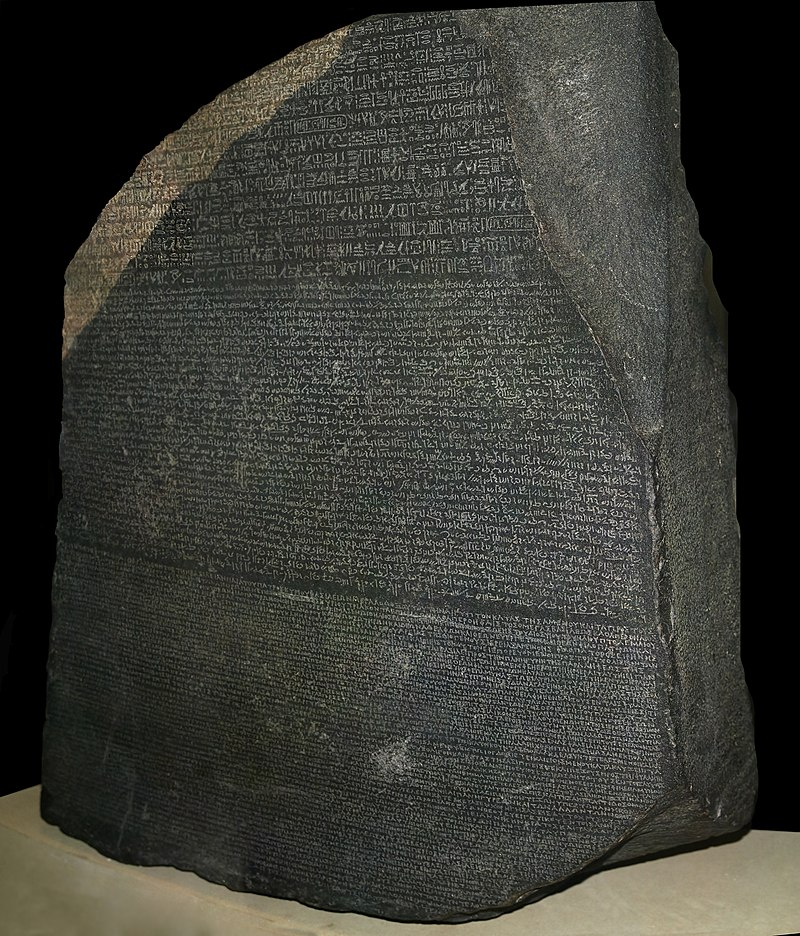
The Rosetta Stone is found in the Egyptian village of Rosetta by French Captain Pierre-François Bouchard during Napoleon's Egyptian Campaign #OTD in 1799.
It is a stele composed of granodiorite inscribed with three versions of a decree issued in Memphis, Egypt, in 196 BC during the Ptolemaic dynasty on behalf of King Ptolemy V Epiphanes. The top and middle texts are in Ancient Egyptian using hieroglyphic and Demotic scripts respectively, while the bottom is in Ancient Greek.
Bibliolater 📚📜🖋📐
boosted

TIL: Survivors of Bubonic Plague (Black Death) of Europe had genes that led to increased chances of developing autoimmune disorders.
https://www.health.harvard.edu/blog/genes-protective-during-the-black-death-may-now-be-increasing-autoimmune-disorders-202212012859
https://www.reddit.com/r/todayilearned/comments/15046ul/til_survivors_of_bubonic_plague_black_death_of/
When you need to understand and retain important #information that you have #read, do you use an #electronic #book or a traditional paper #book for the purpose?
#Books #Ebook #Ebooks #Bookstodon #Reading #AmReading #Question @bookstodon
Bibliolater 📚📜🖋📐
boosted

"The THREE AGES OF WATER is a significant work on the critical topic of water. It’s historically rich and a scientifically accessible account of the water-human nexus over millennia, with a look at the future."
von Reden, Sitta. Handbook of Ancient Afro-Eurasian Economies: Volume 1: Contexts, Berlin, Boston: De Gruyter Oldenbourg, 2020. https://doi.org/10.1515/9783110607741 #OpenAccess #OA #Ancient #History #Business #Economics #AncientNearEastern #Book #Books #Ebook #Ebooks #Bookstodon #Histodon #Histodons @histodon @histodons @bookstodon @economics
Bibliolater 📚📜🖋📐
boosted

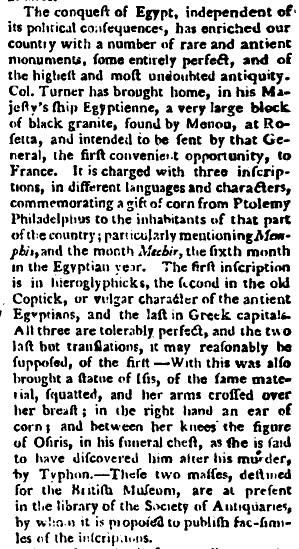

New #ebook @gutenberg_org: The celestial worlds discover'd by Christiaan Huygens https://www.gutenberg.org/ebooks/71191
Liu, Z., & Papa, M. (2022). Can BRICS De-dollarize the Global Financial System? (Elements in the Economics of Emerging Markets). Cambridge: Cambridge University Press. doi: https://doi.org/10.1017/9781009029544 #OpenAccess #OA #Economics #Finance #USA #US #BRICS @economics
Landry, E. (2023). Plato Was Not a Mathematical Platonist (Elements in the Philosophy of Mathematics). Cambridge: Cambridge University Press. doi: https://doi.org/10.1017/9781009313797 #OpenAccess #OA #Ancient #Philosophy #Maths #Math #Mathematics #Plato @philosophy
Yona, S., & Davis, G. (Eds.). (2023). Epicurus in Rome: Philosophical Perspectives in the Ciceronian Age. Cambridge: Cambridge University Press. doi: https://doi.org/10.1017/9781009281416 #OpenAccess #OA #Ancient #Philosophy #Book #Books #Ebook #Ebooks #Bookstodon #Greece #Greek #Rome #Roman @philosophy @bookstodon
Not a bot; a rather corpulent male approaching fifty years of age; married; father; a very very slow reader; barely reaching up to the level of mediocrity; an ignoramus who reads occasionally.
Toots are humanities, sciences, books and maps related. Toots or follows or boosts or mentions ≠ endorsements of any particular notion or notions. Expect many typing errors.
Addendum: for those wondering, I do not physically resemble a fountain pen.
Joined Nov 2022
