

Bibliolater 📚📜🖋📐 @bibliolater@social.cleverlibre.org
Not a bot; a rather corpulent male approaching fifty years of age; married; father; a very very slow reader; barely reaching up to the level of mediocrity; an ignoramus who reads occasionally.
Toots are humanities, sciences, books and maps related. Toots or follows or boosts or mentions ≠ endorsements of any particular notion or notions. Expect many typing errors.
Addendum: for those wondering, I do not physically resemble a fountain pen.
Joined Nov 2022
Do humans get lazier when robots help with tasks? https://blog.frontiersin.org/2023/10/18/do-humans-get-lazier-when-robots-help-with-tasks/ #Robotics #AI #ArtificialIntelligence #Human #Work #Robots
🇲🇽 "Most sequenced individuals had admixed Indigenous American, European and African ancestry, with extensive admixture from Indigenous populations in central, southern and southeastern Mexico."
Ziyatdinov, A., Torres, J., Alegre-Díaz, J. et al. Genotyping, sequencing and analysis of 140,000 adults from Mexico City. Nature (2023). https://doi.org/10.1038/s41586-023-06595-3 #OpenAccess #OA #Science #Research #DNA #Genetics #Mexico #Academia #Academic #Academics @science
"Collectively, these migrations are known as the “supercontinent cycle” and diamonds are one of the few minerals strong enough to survive and record these ancient cycles of creation and destruction." https://www.wits.ac.za/news/latest-news/research-news/2023/2023-10/ancient-diamonds-shine-light-on-the-evolution-of-earth.html #Diamonds #Ancient #Earth #Science #Geoscience @science
Kekić, T. and Lietard, J. (2023) 'A Canvas of Spatially Arranged DNA Strands that Can Produce 24-bit Color Depth,' Journal of the American Chemical Society [Preprint]. https://doi.org/10.1021/jacs.3c06500. #OpenAccess #OA #Science #Genetics #DNA #Chemistry #Colour #Color #Academia #Academic #Academics @science
"Here we use data-driven conditional technology and economic forecasting modelling to establish which zero carbon power sources could become dominant worldwide."
Nijsse, F.J.M.M., Mercure, JF., Ameli, N. et al. The momentum of the solar energy transition. Nat Commun 14, 6542 (2023). https://doi.org/10.1038/s41467-023-41971-7 #OpenAccess #OA #Article #Geography #SolarEnergy #Solar #Energy #Data #Technology #Economics #Climate #Academia #Academic #Academics
"Here, we examine biomarkers extracted from human dental calculus, using sequential thermal desorption- and pyrolysis-GCMS, to report direct evidence for widespread consumption of seaweed and submerged aquatic and freshwater plants across Europe."
Buckley, S., Hardy, K., Hallgren, F. et al. Human consumption of seaweed and freshwater aquatic plants in ancient Europe. Nat Commun 14, 6192 (2023). https://doi.org/10.1038/s41467-023-41671-2 #OpenAccess #OA #Article #Archaeology #Ancient #Europe #Science #Academia #Academic #Academics @archaeodons @science
Feather, J., Leclerc, G., Mądry, A. et al. Model metamers reveal divergent invariances between biological and artificial neural networks. Nat Neurosci (2023). https://doi.org/10.1038/s41593-023-01442-0 #OpenAccess #OA #Article #Science #Neuroscience #Academica #Academic #Academics @science
Geller, Markham J. (ed.) (2014). Melammu: The Ancient World in an Age of Globalization. Berlin: Max-Planck-Gesellschaft zur Förderung der Wissenschaften. DOI: https://doi.org/10.34663/9783945561003-00 #Ancient #Antiquity #History #Globalization #Culture #Language #Literature #Trade #Mediterranean #Mesopotamia #Anatolia #Persia #India @antiquidons
Becchi, Antonio, Meli, Domenico Bertoloni and Gamba, Enrico (eds.) (2013). Guidobaldo del Monte (1545–1607): Theory and Practice of the Mathematical Disciplines from Urbino to Europe. Berlin: Max-Planck-Gesellschaft zur Förderung der Wissenschaften. DOI: https://doi.org/10.34663/9783945561218-00 #History #EarlyModern #C16th #16thCentury #Maths #Math #Mathematics #Science #Italy #Europe @science @earlymodern
"The Tuareg of the Fezzan region (Libya) are characterized by an extremely high frequency (61%) of haplogroup H1, a mitochondrial DNA (mtDNA) haplogroup that is common in all Western European populations. To define how and when H1 spread from Europe to North Africa up to the Central Sahara, in Fezzan, we investigated the complete mitochondrial genomes of eleven Libyan Tuareg belonging to H1."
Ottoni C, Primativo G, Hooshiar Kashani B, Achilli A, Martínez-Labarga C, et al. (2010) Mitochondrial Haplogroup H1 in North Africa: An Early Holocene Arrival from Iberia. PLOS ONE 5(10): e13378. https://doi.org/10.1371/journal.pone.0013378 #OpenAccess #OA #Research #Article #DNA #Africa #Europe #Paleogenetics #Phylogenetics #PopulationGenetics #Population #Genetics #Science #Biology @science @biology
"New research that will be presented Monday, 16 Oct., at the Geological Society of America’s GSA Connects 2023 meeting describes how a series of serendipitous environmental factors allowed an ancient Saharan civilization, the Garamantian Empire, to extract groundwater hidden in the subsurface, sustaining the society for nearly a millennia until the water was depleted."
https://www.geosociety.org/GSA/News/pr/2023/23-34.aspx
#Research #Earth #Science #Geology #Sahara #Desert #Environment #Water #Empire @science
Bibliolater 📚📜🖋📐
boosted

@AmazingMeagen @bibliolater @science @archaeodons we used good old fashioned images and brains. Worked too.
Bibliolater 📚📜🖋📐
boosted

Bibliolater 📚📜🖋📐
boosted

@bibliolater @science @archaeodons Oh great, using a technology renowned for its fallibility for a task that nobody can check its accuracy.
Sounds like a great idea 
"The disaster appeared to have destroyed the scrolls for good, but nearly 2,000 years later researchers have extracted the first word from one of the texts, using artificial intelligence to peer deep inside the delicate, charred remains."
https://www.theguardian.com/science/2023/oct/12/researchers-use-ai-to-read-word-on-ancient-scroll-burned-by-vesuvius #Science #ArtificialIntelligence #AI #Italy #Archaeology #Museum #Classics #Ancient #History @science @archaeodons
"This paper demonstrates that the highly accurate depiction of the Indian Ocean on the Carta marina of Martin Waldseemueller from 1516 is mainly caused by the extremely powerful political and economic interests of the Portuguese Crown and the Upper German-trading companies in the conflict with the Kingdom of Castile over supremacy in the spice trade in India."
Martin Lehmann | Peter Stanley Fosl (Reviewing editor) (2020) The Carta Marina of Martin Waldseemüller from 1516 – political geography in context of the struggle for the spices of Southeast India, Cogent Arts & Humanities, 7:1, DOI: https://doi.org/10.1080/23311983.2020.1741983 #OpenAccess #OA #Journal #Article #History #Map #Maps #Cartography #Economics #Trade #Portugal #India #C16th #16thCentury #Europe #Asia #EarlyModern @historyofeconomics @earlymodern
Bibliolater 📚📜🖋📐
boosted

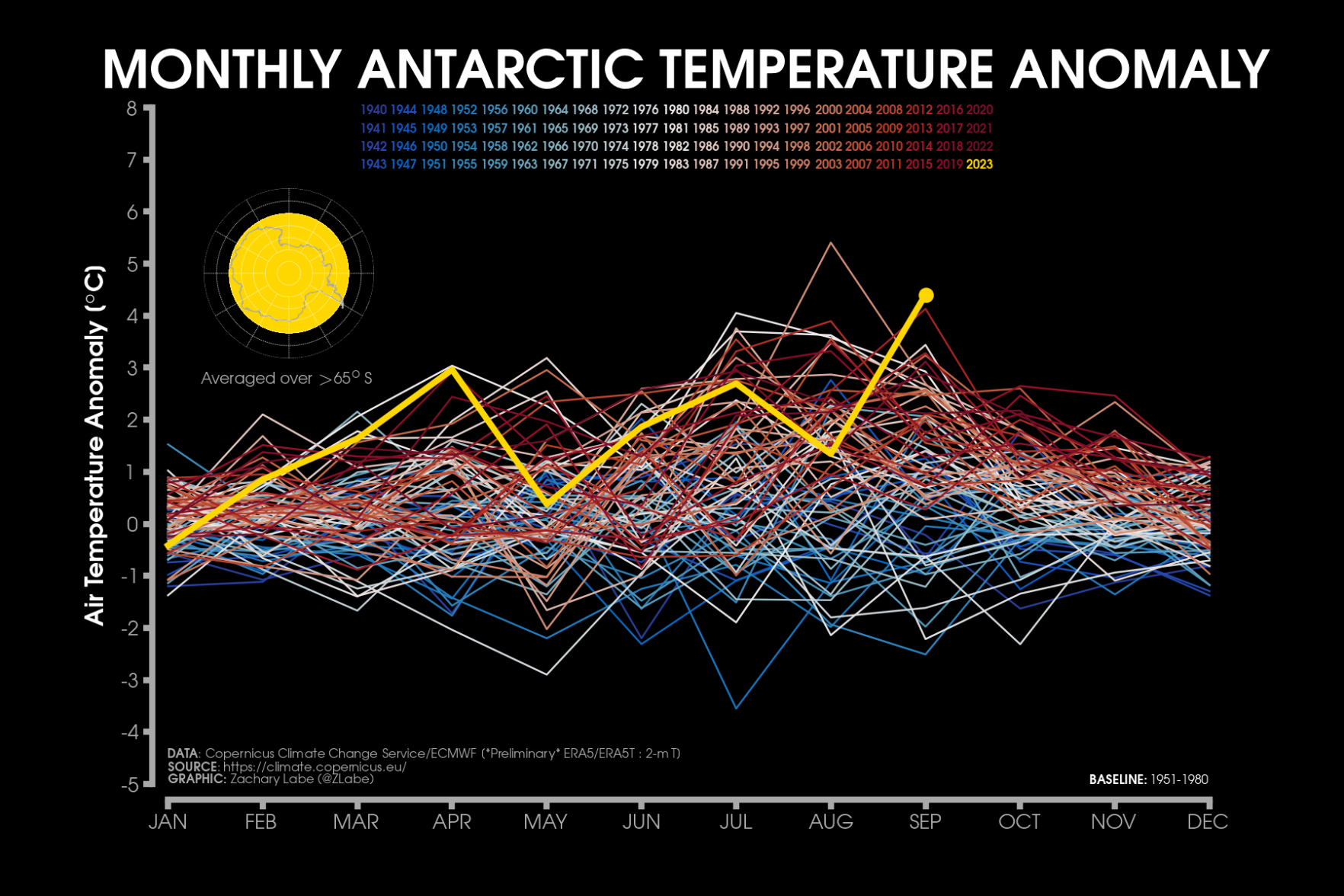
Now averaging across the entire #Antarctic last month shows a record high for the month of September...
See my earlier post today for the spatial distribution of temperature anomalies: https://fediscience.org/@ZLabe/111222620934337678
Data from ECMWF ERA5 reanalysis: https://cds.climate.copernicus.eu/cdsapp#!/dataset/reanalysis-era5-single-levels-monthly-means?tab=overview
Bibliolater 📚📜🖋📐
boosted

@bibliolater @histodon @histodons @bookstodon
Ooh!
I want to read that book!
The Late Antique is such an interesting time
Is it really open access?! Wow. Now I'll have to put my brain where my mouth is
Bibliolater 📚📜🖋📐
boosted

Spinner dolphins (Stenella longirostris) are the acrobats of the ocean, spinning up to seven times during leaps as high as 3m (10 ft).
Video credit: John Downer Productions
Watch the full video: https://www.youtube.com/watch?v=3b4FGlWGsuo
Further reading: https://en.wikipedia.org/wiki/Spinner_dolphin
Jones, A., & Cooper, A. (2023). Kant’s Ongoing Relevance for Philosophy of Science. Kantian Review, 1-18. doi: https://doi.org/10.1017/S1369415423000195 #OpenAccess #OA #Journal #Article #Philosophy #Science #Kant #Biology #PhilosophyOfScience @philosophy @philosophyofscience @science
Not a bot; a rather corpulent male approaching fifty years of age; married; father; a very very slow reader; barely reaching up to the level of mediocrity; an ignoramus who reads occasionally.
Toots are humanities, sciences, books and maps related. Toots or follows or boosts or mentions ≠ endorsements of any particular notion or notions. Expect many typing errors.
Addendum: for those wondering, I do not physically resemble a fountain pen.
Joined Nov 2022
