

🇺🇦🇪🇺 cweickhmann @cweickhmann@social.cleverlibre.org
- Pixelfed
- @cweickhmann
European, federalist @jef_europe, @jef_de, @jef_hessen, social democrat @spdde, RF engineer @ GSI, cyclist, antifa.
Born CO2 346.35 ppm. Citizen of a Hippiestaat.
Joined Apr 2022
🇺🇦🇪🇺 cweickhmann
boosted

Funfact: Würden wir unsere Umwelt so verteidigen, wie die Vorherrschaft des Autos, wir müssten keine Strafen für nicht eingehaltene Klimaverträge zahlen. abgesehen davon, dass unsere Innenstädte zudem statt autogerecht menschenfreundlich wären, dass auch ältere und eingeschränkte Personen ungehindert von A nach B kämen und Kommunen viel Geld für nachhaltigeres übrig hätten, welches sie derzeit in der Querfinanzierung künstlich billig gehaltener Automobilität verpulvern müssen.
Hausinstallationshersteller be like: Wir verkaufen dir diesen "10-Jahres-Hitzewarnmelder".
Produktbeschreibung be like: "batteriebetrieben, mit 10-Jahres-Lithiumbatterie (nicht tauschbar)"
I be like: F*** you very much!
@jeremycliffe If we're taking the open web seriously, we should force Twitter to federate. The strong suit of "Mastodon" is its myriad instances. Twitter could simply plug in.
@holgi Spannend, denn diesen Absatz kann man fast 1:1 auf unser Verhalten zur #Klimakrise anwenden.
Okay, day 2 back in #Darmstadt after 9 days of #Amsterdam and #Enkhuizen. I absolutely agree with #NotJustBikes: "Citys aren't loud, cars are."
Amsterdam has 900k inhabitants. Yet they manage to keep most of the city calm and (while accessible to private cars) mostly low-car. The result is, that you can sit at whichever corner in a restaurant or shop and have an actual conversation. Yes, there are a few places (again: mostly roads) that are loud, but restaurants almost naturally choose not to be there. It's also much calmer in your flat. It is also very easy to choose even very long routes where you encounter only a few larger streets.
Darmstadt has about 160k inhabitants (more than 5 times smaller than Amsterdam). Yet, even in 30 km/h zones, while less frequently than on the main streets, cars go so fast that once one passes, you have to raise your voice if you're talking. Bet ya, they're very often not going 30 but faster. There are only a few areas (Fußgängerzone) where you can actually sit outside and enjoy a calm time, because every few minutes a car speeds by. And if you live in a flat with another house right opposite of the street, you enjoy the sound amplified by at least 3dB. And yet, although Darmstadt is so much smaller than Amsterdam, it seems you encounter a major road even on the shortest routes.
We have two kids. One in a nursery, one in kindergarten. My way to the nursery is 900 m and I have to cross one major street and go along another one for about 100 m.
Today, my daughter wanted to wait outside in the bike trailer while I drop off my son. Just a few seconds after I entered, I could hear her cry. Why? Because two lorries stopped right next to her at the traffic light on that three lane road. Sure you cry. I should cry too.
Then, the way to her kindergarten is another 1.5 km - 90% on a major road. Yes, the second half is 30 km/h. But of course if I go 25 km/h on the red strip to the right, the lorry on the main strip has to go by at 35 km/h, making this an awkward, very close and unnecessarily long overtaking manoeuvre.
Of course, I could take a route through the side streets. However:
* It's 35% longer.
* The road surface is much, much worse.
* I still have to cross 2 major roads, one of which featuring 6 lanes (yes, 2 regular per direction, and two bus lanes).
And last but not least: The behaviour of motorists in the NL (examples Amsterdam and Enkhuizen) is so much better. The amount of times drivers simply waited at a crossing without making a fuzz. I even had to take the car once and was shocked to find that drivers look ahead and let you pass if it makes the situation easier for everyone. This is absolutely not what I see in Darmstadt every day. Drivers go on into a narrow road with parked cars on their side when head traffic is coming (of course a bike does not count as traffic, so that's fine).
#NotJustBikes is comparing the NL to North America. It would be worthwhile to compare them to cities in Europe more often.
The council of Darmstadt recently discussed (and afaik accepted) the rebuilding plans for a major bridge at the main station. It was necessary for structural reasons, the old bridge was a danger. But they made almost every single mistake in the book when it comes to using that project to make that area less car-centric and more pedestrian and bike friendly.
* Slip lanes were not removed. Even the one with the awkward bus station on it (yes, I'm not making this up, this is 100% US style).
* Corner radii were increased almost everywhere. Where they were not touched, they were left at the current, relatively large values.
* They added lanes. In 2022, they literally added lanes. For (car) traffic flow. And I am not talking about the fact that the formerly shared tram/car lanes now became two tram and two car lanes. They added car lanes.
* Did they add pedestrian crossings? No. Not a single one. They treated pedestrians to a refuge island on this now 7 or 8 lane street. Yay!
And more generally speaking, what drives me nuts is the total lack of ambition: If you bring up Amsterdam as a role model, people tell you twelve reasons why it won't work in your city. Even environmentalists will tell you: "Yes, but the NL has a very high car usage per capita and is not much better than DE."
Yet, Amsterdam is a very real city. And so is Enkhuizen (which could stand in for the typical "but in Rural Germany™" kind of argument).
So, the main error here imho is that motorised traffic *demand*/*need*/*requirements* are discussed and finally met. But *peoples'* needs are not. So, as of 2022, in Darmstadt at least, we're still building cities for cars not for people.
👉 https://www.youtube.com/c/NotJustBikes
👉 https://twitter.com/notjustbikes (unfortunately not in the #fediverse yet)
@aoikurayami@c.im Thought so too, but it seems like in this case it doesn't: from an x86* laptop to the arm Raspi it would not work at all.
🇺🇦🇪🇺 cweickhmann
boosted


Wer entfernt die Autos, die sich in unsere Gehirne geklebt haben?
🇺🇦🇪🇺 cweickhmann
boosted

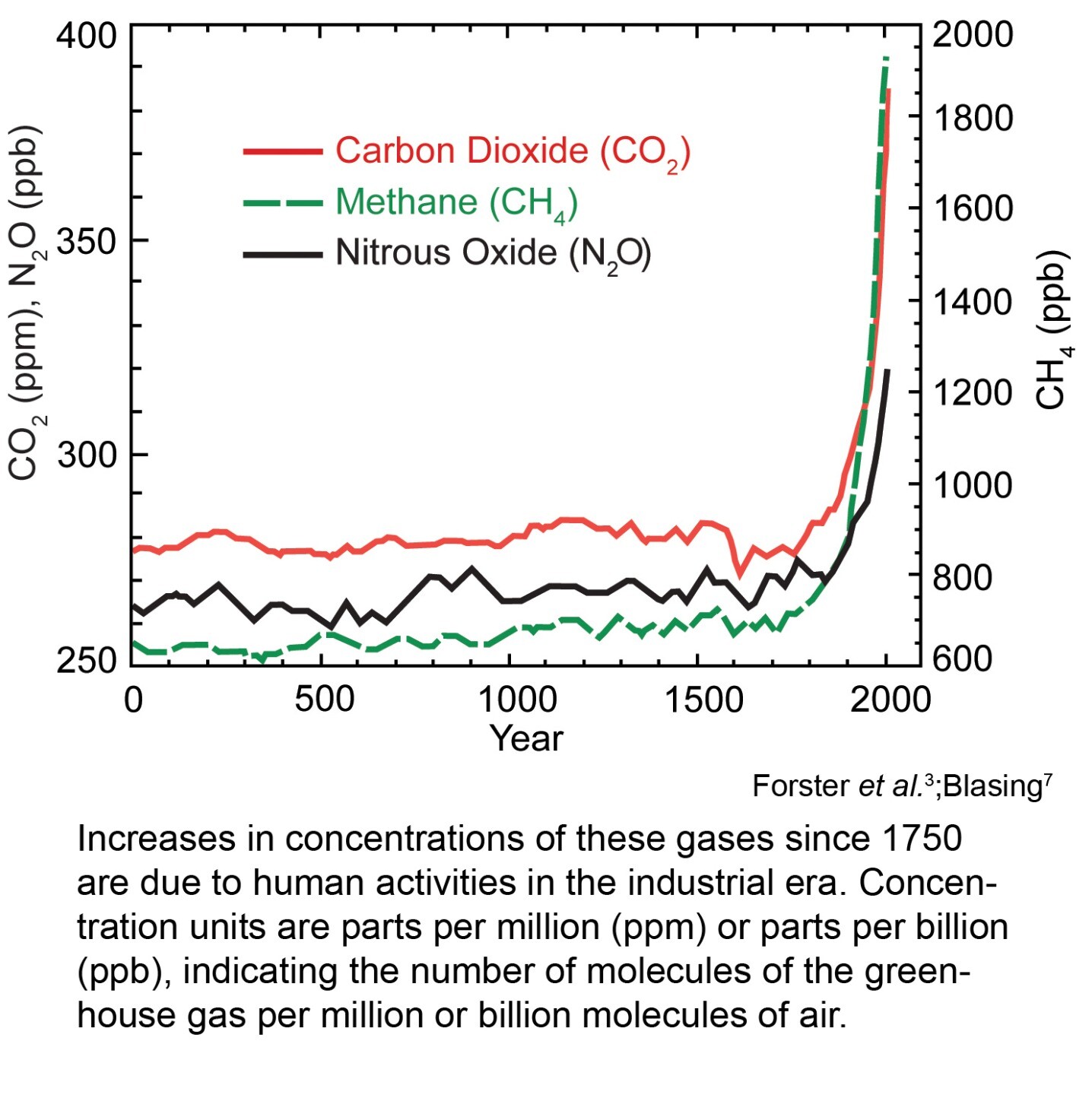
To supplement my last toot of 800,000 years of CO2 data, here's a graph of the past 2000 years for CO2, methane, and nitrous oxide (all greenhouse gases, measured in parts per million) again showing the effect of human activities driving up the concentrations. These are the gases driving #climate change.
🇺🇦🇪🇺 cweickhmann
boosted

Der reichste Mann der Welt hat sich eine der wichtigsten Social Media Plattformen gekauft, um einen Tag vor einer entscheidenden Wahl (in der mächtigsten Demokratie der Welt) aufzurufen die Partei zu wählen, die bei der letzten Wahl einen Coup versucht hat.
@SpaceGeek
Welche hab ich verpasst auszuprobieren? 🤯
🇺🇦🇪🇺 cweickhmann
boosted

Hey, so, we've hit 1,028,362 monthly active users across the network today. 1,124 new Mastodon servers since Oct 27, and 489,003 new users. That's pretty cool.
@natenom
Ist der 'Abstandshalter' ein überholender Verkehrsteilnehmer, der versehentlich den Abstand gehalten hat, oder eine Schwimmnudel? 🤪
Again, it's fascinating to cross a European border by train*: the only indication is a change in signalling and an ever so slightly different style of the installations.
*) Applies for actually working cross-border rail like Amsterdam-Frankfurt. I know, @jon , there are lots of places where it's very visible indeed 🤪
@trinsec
In German, NS (like in NS-Regime, ...) means national socialist, so, yeah. 🤪
🇺🇦🇪🇺 cweickhmann
boosted

Woah - German government has got its own Mastodon instance and most of the ministries and many agencies already have accounts.
Verification problem at least partially solved - just need to check the domain is right!
I've also seen newspapers like theatlantic.com set up instances themselves. Looks like verification will be worked out sooner or later.
https://social.bund.de/explore
CN: Public transport in the Netherlands
As a mof it really feels weird to install the NS App. 🤭
@maori
Deutschland liebt aber Scheinselbstständige. Und z.B. in der IT dürften viele Einzelselbstständigen unter halbwegs konsequent angewandten Kriterien unter Scheinselbstständigkeit fallen.
@LorenzMeyer
Bayern stabil Bayern. Das war ja einer der Kritikpunkte am bayerischen Polizeigesetz.
@SheDrivesMobility
Die Zeitschrift 'Das Haus' bezeichnet Rippen- bzw. Gliederheizkörper als 'normal', Niedrigtemperaturheizkörper hingegen als 'neuartig'.
Unter welchem Stein hat die Redaktion die letzten 40 Jahre gelebt?!
Ich habe in vielen verschiedenen Häusern gelebt und kenne Rippenheizkörper nur aus der heillos sanierungsbedürftigen Schule.
Nur falls wer fragt, was kaputt ist. #ClimateAction #Klimakrise
🇺🇦🇪🇺 cweickhmann
boosted


Ich suche für den 14-jährigen autistischen Sohn meiner Partnerin in Berlin eine Möglichkeit Programmiersprachen zu lernen. Am besten in kleinen Gruppen und nachmittags. Danke für die Tipps <3
- Pixelfed
- @cweickhmann
European, federalist @jef_europe, @jef_de, @jef_hessen, social democrat @spdde, RF engineer @ GSI, cyclist, antifa.
Born CO2 346.35 ppm. Citizen of a Hippiestaat.
Joined Apr 2022
