

🇺🇦🇪🇺 cweickhmann @cweickhmann@social.cleverlibre.org
- Pixelfed
- @cweickhmann
European, federalist @jef_europe, @jef_de, @jef_hessen, social democrat @spdde, RF engineer @ GSI, cyclist, antifa.
Born CO2 346.35 ppm. Citizen of a Hippiestaat.
Joined Apr 2022
@zikka Man muss nur immer schnell wegschauen, wenn er einen nordamerikanischen Supermarktparkplatz zeigt ^^ @notjustbikes @SheDrivesMobility
@lowqualityfacts Hum, I thought it was because the pilot suddenly remembers gravity... but this sounds more plausible an explanation.
@evilscientistca As an electrical engineer working at a fundamental physics research centre, I approve this message. 👍
🇺🇦🇪🇺 cweickhmann
boosted

🇺🇦🇪🇺 cweickhmann
boosted


Das ist leider kein hoax. Schau mal hier:
https://www.instructables.com/Yellow-Dots-of-Mystery-Is-Your-Printer-Spying-on-/
🇺🇦🇪🇺 cweickhmann
boosted

🇺🇦🇪🇺 cweickhmann
boosted

Die Klimarisiken sind zu hoch - Gebäudeversicherer ziehen sich aus Bundesstaaten wie Florida und Kalifornien zurück. Wir marschieren in Kalifornien und anderswo in den USA immer mehr in eine unversicherbare Zukunft, sagt Prof. Dave Jones aus Berkeley.
https://www.deutschlandfunk.de/kalifornien-unversicherbar-welche-rolle-der-klimawandel-spielt-dlf-bce04fc4-100.html
Hahaha, Kinder oder wie Frank Aluhut Schaeffler sagen würde: #Sozialklimbim 🤦♀️
Was für ein widerlicher Tüp!
via @Septembersonne
🇺🇦🇪🇺 cweickhmann
boosted

"Welcher ist Dein Lieblingsvampir ?"
"Der aus der Sesamstraße."
"Der zählt nicht."
"Ich bin ziemlich sicher, daß er genau das tut."
🇺🇦🇪🇺 cweickhmann
boosted

Habe im Verlauf der letzten Tage mehrere Beiträge hier auf Mastodon gelesen, in denen User eine irgendwie bevorstehende Abschaffung des Deutschlandtickets beklagen/betrauern/kritisieren oder gar politischen Akteuren Schuld dafür zuschieben. Dabei steht eine solche Abschaffung gar nicht im Raum.
Ich wundere mich.
Ja, es gibt anhaltenden Streit um die Kostenaufteilung zwischen Bund & Ländern. Da gehört Klappern aber auch zum Handwerk, die Länder wollen immer mehr Geld.
@oli Leiden e.G. 🤭
@peterjelinek Kleine Korrektur hier: Er wird in "GB News" gefragt. Das ist in etwa, als würde er auf einer Kreuzung von Servus TV und Reichelts Aluhut-Kanal interviewt werden.
Bei aller Kritik an BBC, Channel 4 und Co: Das ist kein fairer Vergleich.
🇺🇦🇪🇺 cweickhmann
boosted
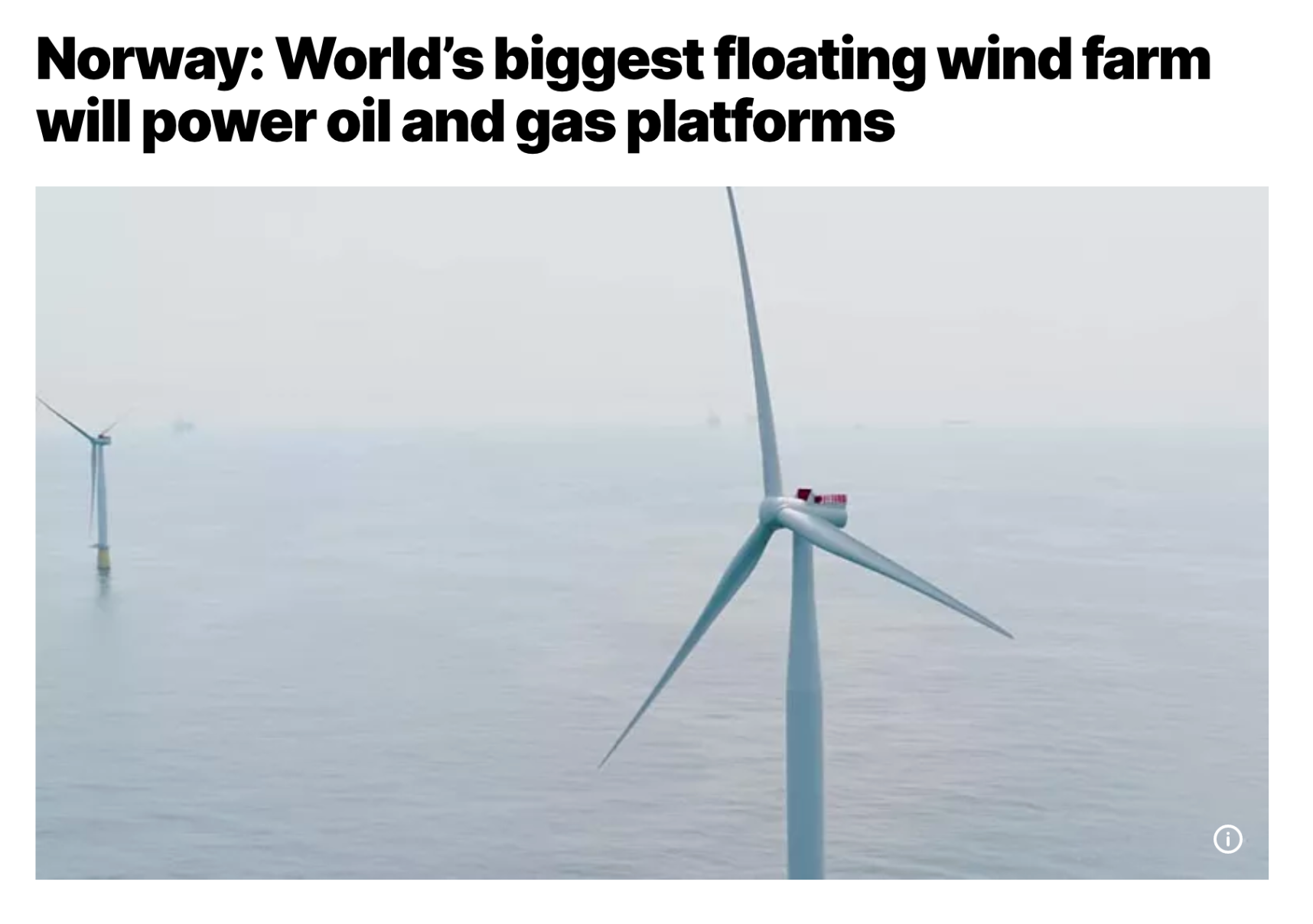
#Climat | Les pays riches n’ont jamais autant financé les énergies fossiles ⚫
Subventions, investissements, prêts… En 2022, les gouvernements du G20 ont consacré 1 400 milliards de dollars d’argent public pour soutenir le développement de l’industrie fossile.
En France, les dépenses fiscales au profit de l’industrie fossile passent de 7,77 à 7,81 milliards d’euros entre 2020 et 2021, selon l’OCDE.
L'article est à lire sur @Mediapart 👇
🇺🇦🇪🇺 cweickhmann
boosted

TIL that the skeleton of what would become known as a Krayt dragon, a piece of desert set dressing featured in Star Wars: A New Hope, was in fact the Brontosaurus built for the Disney film, One of Our Dinosaurs is Missing.
Filmed just a few years before Star Wars, when the fibreglass skeleton was discovered at Elstree Studios, the crew jokingly hid it amongst the props and equipment being shipped to Tunisia.
It ended up being used as a set dressing for the Tatooine desert.
@Perowinger94 So'n FDP-Dude würde jetzt sagen: Schauen Sie, der Markt hat das geregelt. Der Markt hat halt ein internationales Abkommen geregelt, das internationale Flüge von der MwSt befreit und Kerosin gering besteuert. Macht der Markt eben. Und er hat auch geregelt, dass Züge nicht fliegen oder schwimmen können. Wenn die Bahn also marktwirtschaftlich agieren würde, würde sie eine ICE-Trasse nach New York bauen. Tut sie aber nicht. Sehen Sie: der Markt regelt.
Und dann nicken sie alle und sagen: Schlau, was der von der FDP da gesagt hat.
Was der FDP-Dude nicht sagt, ist, wie viel Steuergeld in die Infrastruktur für's Fliegen gesteckt wird. Das sind ja nicht nur die Kosten für die Flughäfen (jaja, anscheinend ist Fraport ja profitabel, aber ich kenne da so ein paar hessische "Flughäfen", die es ... ähem... eher nicht sind). Die Kosten für Lärmschutz werden sozialisiert. Die Autobahnanschlüsse werden ja offenbar auch nicht von der Fraport gebaut.
Und über das Problem der Kosten für die Flugsicherung (DFS) spricht bei der FDP offenbar auch niemand. Der Bericht des Bundesrechnungshofes dazu ist allem Anschein nach nichtöffentlich. 🤷
https://de.wikipedia.org/wiki/DFS_Deutsche_Flugsicherung#Haushalt_und_Geb%C3%BChren
🇺🇦🇪🇺 cweickhmann
boosted

In 🇩🇪 bezahlt die Bahn mehr Steuern auf ihren Strom als die Lufthansa auf ihr Kerosin, während die Kunden mit 7% eine höhere MWSt auf das ÖPNV-Ticket als auf das Flugticket nach New York bezahlen. Gleichzeitig nennen wir uns Klimaweltmeister und "Experten" warnen im TV vor deutschen Alleingängen beim Klimaschutz.
I like this video in particular, because it showcases exactly what I've experienced in the NL in Noordwijk (pop. 45k) for a conference and on holiday in Enkhuizen (pop. 19k).
In Noordwijk I stayed for a conference at ESTEC in a hotel on the beach promenade. The conference had set up a shuttle bus for us attendees, so I didn't care to even look for a bike. I would've but the weather was ... well, late October on the Northern Sea... And still, from the bus, I saw dozens of cyclists going from village to village along cycling paths.
In Enkhuizen we stayed with two small kids and walked or took the IC train to Hoorn. And although we saw a lot of cars around, we only once had to use one: When my daughter fell on the couch table and the only doctor still open was at the hospital in Hoorn. I later found out that we could've in principle done the trip with the IC train since the hospital is just next to the train station.
And just because I read a few YT comments from Europeans (dunno where from exactly) saying basically: "That's not unusual in Europe" -- uhm, no:
I gew up north of Frankfurt (Main) in Rosbach, what you might call a suburb, Wetterau county. And, yes, I took a public bus to school or would take the bike when it wasn't raining. And, yes, for now about 15 years, the town is limited to 30 km/h, but with virtually no physical traffic calming (with a few exceptions). The streets have filled with cars since the 1990s. So, I would not feel safe to let my kids cycle there the way I did as a kid.
And we spent two weeks of holiday just this month in Allgäu, Bavaria. First, in the small town of Pfronten, that for some reason routes a hell of a lot of traffic right through the middle of town at 50 km/h (which is not just ridiculous, but also entirely unrealistic) with sidewalks sometimes literally the width of a beach towel. And while the surrounding area had a lot of cycle paths, the reason you'd only see quasi-MTBs was clear pretty quickly: Most are gravel and only used by tourists. We've met only a handful of locals going by bike between villages.
For me as an experienced cyclist this wasn't an issue, so yeah, talk about "good/bad" in relation to something. But again: This was only okay with my kids in the trailer not on their own bikes.
And then we spent another week in Sulzberg south of Kempten. We were on a former farm outside of town where literally the only even walkable connection to the town was a road. No footpath. I've checked using BRouter [1] if there was some obscure route off the road that we could've used to get to the supermarket (~4km away). I did not find one.
So, yes, I *am* seriously amazed by the approach to mobility in the NL - in small towns. And although it's far from perfect (NL have scrapped small hospitals in favour of big central ones, which can be a pain, see above), it is still *far* better than the situation in vast parts of Germany and for that matter most parts of Europe.
Ja, komisch. Offenbar kann auch die "Landbevölkerung" mit reduzierter Autoabhängigkeit überleben. Und mit wenig Autos, braucht man auch keine #Prot...
🇺🇦🇪🇺 cweickhmann
boosted


"Wir erreichen nun Ingolstadt-Hauptbahnhof, an welchem wir nun 3 Minuten früher sind. Wenn Sie mit dem Ergebnis zufrieden sind, befindet sich der Ausstieg in Fahrtrichtung rechts!" (@Alterrativ) #BahnAnsagen
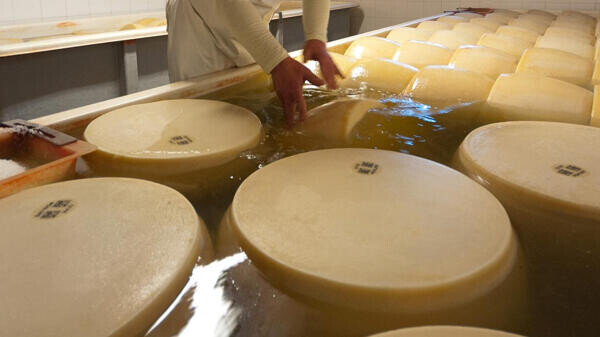
Aluhut: "SIe ChIpPen UnS miT PaRMeSaNKäSe!!!1elf!"
In drei, zwo, eins...

Lieferkette: Winziger Chip im Parmesan soll Echtheit nachweisen – und ist essbar Die Produktion von Parmesan ist ein Milliardengeschäft, auch desha...
- Pixelfed
- @cweickhmann
European, federalist @jef_europe, @jef_de, @jef_hessen, social democrat @spdde, RF engineer @ GSI, cyclist, antifa.
Born CO2 346.35 ppm. Citizen of a Hippiestaat.
Joined Apr 2022
