

*banned 4 MarkDown love* @design_RG@social.cleverlibre.org
- Blog W.Freely :
- https://write.tedomum.net/rgx/
- Glitch-Social :
- https://muensterland.social/@rgx
- Pleroma :
- https://fedi.absturztau.be/yann
- Cats ! :
- https://catgram.jp/@yann2
Books, Bicycles & Cats, Life is Good. Books, hardcover. Bikes, Classic sport and Touring ones. Cats, any colour or size. Aquarius with Virgo rising. INTJ.
STEM Lord, House of Ravenclaw.
I have moved -- please visit my other accounts.
* Follow my Main & Publishing account : https://muensterland.social/@rgx
* Cats photos, now posted at Catgram.Jp : https://catgram.jp/@yann2
* Pleroma Home is at FAB : https://fedi.absturztau.be/yann
Spoken & Written Languages : English. Español. Português.
Joined Nov 2019
@resynth1943@banana.dog And thanks to us having Full Text Search here at Qoto, I managed to find my post!!!
-----------------------------
Please look at this status for an important explanation on WHY we don't have more reasonable limits on Toot size, or an easier to change limit.
By Design. Mr Mastodon head developer thinks it is best done so.
https://busshi.moe/@mewmew/103444186467997545
Blog post in gestation on this topic...
-----------------------------
@resynth1943@banana.dog I have been searching for my past posts, but didn't find it yet -- I had a link to the actual git hub page with the issue being brought in, and Eugen responding, briefly explaining some reasoning for his preference, and closing it. Was around 2017 or so.
There is no technical reason, as witnessed by many instances having higher limites.
He explained he had concerns about visual instance timeline display being overwhelmed by larger posts; not really a problem here, as they do collapse in size, after a certain point.
However, he's the one in control, and it's his idea to have the 500 chars limit hard coded - and in multiple places. I have requested changes from some admins, and one responded it was too much work, as it has to be redone after each update or upgrade.
Eugen is a bit of a control freak, but he's accomplished a lot.
Good that we can look at competing examples of compatible software - like Pleroma, Glitch Soc, etc.
@resynth1943@banana.dog You are welcome, I didn't know, until someone mentioned -- and it instantly made sense.
*banned 4 MarkDown love*
boosted
Found another nice page for reference. You might be able to get some explanations for the general operation of the network and instances, etc.
https://blog.soykaf.com/post/what-is-pleroma/
"In my last few posts I talked a bit about Pleroma. Since then, we had a lot of questions about what Pleroma is, how it is different from GNU Social and Mastodon, why you should use it and so on. This post will be an introduction to Pleroma, so read on if you are interested.
What is Pleroma?
Pleroma is a microblogging server software that can federate (= exchange messages with) other servers that support the same federation standards (OStatus and ActivityPub). What that means is that you can host a server for yourself or your friends and stay in control of your online identity, but still exchange messages with people on larger servers. Pleroma will federate with all servers that implement either OStatus or ActivityPub, like GNU Social, Friendica, Hubzilla and Mastodon."

@resynth1943@banana.dog Yes, it is -- and not only on that file, but in various other ones.
That is what Eugen refused, to consolidate it all in one .config file -- he doesn't want people to use larger sizes and attract users due to that; so makes it harder to change.
@freemo LOL...
You could be the escribe, to the writer's aid.
My handwriting has rusted from lack of use, but I love composing and writing.
@resynth1943@banana.dog Yes, I agree, fully.
Twitter started way back when, at a time when there was no Data service for cell phones -- people sent these new fangled Tweets over SMS. Hence, the 140 characters limit, which they kept even after smart phones were ubiquous.
They increased to 240 Chars or so now, but I still find it quite cramped. Eugen doubled that, to the 500 chars limit, but there's no technical reason for a limit at all.
Our instance here, Qoto, allows 65 K chars -- and it will be transmitted and stored, displayed in any other masto place. So, doesn't break anything.
Not that I have ever used that much, but I have been at 4 K or so many times, in a single post. 500 ?
@freemo I have recovered my gusto for it, after a dry spell. Have been writing some great letters again, met new penpals, and now am having Blog page ideas flashing too.
Love that, I was so active until mid January; then I got Winter blues and retracted a lot.
Hopefully I can focus and jot down notes, go back into some nice writing again. I spent hours in each Blog page, but they were perfect to my liking, and I am still proud of them. If we get motivated, it's a worthwhile pursuit.
Certainly better for my soul than reading numerous online new sources and despairing, of so many bad ones.
@freemo Oh, when I am in the mood, it's lyrical. 😉 🍷
@freemo Yes, the Portuguese one is Smoked, cured and dried - and can be eaten raw, outright, a delicious snack or "Petisco".
With a glass of beer, or a glass of Tinto, some Bread, a nice light meal.
@freemo And from this and other epic letters, I was voted as a great candidate to work with Tourism Portugal, as I absolutely LOVE the country.
Been there at this time of the year, for the past 3 Springs.
I would accept a position with Tourism Portugal in a heartbeat too. 😄
@freemo and anyone interested in Culture and Great Food. :)
From a letter I wrote to a pen pal, my impressions on the theme of Chouriço versus Chorizo.
Portugal and España are neighbours, but Portugal was a country since around 1130 -- when the rest of Ibéria was a patchwork of small kingdoms and Moorish domains.
------[ Forwarded Letter segment ]------
Chouriço is indeed a bit different from the Spanish Chorizo - I had found a great website once that explained it quite well, will search in a minute and see if I can locate it again for you.
In my own words, I would say, comparing the examples I bought and ate along during my bicycle trip in Portugal and Spain in 2017 :
- The Spanish one has an intense red tone inside it, I think it get a load of Pimentón during fabrication.
- The Portuguese one was available in different variations at the supermarkets; some with Wine, some with Onion, and a number of other variants. I did find the Spanish ones a bit more fatty, at least the ones I purchased; the Portuguese ones you could see chunks of meat inside and the ocassional white fat blob, but it wasn't spread out in the whole sausage as in the Spanish case.
I did prefer the Portuguese ones, because it seemed more artisanal and tasted better.
Looked around and I did not find that exact page I had seen, which had some well explained diferences. But Wikipedia has a good page for Chorizo, which includes regional varieties, including Portugal -- https://en.wikipedia.org/wiki/Chorizo
I liked this answer I found at a Quora page, written by a Portuguese, which confirms my impressions :
"André Braga, Portuguese - represented Portugal in the Youth European Parliament 2011
Answered Oct 20, 2015
Originally Answered: How do Portugese and Spanish chorizo differ?
There are quite a few differences. I will compare chouriço (PT) with chorizo (ES) from a Portuguese perspective (as I am Portuguese).
Chouriço VS Chorizo:
Chouriço has a stronger wine flavor;
Chouriço is normally darker and less bright;
Chouriço has a stronger flavor (but normally less spicy);
Raw cold Portuguese chouriço is very flavorful.
I love both chouriço and chorizo. As a piece of advice - you pay what you get. Go for the good quality ones and you will have an amazing experience regardless of the one you chose :)"
From: https://www.quora.com/How-do-Portuguese-chouri%C3%A7o-and-Spanish-chorizo-differ
I located a really good photo, attaching here, which shows what I expect to find in a good Portuguese Chouriço - leaner meat, some odd chunks of fat here and there, in moderation. A smoked look, and dried. This would be ready to be eaten as a snack or light meal, it's great with some wine and good bread, maybe even some cheese. :)
----[ forwarded letter segment ends ]-----
#Portugal #Food #Gourmet #EU #Culture #Iberia #Travel #yummy

@freemo "Peri-peri (/ˌpɪri ˈpɪri/ PIRR-ee-PIRR-ee, often hyphenated or as one word, and with variant spellings piri-piri or pili pili) is a cultivar of Capsicum frutescens that was originally produced by Portuguese explorers in Mozambique[1][2] from the malagueta pepper and then spread to other Portuguese territories. "
The trick is the peppers they are using, haven't seen those in Brazil, although there's lots of varieties there. Peri-peri is actually my favourite now.
Wiki quote: http://en.wikipedia.org/wiki/Peri-peri
Sauce made from peri-peri chilis (used as a seasoning or marinade) is Portuguese in origin and is "especially prevalent in Angola, Namibia, Mozambique and South Africa".[7]
Recipes vary from region to region, and sometimes within the same region depending on intended use (ex., cooking vs. seasoning at the table) but the key ingredients are chili and garlic, with an oily or acidic base.[8] [9]
Other common ingredients are salt, spirits (namely whisky), citrus peel, onion, pepper, bay leaves, paprika, pimiento, basil, oregano, and tarragon.[10]
@freemo Piri-Piri was a surprise discovery for me too -- even growing up on a spice loving country, I had never encountered it. It is linked to the Great Navigations, and I have talked about it with friends in Philippines, India and Japan that confirm it can be found there.
Amazing traditions and history. I love the taste of it, not caustic, just yummy and adds much flare.
@freemo I am sure you can find it easy in Philly. Any large city should have an immigrant community, and the stores have many great food items.
I will have to prepare and share a post about Chouriço too!

@11112011 Just looking at that, the whole table. Perfect spread.
Saudades de Portugal!

For the discerning people who like some spice, not caustic, but flavourful.
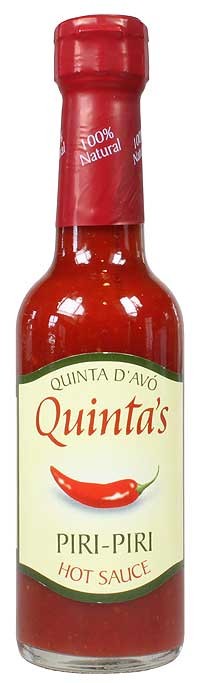
Piri-Piri sauce, common in Portugal and found in many places with local Portuguese communities, is wonderful.
Wiki knows it : http://en.wikipedia.org/wiki/Peri-peri
For us far from there, the memories, a supermarket bottle, or maybe even homemade?
https://easyportugueserecipes.com/portuguese-homemade-hot-sauce-piri-piri/

@freemo You should look for and get some Piri-Piri sauce. At a Portuguese store.
Man, it's lovely, spicy without burn, just nice.
https://www.bing.com/search?q=piri-piri+sauce&qs=BT&pq=piri-piri+sau&sc=8-13
- Blog W.Freely :
- https://write.tedomum.net/rgx/
- Glitch-Social :
- https://muensterland.social/@rgx
- Pleroma :
- https://fedi.absturztau.be/yann
- Cats ! :
- https://catgram.jp/@yann2
Books, Bicycles & Cats, Life is Good. Books, hardcover. Bikes, Classic sport and Touring ones. Cats, any colour or size. Aquarius with Virgo rising. INTJ.
STEM Lord, House of Ravenclaw.
I have moved -- please visit my other accounts.
* Follow my Main & Publishing account : https://muensterland.social/@rgx
* Cats photos, now posted at Catgram.Jp : https://catgram.jp/@yann2
* Pleroma Home is at FAB : https://fedi.absturztau.be/yann
Spoken & Written Languages : English. Español. Português.
Joined Nov 2019
