

Dimos Karamanlis @dimokaramanlis@social.cleverlibre.org
- Website
- dimokaramanlis.github.io
Neuroscientist postdoc. Interested in ethologically-relevant neural coding, vision and decision-making. Currently based at the Department of Basic Neurosciences (UNIGE).
Joined Nov 2022
Dimos Karamanlis
boosted

Trained in an academic setting, I have often felt a little uneasy conveying science beyond my expertise.
@markdhumphries writes that this is not only okay, but actually highly encouraged for good popular science writing. He advocates doing research on the topic and conveying your own journey through learning.
https://medium.com/the-spike/its-a-good-thing-when-i-don-t-know-what-i-m-writing-about-6d0ce69d5629
Dimos Karamanlis
boosted

#migration#re-Introduction.
I'm a theoretical neuroscientist at U Mainz Medical Center and co-affiliated with U Bonn Medical center. Primary focus on cortical circuits, their network activity, synaptic plasticity and protein dynamics in dendrites. Broadly interested how circuits learn e.g. neuro/AI interface and want to understand how neural networks compute, both algorithmically and intracellularly. Occational posts about societal and academic issues.
Dimos Karamanlis
boosted

@jacklerner I would remind students: Whenever you read a productivity tip or lessons from someone's process, ask yourself: Who's taking care of the house and kids? Who manages their finances? Who's booking their flights and tracking their expenses and picking up their laundry? Do they have any disabilities, health issues, other challenges?
Do not beat yourself up if you're not able to be as productive as someone with significantly more privileges re: time. We don't all have the same 24 hours.
Dimos Karamanlis
boosted

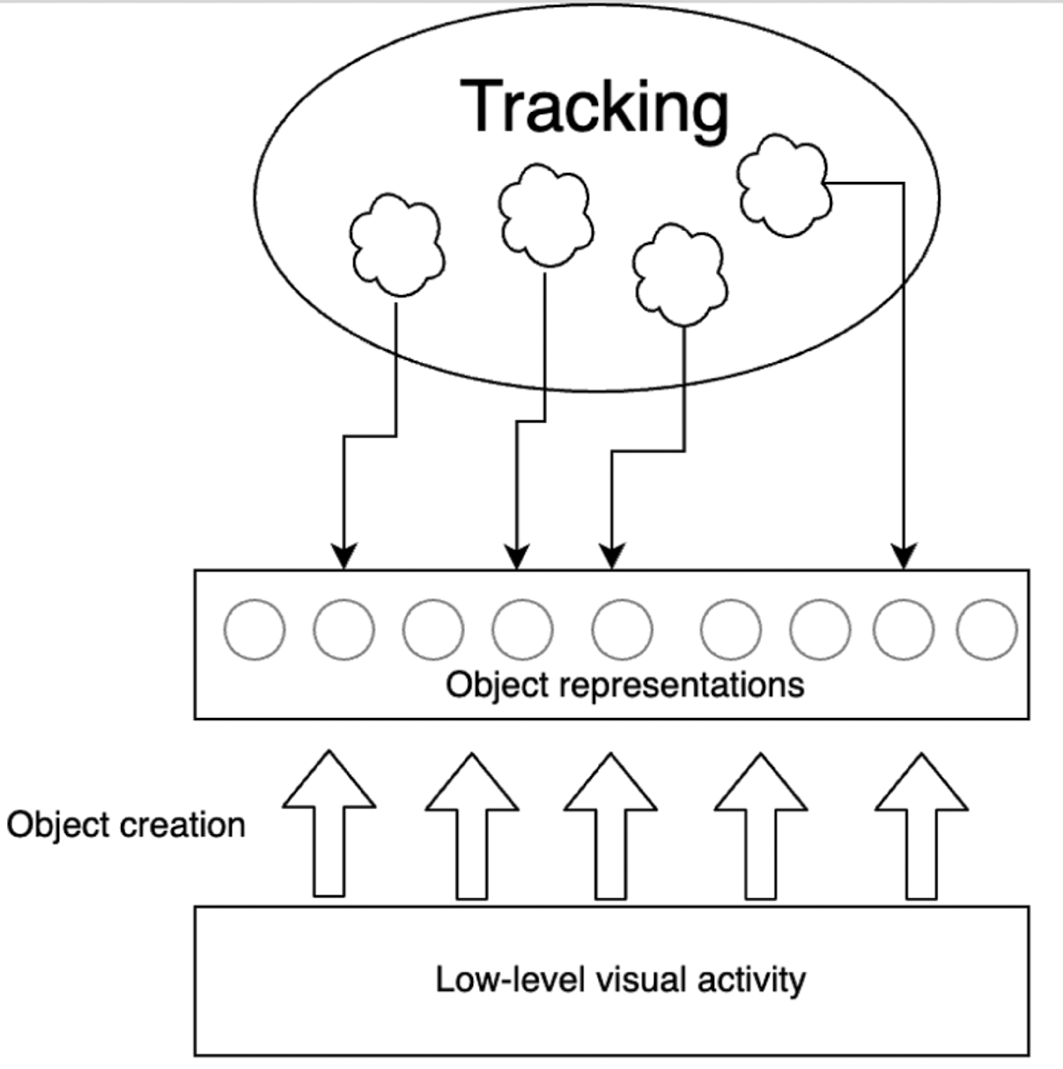
My little book is now officially published by Cambridge Univ Press and available for free here https://www.cambridge.org/core/elements/attending-to-moving-objects/0914ABF2EF7D03676124F7250874071A . I draw lessons from object tracking research to illuminate the nature of the bottlenecks on human visual processing.
The official version is available for free for two weeks. The version I published with bookdown (https://tracking.whatanimalssee.com/intro.html#summary) will be available for free at least until I die, or become too ashamed of the book. #attention #perception
#openaccess @cognition
Dimos Karamanlis
boosted

Naive question (maybe): Is there a definition of 'computation' akin to the mathematical definition of information (entropy/MI)? I don't mean Turing machines. e.g. something that could determine the extent to which a group of neurons/synapses are signalling versus computing?
Dimos Karamanlis
boosted

Job alert: tenure-track Assistant Professorship in Applied Psychology! 📢
My department at Leiden University is recruiting an Assistant Professor in Applied Cognitive Psychology, with tenure after 1.5 years. Research topics include behavior change and sustainability, and the position includes teaching and coordinating our MSc program. Deadline is 10 February, apply here.
Our new work with @TimGollisch and team is now out as a @biorxivpreprint!
We found that gaze shifts in natural movies drive concerted responses in populations of retinal ganglion cells. We think that these concerted responses violate the decorrelation prediction of efficient coding in a cell-type-specific manner in both marmosets and mice.
Check the manuscript for more details!
https://www.biorxiv.org/content/10.1101/2023.01.10.523412v1?rss=1
Dimos Karamanlis
boosted

Visual cortex is affected by sounds. Does this mean it is multisensory? Does it represent sounds?
Today in Nature #Neuroscience (https://doi.org/10.1038/s41593-022-01227-x) Célian Bimbard and team find otherwise.
Sound-evoked activity in visual cortex was similar across neurons. Even neurons in hippocampus. It persisted after we cut fibers from auditory cortex!
This activity was predicted by… subtle body movements evoked by the sounds. It reflects brainwide state and behavior signals.
Dimos Karamanlis
boosted

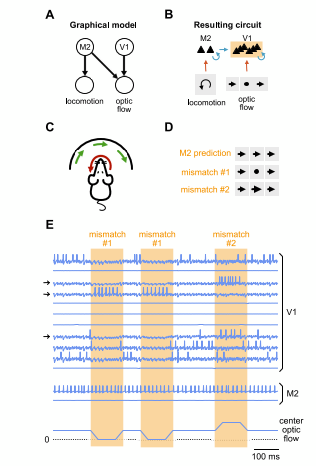
We explain how responses to a mismatch between locomotion and optic flow can arise in V1. We propose they are a result of a cooperation between motor and visual areas to explain the perceived optic flow. Now out in Neural Computation:
https://www.biorxiv.org/content/10.1101/2022.04.07.486697v1
(free)
https://doi.org/10.1162/neco_a_01546 (paywall)
An interesting question: Does cortex integrate different modalities already in the early levels of processing? We think yes, by distributing representations over multiple areas.
Dimos Karamanlis
boosted

A big thanks to @kendmiller + for helping the #neuroscience community get its hashtag act together!
https://neuromatch.social/@kendmiller@qoto.org/109645950754401219
For neuro paper threads: sigmoid.social/about/more has already claimed #PaperThread and #NewPaper (the latter announcing a paper without a thread) for the AI community. I enjoy seeing their papers too, but we need a distinct tag for neuro papers. For a thread, ... maybe we want something simple like #NeuroPaperThread and #NeuroNewPaper?
Great idea Ken - let's do this.
➡️EVERYONE: BOOKMARK THIS! ⬅️ and follow those hashtags. And then don't hold back. After all, it's what we all show up here for: to hear what you've figured out and learn from you.
Dimos Karamanlis
boosted

There's a generational gap which I'm starting to experience more and more, where nearly everything I talk to my kids about — be it nuclear fusion, be it war in Ukraine, be it GPUs — they source with YouTube videos.
But I simply cannot ingest these. Watching a 1½ hours sequential display of maybe even valid statements but which you can't easily scan for useful information feels like watching TV in 1990's, especially that YT is frequently interrupted by ads. And specifically for that reasons I haven't had a TV at home since 2000's.
Videos are kind of OK fo a lecture, where the lecturer sequentially guides you through an unfamiliar topic. But a rather lengthy video to present a single point, that would otherwise fit on half of a printed page, which you can easily scan and locate relevant paragraphs as a matter of seconds?
Feels very much like a downgrade, sorry...
But I simply cannot ingest these. Watching a 1½ hours sequential display of maybe even valid statements but which you can't easily scan for useful information feels like watching TV in 1990's, especially that YT is frequently interrupted by ads. And specifically for that reasons I haven't had a TV at home since 2000's.
Videos are kind of OK fo a lecture, where the lecturer sequentially guides you through an unfamiliar topic. But a rather lengthy video to present a single point, that would otherwise fit on half of a printed page, which you can easily scan and locate relevant paragraphs as a matter of seconds?
Feels very much like a downgrade, sorry...
Dimos Karamanlis
boosted
Across a bunch of scientist biographies, I noticed that a lot of scientists were part of a club to discuss science. It's usually something mostly informal that meets about once a month. Some scientists that I know were part of such clubs and developed ideas there are Norbert Weiner, Ramon y Cahal, Alan Turing, Pyotr Kapitsa, among others. Counting down to the new year, I'll be posting about the societies that have fascinated me.
Dimos Karamanlis
boosted

#introduction 👋
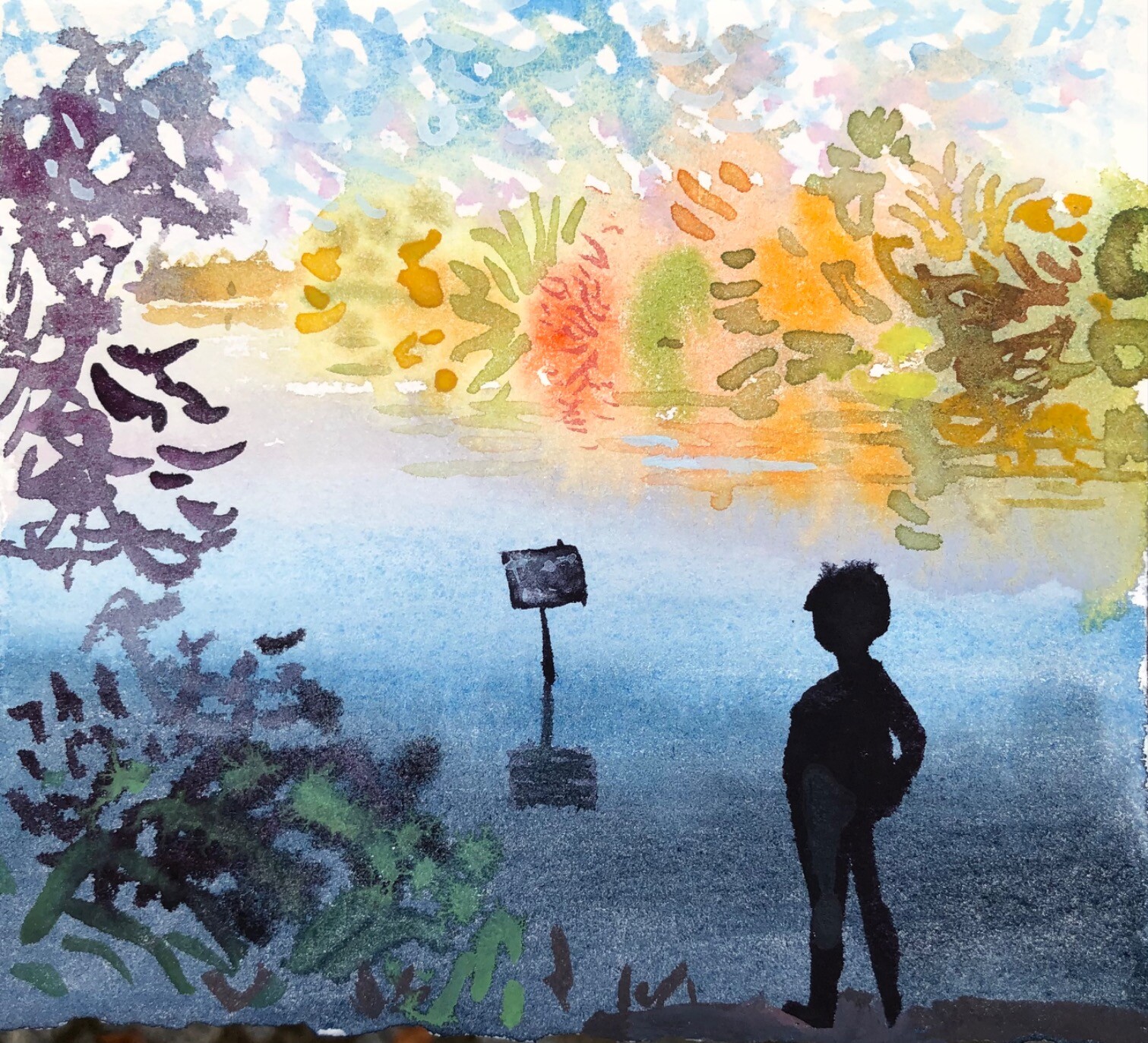
I’m a neuroscientist & artist. I got into the brain biz from making art—it’s like running #vision experiments on yourself. #Color is an obsession, it connects the physical world with #perception, #cognition, society, so I think it’s a great tool to understand us. I taught #neuroscience at #wellesley, ran a lab at #MIT & now at #NIH #NEI #NIMH. #Science happens in teams & diversity improves teams, so I really value #diversity in science, at all levels, of all kinds. #watercolor
Dimos Karamanlis
boosted

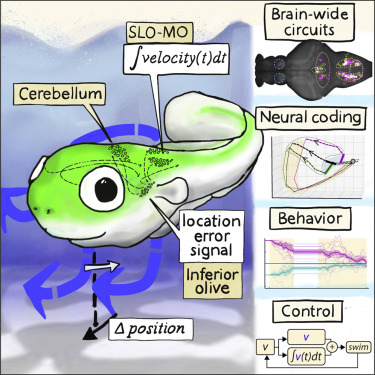
New work from the lab out in Cell today, by En Yang and colleagues:
A brainstem integrator for self-location memory and positional homeostasis in zebrafish
Dimos Karamanlis
boosted

I’m a bit concerned that people’s threads on this platform might be biased, so I will hereby do my bit to correct for that:
1/(n-1)
Dimos Karamanlis
boosted

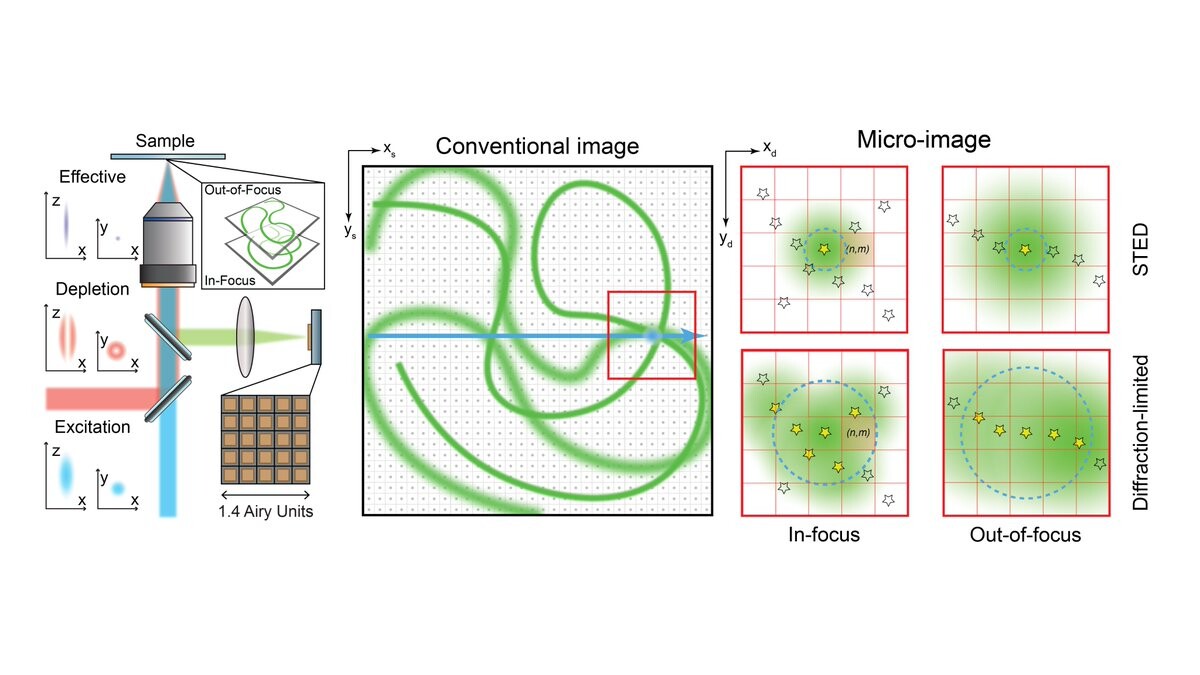
Have a look at our new publication on @NatureComms@twitter.com! In this work, we exploit the information provided by a #SPADarray to push the optical sectioning and resolution of #imagescanningmicroscopy to its limits.
https://doi.org/10.1038/s41467-022-35333-y
#BrightEyes_ERC
@IITalk@twitter.com @ERC_Research@twitter.com
(1/5)
Dimos Karamanlis
boosted

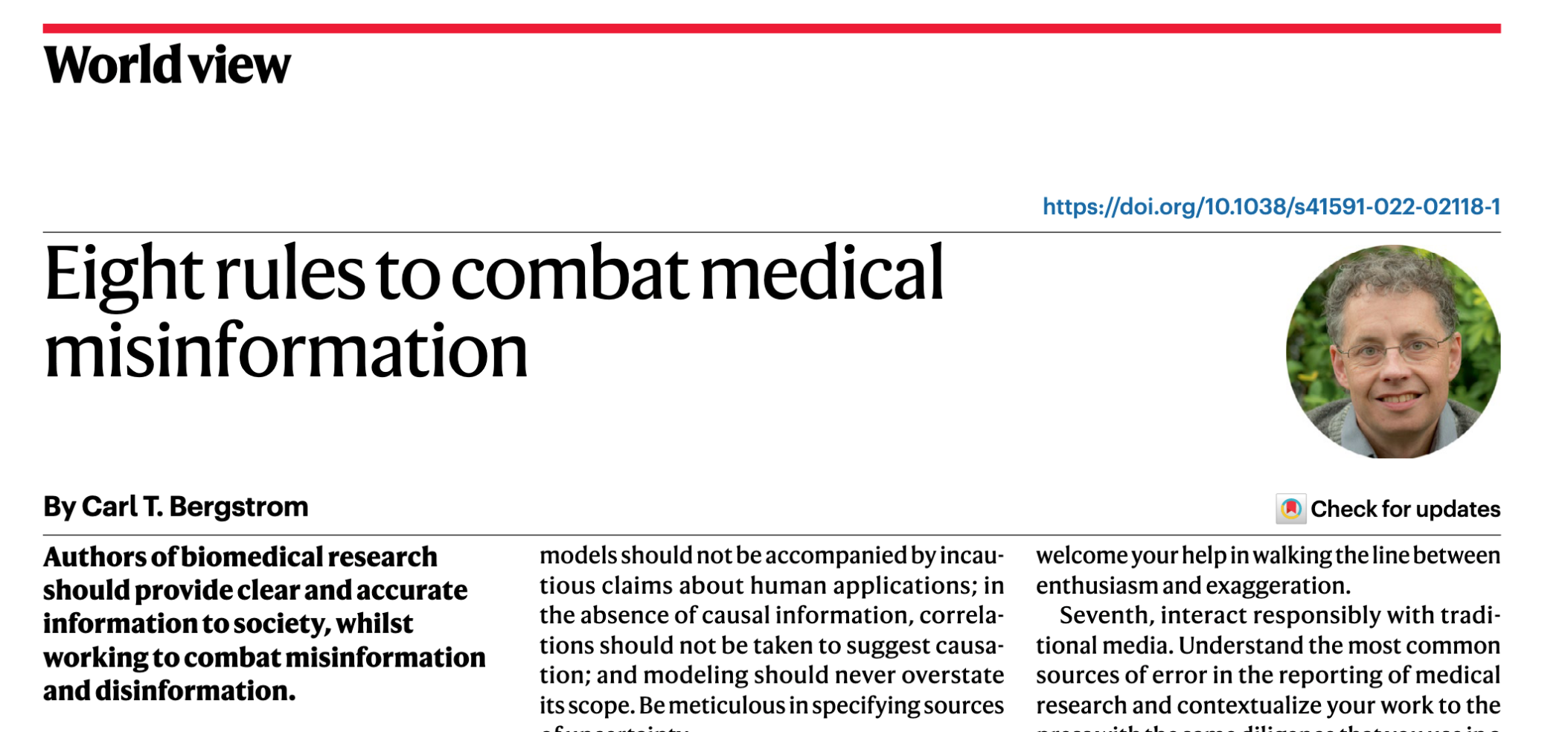
Out today, my short piece in Nature Medicine about what scientists can do as authors to combat misinformation and disinformation about their own work.
Dimos Karamanlis
boosted

I wonder what one might expect for vision if we delete the 90% or so of the retinal ganglion cells that project to the LGN, leaving only the other 10% to signal the brain?
Perhaps an impoverished form of vision that is unlike intact sensation? Over time, we might learn how to use the residual signals in helpful ways.
Perhaps this is an engineer’s view, without much philosophy. Is there a connection to philosophy in there?
Dimos Karamanlis
boosted


Hi everyone!
I am a neuroscientist (postdoc) in Botond Roska’s lab at the IOB in the beautiful city of Basel. During my PhD in Sonja Hofer’s lab at the SWC in London I studied the role of the ventral lateral geniculate nucleus (vLGN) in visually evoked escape behaviour. In general, I am interested in how the brain processes sensory stimuli and how experiences and internal mental states influence sensory information processing.
Looking forward to meeting you all!
At least ChatGPT could analyze some data... #neuroscience


- Website
- dimokaramanlis.github.io
Neuroscientist postdoc. Interested in ethologically-relevant neural coding, vision and decision-making. Currently based at the Department of Basic Neurosciences (UNIGE).
Joined Nov 2022
