

⊥ᵒᵚ Cᵸᵎᶺᵋᶫ∸ᵒᵘ ☑️ @falken@social.cleverlibre.org
- thefalken
- Codeberg
- https://codeberg.org/falken
Lead dev @extravision for ☁️,📱 & 💻. Views own.
Likes : 🐕, 🧱, 🐧,🚀, sci-fi, whisky, electronic 🎶.
Dislikes : Long bios
He/him
Joined Nov 2022
⊥ᵒᵚ Cᵸᵎᶺᵋᶫ∸ᵒᵘ ☑️
boosted

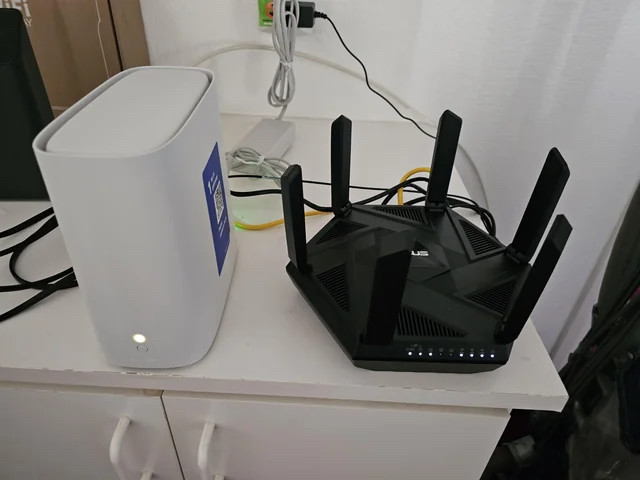
Please choose from the two contemporary design styles for your wifi hardware: “rounded soft box with white light” and “satanic death cult blood sacrifice altar”
I open sourced a thing for aggregation of DMARC reports from multiple domains.
https://codeberg.org/falken/dmarc-report
#email #geek #nodejs #awscommunity #aws #lambda #dynamodb #ses
⊥ᵒᵚ Cᵸᵎᶺᵋᶫ∸ᵒᵘ ☑️
boosted

"As is common practice, the image was resized to fit our specs. During that process, the automation by Photoshop created an image that was not consistent with the original.”
(A) Adobe, WTF?
(B) Users: either dump the app or learn to switch the “AI” off.
https://www.abc.net.au/news/2024-01-30/victorian-mp-georgie-purcell-altered-image/103403664
⊥ᵒᵚ Cᵸᵎᶺᵋᶫ∸ᵒᵘ ☑️
boosted

@carnage4life
Save two hours writing boilerplate, spend ten hours debugging incredibly subtle bugs in production, sounds like a win!
Yea, the fact that LLMs just inherently produce "plausible" results rather than "correct" results means producing bugs that are just that much harder to spot.
⊥ᵒᵚ Cᵸᵎᶺᵋᶫ∸ᵒᵘ ☑️
boosted

Study of codebases over a 4 year period show Github Copilot lowers the quality of code over time by increasing the likelihood of bugs being introduced and copy & pasted code.
This is a healthy counterpoint to studies that show improved productivity.
Fast. Cheap. Good. Pick Two.
https://visualstudiomagazine.com/articles/2024/01/25/copilot-research.aspx
⊥ᵒᵚ Cᵸᵎᶺᵋᶫ∸ᵒᵘ ☑️
boosted

@Gargron @codinghorror @Ciantic @thomasfuchs I see these three dots a lot and don't know what they're useful for.
⊥ᵒᵚ Cᵸᵎᶺᵋᶫ∸ᵒᵘ ☑️
boosted

Absolutely losing it after discovering what3words took control of the whatfreewords domain by arguing that "three" and "free" are indistinguishable when spoken.
https://www.wipo.int/amc/en/domains/search/text.jsp?case=D2019-2439
⊥ᵒᵚ Cᵸᵎᶺᵋᶫ∸ᵒᵘ ☑️
boosted

🍴Evolution of cooking recipe websites🍗
1994: List of ingredients, list of steps
2004: Some background information and photos, list of ingredients, list of steps
2014: Serial killer manifesto of author, photos, list of ingredients, list of steps
2024: You need to use Google to sign in to see the recipe and let us read all your mail, list of ingredients, also here's instructions where to mail the blood of your firstborn
⊥ᵒᵚ Cᵸᵎᶺᵋᶫ∸ᵒᵘ ☑️
boosted

⊥ᵒᵚ Cᵸᵎᶺᵋᶫ∸ᵒᵘ ☑️
boosted

⊥ᵒᵚ Cᵸᵎᶺᵋᶫ∸ᵒᵘ ☑️
boosted

Monday morning read: The untold history of Barbie Fashion Designer, the first mass-market ‘game for girls’ https://www.polygon.com/23776996/barbie-fashion-designer-retro-game-untold-story-history
lots of 90s game dev lore gems in it; feels incredible they pulled it off tbh
and, was it lowkey the first mainstream 3D printing game, too??
⊥ᵒᵚ Cᵸᵎᶺᵋᶫ∸ᵒᵘ ☑️
boosted

@elizabethtasker (Regarding the "busted" landing I would say that surviving a highly non-nominal final descent and touchdown, communicating with Earth and taking pictures in spite of the totally wrong orientation on the ground and reviving promptly when the sun angle was right are tremendous *achievements* showing very robust engineering! The success seems to be on a par with the recovery and return of the near-dead original Hayabusa mission or making good use of Akatsuki in a very wrong orbit.)
⊥ᵒᵚ Cᵸᵎᶺᵋᶫ∸ᵒᵘ ☑️
boosted

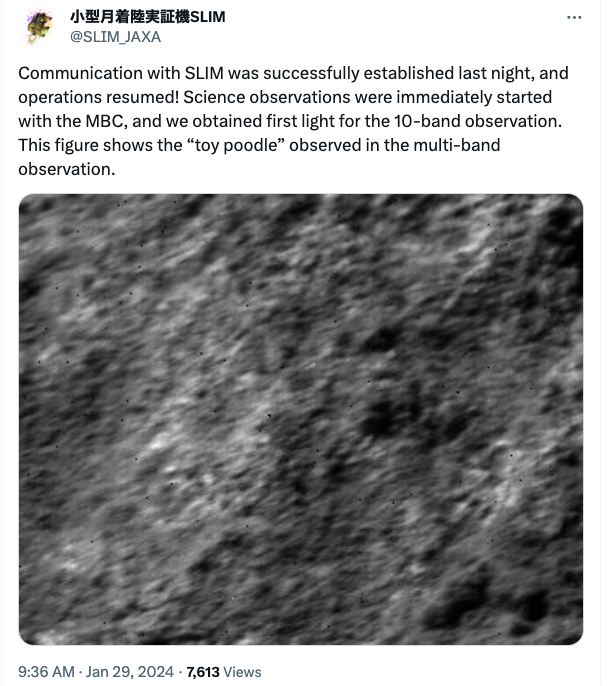
SLIM'S ALIVE!! The team reestablished communication with the spacecraft after the Sun inched round in the sky and hit the solar panels. Wild science'ing instantly began!
I don't think #SLIM has a long lunar surface program. It is primarily a technology demonstration to test the image matching navigation (100% success) and 2-step landing (busted due to the loss of one of the two main engines). So I think the multi-band camera will snap hundreds of images while the Sun is up, and then be done.
⊥ᵒᵚ Cᵸᵎᶺᵋᶫ∸ᵒᵘ ☑️
boosted

@brucelawson (a member of @owa) on the recent iOS engine choice news:
https://brucelawson.co.uk/2024/apple-and-malicious-compliance/
⊥ᵒᵚ Cᵸᵎᶺᵋᶫ∸ᵒᵘ ☑️
boosted

By the way, the one time in my career that I've ever pressed "The big red button that shall never be pressed!" was at RAND.
It is standard for computer room facilities to have a way to kill all power to the equipment quickly in cases of emergency. Traditionally this is a very large red button that can be pressed for this purpose, often just inside an entry door. Typically it's under some sort of plastic shield or such to avoid it being pressed accidentally.
This button is never to be used in the course of normal events. Because it abruptly terminates all power to associated equipment, the risk of data loss and even equipment damage is very significant.
So one day, I walk down the stairs to my basement computer room at RAND where the PDP-11s and ARPANET interfaces lived. I open the door ... and there's nothing there but a wall of white.
When faced with something like that, it takes a couple of seconds to figure out what the hell is going on -- it's not in your brain's expected scenarios for opening that door.
The room was full of white smoke.
Within a few seconds I reached up under the shield just inside the door and slammed down the "never to be pressed" red button.
Instantly power was cut to the UNIX PDP-11s, the ARPANET equipment, a bunch of peripherals, and even a number of disk drives that were in an adjacent room that serviced the big IBM mainframe on the ground floor above.
As it turned out, the Halon fire suppression system was within a few seconds of firing when I killed the power -- management was pretty happy about that since recharging the Halon was expensive.
I got a DEC (Digital Equipment Corporation) CE (Customer Engineer) out to RAND within a couple of hours. He quickly found the source of the problem.
A PDP-11/70 power supply had dramatically failed. It was partly molten slag. Very impressive. I tried to get the RAND photographer down to take a photo of it (this was long before cell phone cameras or even cell phones), but the CE grabbed the power supply, hid it under his coat, and ran out to his car with it.
Apparently he wasn't thrilled with the prospect of photographic evidence of the failure.
Interesting day.
⊥ᵒᵚ Cᵸᵎᶺᵋᶫ∸ᵒᵘ ☑️
boosted

⊥ᵒᵚ Cᵸᵎᶺᵋᶫ∸ᵒᵘ ☑️
boosted

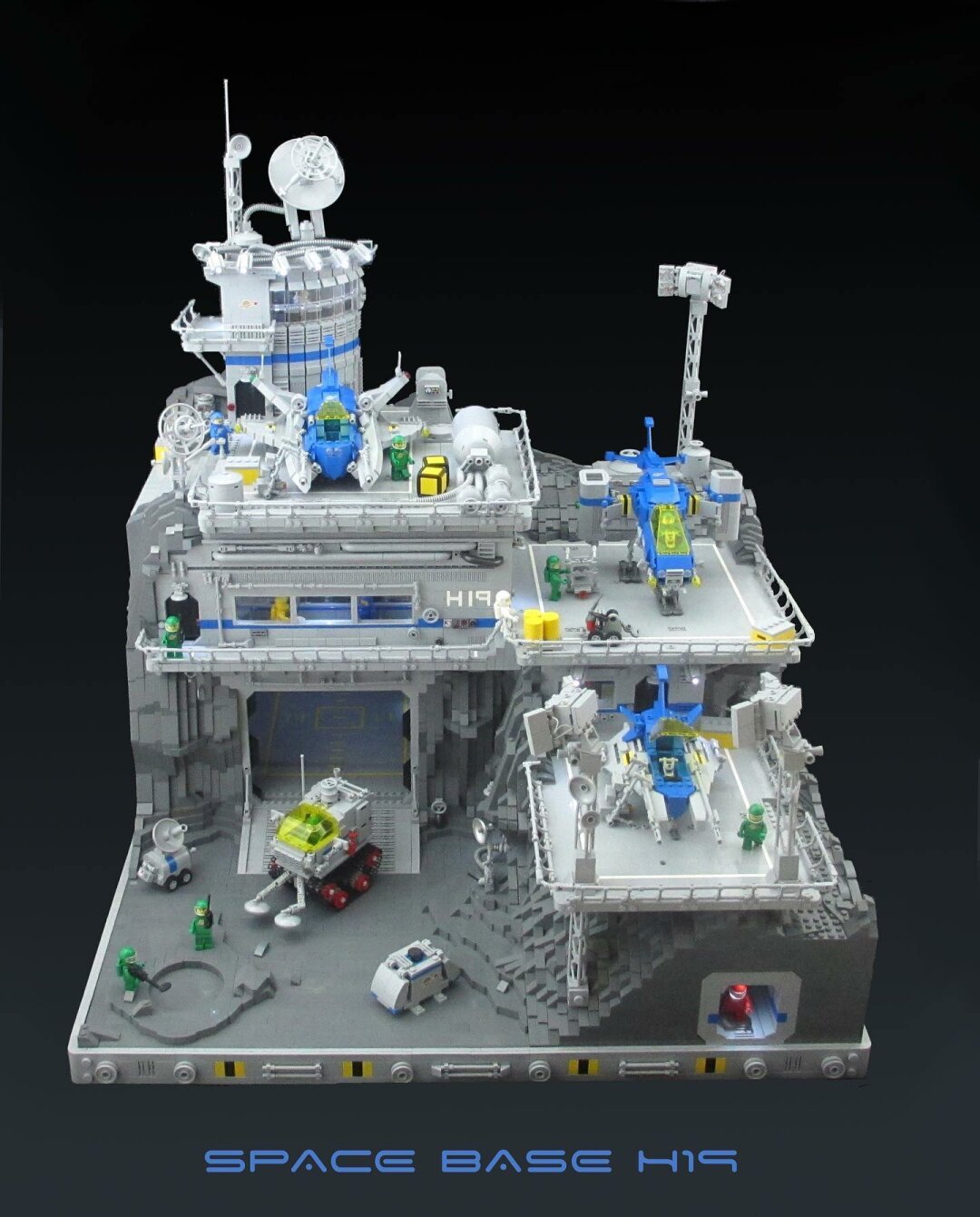
Man, that's a lot of bricks! If you're into #LegoSpace, check out some of Ben Hauger's builds.
https://www.instagram.com/p/B4NBqheJtcS/
#Lego #classic #space
https://www.instagram.com/p/B4NBqheJtcS/
#Lego #classic #space
⊥ᵒᵚ Cᵸᵎᶺᵋᶫ∸ᵒᵘ ☑️
boosted

When I was a smartass computer nerd in the 80s and 90s, an eternal theme was people asking me for tech support help and me having to slowly, patiently explain to them that computers aren't scary, they're actually predictable, they won't explode or erase your data (unless you really make an effort), and they operate by simple (if somewhat arcane) rules. Edit > Cut, then click, then Edit > Paste. Save As. Use tabs, not spaces. Stuff like that. Maybe not easy, but simple, or at least consistent and learnable.
But that's not true anymore.
User interfaces lag. Text lies. Buttons don't click. Buttons don't even look like buttons! Panels pop up and obscure your workspace and you can't move or remove them -- a tiny floating x and a few horizontal lines is all you get. Mobile and web apps lose your draft text, refresh at whim, silently swallow errors, mysteriously move shit around when you're not looking, hide menus, bury options, don't respect or don't remember your chosen settings. Doing the same thing gives different results. The carefully researched PARC principles of human-computer interaction -- feedback, discoverabilty, affordances, consistency, personalization -- all that fundamental Don Norman shit -- have been completely discarded.
My tech support calls now are about me sadly explaining there's nothing I can do. Computers suck now. They run on superstition, not science. It's a real tragedy for humanity and I have no idea how to fix it.
Just had the chance to change prod on Friday, and instead created an issue due Monday
⊥ᵒᵚ Cᵸᵎᶺᵋᶫ∸ᵒᵘ ☑️
boosted






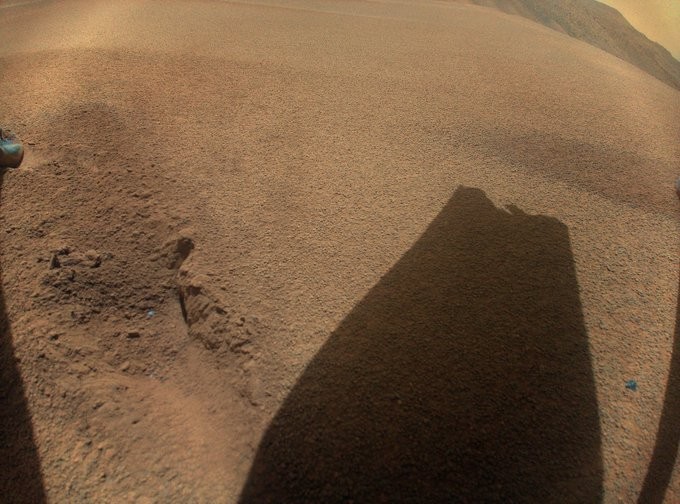
Sad news - Mars helicopter Ingenuity suffered some rotor damage during flight 72 and its mission has ended.
https://www.jpl.nasa.gov/news/after-three-years-on-mars-nasas-ingenuity-helicopter-mission-ends
#Ingenuity #Mars
9/n
- thefalken
- Codeberg
- https://codeberg.org/falken
Lead dev @extravision for ☁️,📱 & 💻. Views own.
Likes : 🐕, 🧱, 🐧,🚀, sci-fi, whisky, electronic 🎶.
Dislikes : Long bios
He/him
Joined Nov 2022
