

🎓 Dr. Freemo  🇳🇱
@freemo@social.cleverlibre.org
- UFoI Member
- http://UFoI.org/u/freemo/
- Website
- http://JeffreyFreeman.me
- Gitlab
- https://git.qoto.org/freemo
Admin
Jeffrey Phillips Freeman
Innovator & Entrepreneur in Machine Learning, Evolutionary Computing & Big Data. Avid SCUBA diver, Open-source developer, HAM radio operator, astrophotographer, and anything nerdy.
Born and raised in Philadelphia, PA, USA, currently living in Utrecht, Netherlands, USA, and Thailand. Was also living in Israel, but left.
Pronouns: Sir / Mister
(Above pronouns are not intended to mock, i will respect any persons pronouns and only wish pronouns to show respect be used with me as well. These are called neopronouns, see an example of the word "frog" used as a neopronoun here: http://tinyurl.com/44hhej89 )
A proud member of the Penobscot Native American tribe, as well as a Mayflower passenger descendant. I sometimes post about my genealogical history.
My stance on various issues:
Education: Free to PhD, tax paid
Abortion: Protected, tax paid, limited time-frame
Welfare: Yes, no one should starve
UBI: No, use welfare
Racism: is real
Guns: Shall not be infringed
LGBT+/minorities: Support
Pronouns: Will respect
Trump: Moron, evil
Biden: Senile, racist
Police: ACAB
Drugs: Fully legal, no prescriptions needed
GPG/PGP Fingerprint: 8B23 64CD 2403 6DCB 7531 01D0 052D DA8E 0506 CBCE
Joined Jul 2018
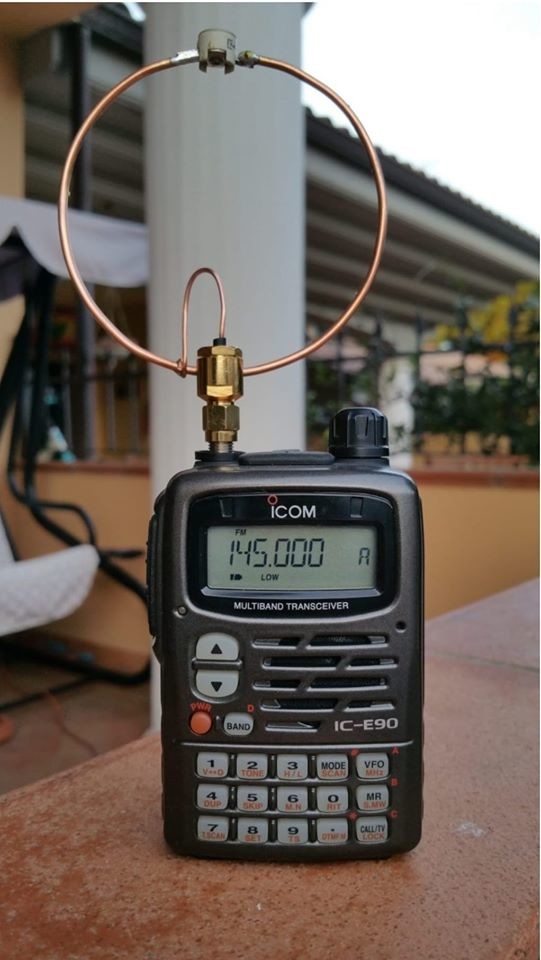
mag loop antennas have a very real functional purpose too. They tend to be great at noise rejection that comes from short distances so good in cities.
@Absinthe Not sure why you asked me then :)
When my mind isnt deep in another problem ill be a little more clear headed to think about this. fun problem.
@Absinthe my gut keeps pushing me towards thinking it would probably fit a minimax tree.. but i keep trying to find a simpler approach.. might want to consider a minimax though
@Absinthe the key here is finding the language to represent the problem yea.
@Absinthe sorry i really dont have the spare mental processes to go as deep as id need to to really solve this.. pretty sure i could do it but its meant to require a bit of mental energy all the same, it isnt super simple but not crazy hard either.. ill give it a try soon i hope.
@Absinthe its a little more complicated than that just because we are dealing with sets.. each position must be unique.. so may not even be the right approach now that I think about it. I think I'd go with a tree of tuples now thatI think of it, with each node representing a partial solution to the 3x1.
@Absinthe well your starting point is really 3x1 then.. your deealing just with the positional aspect of 3 variables.. which is fine, like you said you have to start somewhere.
So lets start with just 3x1 and work our way out... you need to start with a robust enough mathematical language to describe things right... Try to think in set theory terms, that means tuples and sets...
tuples, or adjacency lists might be useful representations..
if we start simple it might be as simple as saying "Bob is left of Alice" being represented as "p_bob < p_alice" at which point it all just become simple simultaneous equations right?
Seems to me this is the easy part of the problem if you model it that way.
@Absinthe keep in mind there are two dimensions to this... one dimension is the positional relationships.. one house being left of another, for example... thats one dimension... Then the other "dimension" (not spatial) is then the association to the various variables, like what pet they have, this dimension would likely look more like relations in a graph while the other dimension would look a bit different.
Its a fun problem im tempted to work on if i werent busy writing my mmorpg :)
@Absinthe a mathematical proof would produce a solver.. each rule infers the elimination of relationships, when only one path to the target exists (one relationship) then you know your rule set is valid.. just as you said.. but that is a solver, the one relationship that would remain would be the solution.
So thats my whole point, yes you can create a mathematical "proof".. but in doing so you would have created a special type of solver all the same.
@Absinthe yea should be doable.. brute force could work but would get infeasible for any large sets obviously.
An efficient solution would be better though up to you if that is something your after, but like i said while that would still result in a solver it would need to be of a very specific nature.
But i could certainly envision this being doable with set theory and perhaps some graph theory depending on how you want to approach it.
Start simple and work up...
But to answer your question, yes its doable and it doesnt need to be brute forced with an ordinary solver.
@Absinthe Not just any solver would be efficient (though i guess you could brute force it with any solver). The challenge would be desigining a way to develop the clues pragmatically rather than just trial and error.
@Absinthe Well any solution that designs a valid clue set would also have to be able to solve the problem. You can only verify the clue set is valid if it produces a solution.
But it doesnt need to be random in any way.. like you dont need to generate random clues then test, you can generate the clues predictively.
But regardless any such system will be one step away from a solver at best.
@Absinthe Ahh so you want to be able to generate a clue set that results in a solvable puzzle of the type... its absolutely doable yea. I never did it myself but my instinct is that it would be little more than simple set theory.
I'd have to work it out but im thinking each clue would reduce the possible options of the final set until you have a one member set, which is the solution as well as ensures its solvable..
But yea the key in my mind would be to just work it as set theory I'd think.
With that said, I'd have to give it more thought to actually implement such a thing...
@Absinthe calculate the clues or solve the puzzle? The clues are usually predefined for that riddle. You trying to create a varient of the riddle with different clues that works similarly?
@pandabo I didnt build it, so I dunno... Generally mag loops are just fine for transmission, given everything can handle the voltage... considering a handheld is low wattach it probably wouldnt need a very big capacitor.
@markos philly/netherlands here :)
@markos 73 WI2ARD here
Medieval armor was likely a lot more agile and comfortable than people realize.
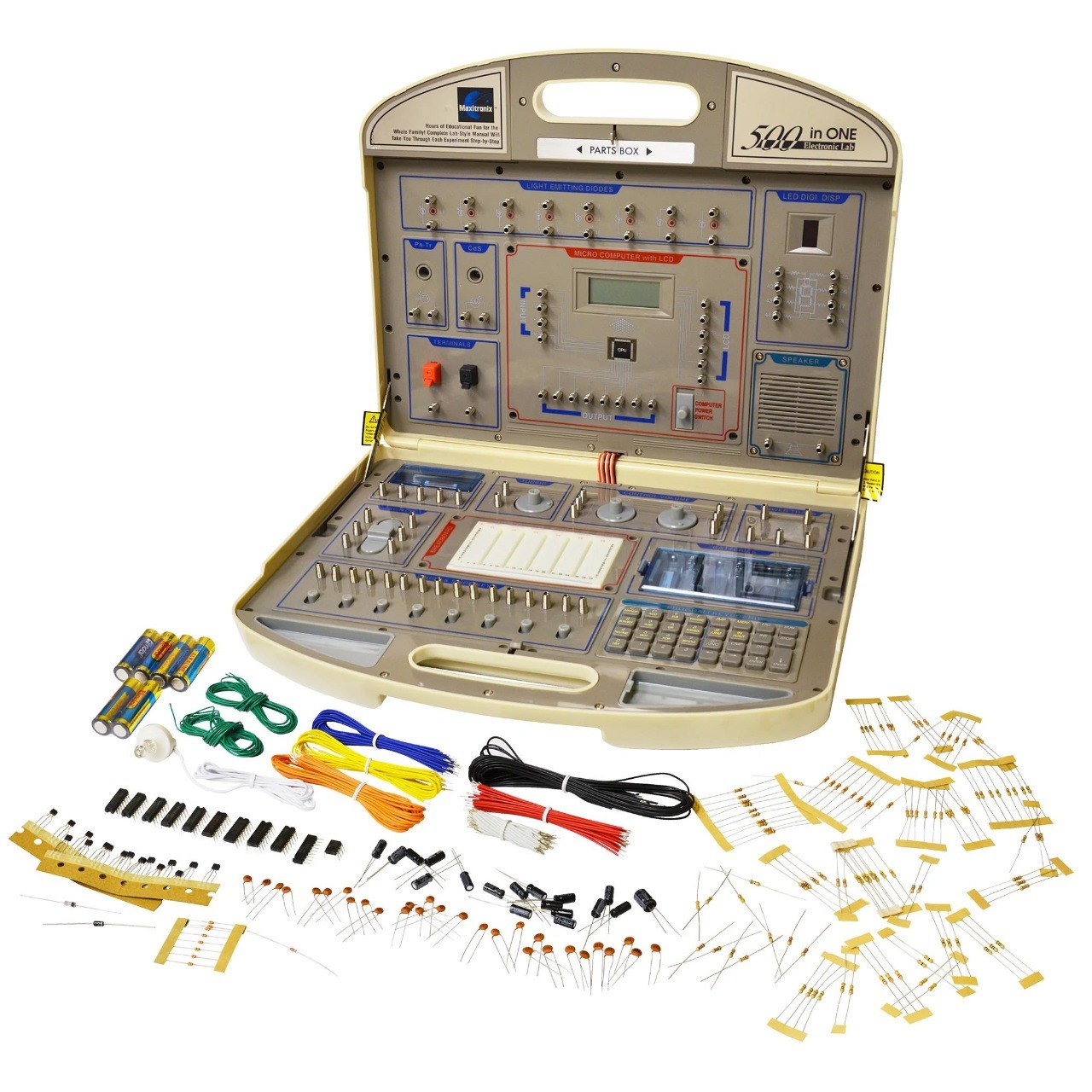
LOL so apparently I just noticed in one of the episodes of Star Trek Enterprise they tried to use one of those Radio Shack 100 in 1 electronics kits as an actual engineering prop. Never picked this up before but omg the lawls.
Also attached a picture of the actual retail device (technically marketed as 500 in 1)

- UFoI Member
- http://UFoI.org/u/freemo/
- Website
- http://JeffreyFreeman.me
- Gitlab
- https://git.qoto.org/freemo
Admin
Jeffrey Phillips Freeman
Innovator & Entrepreneur in Machine Learning, Evolutionary Computing & Big Data. Avid SCUBA diver, Open-source developer, HAM radio operator, astrophotographer, and anything nerdy.
Born and raised in Philadelphia, PA, USA, currently living in Utrecht, Netherlands, USA, and Thailand. Was also living in Israel, but left.
Pronouns: Sir / Mister
(Above pronouns are not intended to mock, i will respect any persons pronouns and only wish pronouns to show respect be used with me as well. These are called neopronouns, see an example of the word "frog" used as a neopronoun here: http://tinyurl.com/44hhej89 )
A proud member of the Penobscot Native American tribe, as well as a Mayflower passenger descendant. I sometimes post about my genealogical history.
My stance on various issues:
Education: Free to PhD, tax paid
Abortion: Protected, tax paid, limited time-frame
Welfare: Yes, no one should starve
UBI: No, use welfare
Racism: is real
Guns: Shall not be infringed
LGBT+/minorities: Support
Pronouns: Will respect
Trump: Moron, evil
Biden: Senile, racist
Police: ACAB
Drugs: Fully legal, no prescriptions needed
GPG/PGP Fingerprint: 8B23 64CD 2403 6DCB 7531 01D0 052D DA8E 0506 CBCE
Joined Jul 2018
