

🎓 Dr. Freemo  🇳🇱
@freemo@social.cleverlibre.org
- UFoI Member
- http://UFoI.org/u/freemo/
- Website
- http://JeffreyFreeman.me
- Gitlab
- https://git.qoto.org/freemo
Admin
Jeffrey Phillips Freeman
Innovator & Entrepreneur in Machine Learning, Evolutionary Computing & Big Data. Avid SCUBA diver, Open-source developer, HAM radio operator, astrophotographer, and anything nerdy.
Born and raised in Philadelphia, PA, USA, currently living in Utrecht, Netherlands, USA, and Thailand. Was also living in Israel, but left.
Pronouns: Sir / Mister
(Above pronouns are not intended to mock, i will respect any persons pronouns and only wish pronouns to show respect be used with me as well. These are called neopronouns, see an example of the word "frog" used as a neopronoun here: http://tinyurl.com/44hhej89 )
A proud member of the Penobscot Native American tribe, as well as a Mayflower passenger descendant. I sometimes post about my genealogical history.
My stance on various issues:
Education: Free to PhD, tax paid
Abortion: Protected, tax paid, limited time-frame
Welfare: Yes, no one should starve
UBI: No, use welfare
Racism: is real
Guns: Shall not be infringed
LGBT+/minorities: Support
Pronouns: Will respect
Trump: Moron, evil
Biden: Senile, racist
Police: ACAB
Drugs: Fully legal, no prescriptions needed
GPG/PGP Fingerprint: 8B23 64CD 2403 6DCB 7531 01D0 052D DA8E 0506 CBCE
Joined Jul 2018
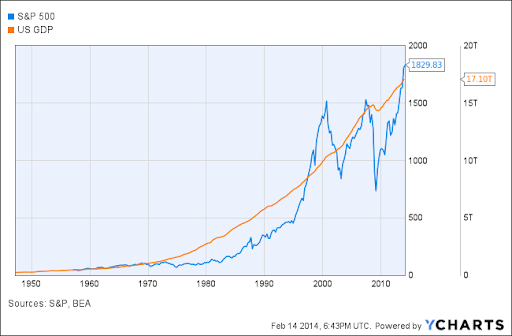
@seb As I pointed out earlier there is generally very strong correlation between stock market indexes and all the other indicators of economic growth, for example GNP.
@seb No thats not how data analysis works. You do not count the number of people That would be a dishonest and inaccurate representation. It is what we would call non-normalized data in the trade (remember this is what I do for a living).
As for looking at it against the population percentage, again, thats not an honest way to present the data either when we talk about cause and effect tests (things like the Granger Causality test). since we are trying to measure the causality between a change in policy (ending lockdown quickly) and its effect on the infection rate then the honest and accurate way to look at that is the rate of change of infection rate. It is the only way to make a case that suggests causality rather than simple correlation. Read up on the Granger Causality test to understand this idea a bit more if you'd like.
@seb Teh dates werent picked arbitrarily, they were picked very specifically in relationship to each countries re-opening schedule from about 2 month after reopening as the starting point in each case, which based on the R0 number for this virus is when it should peek outside of a lockdown.
The USA had the majority of its states reopen between may1st to may 30th, therefore mid July was selected. Canada's reopening was much more gradual however starting at the earliest in mid april with minimal openings, but not really reaching the level of reopening of the USA until much letter. So the trend for canada was picked 2 months after the reopenings began, and indeed we see the increases are more gradual at first since the reopening was slower, but ultimately cases just continued to increase.
So no, the dates were not picked arbitrarily but rather very specific for the case being made here.
@seb The numbers don't lie, Canada has had a 700% increase in COVID infections since June/July and the USA has had a 50% reduction in the same time period. Can't argue with numbers like this IMO.
I've already explained why infection rate is the valid number to observe if we talk about how well we handle the spread of this virus, death rate is related to entirely different factors, namely the health of americans whom have twice the comorbidities of any other country and with much more severe cases of both obesity and diabetes for the most part. that is largely unrelated to how we have handled the spread of COVID, so is not a meaningful number to quote where infection rate is.
@rbe_expert No your analogy is completely naive to the points of the argument, it isnt like that at all.
The point made here is exactly that lockdowns **do not** reduce the spread overall spread, it will only **delay** the spread. That is the key.
Its easy to understand why that is if you imagine an ideal lockdown where there is absolutely no spread of the virus locally, but where the virus remains in the wild. All that would do is put things on pause, you'd have no cases of any kind but eventually lockdown gets lifted. When it does you are right back at square one, the lock down had no benefit as now you have the whole population in the wild, no immunity, and the vir5us spreads exactly as it would when it was first introduced if no lock down were instituted. So it would effectively do nothing to reduce the spread of the virus in the long term.
If you consider partial (imperfect) lockdowns the scenario is the same except instead of completely pausing the spread it only temporarily slows it down and once the lockdown is lifted it goes back to spreading at its normal pace again and the overall numbers infected long-term would be the same as if the virus had never spread.
Now in the above scenario the total number infected would be the same long-term in both a full lockdown, partial lockdown, or no lockdown, if we were talking about a virus like measles where once you get it you are immune for life, because with such a virus you can develop a perfect herd immunity once a certain level of spread is reached, thus you an upper level which is always a constant for long-term end results.
However in this case we do not have the normal immunity properties we expect with measles, instead we have the same immunity properties we have with all other coronavirus-class viruses (for example the common cold is about 50% of the time a type of coronavirus). What we see is that when someone has a very mild case, particularly asymptomatic, then their immunity lasts only on the order of weeks. In a severe case the immunity appears to be in the ballpark of a year max, just like we see with types of coronavirus.
This changes the dynamics of herd immunity significantly. Consider the simple case where everyone had a severe infection (just to make the mental exercise easier to understand). Also lets pick a random number of 70% population immunity could theoretically cause herd immunity. If 70% of the population got infected overnight we would have herd immunity for a year and no new infections would be seen for a year after that. However if you slowed down the infection so that you stopped all new cases for a whole year and locked down everyone, then when they were released there would be no herd immunity, you'd see the same overnight spike, and you just wasted a year of your life in lockdown with no benefits, in the end the people still got infected.
So in the end the lockdowns dont help. There is in fact only one argument for the lock down, if your hospitals go over 100% capacity then a partial lock down makes sense to slow the virus just enough to get capacity below 100%. But in such a case you want a minimal lockdown such that it is just barely enough to get the numbers under 100% but no more than that. The USA hospitals on average have maintained a margin under 100% so this has not been an issue.
@mpjgregoire@mamot.fr No thats incorrect and not what I am saying.
What I am saying is the reason the USA has had significantly declining COVID **infection** rate since June/July compared to Canada and Europes significantly increasing **infection** rate is because europe and canada had much stricter and longer lockdowns.
The **death rate** is a seperate matter and how infection rates translate to death rate is mostly unrelated to the lockdown. the Factors that effect that are largely obesity and diabeties in the population which is the top comorbidity of COVID-19 and something america has at at least twice the rate of Canada and Europe.
So you have two factors at play, america is ahead of the game in terms of infection rate, but this still translates to more deaths per infection due to unrelated factors.
As for the lockdown comparison the United states was one of the earliest to lift the strictest aspects of the lockdown (where people were required to stay indoors except for essential business), in fact it is one of the biggest criticisms against him.
@Quansv This feels like it might be self promotion and/or spam.. Bear in mind if all your posts are limited to or strongly focus on promoting this one channel (which seems to promote products) your account will be suspended.
@rbe_expert Yes I know what your saying. that has the same consequences, just to a slightly lesser extent than locking everyone away.
Point is lockdowns don't work, to any extent, when dealing with a virus that has the sorts of qualities this virus has. A full lockdown would have the worst long-term results, a partial lock down isnt quite as bad but still does more harm than good.
Lockdowns do not work at surpressing a virus that is in the wild globally, has a large portion of asymptomatic carriers, has short incubation periods, and has weak long-term immune response.... it literally has all the characteristics that a lockdown is **not** suited for as a solution.
@tim No the graph doesnt make that point at all. As you can see it still correlates during short term variation as well. You can see rather clearly during the 2009 stock market crasht eh GNP also dipped at the same time, showing short term, <1 year, correlation.
Thanks for pointing out **my** point though :)
@tim Well yes and no.. There is plenty of evidence, the question is how confident can we be that the evidence ensures the outcome I stated. Nothing is 100% in science so there is always some room for error.
What I know from having worked in the past on disease proliferation models is that all the models we have when we deal with diseases that have the characteristics of COVID agree with what I said. What we also know is all the numbers regarding infection so far have matched those models exactly and that we have thus far seen the pattern agree exactly with what I said, Canada and europe has drastically increasing covid infection numbers while the USA has drastically decreasing numbers.
There are of course many other factors that could effect this, so there are no garuntees. But we absolutely have evidence to suggest what I said is valid, and that evidence has been consistent so far and relatively compelling.
@rbe_expert Yes it would. Even if you could some how figure out a way to make a non-capitalistic society work without everyone starving to death in general (has never been down) the productivity and ability to make progress in terms of infrastructure and resources still has just as much effect on the health of the population as in a capitalist society. If you lock everyone away and prevent them from working resources, including food, become scarce and people start dying.
The only difference you'd have in an idealistic non-capitalist society, say communism, would be instead of some people starving a bit more than others, everyone would starve and die together.
@tim Actually thats not true, at least not most of the time, sometimes it can be...
Typically the Stock Market in all countries, including the USA, shows very close correlation to other indicators of economic grown. For example the gold standard, the GNP tends to very closely correlate with the S&P 500 index.

@tim Oh and by the way Europe is showing the exact same pattern, since june/july covid cases have been going up and have similarly doubled, meanwhile in that same timespan the USA COVID cases have decreased at the rate I mentioned. Again showing the approach the USA took by ending the lockdowns earlier and not being as strict with them has the best long-term results on COVID infection rates. Strict lockdown means the vbirus spreads as it would have when new when you finally ease up on lockdowns, it doesnt work as a long term management solution.
@tim There are different aspects there that go beyond measuring if a lockdown is a good move or not. A large part of the death rate difference is two fold.. 1) the USA's tactic would and should have high death rate up front, lower death rate long-term if all else is equal. 2) All else is not equal, Americans have twice the rate of obesity, higher rate of diabetes, and poorer access to healthcare.
So because of point #2 we would expect a higher death rate for the same infection rate. Which is why comparing death rate is itself "hand waving" if we are trying to access the viability of the lockdown strategies themselves. So what matters is infection rate, not death rate (as that isnt influenced by the points in #2 nearly as much).
The fact is, since june/july Canada's infection rate has went up, and the USA's has went down, showing exactly what I describe.
The economy, and namely the stock market is **not** the main motivator here. The point is the strategy of not having strict lockdowns in its own right is showing successful based on our own trends of decreasing infection while countries that had strict lockdown show increasing infection rates, so it was a good strategy even without considering the economy. The fact that it also means we have stock market growth and not a crash is only a bonus.
We also cant forget that poverty kills, so it is hardly irrelevant.
So after reading a misleading meme on the internet I was compelled to compare the COVID situation in Canada over the past few months to that in the USA. This is what I notice.
The Canadian stock market has crashed by a thousand points since the beginning of the year and COVID cases in Canada have **increased** 700% since mid june... Compared to america where the stock market has **increased** by 3,000 points since the beginning of the year (thatsa 33% increase) and covid cases has **dropped** by more than 50% since the beginning of july.
The issue with lockdowns is they look great to everyone who is too ignorant to understand whats going on, but they devastate the economy and do no good because the second you let up the lock down no one has immunity and the virus spreads like it is new. So in the long run you get hit hard in the wallet AND in terms of the infection. Meanwhile the americans approach may have resulted in more infection early on but fewer in the long term and without damaging the economy along the way.
Status quo I guess is closest, it means neither to improve or to dismantle but rather to maintain things as they are.
Sadly thats true, though I might have voted Buttigeg too, though he has other issues.. Then again most republicans dont look much better sadly.
@sev At first they meant somewhat different things but today they are almost interchangeable since EDA kinda died out as its own thing and modern day ECAD just looks like EDA.
Originally ECAD was, similar to traditional CAD, int he sense that you designed things in 3D with a consideration of the dimensions and ultimately its compatibility with the case as you moved along. EDA however would largely have the developer focus mainly at the schematic level and the traces on the board without much regard tot he 3D layout. Though with the addition of 3D models in EDA and with ECAD integration in better with schematics the two have met in the middle and really arent different things anymore.
Thats how it was explained to me anyway.
- UFoI Member
- http://UFoI.org/u/freemo/
- Website
- http://JeffreyFreeman.me
- Gitlab
- https://git.qoto.org/freemo
Admin
Jeffrey Phillips Freeman
Innovator & Entrepreneur in Machine Learning, Evolutionary Computing & Big Data. Avid SCUBA diver, Open-source developer, HAM radio operator, astrophotographer, and anything nerdy.
Born and raised in Philadelphia, PA, USA, currently living in Utrecht, Netherlands, USA, and Thailand. Was also living in Israel, but left.
Pronouns: Sir / Mister
(Above pronouns are not intended to mock, i will respect any persons pronouns and only wish pronouns to show respect be used with me as well. These are called neopronouns, see an example of the word "frog" used as a neopronoun here: http://tinyurl.com/44hhej89 )
A proud member of the Penobscot Native American tribe, as well as a Mayflower passenger descendant. I sometimes post about my genealogical history.
My stance on various issues:
Education: Free to PhD, tax paid
Abortion: Protected, tax paid, limited time-frame
Welfare: Yes, no one should starve
UBI: No, use welfare
Racism: is real
Guns: Shall not be infringed
LGBT+/minorities: Support
Pronouns: Will respect
Trump: Moron, evil
Biden: Senile, racist
Police: ACAB
Drugs: Fully legal, no prescriptions needed
GPG/PGP Fingerprint: 8B23 64CD 2403 6DCB 7531 01D0 052D DA8E 0506 CBCE
Joined Jul 2018
