

🎓 Dr. Freemo  🇳🇱
@freemo@social.cleverlibre.org
- UFoI Member
- http://UFoI.org/u/freemo/
- Website
- http://JeffreyFreeman.me
- Gitlab
- https://git.qoto.org/freemo
Admin
Jeffrey Phillips Freeman
Innovator & Entrepreneur in Machine Learning, Evolutionary Computing & Big Data. Avid SCUBA diver, Open-source developer, HAM radio operator, astrophotographer, and anything nerdy.
Born and raised in Philadelphia, PA, USA, currently living in Utrecht, Netherlands, USA, and Thailand. Was also living in Israel, but left.
Pronouns: Sir / Mister
(Above pronouns are not intended to mock, i will respect any persons pronouns and only wish pronouns to show respect be used with me as well. These are called neopronouns, see an example of the word "frog" used as a neopronoun here: http://tinyurl.com/44hhej89 )
A proud member of the Penobscot Native American tribe, as well as a Mayflower passenger descendant. I sometimes post about my genealogical history.
My stance on various issues:
Education: Free to PhD, tax paid
Abortion: Protected, tax paid, limited time-frame
Welfare: Yes, no one should starve
UBI: No, use welfare
Racism: is real
Guns: Shall not be infringed
LGBT+/minorities: Support
Pronouns: Will respect
Trump: Moron, evil
Biden: Senile, racist
Police: ACAB
Drugs: Fully legal, no prescriptions needed
GPG/PGP Fingerprint: 8B23 64CD 2403 6DCB 7531 01D0 052D DA8E 0506 CBCE
Joined Jul 2018
So I was thinking a bit and want to get some input... As you all know QOTO is for anyone in STEM as a professional or with a passion for the topic.
I just had an idea of starting a sister-server, one based on the same principle as QOTO but oriented specifically for students and amateurs as seperate from QOTO, which will remain open to everyone.
This separation can have a few advantages. For starters a new server that will have a new reputation in the fediverse so will have much larger initial reach . But more importantly we can use the main server as sort of a source for mentorship for those on the younger server. I'd like to setup extracurricular servers that might be good to facilitate this and provide learning resources as well as publish more advanced content. Maybe even start a scientific journal or organize a shared blog where all our members can post to as a collective...
I'd love some thoughts.
🎓 Dr. Freemo 🇳🇱
boosted
🇳🇱
boosted

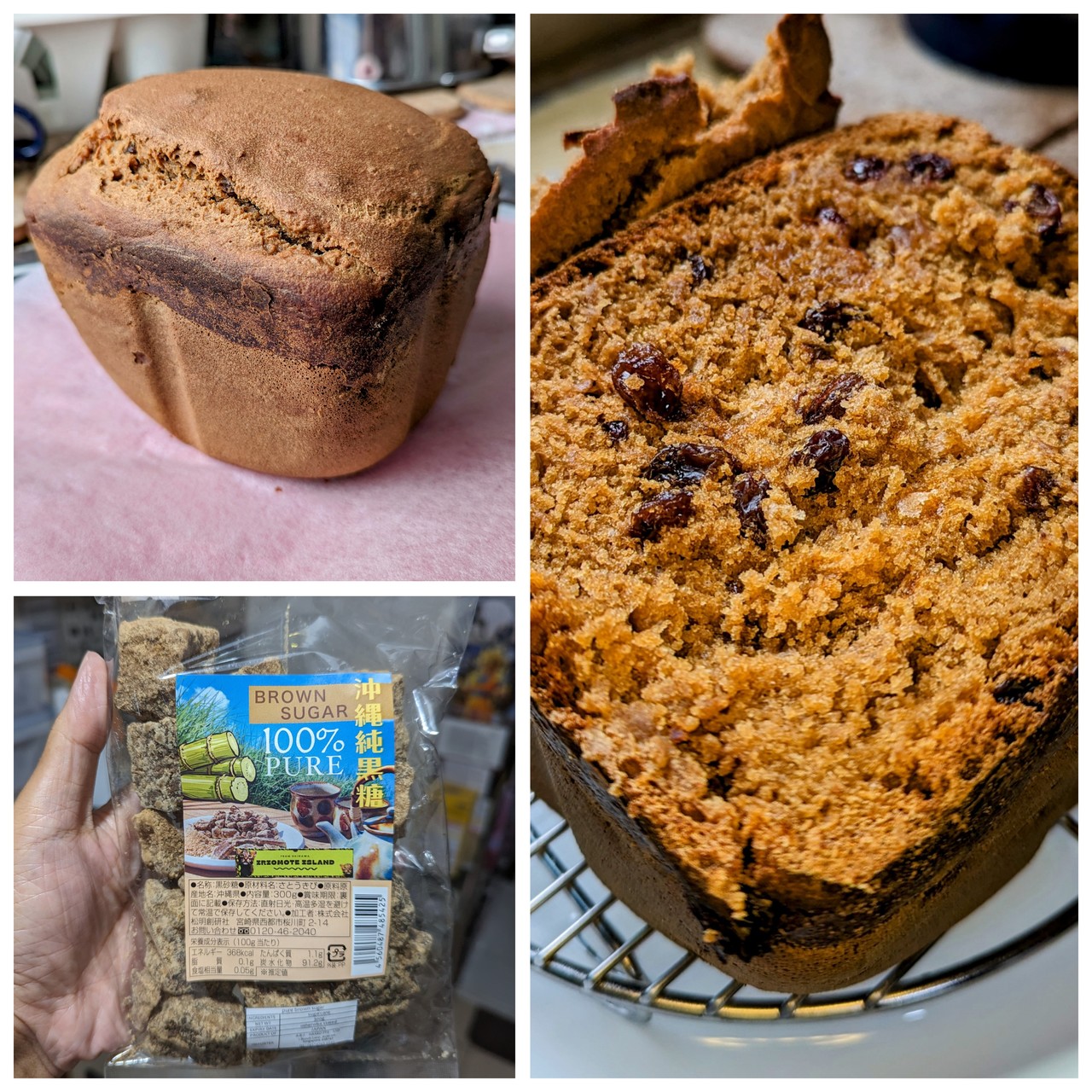
Okinawa Black Sugar Sourdough
Recipe: https://lupyuen.codeberg.page/articles/sourdough.html#okinawa-black-sugar-sourdough
@lupyuen Man that looks fricking amazing... When are you going to invite your local neighboorhood friendly QOTO admin over to eat all your food and say hi :)
🎓 Dr. Freemo 🇳🇱
boosted
🇳🇱
boosted

I am always glad when I hear people like it here and appreciate the style of moderation I brought. I appreciate that thanks for telling me.
I know I started #QOTO because i wasnt happy with any of the moderation on any of the servers out there. So I wanted to create my ideal moderation paradise. I never though so many people would gravitate towards it, its great!
Please #Share this to help others, thanks!
I offer free tutoring in most college level #STEM courses. Can be online, just random questions, video chat, or even in person.
If anyone needs help learning any STEM topic (even you arent in school), please reach out to me I am always happy to help. If I dont know the subject I can also maybe connect you with someone who does, but I am well versed on most of the basics like #Math, #Biology #statistics #BigData #programming #Chemistry #Medicine #ElectricalEngineering and #RF design.
Probably the exact thought every single person who has ever worked for me had the first hour or two they met me :)
I want to code #haskell so bad, but even now as I contemplate a green field project I just cant convince myself its a pragmatic decision...
I really need to find siome way to use this amazingly gun language!
@cobratbq yea looking for specific answers is rarely a helpful approach.
@tatzelbrumm Ya know oddly enough i cant remember ever being interviewed for the EE positions I've had. I was just offered the job no interview, or started as a non-EE and moved over once in my early career.
🎓 Dr. Freemo 🇳🇱
boosted
🇳🇱
boosted
@tatzelbrumm Usually if the interviewee is struggling or stressed I will remind them of this story, that I have had people who couldnt answer a single question that I've hired and that I care more about how they reason their way through a problem than what they know... so hopefully that helps the unequal treatment somewhat.
As for some of the questions I ask, I usually have a range of them from simple, to advanced but most of them are designed to have multiple levels of answers.
Also keep in mind since ive worked in so many diverse fields, usually as the boss, that the questions vary dramatically based on the field. Hiring chemists are very different questions than programmers, or medical doctors, or electrical engineers. So its hard to give you good examples that really covers the gammut.
I think you're a programmer IIRC so let me give you some examples from there:
On the whiteboard, in psuedocode, write for me an algorithm that will check if a number is prime. How would you be able to optimize it if you were asked to generate a bin of primes rather than to test for prime?
What is the difference between little-O, big-O little-omega and big-omega?
How would you evaluate a conventionally written algorithm to determine if it is likely to be suitable for GPU acceleration?
What is the fork-join pattern useful for and why is it so important?
🎓 Dr. Freemo 🇳🇱
boosted
🇳🇱
boosted

Ty. it was just a quick search & 1 link but lots easily found.
I forgot his immigration laws changes
And an opinion, but lots of facts - 2 links below
Understanding big-O notation is what gave me the revelation to understand why RF far-fields and near-fields exist. Specifically why one occurs over short distances and the other over long.
Anyone can guess what the connection between the two were for me?
@cobratbq yea when people start blanking i offer to give them some time alone to think... I usually like to let a candidate come in, answer some questions, then spend some time alone doing some coding stuff with ample time. The ample time is so they can reflect ont heir earlier questions and before they leave i try to probe them to see if they had any new thoughts.
Blanking under stress is common and I want to help that not be an issue.
@JonKramer Thats the kind of person I want!
Banning abortions after 6-weeks might have some merrit, but unless he also pushed to give free pregnancy tests and aide to those who need abortion then I'd say it was done improperly (thought could potentially support a post-8-week ban under those conditions)
The disney thing I'n need some more context on.
The other stuff is inexcusable no matter how you dice it.
I will check the link out shortly. Thanks!
@tatzelbrumm Usually if the interviewee is struggling or stressed I will remind them of this story, that I have had people who couldnt answer a single question that I've hired and that I care more about how they reason their way through a problem than what they know... so hopefully that helps the unequal treatment somewhat.
As for some of the questions I ask, I usually have a range of them from simple, to advanced but most of them are designed to have multiple levels of answers.
Also keep in mind since ive worked in so many diverse fields, usually as the boss, that the questions vary dramatically based on the field. Hiring chemists are very different questions than programmers, or medical doctors, or electrical engineers. So its hard to give you good examples that really covers the gammut.
I think you're a programmer IIRC so let me give you some examples from there:
On the whiteboard, in psuedocode, write for me an algorithm that will check if a number is prime. How would you be able to optimize it if you were asked to generate a bin of primes rather than to test for prime?
What is the difference between little-O, big-O little-omega and big-omega?
How would you evaluate a conventionally written algorithm to determine if it is likely to be suitable for GPU acceleration?
What is the fork-join pattern useful for and why is it so important?
@tatzelbrumm She did, and its been I think a decade since then and I have long since moved on from that job and we are still in touch. She did a wonderful job, and I got to teach her a lot in my time as her boss.
I have been told I give some of the most technically challenging interviews most people have ever experienced.. once a lady couldnt answer any of my questions, even the easy ones, and just started crying.. little did she know she got the job because im not looking for people who know the answers, I'm looking for people who ask the right questions to arrive at and understand the answers.
- UFoI Member
- http://UFoI.org/u/freemo/
- Website
- http://JeffreyFreeman.me
- Gitlab
- https://git.qoto.org/freemo
Admin
Jeffrey Phillips Freeman
Innovator & Entrepreneur in Machine Learning, Evolutionary Computing & Big Data. Avid SCUBA diver, Open-source developer, HAM radio operator, astrophotographer, and anything nerdy.
Born and raised in Philadelphia, PA, USA, currently living in Utrecht, Netherlands, USA, and Thailand. Was also living in Israel, but left.
Pronouns: Sir / Mister
(Above pronouns are not intended to mock, i will respect any persons pronouns and only wish pronouns to show respect be used with me as well. These are called neopronouns, see an example of the word "frog" used as a neopronoun here: http://tinyurl.com/44hhej89 )
A proud member of the Penobscot Native American tribe, as well as a Mayflower passenger descendant. I sometimes post about my genealogical history.
My stance on various issues:
Education: Free to PhD, tax paid
Abortion: Protected, tax paid, limited time-frame
Welfare: Yes, no one should starve
UBI: No, use welfare
Racism: is real
Guns: Shall not be infringed
LGBT+/minorities: Support
Pronouns: Will respect
Trump: Moron, evil
Biden: Senile, racist
Police: ACAB
Drugs: Fully legal, no prescriptions needed
GPG/PGP Fingerprint: 8B23 64CD 2403 6DCB 7531 01D0 052D DA8E 0506 CBCE
Joined Jul 2018
