

🎓 Dr. Freemo  🇳🇱
@freemo@social.cleverlibre.org
- UFoI Member
- http://UFoI.org/u/freemo/
- Website
- http://JeffreyFreeman.me
- Gitlab
- https://git.qoto.org/freemo
Admin
Jeffrey Phillips Freeman
Innovator & Entrepreneur in Machine Learning, Evolutionary Computing & Big Data. Avid SCUBA diver, Open-source developer, HAM radio operator, astrophotographer, and anything nerdy.
Born and raised in Philadelphia, PA, USA, currently living in Utrecht, Netherlands, USA, and Thailand. Was also living in Israel, but left.
Pronouns: Sir / Mister
(Above pronouns are not intended to mock, i will respect any persons pronouns and only wish pronouns to show respect be used with me as well. These are called neopronouns, see an example of the word "frog" used as a neopronoun here: http://tinyurl.com/44hhej89 )
A proud member of the Penobscot Native American tribe, as well as a Mayflower passenger descendant. I sometimes post about my genealogical history.
My stance on various issues:
Education: Free to PhD, tax paid
Abortion: Protected, tax paid, limited time-frame
Welfare: Yes, no one should starve
UBI: No, use welfare
Racism: is real
Guns: Shall not be infringed
LGBT+/minorities: Support
Pronouns: Will respect
Trump: Moron, evil
Biden: Senile, racist
Police: ACAB
Drugs: Fully legal, no prescriptions needed
GPG/PGP Fingerprint: 8B23 64CD 2403 6DCB 7531 01D0 052D DA8E 0506 CBCE
Joined Jul 2018
@cowanon So what you really want to know is how can you verify what is scientifically and rigorously shown to be true beyond reasonable doubt?
@cowanon You just want to know the meaning of those words? What was unclear when you tried to look it up?
@ericbuijs1 They arent spamming the instance, they dont tag anyone, follow anyone, and are marked as a bot.
There is nothing about that bot that would constitute spam. Making a handful of posts over a short period once a day is hardly spam by any measure.
I do appreciate you mentioning it, but any user can filter out bots if they dont want to see automated posts. So its a non-problem as far as I can see.
Thank you.
Fair point, but as you say, context. It is explaining that while gender grew out of the idea of sex it has now come to mean something no longer dictated by sex.
@design_RG Still cool, thanks for sharing!
@design_RG ANCIENT - GREEK EMPIRES (6th CENT BC - 5th CENT AD) KINGDOM OF MACEDON Alexander III, 336-323 BC
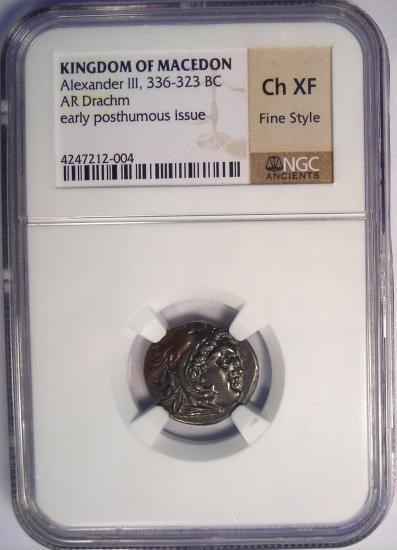
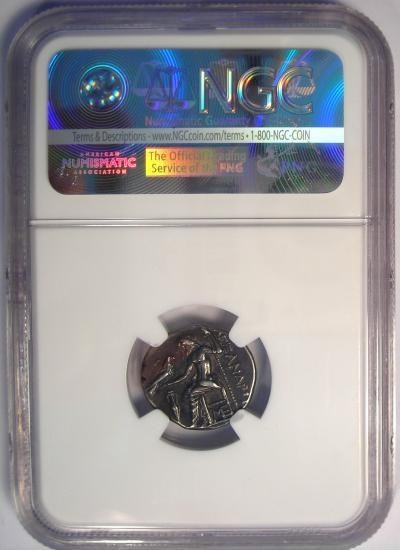
@design_RG ANCIENT - BYZANTINE (5th CENT AD - 15th CENT AD) BYZANTINE EMPIRE Constans II, AD 641-668
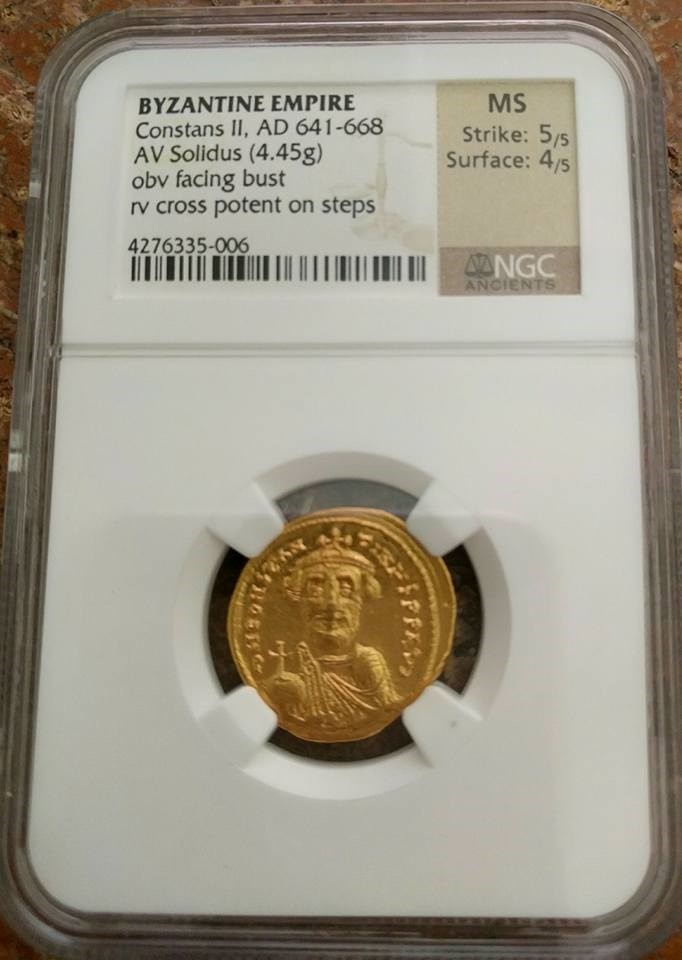
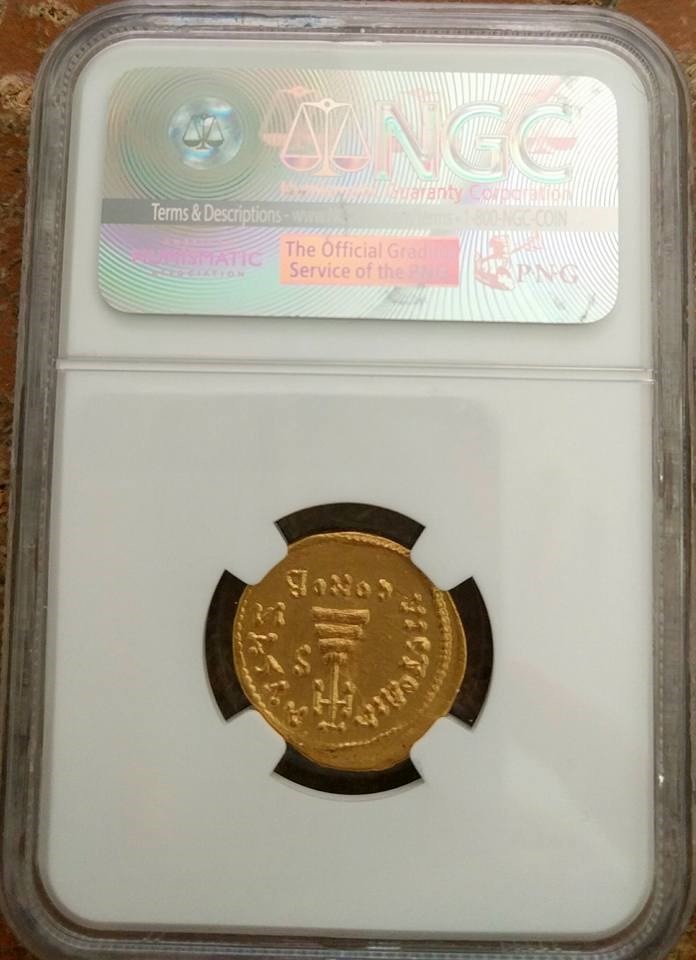
No, if that were the case then the definition would say so. Definitions are wordy and precise specifically so you cant pull that sort of nonsense.
What I will say is this. At the time cross-dressers/trans were a lot less common in public. For that reason most of the time it wasnt even a question which one had to think about when talking about people. That only happened behind closed doors.
@georgia lol funny but is actually true. Stars scintilate (twinkle), planets dont. Still true today :)
@CCoinTradingIdeas Gender is still about words, The words we use called adjectives. No one wants it to be about anything other than that. Thats why sex is a different word.
There are only two **sexes** (and more rarely intersex). But as the definition has **always** been, sex is **not** the same as gender.
@georgia For reference here is the original (1828) definition for planet. It would include pluto and exclude most kepler objects in its wording. It is the real definition as far as im concerned as it developed through natural usage
noun [Latin planeta; Gr. wandering, to wander, allied to Latin planus. See Plant.] A celestial body which revolves about the sun or other center, or a body revolving about another planet as its center. The planets which revolve about the sun as their center, are called primary planets; those which revolve about other planets as their center, and with them revolve about the sun, are called secondary planets, satellites or moons. The primary planets are named Mercury, Venus, Earth, Mars, Jupiter, Saturn and Herschell. Four smaller planets, denominated by some, asteroids, namely, Ceres, Pallas, Juno and Vesta, have recently been discovered between the orbits of Mars and Jupiter. Mars, Jupiter, Saturn and Herschell, being without the earth's orbit, are sometimes called the superior planets; Venus and Mercury, being within the earth's orbit, are called inferior planets. The planets are opake bodies which receive their light from the sun. They are so named from their motion or revolution, in distinction from the fixed stars, and are distinguished from the latter by their not twinkling.
@Rovine There are two different arguments being conflated here
1) People can choose their gender, on a spectrum between masculine and feminine, based on how they express themselves (dress, act, talk)
2) That genders do not exist on a spectrum and can be anything that you feel id "right"
I agree with #1, but not with #2.
Which of these posts were commercial in nature? All I see are free-to-the-pubic journal papers, nothing commercial.
Interesting fact of the day: Webster's Dictionary in 1828 defined gender in much the same way as modern liberals define it, that being, ones expression of pronouns and does not strictly adhere to any sense of sex. In fact the dictionary definition at the time goes into some detail on that point.
So strictly speaking assigning ones gender based on preferred pronouns or expression of femininity/masculinity is in fact the traditional and historic usage of the word.
Here is a word-for-word copy of the text of the definition for gender in Webster's 1828 dictionary:
In grammar, a difference in words to express distinction of sex; usually a difference of termination in nouns, adjectives and participles, to express the distinction of male and female. But although this was the original design of different terminations, yet in the progress of language, other words having no relation to one sex or the other, came to have genders assigned them by custom. Words expressing males are said to be of the masculine gender; those expressing females, of the feminine gender; and in some languages, words expressing things having no sex, are of the neuter or neither gender
@Rod Very cool, ill try it soon!
@georgia Crafting of definitions are based on usage, we dont get to pick and choose what a definition is for existing words.
Planet was never a technical term, it was archaic, so they had no right to try to redefine it contrary to its usage. If they wanted a technical term then they should have made up a new term for what they wanted.
Thats the whole point, you dont get the right to craft definitions for words already in common use, the usage dictates the definition not the other way around.
@Rod hyperspace?
@iamo Life in general? Have you considered looking for some help to get happy again from someone trained to help?
@bauglir Yes it is, its on our gitlab instance.
Yes we are working on the 3.0 update and should be doing the move soon. There is a bit of fear over it dropping OStatus and thus would cut us off from systems that federate with that protocol.
- UFoI Member
- http://UFoI.org/u/freemo/
- Website
- http://JeffreyFreeman.me
- Gitlab
- https://git.qoto.org/freemo
Admin
Jeffrey Phillips Freeman
Innovator & Entrepreneur in Machine Learning, Evolutionary Computing & Big Data. Avid SCUBA diver, Open-source developer, HAM radio operator, astrophotographer, and anything nerdy.
Born and raised in Philadelphia, PA, USA, currently living in Utrecht, Netherlands, USA, and Thailand. Was also living in Israel, but left.
Pronouns: Sir / Mister
(Above pronouns are not intended to mock, i will respect any persons pronouns and only wish pronouns to show respect be used with me as well. These are called neopronouns, see an example of the word "frog" used as a neopronoun here: http://tinyurl.com/44hhej89 )
A proud member of the Penobscot Native American tribe, as well as a Mayflower passenger descendant. I sometimes post about my genealogical history.
My stance on various issues:
Education: Free to PhD, tax paid
Abortion: Protected, tax paid, limited time-frame
Welfare: Yes, no one should starve
UBI: No, use welfare
Racism: is real
Guns: Shall not be infringed
LGBT+/minorities: Support
Pronouns: Will respect
Trump: Moron, evil
Biden: Senile, racist
Police: ACAB
Drugs: Fully legal, no prescriptions needed
GPG/PGP Fingerprint: 8B23 64CD 2403 6DCB 7531 01D0 052D DA8E 0506 CBCE
Joined Jul 2018
