

🎓 Dr. Freemo  🇳🇱
@freemo@social.cleverlibre.org
- UFoI Member
- http://UFoI.org/u/freemo/
- Website
- http://JeffreyFreeman.me
- Gitlab
- https://git.qoto.org/freemo
Admin
Jeffrey Phillips Freeman
Innovator & Entrepreneur in Machine Learning, Evolutionary Computing & Big Data. Avid SCUBA diver, Open-source developer, HAM radio operator, astrophotographer, and anything nerdy.
Born and raised in Philadelphia, PA, USA, currently living in Utrecht, Netherlands, USA, and Thailand. Was also living in Israel, but left.
Pronouns: Sir / Mister
(Above pronouns are not intended to mock, i will respect any persons pronouns and only wish pronouns to show respect be used with me as well. These are called neopronouns, see an example of the word "frog" used as a neopronoun here: http://tinyurl.com/44hhej89 )
A proud member of the Penobscot Native American tribe, as well as a Mayflower passenger descendant. I sometimes post about my genealogical history.
My stance on various issues:
Education: Free to PhD, tax paid
Abortion: Protected, tax paid, limited time-frame
Welfare: Yes, no one should starve
UBI: No, use welfare
Racism: is real
Guns: Shall not be infringed
LGBT+/minorities: Support
Pronouns: Will respect
Trump: Moron, evil
Biden: Senile, racist
Police: ACAB
Drugs: Fully legal, no prescriptions needed
GPG/PGP Fingerprint: 8B23 64CD 2403 6DCB 7531 01D0 052D DA8E 0506 CBCE
Joined Jul 2018
FYI you can easily hack a 15$ spark cap lighter off amazon and turn it into a a high voltage power supply. Im easily getting a 1cm spark gap off this. They are AC so could easily hook it as a first stage to a tesla coil id imagine.
🎓 Dr. Freemo 🇳🇱
boosted
🇳🇱
boosted


Progressive Surprised To Learn He Can Still Wear Mask Even Without Government Forcing Him To https://babylonbee.com/news/progressives-worried-that-without-mask-mandate-theyll-have-to-take-responsibility-for-their-own-decisions https://twitter.com/TheBabylonBee/status/1368667772322914304 #Comedy
--
bot list: https://joejoe.github.io/mastodon
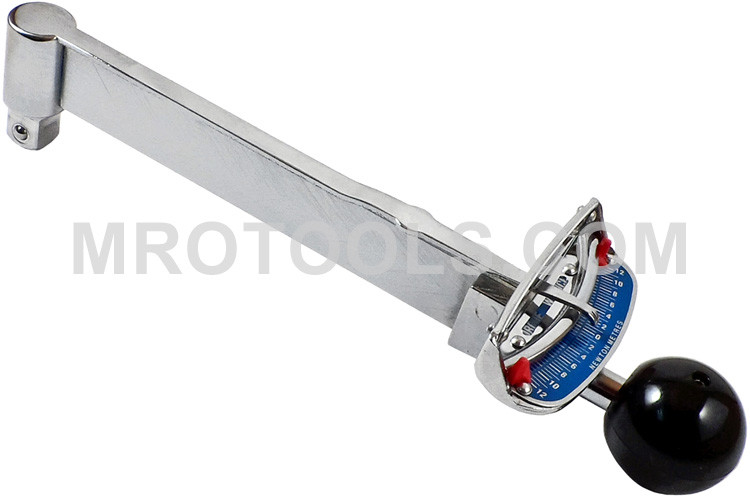
Thats weird, in most of the world other than the USA torque wrenches are indeed in newton meters. You can see one attached.
@lupyuen We do have vietnamese resteraunts but keep in mind america for whatever reason bastardizes ansy sort of asian food and its really just some american thing.
What I'd need to do is go into the vietnamese market we have (where native vietnamese imigrants tend to go) and go to the resteraunt there, then I'd have to ask for the vietnamese menu (they tend to hide it) and order off that.. however it is never in english. but I can ask the waiter, I bet they would know if i describe it.
I'm sure its safe to eat i was just surprised by its raw look. On closer inspection it seems the meat is cooked its just poached (boiled?) which explains why it looks almost raw but isnt, the meat isnt pink.
either way I intent to make it a point to try it sometime soon if I can find it. I need to start traveling again soon and asian countries including singapore is on my list.
correct, they are the exact same concepts just with different base units with metric prefixes.
By the way there is a non-standard (so while metric not part of SI metric) for newton-force and thats kilogram force. It would be the force exerted by 1 kg, and therefore more similar to the pound-force.. reason it isnt used is because it produces weird numbers (in much the same way pound-force does).. whereas newton-force sticks to units of 1 and doesnt rely on gravity so much easier to use intuitively in calculations.
@lupyuen I dont really know enough about singapore food. We have a few things we claim are singapore foods in america but probably in reality has nothing to do with singapore food...
Based on the wikipedia article sounds like something id love to try.
Ooops, yes your right.. my brain mixed it with the first few digits of pi apparently :)
@lupyuen why does the chicken look raw, is this some sort of native food thing, is it really just steamed or something and looks raw? Any spices? Any good? (I love learning about how people eat in other countries :)
Ps, yes I just used an emoji smiley to simultaneous act as a smiley and to close a parenthesis.
@cjd A newton is the same idea s a pound-force but applies to kg with simpler numbers.. 10 kg in weight is similar the same force (exerted due to gravity) as 1 newton.. everyone is familiar with it too. the difference is the math is based on simple multiples of 10...
Now ask any random american to calculate something from a pound-force and the numbers are so convoluted even experienced people often cant.. "What if I apply 5 ounce-force to a ton of bricks how fast will it accelerate".. good luck finding a single american who can answer that... however ask "if i apply 5 millinewton to 10 kg of metal how fast will it accelerate", then youc an do the math in your head and most europeans would have little problem doing it if they know even basic math.
Sorry but i am not seeing where the advantage of a pound-force is here at all.
@cjd Everything you said applies just as much to imperial as metric... Newton is no more a basic unit than the pound-force is.. However a newton is a combination of the same units in metric as pound-force is in imperial, except that of course imperial units use convoluted numbers and multiplies where metric does not.
In metric is really simple, a newton is the force it takes to make 1 kg of mass accelerate at 1 m/s^2, nice and easy... not so much with the imperial pound-force. 1 pound-force is equal to the force it takes to accelerate 1 pound by 32.174 ft/s2 (good luck remembering that).. or if you really want to get convoluted 1 ounces (16 ounce-force) by 514.784 ft/sec^2
I think its quite obvious that newtons are far more intuitive and easier to remember than the convoluted pound-force.
> I already told you: PSI, foot-pounds (torque) and foot-pounds (work). They are intuitive to anybody who knows two of the most basic units of that system of measures.
Yes but that was trivially debunked... Anyone working with the metric system has equivelant units.. Pascal (pressure), Newton-meters (torque) and Newton-meters (work), which require only knowledge of the two most basic units of the metric system, meters and newtons...
So you havent in any way given why imperial is superior at all.. you just said "if i already know how to work with these really obscure units that no one in the world but me and people near me use then its easier cause im familiar with it"... thats a horrible excuse considering we live in a wider world..
Moreover there ARE disadvantages beyond just familiarity.. the lack of easy to remember prefixes being the most notable which makes the imperial system far far less intuitive when working PSI or foot-pounds at large or small scale, while its trivial to work at large or small scales in the metric equivalent.
so while you did try to make that argument it ultimately failed quite poorly IMO.
Moreover forcing a system of measurement on a people is only bad if its arbitrary, when the new system of measurement is significantly superior, as metric is, then it isnt a bad thing at all. Americans would be better off in the end by far considering they are adopting a system with many advantages and leaving behind a system without a single advantage aside from familiarity (which is temporary).
@js290 It feels like this guy doesnt have the first clue what he is talking about (over and over again he says misleading and incorrec tthings) and is just quoting wikipedia or something without understand it.
@js290 What are youa sking or stating by sharing that.. he says some misleading things you probably picked up on.
@cjd Your expiernce is not in question. I was merely pointing out that scienctists that tend to take on personal projects need to work with every single one of those pieces of equipment as well. Building devices is hard to escape in most areas of science and they tend to have demanding specifications.
Thing is, you havent actually given a single reason that the imperial system is better, the few you gave were simply incorrect (like implying that newtons wasnt based on base metric units).. .yet there are quite a few reasons metric is superior (intuitive units that scale by simple powers of 10).
If you could list even one example of how imperial units are easier to work with in any context at all (that doesnt rely on simple familiarity with imperial units itself) then I'd be happy to consider it. But so far there isnt a single advantage mentioned to imperial units of any kind, not a single setting where imperial units are the norm (outside of the USA), and quite a few reasons metric units are suprior.
There is a reason the entire world, except the USA, uses metric units whether its science, woodworking, carpentry, metalwork, lathe, or any other field you can imagine.. because its the better choice in every field except in the USA which for whatever reason prefers to stay in the dark ages when it comes to unit of measurements.
@cjd You probably dont realize it but doing science tends to require building things, and often those things can be fairly advanced with very critical specifications. A few millimeters off and you wind up with something that doesnt work at all or bad data.
Have you ever built a particle accelerator by hand for example?
@cjd yes many times both in metric and imperial units. All the ones in the netherlands and europe are exclusively metric of course.
In fact aside from a small global population in the USA virtually the entire world of people who work with such things all do so in metric...
your point?
@cjd You seem confused...
you said
> If instead of Newtons there was just kg-force
A newton is a unit force, so adding kg into it as kg-force makes no sense. A newton (as any force would be) is mass-acceleration which in this case is the standard kg * m/s^2
So its already in standard units and all nice simple multiples (unlike PSI which becomes quite confusing in any other multiple like feet)
- UFoI Member
- http://UFoI.org/u/freemo/
- Website
- http://JeffreyFreeman.me
- Gitlab
- https://git.qoto.org/freemo
Admin
Jeffrey Phillips Freeman
Innovator & Entrepreneur in Machine Learning, Evolutionary Computing & Big Data. Avid SCUBA diver, Open-source developer, HAM radio operator, astrophotographer, and anything nerdy.
Born and raised in Philadelphia, PA, USA, currently living in Utrecht, Netherlands, USA, and Thailand. Was also living in Israel, but left.
Pronouns: Sir / Mister
(Above pronouns are not intended to mock, i will respect any persons pronouns and only wish pronouns to show respect be used with me as well. These are called neopronouns, see an example of the word "frog" used as a neopronoun here: http://tinyurl.com/44hhej89 )
A proud member of the Penobscot Native American tribe, as well as a Mayflower passenger descendant. I sometimes post about my genealogical history.
My stance on various issues:
Education: Free to PhD, tax paid
Abortion: Protected, tax paid, limited time-frame
Welfare: Yes, no one should starve
UBI: No, use welfare
Racism: is real
Guns: Shall not be infringed
LGBT+/minorities: Support
Pronouns: Will respect
Trump: Moron, evil
Biden: Senile, racist
Police: ACAB
Drugs: Fully legal, no prescriptions needed
GPG/PGP Fingerprint: 8B23 64CD 2403 6DCB 7531 01D0 052D DA8E 0506 CBCE
Joined Jul 2018
