

🎓 Dr. Freemo  🇳🇱
@freemo@social.cleverlibre.org
- UFoI Member
- http://UFoI.org/u/freemo/
- Website
- http://JeffreyFreeman.me
- Gitlab
- https://git.qoto.org/freemo
Admin
Jeffrey Phillips Freeman
Innovator & Entrepreneur in Machine Learning, Evolutionary Computing & Big Data. Avid SCUBA diver, Open-source developer, HAM radio operator, astrophotographer, and anything nerdy.
Born and raised in Philadelphia, PA, USA, currently living in Utrecht, Netherlands, USA, and Thailand. Was also living in Israel, but left.
Pronouns: Sir / Mister
(Above pronouns are not intended to mock, i will respect any persons pronouns and only wish pronouns to show respect be used with me as well. These are called neopronouns, see an example of the word "frog" used as a neopronoun here: http://tinyurl.com/44hhej89 )
A proud member of the Penobscot Native American tribe, as well as a Mayflower passenger descendant. I sometimes post about my genealogical history.
My stance on various issues:
Education: Free to PhD, tax paid
Abortion: Protected, tax paid, limited time-frame
Welfare: Yes, no one should starve
UBI: No, use welfare
Racism: is real
Guns: Shall not be infringed
LGBT+/minorities: Support
Pronouns: Will respect
Trump: Moron, evil
Biden: Senile, racist
Police: ACAB
Drugs: Fully legal, no prescriptions needed
GPG/PGP Fingerprint: 8B23 64CD 2403 6DCB 7531 01D0 052D DA8E 0506 CBCE
Joined Jul 2018
@1iceloops123 it can fit almost any size since it comes with multiple length screws. The 8 that i have in mine took the largest length screws. You can probably use it for 2 or more keys if i had to guess.
@lucifargundam yea it wont taste like a crunch bar, but is probably good in its own right.
@lucifargundam the coco pebbles chocolate bar looks good as hell!
@skells If life is too short then best not to start unintentional drama and keep to non-offensive terms.
@skells Transvestite is considered a rude term, they prefer transsexual. I assume this was just a mistake on your part, so be aware for the future.
Did your remote follow request actually get accepted and go through. If you go to the profile now does it say you are following them?
My guess is that the server has us blocked. From what I can tell from the moderators page they block VERY heavily including mastodon.online and fosstodon and other generally well behaved instances have gotten the block hammer from them.
@1iceloops123
Ill find a link for ya
re: AI
A rough benchmark Quinn did comparing the HAM algorithm (I wrote it some years back) to the well known Spring algorithm.
Apparently on his test the Spring algorithm took 2s to complete and the HAM algorithm only 21ms, they are otherwise very similar algorithms in terms of their results. I've found these results are pretty typical of past benchmarks I've seen.

🎓 Dr. Freemo 🇳🇱
boosted
🇳🇱
boosted
re: AI
@freemo interesting to note that if i put nim in total performance mode (these tests were run in the default debug mode, i did a second set with all the safeties off and all the speed settings on) HAM runs in 21ms and springy runs in 2s.
re: AI
@icedquinn ohhh very cool you implemented my HAM algorithm! Awesome.
The 2s vs 21ms difference is huge, and in fact not that uncommon. Always exciting to see someone put one of my algo to the test!
🎓 Dr. Freemo 🇳🇱
boosted
🇳🇱
boosted
re: AI
# Module: Iced Quinn, 2021
# Algorithm: Jeffrey Phillips Freeman, 2017
# https://jeffreyfreeman.me/hyperassociative-map-explanation/

import math, random

# chi: ideal distance between nodes
# sigma: how strong unrelated nodes repel one another; smaller is stronger
# nu: learning rate
# beta: alignment threshold; stop when movement in an iteration falls below this

# neighbors: any vertex connected by an edge to this one
# non-neighbor: other vertices who are not connected by an edge

# TODO don't take sqrts and use pre-squared values; saves time

const
   Nu = 0.05
   Beta = 0.005

type
   Vertex* = object
      x*, y*: float
      edges*: seq[int]

   Edge* = object
      v1*, v2*: int
      length*: float

   Solver* = object
      chi*, sigma*: float
      vertices*: seq[Vertex]
      edges*: seq[Edge]
      rng*: Rand

func add*(self: var Solver; v: Vertex) {.inline.} =
   self.vertices.add v

func add*(self: var Solver; e: Edge) {.inline.} =
   self.edges.add e
   self.vertices[e.v1].edges.add self.edges.high
   self.vertices[e.v2].edges.add self.edges.high

func mag(s: varargs[float]): float =
   result = 0
   for k in s:
      result += (k * k)
   result = sqrt(result)

func relates(self: Edge; v: int): bool =
   result = false
   if self.v1 == v: return true
   if self.v2 == v: return true

func opposite(self: Edge; v: int): int =
   if v == self.v1: return self.v2
   if v == self.v2: return self.v1
   # TODO find proper exception
   raise new_exception(Defect, "Vertex was not in edge")

func set_defaults*(self: var Solver) =
   self.chi = 1
   self.sigma = 2

func validate(self: Edge) =
   assert self.length > 0

func validate(self: Solver) =
   assert self.sigma > 1

func randomize(self: var Solver) =
   # TODO somehow check if the randomizer is uninitialized, as that will cause an infinite lockup
   for i in 0..<self.vertices.len:
      self.vertices[i].x = self.rng.gauss()
      self.vertices[i].y = self.rng.gauss()

iterator neighbors(self: Solver; vi: int): lent Vertex =
   # yield only nodes which do share edges with v_i
   for ei in self.vertices[vi].edges:
      yield self.vertices[opposite(self.edges[ei], vi)]

iterator neighbors_edge(self: Solver; vi: int): (lent Vertex, float) =
   # yield only nodes which do share edges with v_i
   for ei in self.vertices[vi].edges:
      yield
         (self.vertices[opposite(self.edges[ei], vi)],
         self.edges[ei].length)

iterator not_neighbors(self: Solver; vi: int): lent Vertex =
   # yield only nodes which do not have edges with v_i
   for i in 0..<self.vertices.len:
      block mushroom:
         for ei in self.vertices[i].edges:
            if relates(self.edges[ei], vi): break mushroom
         yield self.vertices[i]

func align(self: var Solver; vi: int): (float, float) =
   var v = addr self.vertices[vi]

   let px = v.x
   let py = v.y
   var dpx = 0.0
   var dpy = 0.0

   for (m, chi) in neighbors_edge(self, vi):
      let qx = m.x - px
      let qy = m.y - py
      let q = mag(qx, qy)
      dpx += qx * (((q - chi) * Nu) / q)
      dpy += qy * (((q - chi) * Nu) / q)

   for m in not_neighbors(self, vi):
      let qx = m.x - px
      let qy = m.y - py
      let q = mag(qx, qy)
      var cx = qx * (-Nu / (pow(q, self.sigma + 1)))
      var cy = qy * (-Nu / (pow(q, self.sigma + 1)))
      let c = mag(cx, cy)
      if c > self.chi:
         cx *= (self.chi / c)
         cy *= (self.chi / c)
      dpx += cx
      dpy += cy

   return (dpx, dpy)

func align_all(self: var Solver): float =
   result = 0
   for i in 0..<self.vertices.len:
      var v = addr self.vertices[i]
      let (dpx, dpy) = align(self, i)
      let dp = mag(dpx, dpy)
      if dp > result:
         result = dp
      v.x += dpx
      v.y += dpy

func solve*(self: var Solver) =
   validate(self)
   debugecho "> randomizing"
   randomize(self)
   debugecho "> solving"
   var i = 0
   let target = Beta * self.chi
   while true:
      let energy = align_all(self)
      inc i
      debugecho i, ",", energy

      if energy < target: break
      # optional: could recenter the graph if you wanted
re: AI
@icedquinn Havent messed with nim too much, sounds cool though!
@Wetrix Not sur eI can call it an accomplishment, but I am pretty happy with it :)
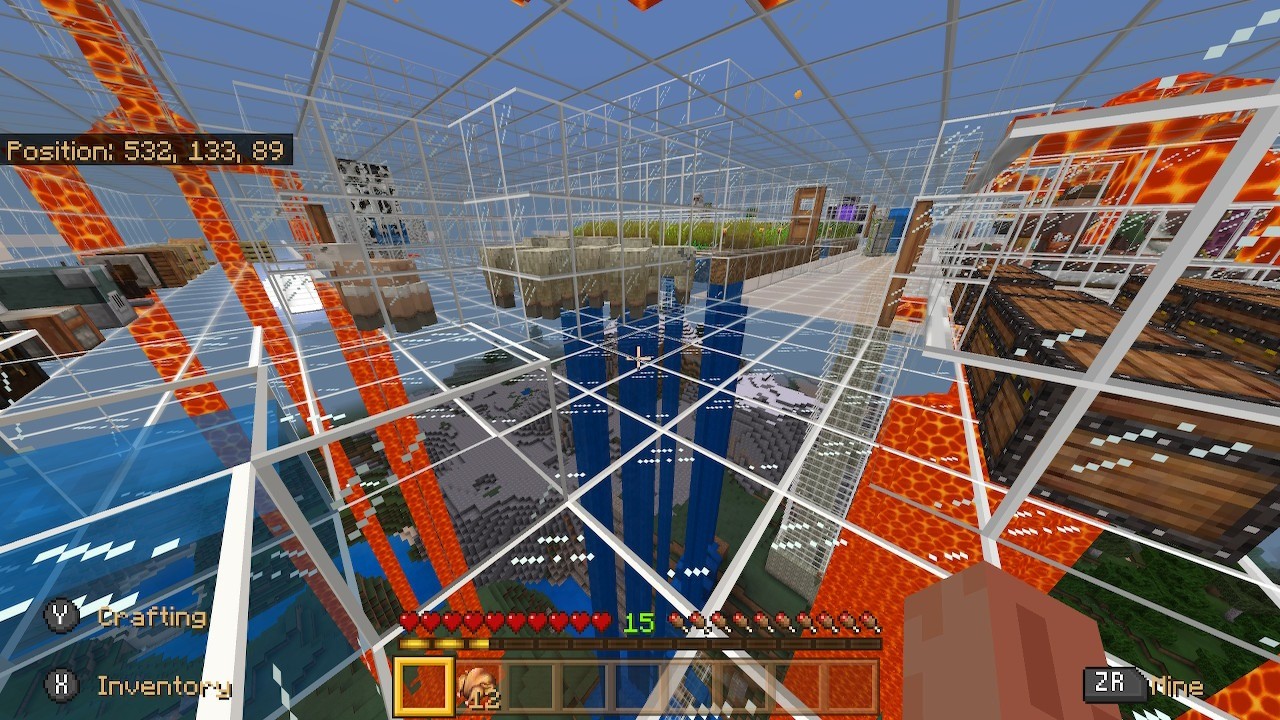
Here are two pictures from the inside, one shows the room with all the beds for all the villagers who are just waking up.

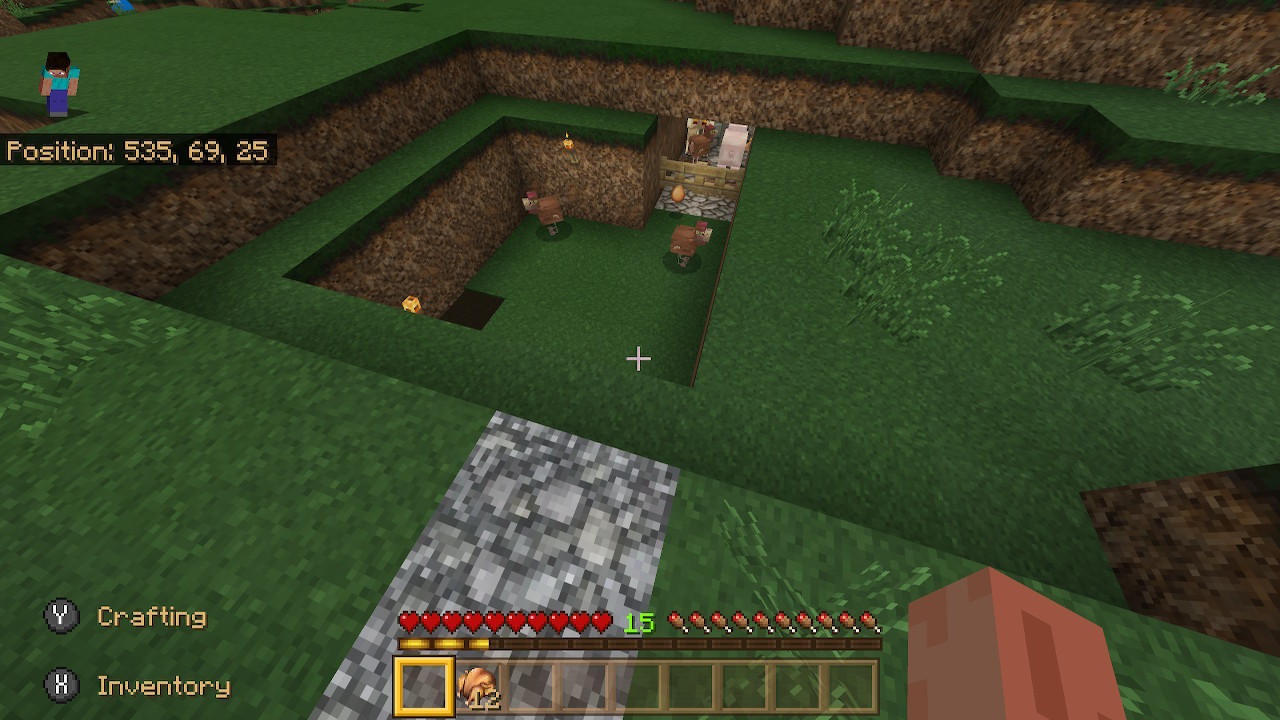
This is a picture of my animal trap outside I used to capture animals and eventually get them inside.
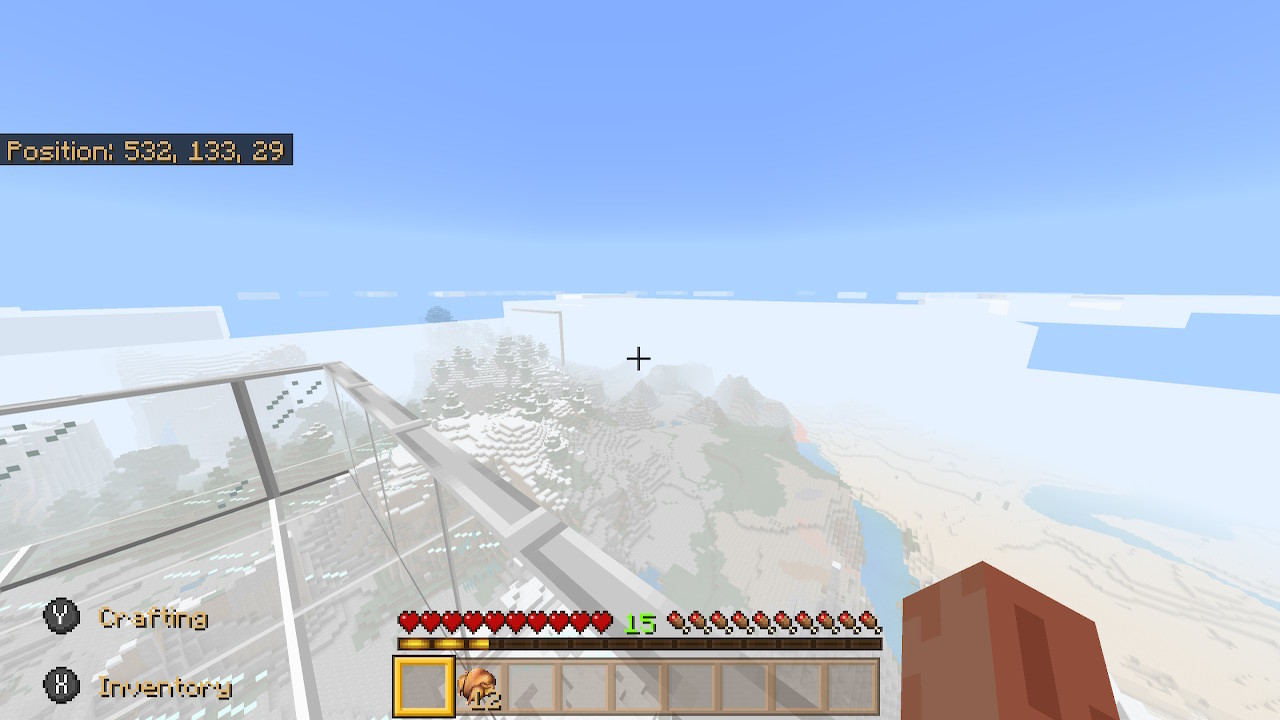
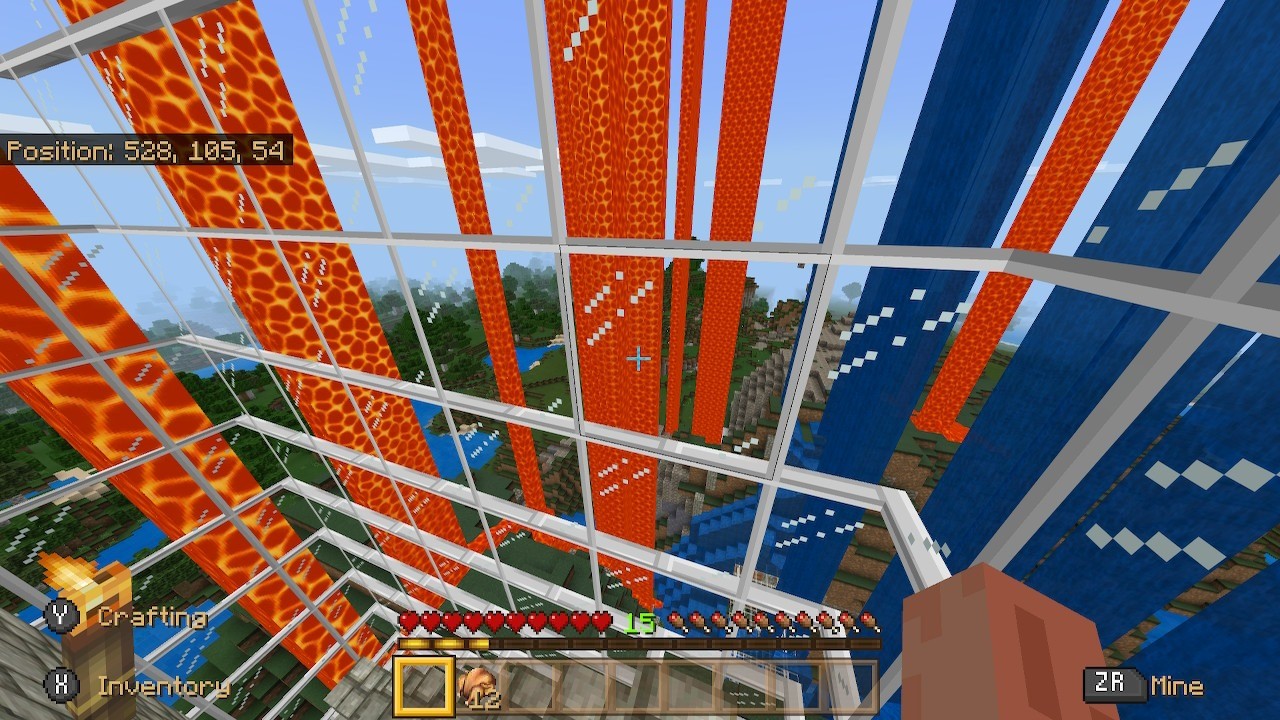
These pictures are several views from the roof of the structure and one of the view of the spiral staircase on the way down.
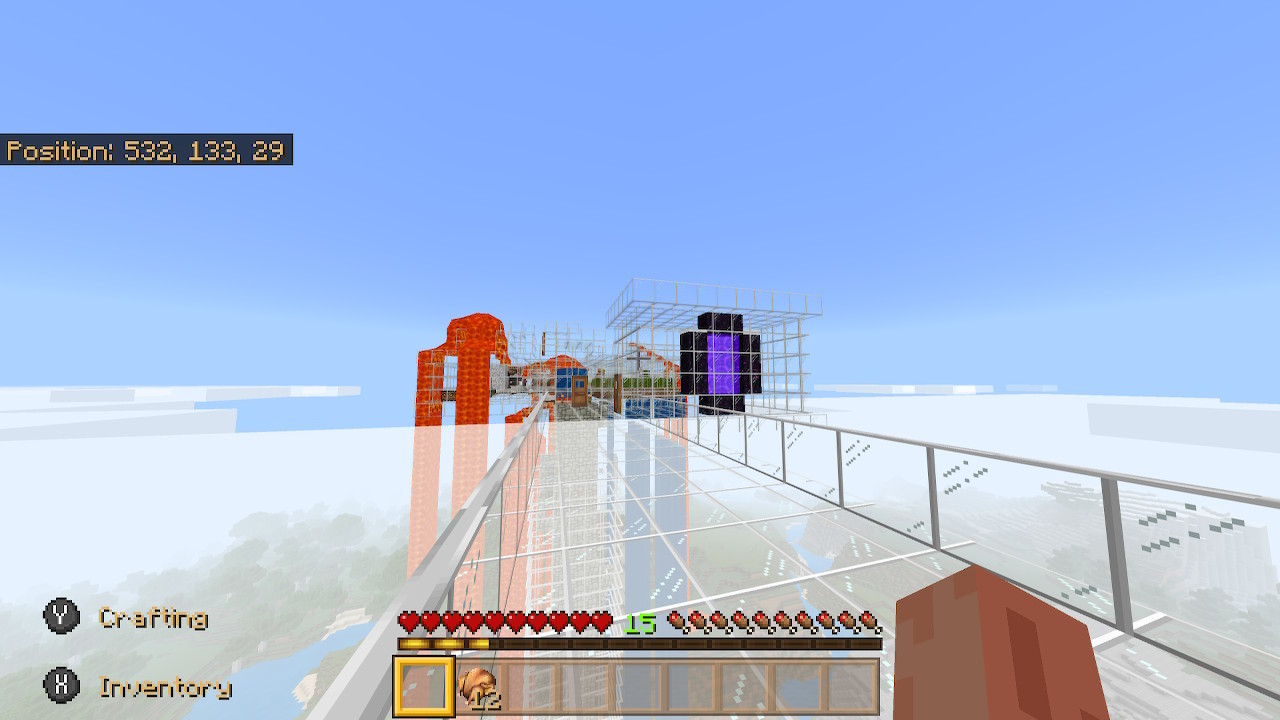
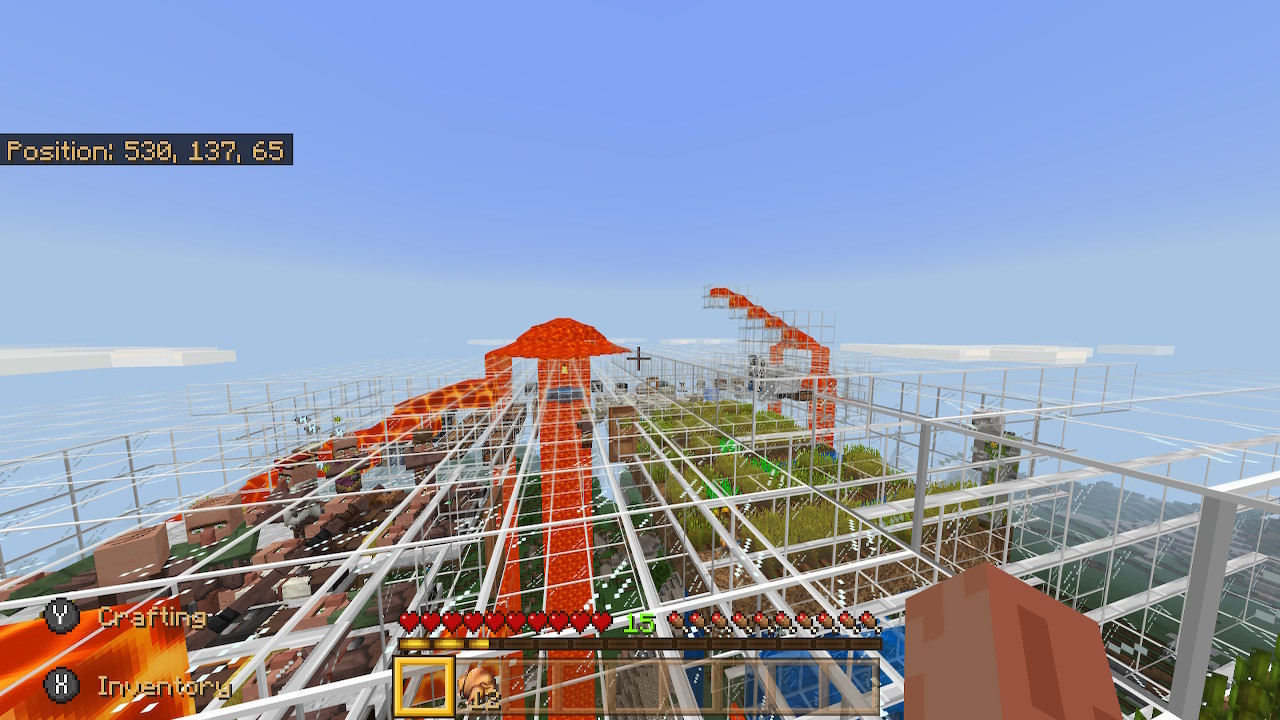
I revived an old #minecraft #game I played a few years ago. I didn't have any photos saved so I wanted to snatch some screenshots. If anyone wants to see more pictures I will reply with some bonus pictures.
The design was a glass "fortress" in the clouds. It has a glass spiral staircase going up to one block above the cloud line and then the structure is made of glass. It contains villagers, a gollum, a machine that automatically breeds and kills chickens for an endless supply of food, sheep, cows, and all the accessories. Has about 20 villagers, a portal, and is draped in lava and water flowing down.
There is also an extensive underground structure with mushrooms and other stuff. There is also a "trap" outside where world-spawned animals get trapped and then a gate to herd them into the interior of the structure. so I have several more animals (mostly llamas) trapped in an underground chamber.
The attached pictures are of the fortress from a few angles from the outside (more pictures in the replies)
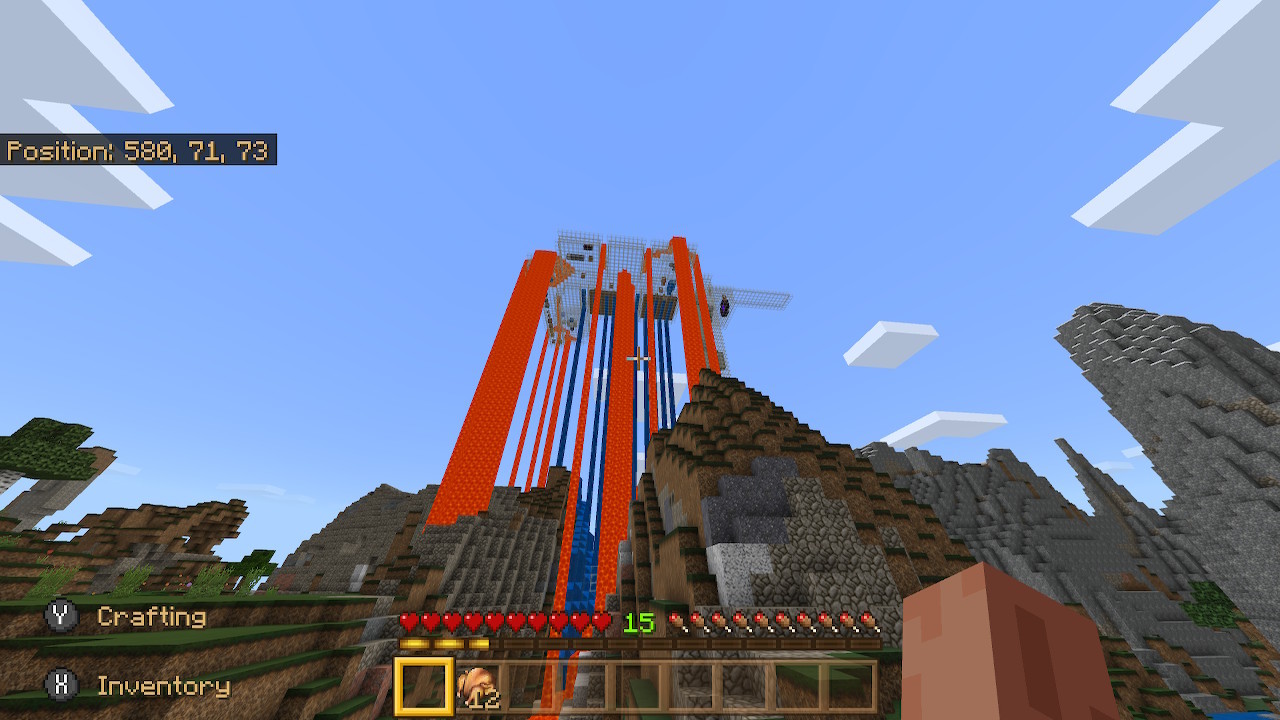

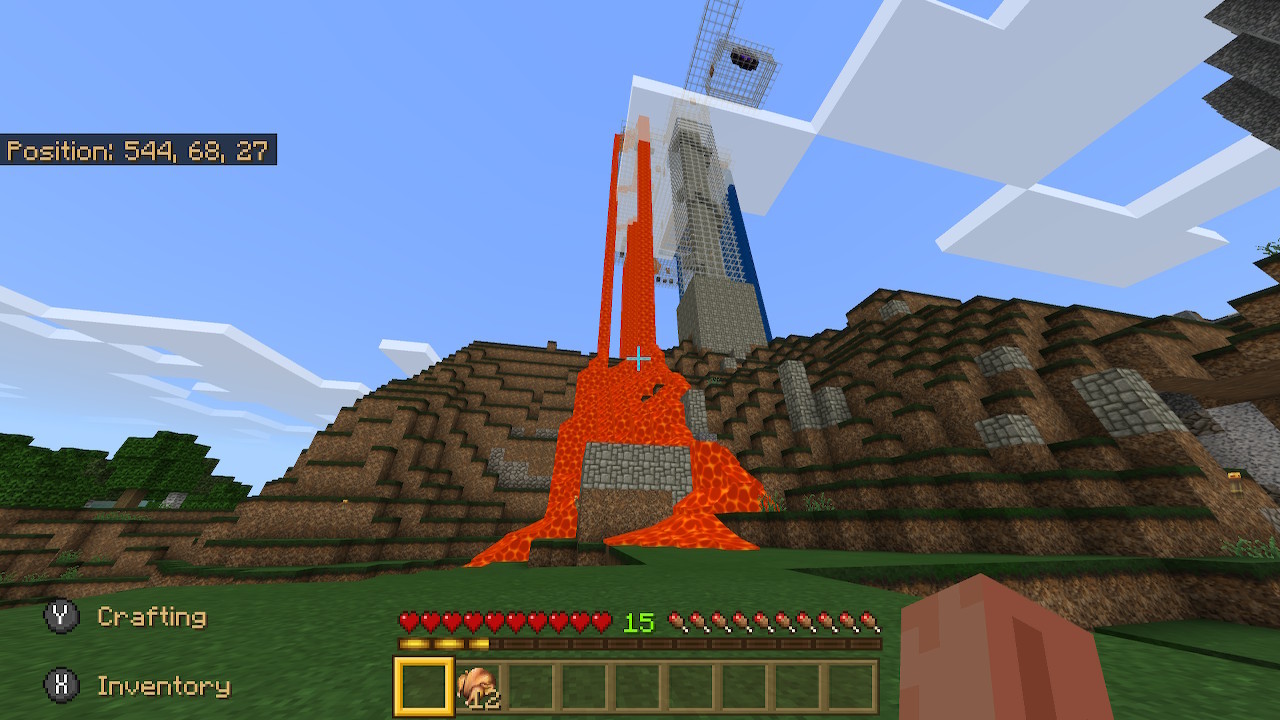
@pedromvpg You can question anything, however how you go about it may make you look like an idiot, but you can still question it.
- UFoI Member
- http://UFoI.org/u/freemo/
- Website
- http://JeffreyFreeman.me
- Gitlab
- https://git.qoto.org/freemo
Admin
Jeffrey Phillips Freeman
Innovator & Entrepreneur in Machine Learning, Evolutionary Computing & Big Data. Avid SCUBA diver, Open-source developer, HAM radio operator, astrophotographer, and anything nerdy.
Born and raised in Philadelphia, PA, USA, currently living in Utrecht, Netherlands, USA, and Thailand. Was also living in Israel, but left.
Pronouns: Sir / Mister
(Above pronouns are not intended to mock, i will respect any persons pronouns and only wish pronouns to show respect be used with me as well. These are called neopronouns, see an example of the word "frog" used as a neopronoun here: http://tinyurl.com/44hhej89 )
A proud member of the Penobscot Native American tribe, as well as a Mayflower passenger descendant. I sometimes post about my genealogical history.
My stance on various issues:
Education: Free to PhD, tax paid
Abortion: Protected, tax paid, limited time-frame
Welfare: Yes, no one should starve
UBI: No, use welfare
Racism: is real
Guns: Shall not be infringed
LGBT+/minorities: Support
Pronouns: Will respect
Trump: Moron, evil
Biden: Senile, racist
Police: ACAB
Drugs: Fully legal, no prescriptions needed
GPG/PGP Fingerprint: 8B23 64CD 2403 6DCB 7531 01D0 052D DA8E 0506 CBCE
Joined Jul 2018
