

🎓 Dr. Freemo  🇳🇱
@freemo@social.cleverlibre.org
- UFoI Member
- http://UFoI.org/u/freemo/
- Website
- http://JeffreyFreeman.me
- Gitlab
- https://git.qoto.org/freemo
Admin
Jeffrey Phillips Freeman
Innovator & Entrepreneur in Machine Learning, Evolutionary Computing & Big Data. Avid SCUBA diver, Open-source developer, HAM radio operator, astrophotographer, and anything nerdy.
Born and raised in Philadelphia, PA, USA, currently living in Utrecht, Netherlands, USA, and Thailand. Was also living in Israel, but left.
Pronouns: Sir / Mister
(Above pronouns are not intended to mock, i will respect any persons pronouns and only wish pronouns to show respect be used with me as well. These are called neopronouns, see an example of the word "frog" used as a neopronoun here: http://tinyurl.com/44hhej89 )
A proud member of the Penobscot Native American tribe, as well as a Mayflower passenger descendant. I sometimes post about my genealogical history.
My stance on various issues:
Education: Free to PhD, tax paid
Abortion: Protected, tax paid, limited time-frame
Welfare: Yes, no one should starve
UBI: No, use welfare
Racism: is real
Guns: Shall not be infringed
LGBT+/minorities: Support
Pronouns: Will respect
Trump: Moron, evil
Biden: Senile, racist
Police: ACAB
Drugs: Fully legal, no prescriptions needed
GPG/PGP Fingerprint: 8B23 64CD 2403 6DCB 7531 01D0 052D DA8E 0506 CBCE
Joined Jul 2018
One or fewer sclerosis: fine
Multiple sclerosis: bad
I have come to the point in my life where i just accept that a white shirt gets a single use, it is an inevitable law of physics and it is immutable.
@zpartacoos
Apparently camels spread covid?
@trinsec
Well to be fair it is hard for someone to have my level of mastery of the english language ;)
@trinsec
No, there is no pressure on your ears because as it builds up you equalize (hold you nose and close your mouth and lightly blow).
Ear plugs would be very dangerous.
Im not entirely sure what the covid rule is being depicted here or how it involves a camel... But i reall want to know.


@mushambo
Today was a hard one, i would t sweat it.
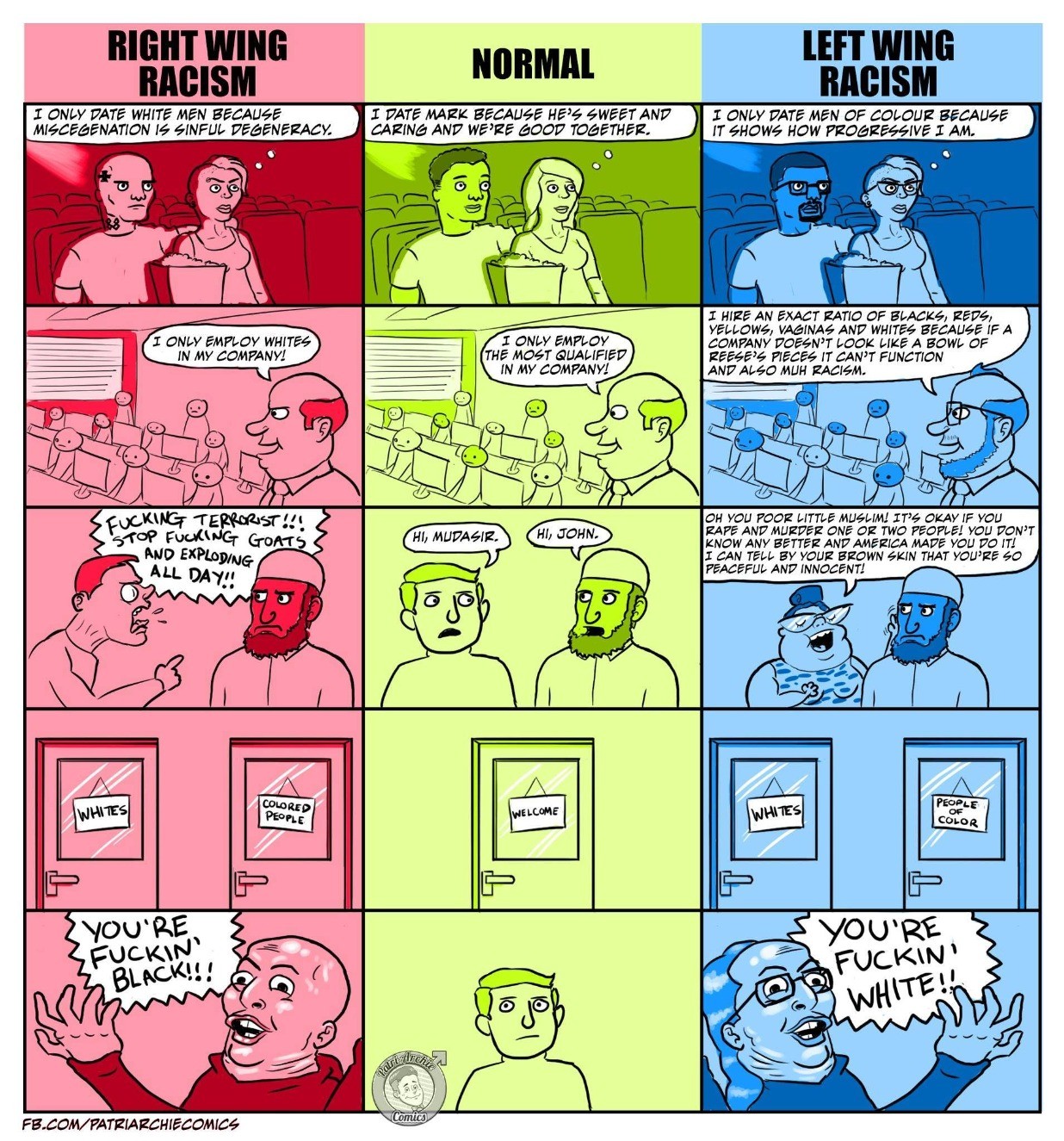
Which white male in this cartoon am I fucking exactly?
🎓 Dr. Freemo 🇳🇱
boosted
🇳🇱
boosted
@voidabyss
I think the tree shown is just intended to illustrate the relationship between active religions. I agree it is missing a lot of proto-jewish religions.
@jch
There has been a lot of discussion lately, much of it just plain incorrect, about the relationship between resonance and antenna efficiency. Many incorrectly claim that resonance has nothing to do with antenna efficiency at all, similarly others incorrectly claim that resonance is a direct indication of efficiency. Neither of these statements is true. The reality is that resonance does have a significant impact on how efficient your antenna is, but the relationship is highly non-linear and depends on many characteristics.
Below I have attached a chart hat plots out the total radiation resistance (R_r) vs the measured input resistance (R_in) of a dipole. Efficiency is just R_r/R_in. In other words an efficient antenna will have 100% of its resistance as radiation resistance, and R_in is **always** larger than R_r (since it is essentially ohmic resistance plus radiation resistance). When these two numbers differ significantly an antenna is inefficient. The source for the chart below is here and it gives much of the math if you want a deeper dive:
https://nptel.ac.in/content/storage2/courses/108101092/Week-2-Dipole%20Antenna.pdf
What is important to note here is that at anti-resonance we see a **huge** R_in value and a small R_r value, this means an anti-resonant antenna will have very high losses. Keep in mind the graph is very hard to read for the values <0.5 in length because the resolution isnt high. But there is significant divergence there as well. Notice at ~5/8ths wavelength antenna would exhibit very significant internal ohmic losses due to heat.
#hamradio #rf #radio #ee #electronics #electricalrngineering @Electronics

I am offended by this, go fuck yourself.
@CapitalB Meet women? They do that?
@sgryphon yup, same god, some minor differences in opinion mostly but same basic idea.
@Co
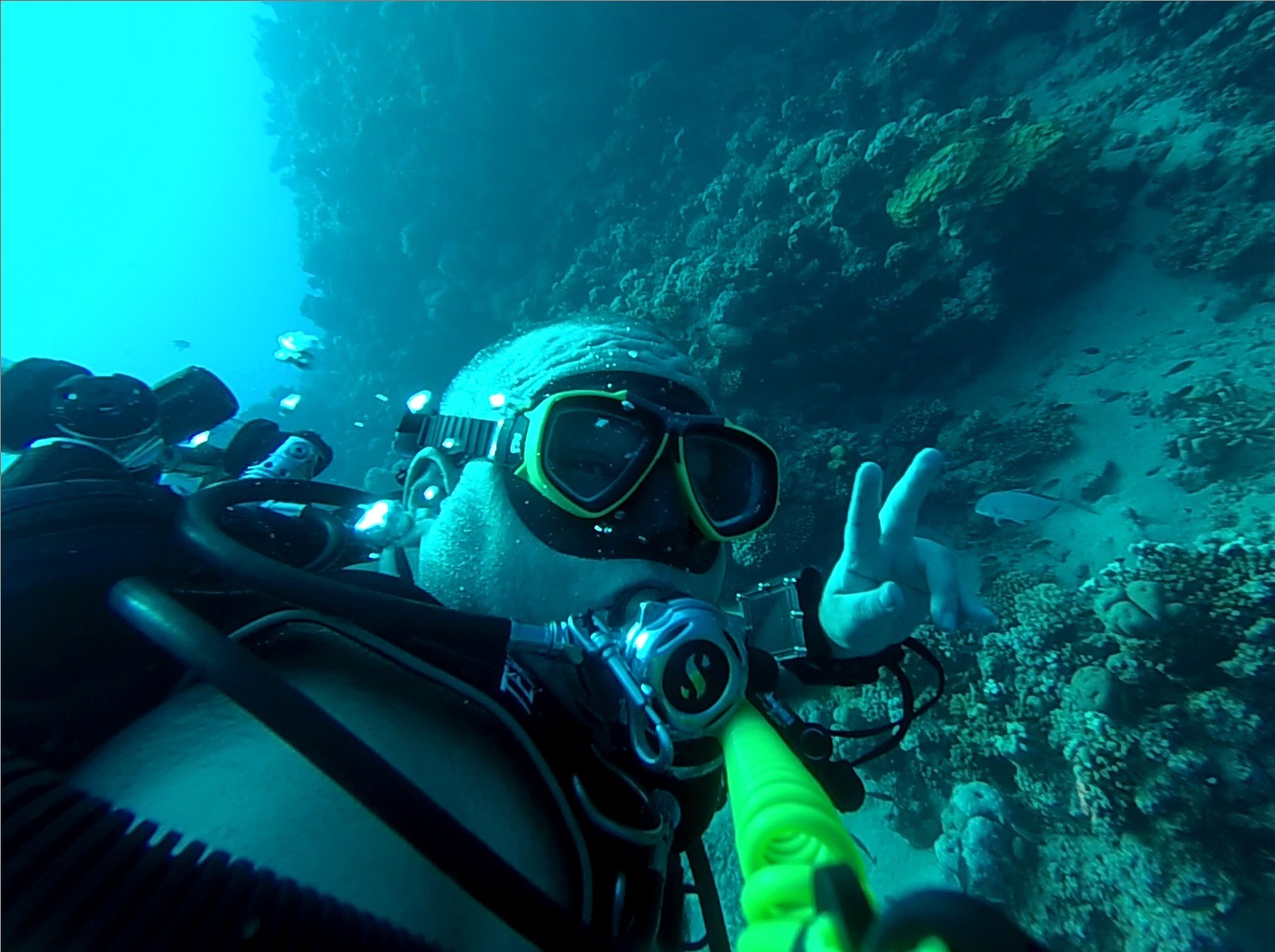
Red implies you are probably getting the bends and bubbles are forming
@gemlog
It is, yes. Thanks
@Pat @freeschool @ligthert @lnxw37a2
- UFoI Member
- http://UFoI.org/u/freemo/
- Website
- http://JeffreyFreeman.me
- Gitlab
- https://git.qoto.org/freemo
Admin
Jeffrey Phillips Freeman
Innovator & Entrepreneur in Machine Learning, Evolutionary Computing & Big Data. Avid SCUBA diver, Open-source developer, HAM radio operator, astrophotographer, and anything nerdy.
Born and raised in Philadelphia, PA, USA, currently living in Utrecht, Netherlands, USA, and Thailand. Was also living in Israel, but left.
Pronouns: Sir / Mister
(Above pronouns are not intended to mock, i will respect any persons pronouns and only wish pronouns to show respect be used with me as well. These are called neopronouns, see an example of the word "frog" used as a neopronoun here: http://tinyurl.com/44hhej89 )
A proud member of the Penobscot Native American tribe, as well as a Mayflower passenger descendant. I sometimes post about my genealogical history.
My stance on various issues:
Education: Free to PhD, tax paid
Abortion: Protected, tax paid, limited time-frame
Welfare: Yes, no one should starve
UBI: No, use welfare
Racism: is real
Guns: Shall not be infringed
LGBT+/minorities: Support
Pronouns: Will respect
Trump: Moron, evil
Biden: Senile, racist
Police: ACAB
Drugs: Fully legal, no prescriptions needed
GPG/PGP Fingerprint: 8B23 64CD 2403 6DCB 7531 01D0 052D DA8E 0506 CBCE
Joined Jul 2018
