

🎓 Dr. Freemo  🇳🇱
@freemo@social.cleverlibre.org
- UFoI Member
- http://UFoI.org/u/freemo/
- Website
- http://JeffreyFreeman.me
- Gitlab
- https://git.qoto.org/freemo
Admin
Jeffrey Phillips Freeman
Innovator & Entrepreneur in Machine Learning, Evolutionary Computing & Big Data. Avid SCUBA diver, Open-source developer, HAM radio operator, astrophotographer, and anything nerdy.
Born and raised in Philadelphia, PA, USA, currently living in Utrecht, Netherlands, USA, and Thailand. Was also living in Israel, but left.
Pronouns: Sir / Mister
(Above pronouns are not intended to mock, i will respect any persons pronouns and only wish pronouns to show respect be used with me as well. These are called neopronouns, see an example of the word "frog" used as a neopronoun here: http://tinyurl.com/44hhej89 )
A proud member of the Penobscot Native American tribe, as well as a Mayflower passenger descendant. I sometimes post about my genealogical history.
My stance on various issues:
Education: Free to PhD, tax paid
Abortion: Protected, tax paid, limited time-frame
Welfare: Yes, no one should starve
UBI: No, use welfare
Racism: is real
Guns: Shall not be infringed
LGBT+/minorities: Support
Pronouns: Will respect
Trump: Moron, evil
Biden: Senile, racist
Police: ACAB
Drugs: Fully legal, no prescriptions needed
GPG/PGP Fingerprint: 8B23 64CD 2403 6DCB 7531 01D0 052D DA8E 0506 CBCE
Joined Jul 2018
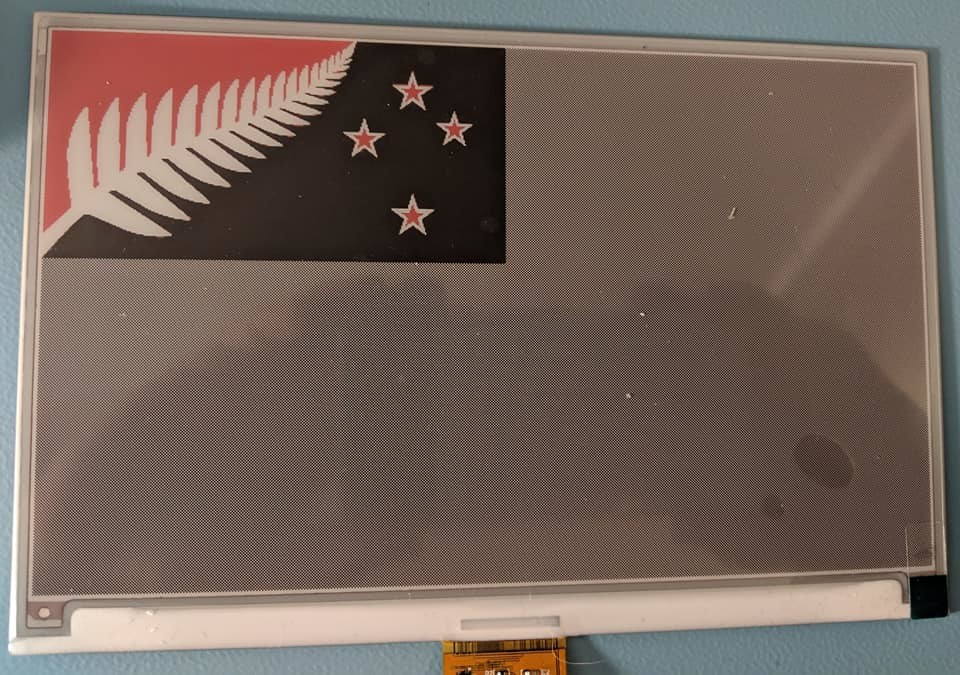
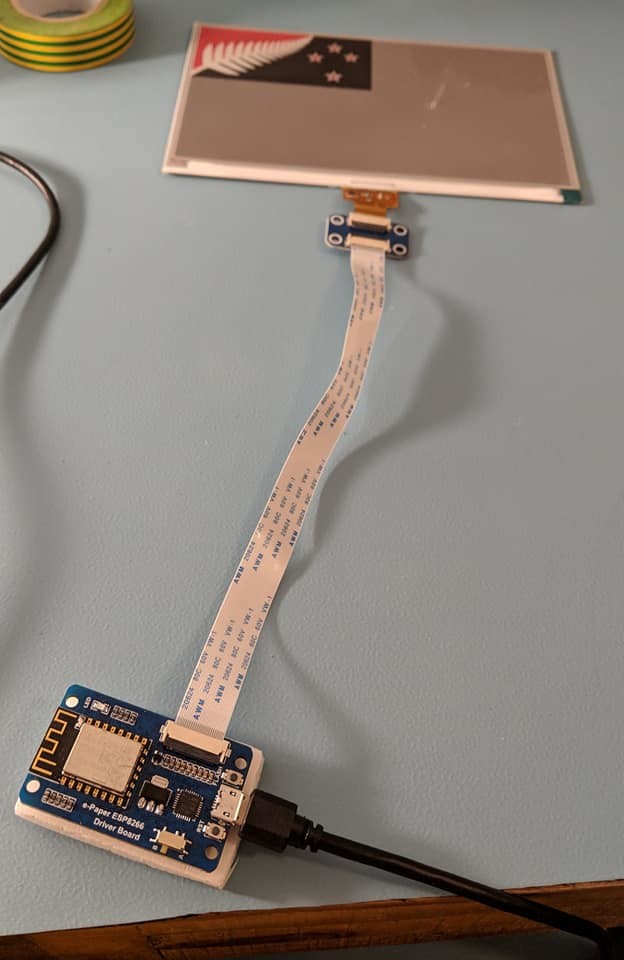
Now that I finally got my Electrical Engineering workbench in place I had some time to work on coding up a e-ink display. I finally got it successfully displaying images. This display is 7.5 inches and can do red black and white.
#electronics #EE #ElectricalEngineering #Engineering #Science
My new Electrical Engineering workstation here at my Dutch home. It has both desktop and floor anti-static mats. So you can either use the anti-static bracelet or just go barefoot and not need the bracelet.
🎓 Dr. Freemo 🇳🇱
boosted
🇳🇱
boosted

Human skin and its microbiome give off a lot of lactic acid compared with other vertebrates’, says geneticist Matthew DeGennaro of Florida International University in Miami. Researchers since the 1960s have mused that lactic acid might be one of the big clues Ae. aegypti mosquitoes use to pick out humans.
IR8a’s role in detecting traces of acids in the air was revealed in part by evidence from how mutant mosquitoes behave. Mutants with nonworking IR8a, but with their other abilities intact, were only about half as likely to settle on a human arm or sweat-stained sock as normal mosquitoes, DeGennaro and colleagues report March 28 in Current Biology.
Insects evolved odor detection separately from vertebrates, and the six-legged version is “very complex,” DeGennaro says. Mosquitoes rely on three families of odor-sniffing proteins that have overlapping abilities to identify groups of airborne chemical compounds. Proteins called ionotropic receptors, which include IR8a, target acids among other compounds. As a mosquito hunts, the floating chemical cues get combined with other information such as atmospheric heat, moisture and the sight of something biteable. DeGennaro calls carbon dioxide “mosquito coffee,” revving the insects up to get to work seeking a meal. READ MORE >>>>>>> https://www.sciencenews.org/article/genetics-how-mosquitoes-sniff-out-human-swea
🎓 Dr. Freemo 🇳🇱
boosted
🇳🇱
boosted
Geneticists close in on how mosquitoes sniff out human sweat
A protein in the antennae of Aedes aegypti detects lactic acid wafting off skin
Geneticists have found a scent-sniffer protein molecule in mosquito antennae that — if somehow jammed — might leave a bloodsucker confused about whether we’re human enough to bite.
Aedes aegypti mosquitoes, which can spread Zika and dengue, prefer human blood to the blood of other animals. A string of experiments now shows that a protein called IR8a, found in the insects’ antennae, is one of the molecules necessary for detecting lactic acid, a component of human sweat, wafting by.
Human skin and its microbiome give off a lot of lactic acid compared with other vertebrates’, says geneticist Matthew DeGennaro of Florida International University in Miami. Researchers since the 1960s have mused that lactic acid might be one of the big clues Ae. aegypti mosquitoes use to pick out humans.
IR8a’s role in detecting traces of acids in the air was revealed in part by evidence from how mutant mosquitoes behave. Mutants with nonworking IR8a, but with their other abilities intact, were only about half as likely to settle on a human arm or sweat-stained sock as normal mosquitoes, DeGennaro and colleagues report March 28 in Current Biology.
Insects evolved odor detection separately from vertebrates, and the six-legged version is “very complex,” DeGennaro says. Mosquitoes rely on three families of odor-sniffing proteins that have overlapping abilities to identify groups of airborne chemical compounds. Proteins called ionotropic receptors, which include IR8a, target acids among other compounds. As a mosquito hunts, the floating chemical cues get combined with other information such as atmospheric heat, moisture and the sight of something biteable. DeGennaro calls carbon dioxide “mosquito coffee,” revving the insects up to get to work seeking a meal. READ MORE >>>>>>> https://www.sciencenews.org/article/genetics-how-mosquitoes-sniff-out-human-sweat
🎓 Dr. Freemo 🇳🇱
boosted
🇳🇱
boosted
RT
FILE PHOTO © AFP / William West
Aboriginals in Australia have won a ground-breaking case that paves the way for billions of dollars in compensation claims for colonial land loss, as well as loss of spiritual connection.
The High Court of Australia ruled in favor of the Ngaliwurru and Nungali groups from the Northern Territory in the biggest ‘native title’ ruling on indigenous rights to traditional land and water in decades on Wednesday.
It said the Northern Territory government was to pay $2.53mn in damages to the Ngaliwurru and Nungali groups for an earlier federal court ruling which found the NT government “extinguished” their native title rights when they built infrastructure on their land in the 80s and 90s. https://www.rt.com/news/453929-aboriginal-high-court-ruling-compensation-win/?fbclid=IwAR2OxHLitTYuSymLAr7Hg2tXbZn47RzKQjNN1i8SrJ-L_szXhEwYpjZc4kE
🎓 Dr. Freemo 🇳🇱
boosted
🇳🇱
boosted
Astronomers Observe Doughnut-Shaped Torus Surrounding Black Hole
Astronomers used the National Science Foundation’s Karl G. Jansky Very Large Array (VLA) to make the first direct image of a dusty, doughnut-shaped feature surrounding…
Artist’s conception of the dusty, doughnut-shaped object surrounding the supermassive black hole, disk of material orbiting the black hole, and jets of material ejected by the disk, at the center of a galaxy. Credit: Bill Saxton, NRAO/AUI/NSF
Astronomers used the National Science Foundation’s Karl G. Jansky Very Large Array (VLA) to make the first direct image of a dusty, doughnut-shaped feature surrounding the supermassive black hole at the core of one of the most powerful radio galaxies in the Universe — a feature first postulated by theorists nearly four decades ago as an essential part of such objects.
The scientists studied Cygnus A, a galaxy some 760 million light-years from Earth. The galaxy harbors a black hole at its core that is 2.5 billion times more massive than the Sun. As the black hole’s powerful gravitational pull draws in surrounding material, it also propels superfast jets of material traveling outward at nearly the speed of light, producing spectacular “lobes” of bright radio emission.
Black hole-powered “central engines” producing bright emission at various wavelengths, and jets extending far beyond the galaxy are common to many galaxies, but show different properties when observed. Those differences led to a variety of names, such as quasars, blazars, or Seyfert galaxies. To explain the differences, theorists constructed a “unified model” with a common set of features that would show different properties depending on the angle from which they are viewed. READ MORE >>>>>>> https://scitechdaily.com/astronomers-observe-doughnut-shaped-torus-surrounding-black-hole/ READ MORE https://scitechdaily.com/astronomers-observe-doughnut-shaped-torus-surrounding-black-hole/
O then, just dont complain when some white director decides to only cast white dudes then.
https://twentytwowords.com/jordan-peele-says-hell-never-cast-white-lead-one-films/
The ladies need to learn to be more specific when they ask for pillow talk :)
🎓 Dr. Freemo 🇳🇱
boosted
🇳🇱
boosted

My paper that took longer to be accepted, almost one year... and appear in 1st April :-p
🎓 Dr. Freemo 🇳🇱
boosted
🇳🇱
boosted

@mala basically, we *NEED* ocap security in our operating systems, and it's the only viable future. If it comes handed down from a corporate direction without community involvement it might be done in a way that results in hard-to-work-around lockdown. If, however, the hardware and entire os stack are truly libre, it'll be the best advancement in user freedom since GNU
Remember laws, not guns, save lives. Just say no! lol
Making some from-scratch Cajun style jambalaya where everything is from scratch including the roux (pictured) and the broth (Guinea Fowl soup).
🎓 Dr. Freemo 🇳🇱
boosted
🇳🇱
boosted



Hello! I'm Unigiri and interested in Computer Science, Math, Learning English, Competitive Programming and CTF.
- UFoI Member
- http://UFoI.org/u/freemo/
- Website
- http://JeffreyFreeman.me
- Gitlab
- https://git.qoto.org/freemo
Admin
Jeffrey Phillips Freeman
Innovator & Entrepreneur in Machine Learning, Evolutionary Computing & Big Data. Avid SCUBA diver, Open-source developer, HAM radio operator, astrophotographer, and anything nerdy.
Born and raised in Philadelphia, PA, USA, currently living in Utrecht, Netherlands, USA, and Thailand. Was also living in Israel, but left.
Pronouns: Sir / Mister
(Above pronouns are not intended to mock, i will respect any persons pronouns and only wish pronouns to show respect be used with me as well. These are called neopronouns, see an example of the word "frog" used as a neopronoun here: http://tinyurl.com/44hhej89 )
A proud member of the Penobscot Native American tribe, as well as a Mayflower passenger descendant. I sometimes post about my genealogical history.
My stance on various issues:
Education: Free to PhD, tax paid
Abortion: Protected, tax paid, limited time-frame
Welfare: Yes, no one should starve
UBI: No, use welfare
Racism: is real
Guns: Shall not be infringed
LGBT+/minorities: Support
Pronouns: Will respect
Trump: Moron, evil
Biden: Senile, racist
Police: ACAB
Drugs: Fully legal, no prescriptions needed
GPG/PGP Fingerprint: 8B23 64CD 2403 6DCB 7531 01D0 052D DA8E 0506 CBCE
Joined Jul 2018
