

FreeSchool: Learn Respect Love @freeschool@social.cleverlibre.org
It's about changing / opening our minds...
I give people time and I thnk that's the difference to others online who really don't have or give time and give up on people really easy... (don't mean to be competitive, no put-downs, just I more dedicate time to others and weave us together).
So you don't even have to read any of this because EVERYTHING needs time + communication and without that a lot is broken and even less human even if it's for good...
Just follow and put notifications on to TEST MY FEED.... the rest below is just over-info for most poeple.
Open Learning School or Freedom University...
------------------------------------
A lot you might be at length and depth, but if you're easy about it, you can take the best and even take me along to understand life with others!
To learn and do everything practically! (this is a practical living (and gets stuff done as much as we can).
Fan of Fediverse!
Quick Look - peace-loving work / services:
█ Mini-Podcast (few mins each, examples below)
█ Picture remixes / video remixes
█ Lessons without being too 'teacher' about it. Teacher has teeth for eliminating doubt.
█ Food for thought as gentle soul also.
█ Unique ideas - often impossible for professionals (they are burdened by financial repsonsibility and therefore associational risk in saying things). I'm more diverse and occasionally direct (with respect, though I don't shy away from reminding people).
█ Not too embarrassing to say "I don't know" but can still chase things.
█ More responsive than casual users usually because people think having 'job' is enough in life. I say it's not! And even faimily is of no use if it's only getting worse (in everything!).
Podcast Examples:
1. Gary Ackerman's thoughts on AI
https://qoto.org/@freeschool/111867522723922385
2. The Little Prince book
https://qoto.org/@freeschool/111845561003150354
3. Fantasy genre from a fan's perspective
https://qoto.org/@freeschool/111845709367492677
I help people create audio / edit educational audio / podcast / music / visual short videos / transcript text
+ I like to add a bit humour while being quite strict in my own politics (opinions) but open / inviting for others to tell me what I should do if they can explain more than just a short comment (I don't mind it's healthy for me at least if you have logic and can stand yourself explaining).
FreeSchool is about Learning towards Freedom (which is about Uniting everyone slowly, even "1 by 1"... Easy with The Fediverse!
Not virtue signalling here only, but practise of EVERYTHING as we go. Judged by getting in contact (many have) and having courage to communicate (or seeking it from others is ok, EVERYONE needs a bit of courage or hand-holding to make big personal changes). Who else is there for example if family doesn't understand?
Learning and watching can be good and staying out of people's way, BUT better is doing something every day and helping each other with some tough decisions / lessons... and then being bold enough to do them. 1... 2... 3 that is all that's needed.
Let my posts do most of the talking.
Put me on notification (click bell that appears after follow ia accepted) and if it's not interesting switch off after and tick me off the list of potential people to follow daily!
Media version of my posts here... open link for later... good for visual scrolling version and judge me on that I don't mind...
https://qoto.org/@freeschool/media
I'm usually impressed with my media gallery as I work on posts a lot usually or hit the "Aha!" moments and capture it (other people may forget it for years, not me!).
Freedom is about *making it work together* better like using #Mastodon on the #Fediverse daily for better platforms with more #bestpractices and 'best' people to help us which I kind of collect here and  when it's #1 comment!
I am measurably better because I reply and stick to everything to the end(!)
No cancelling friendship suddenly without saying why or being moody!
Freedom is to Learn, Respect and Love eventually and ️to Unite!
Practically it's also like Tetris - add yourself to the puzzle and watch it all happen...
█▬▄▀ ╚ ╦ ╝╠╧
talk more on Mastodon and the Fediverse and puzzle it all out using better ways to less use the other bad commercial / extractive people...
L£$$ of the less caring people like the ggl's / ytb / gmail / mainstream communication points etc who are offering lots of space 'free' and it's not free of peace there.
We GIVE to real people (TIME NOT JUST MONEY).
There's no buy-in solution - we have to make it with selotape or whatever we have - it's not shameful to bring whatever you have.
FreeSchool is terminology put together from many good things from past (coined in 1950's/60's. I / we become it eventually through being.
It's a movement for Freedom via Learning it all (learning self included and less active stuff) and doing the learning *together* --> https://wikipedia.org/wiki/Freeschool.
I encourage you warmly to participate with me as a I have time and then spiral out naturally to others (we are part of humanity and so naturally a sort of evangelism or ecological pyramid of life as we choose to spread lesser suffering while accepting consuming is part of it).
Less-commercial in orientation (in everything) and happy to think / work for free.
Naturally you will hesitate if someone is sure of themself or ok standing on shoulders what we copy do the best from humbly but not too sterile either.
Based on just emotions ruins almost everything, which seems very common - very ungraceful - so don't disconnect... do it gracefully at least!
A "school" of thought is here you can interact / ask and make best together as free/low cost as possible.
Even a bad answer you can take best from (of course I won't know all your situation when I suggest something but I don't need to answer 100% - you also need to help me!).
Leave perfectionism, we are all imperfect humans! Let's do it... Choose something ANYTHING and keep the thoughts rolling together...!
All content under the Creative Commons license CC-BY-SA-NC. https://creativecommons.org/licenses/by-nc-sa/4.0/?ref=chooser-v1 Thereby, ideally, only using tools and resources that are #FLOSS #OpenSource. #nobot
Joined Dec 2021
FreeSchool: Learn Respect Love
boosted

"I've stepped down as lead developer of #GrapheneOS ... I'm unable to handle the escalating level of harassment including recent swatting attacks"
https://discuss.grapheneos.org/d/5235-stepping-down-as-project-leader-of-grapheneos
FreeSchool: Learn Respect Love
boosted

My rando opinion (whoever I'm supposed to be) is.. Well.. We're (us #fedi types) trying to build *our* social networks out of people we actually (want to) network with. We are the community gardens of social media, where each "neighborhood" tends to its own, and shares with everyone. We are the new growth forest using the mycelial internet to share our nutirents with each other. We're trying to shape our digital society in the image of the society we (want to) live in.
1/2
FreeSchool: Learn Respect Love
boosted

So @snarfed.org gets todays’s prize for setting the #fediverse on fire with his #blueskybridge. Oh dear.
Two observations: 1) there are many people in the fediverse who clearly have been hurt in the past and are afraid of being hurt again. I totally sympathize. We need a roadmap to make the fediverse safer for them than it currently is, because I don’t think it’s as safe for them as they think it is, Ryan’s work notwithstanding. (Cont’d)
FreeSchool: Learn Respect Love
boosted

A complete stranger took my Kitchenaid mixer on, fixed it, and delivered it back to me, all for a $20 tube of degreaser and some thanks.
Repair Cafes are amazing, and they're all around the world -- look in your community for a Repair Cafe for things you can't fix.
I'm so thrilled. It was a gift from my stepmom and my brother did an idiotic job of packing it when he shipped it to me, which broke shit.
Dude not only repaired things, but fabricated a new knob for me.
Most humans are good.
FreeSchool: Learn Respect Love
boosted

Personal attacks for bridging Bluesky + shrugging off Friendica, Hubzilla and (streams) = hypocrisy; CW: long (almost 2,000 characters), Fediverse meta, non-Mastodon Fediverse meta, Bluesky bridge meta
Since the BridgyFed drama, there might be four more reasons for Mastodon users to want Friendica, Hubzilla and (streams) out of the Fediverse. I mean, aside from their usual atrocities like their users writing well over 500 characters, using text formatting, quoting and quote-posting like it's totally normal. Because it is for them. And aside from no instance on any of the three having rules and moderator numbers on par with Mastodon.
One, they aren't based on ActivityPub. They're technically bridged to Mastodon. They're bridged one instance at the time, and the bridge is a plug-in on the instance and therefore part of the project. But still, it isn't that much different from BridgyFed connecting Bluesky to the rest of the Fediverse.
Two, since they aren't based on ActivityPub, they're aliens. Aliens of basically the same kind as Bluesky, only that they've mostly got those features that Mastodon has that Bluesky doesn't. But the BridgyFed drama isn't about Bluesky's features or lack thereof, and it isn't only about Bluesky being commercial either. It's also about Bluesky being too different in technology, functionality and culture. But let me tell you a secret: Bluesky is probably much closer to Mastodon than Hubzilla. I mean, I've already mentioned how Friendica, Hubzilla and (streams) users "misbehave" from a Mastodon point of view. You won't see any of this come from Bluesky anytime soon.
Three, Friendica is already fully federated with Bluesky. It's a feature that was introduced with the latest stable release.
Four, speaking of Friendica, that allegedly "hate-fuelling" Fediverse News is a public group account on Friendica. Only that the user who started that particular thread is on Firefish, and Fediverse News only automatically forwarded what he had posted.
So where's the outrage?
#Long #LongPost #CWLong #CWLongPost #FediMeta #FediverseMeta #CWFediMeta #CWFediverseMeta #Friendica #Hubzilla #Streams #(streams) #BridgyFed #Bluesky #Bridge #BlueskyBridge
One, they aren't based on ActivityPub. They're technically bridged to Mastodon. They're bridged one instance at the time, and the bridge is a plug-in on the instance and therefore part of the project. But still, it isn't that much different from BridgyFed connecting Bluesky to the rest of the Fediverse.
Two, since they aren't based on ActivityPub, they're aliens. Aliens of basically the same kind as Bluesky, only that they've mostly got those features that Mastodon has that Bluesky doesn't. But the BridgyFed drama isn't about Bluesky's features or lack thereof, and it isn't only about Bluesky being commercial either. It's also about Bluesky being too different in technology, functionality and culture. But let me tell you a secret: Bluesky is probably much closer to Mastodon than Hubzilla. I mean, I've already mentioned how Friendica, Hubzilla and (streams) users "misbehave" from a Mastodon point of view. You won't see any of this come from Bluesky anytime soon.
Three, Friendica is already fully federated with Bluesky. It's a feature that was introduced with the latest stable release.
Four, speaking of Friendica, that allegedly "hate-fuelling" Fediverse News is a public group account on Friendica. Only that the user who started that particular thread is on Firefish, and Fediverse News only automatically forwarded what he had posted.
So where's the outrage?
#Long #LongPost #CWLong #CWLongPost #FediMeta #FediverseMeta #CWFediMeta #CWFediverseMeta #Friendica #Hubzilla #Streams #(streams) #BridgyFed #Bluesky #Bridge #BlueskyBridge
FreeSchool: Learn Respect Love
boosted

FreeSchool: Learn Respect Love
boosted

Yesterday, the children of Gaza decided to hold their own press conference outside of Al-Shifa Hospital in #Gaza.
The spokesperson says:
"Since October 7th, we have been subjected to genocide, killing, displacement, and bombs falling on our head in front of the whole world.
They are lying to the world, saying that they are targeting resistance fighters, but as children, we have escaped death more than once. We, as children, have escaped death more than once.
We came to Al-Shifa Hospital as a safe place after we were repeatedly exposed to bombing. We were surprised that we were once again exposed to death after the occupation targeted Al-Shifa Hospital.
The occupation starves us. For many days, we have no water or food, or even bread. We drink contaminated water.
We came to shout as children, urging you all to protect us. Stop the death. We want life. We want peace. We want a trial for the killers. We want medicine. We want food. We want education. We want life."
#QUESTION Has anyone ever gone through their photos and done something practical with them?
(is it all mostly just storage we never revisit until once in a moon remember a specific picture?)
“No #morality can be founded on #authority, even if the authority were #divine.”
— A. J. #Ayer, Essay on #Humanism
Authority is an interesting point tied to morality.
FreeSchool: Learn Respect Love
boosted

FreeSchool: Learn Respect Love
boosted

Simplicity is better than complexity.... (but usually not measured, or even negative as productivity in terms of code mass)...
Nice story from @robpike on his blog about how simplicity can be seen as harmful 'productivity'.
How less code can be bad!
ℹ️ Also I have feelings of being very good at my work (in the past) and efficient but coming up against management frequently as a result of that, asking them "what's the problem" because it really did seem to change the whole stand, perspective and even the company I was working for... and that isn't often 'good' though didn't stop me lol!
From Robs @robpike blog...
"He reduced the complexity of the system. Less code, less to test, less to maintain. His coworkers loved it.
But there was a catch. During his performance review, he learned that management had a metric for productivity: lines of code.
Tom had negative productivity. In fact, because he was so successful, his entire group had negative productivity. He returned to Research with his tail between his legs.
And he learned his lesson: complexity is endemic. Simplicity is not rewarded."
https://commandcenter.blogspot.com/2023/12/simplicity.html
------------------------------
The rest pasted below for longevity Creative Commons Attribution 3.0 License.. I really recommend visiting his blog also so you get to keep this and get more of the same logic and gems.
------------------------------
FULL VERSION:
Wednesday, December 06, 2023
Simplicity
In May 2009, Google hosted an internal "Design Wizardry" panel, with talks by Jeff Dean, Mike Burrows, Paul Haahr, Alfred Spector, Bill Coughran, and myself. Here is a lightly edited transcript of my talk. Some of the details have aged out, but the themes live on, now perhaps more than ever.
---
Simplicity is better than complexity.
Simpler things are easier to understand, easier to build, easier to debug, and easier to maintain. Easier to understand is the most important, because it leads to the others. Look at the web page for google.com. One text box. Type your query, get useful results. That's brilliantly simple design and a major reason for Google's success. Earlier search engines had much more complicated interfaces. Today they have either mimicked ours, or feel really hard to use.
That's google.com. But what about what's behind it? What about GWS? How you do you invoke it? I looked at the argument list of a running GWS (Google Web Server) instance. XX,XXX characters of configuration flags. XXX arguments. A few name backend machines. Some configure backends. Some enable or disable properties. Most of them are probably correct. I guarantee some of them are wrong or at least obsolete.
So, here's my question: How can the company that designed google.com be the same company that designed GWS? The answer is that GWS configuration structure was not really designed. It grew organically. Organic growth is not simple; it generates fantastic complexity. Each piece, each change may be simple, but put together the complexity becomes overwhelming.
Complexity is multiplicative. In a system, like Google, that is assembled from components, every time you make one part more complex, some of the added complexity is reflected in the other components. It's complexity runaway.
It's also endemic.
Many years ago, Tom Cargill took a year off from Bell Labs Research to work in development. He joined a group where every subsystem's code was printed in a separate binder and stored on a shelf in each office. Tom discovered that one of those subsystems was almost completely redundant; most of its services were implemented elsewhere. So he spent a few months making it completely redundant. He deleted 15,000 lines of code. When he was done, he removed an entire binder from everybody's shelf. He reduced the complexity of the system. Less code, less to test, less to maintain. His coworkers loved it.
But there was a catch. During his performance review, he learned that management had a metric for productivity: lines of code. Tom had negative productivity. In fact, because he was so successful, his entire group had negative productivity. He returned to Research with his tail between his legs.
And he learned his lesson: complexity is endemic. Simplicity is not rewarded.
You can laugh at that story. We don't do performance review based on lines of code.
But we're actually not far off. Who ever got promoted for deleting Google code? We revel in the code we have. It's huge and complex. New hires struggle to grasp it and we spend enormous resources training and mentoring them so they can cope. We pride ourselves in being able to understand it and in the freedom to change it.
Google is a democracy; the code is there for all to see, to modify, to improve, to add to. But every time you add something, you add complexity. Add a new library, you add complexity. Add a new storage wrapper, you add complexity. Add an option to a subsystem, you complicate the configuration. And when you complicate something central, such as a networking library, you complicate everything.
Complexity just happens and its costs are literally exponential.
On the other hand, simplicity takes work—but it's all up front. Simplicity is very hard to design, but it's easier to build and much easier to maintain. By avoiding complexity, simplicity's benefits are exponential.
Pardon the solipsism but look at the query logging system. It's far from perfect but it was designed to be—and still is—the only system at Google that solves the particular, central problem it was designed to solve. Because it is the only one, it guarantees stability, security, uniformity of use, and all the economies of scale. There is no way Google would be where it is today if every team rolled out its own logging infrastructure.
But the lesson didn't spread. Teams are constantly proposing new storage systems, new workflow managers, new libraries, new infrastructure.
All that duplication and proliferation is far too complex and it is killing us because the complexity is slowing us down.
We have a number of engineering principles at Google. Make code readable. Make things testable. Don't piss off the SREs. Make things fast.
Simplicity has never been on that list. But here's the thing: Simplicity is more important than any of them. Simpler designs are more readable. Simpler code is easier to test. Simpler systems are easier to explain to the SREs, and easier to fix when they fail.
Plus, simpler systems run faster.
Notice I said systems there, not code. Sometimes—not always—to make code fast you need to complicate it; that can be unavoidable. But complex systems are NEVER fast—they have more pieces and their interactions are too poorly understood to make them fast. Complexity generates inefficiency.
Simplicity is even more important than performance. Because of the multiplicative effects of complexity, getting 2% performance improvement by adding 2% complexity—or 1% or maybe even .1%—isn't worth it.
But hold on! What about our Utilization Code Red?
We don't have utilization problems because our systems are too slow. We have utilization problems because our systems are too complex. We don't understand how they perform, individually or together. We don't know how to characterize their interactions.
The app writers don't fully understand the infrastructure.
The infrastructure writers don't fully understand the networks.
Or the apps for that matter. And so on and so on.
To compensate, everyone overprovisions and adds zillions of configuration options and adjustments. That makes everything even harder to understand.
Products manage to launch only by building walls around their products to isolate them from the complexity—which just adds more complexity.
It's a vicious cycle.
So think hard about what you're working on. Can it be simpler? Do you really need that feature? Can you make something better by simplifying, deleting, combining, or sharing? Sit down with the groups you depend on and understand how you can combine forces with them to design a simpler, shared architecture that doesn't involve defending against each other.
Learn about the systems that already exist, and build on them rather than around them. If an existing system doesn't do what you want, maybe the problem is in the design of your system, not that one.
If you do build a new component, make sure it's of general utility. Don't build infrastructure that solves only the problems of your own team.
It's easy to build complexity. In the rush to launch, it's quicker and easier to code than to redesign. But the costs accumulate and you lose in the long run.
The code repository contains 50% more lines of code than it did a year ago. Where will we be in another year? In 5 years?
If we don't bring the complexity under control, one day it won't be a Utilization Code Red. Things will get so complex, so slow, they'll just grind to a halt. That's called a Code Black.
More money spent = less productivity in terms of working with people directly... M=[M x debt] and profit needed. Money = [not the people work]...
More money you spend, worse productivity you are doing working with people directly...
(above a certain amount of comfort or trying to live, just change of the people's mentalities to choose better things to do from there and for better/more measured reasons)...
So with 'fairly minimal' stuff like a Mastodon instance, it is possible to maximise advancing people's mindset and upgrading to better thoughts by talking more often like a therapy to it all of history we have come to absorbing and being aware of.
Mostly as 2 measurable ways to help my statement
(and this is not a rant just logically 2 main things!):
█1.█ Spending money means you are unlikely to be doing the people work (measurable and guesstimated by adding all sectors and how much money goes to humanistic work and how much not. So is it for profit and taking advantage of people (and even war?) or is money for helping consciousness and compassion and perpetuating that to the next generations? <--- LOL you know the answer ! Near 0 or even whatever good cause lesser than this with 'charities' even having to turn over a profit before anything)
█2.█ Money is bad material or:
M=[M x debt]
so = infinite / constant debt?... as a power balance... deliberately?
Quite a shitload of debt
= shitload of depressed people RIGHT?
And overall giving power to others as currency turns everything into tax obviously IS UNcaring / actually help people war using currency/our labour as their main source, even if you can't imagine living almost exactly the same without your government taxing you on everything so heavily.
█ℹ️█ If none of the above makes sense ask yourself if you like Banks or think giving debt is a service to the world an good way of doing things?
Internet and Electricity keeping you alive?...
Internet and Electricity keeps the magic of us alive, and can also be cut dead.
What we do NOW without these outages, disconnections, shut down will be importance for when we do.
So what do you do or will do without so much Internet time or with limited connection?
And could you live with people around you as main source of entertainment etc? Would they listen?
(Many escaped to internet because people around were not understanding and even punishing (even though internet has that too) - maybe that's the good work to be done offline also but seems impossible actually to convince real people if I'm honest and wait for them to get old and die)...
FreeSchool: Learn Respect Love
boosted

BEST THREADS/FACEBOOK  + BLUESKY INVASION COMMENTS
BEST POINTS ABOUT INCOMING COMMERCIAL INVASION: 💣 💥
💥 THREADS/FACEBOOK INVASION
💥 BLUESKY INVASION
ℹ️ UPDATED 15/02/2024 - Best first below.....
(will re-draft weekly - let me know if it's unwanted to be CC-d in, because I respect your comments and think you can be game-changers so add acc name here for now so you get credit)
This is almost like dial-up and broadband all over again!
--------------------------
Follow  and optionally notification 🔔 for similar topics.
--------------------------
█ Opt-out is not consent.
Everyone knows this and yet many #Mastodon admins continue to abuse us.
Where are the good guys?
● @happyborg
https://fosstodon.org/@happyborg/111926784690582141
--------------------------
█ Native #openweb is "permissionless" this is how #ActivityPub works and why it works. Is #bluesky native to the #openweb?
● @witchescauldron
--------------------------
█ ⚔️ This is a "trust" vers "control issue and yes people are pushing #closedweb thinking and code, we need to think this through better.
● @witchescauldron
https://kolektiva.social/@witchescauldron/111926403671342182
--------------------------
█ Signing up for #Bluesky was a mistake. I have gotten so many #spam calls in the past few days. The sudden spike only makes sense if they're selling the phone number I used for 2FA.
● @o76923
https://kitty.social/notes/9pok05pec10yv5uv
--------------------------
█ QUOTE> The point of the fediverse is to connect with others, with full control and safety. It's for making connections between networks of different sizes and implementations."
I say, bc at some point, it might matter that this isn't quite the system you want.
● @maegul
https://hachyderm.io/@maegul/111927386224381574
--------------------------
█ It's not the federation that is the issue... [snip] But "copy this data of mine to a non-AP company network via a bridge where the rules are different" is a different question, and checking with someone first is reasonable.
[snip]
It's beyond the scope of reasonable expectation to assume "usage implies opt in".
● @Crell
https://phpc.social/@Crell/111926941771490396
█ [snip...] Not to mention that a lot of Mastodon users don't understand how Mastodon works. They think it must have a pool of all accounts and all posts and all that somewhere, and the BridgyFed Bluesky bridge will give Bluesky unlimited access to it all.
They also think that Bluesky will be able to post nasty stuff to everyone, even those who aren't connected to anyone on Bluesky.
They think the same about Threads, because in their heads, they're still on Twitter where the secret-sauce algorithm would probably allow for that to happen.
● @jupiter_rowland
https://hub.netzgemeinde.eu/item/b59ac1d1-100c-4b2f-a6d6-825e8fceb9e1
FreeSchool: Learn Respect Love
boosted


“Uber is a scourge on our transport system and an enemy of labor rights. It’s setting itself up to make sure it doesn’t go anywhere. We’d be much better off if it doesn’t succeed.” https://disconnect.blog/the-high-cost-of-ubers-small-profit/
FreeSchool: Learn Respect Love
boosted

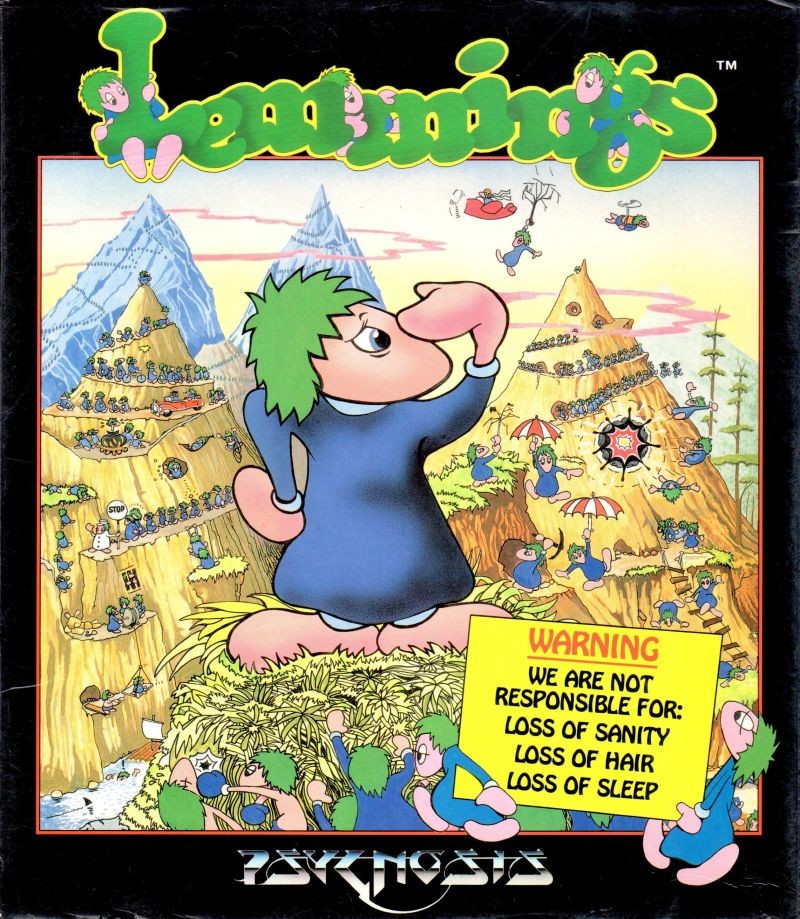
I worked on #Lemmings and am therefore old.
“It Was 33 Years Ago Today: Happy Birthday Lemmings! - The Scottish Games Network”
https://scottishgames.net/2024/02/14/it-was-33-years-ago-today-happy-birthday-lemmings/
 ?
?


@garyackerman
"Rate my podcast" poll ! (click this post to see / listen to 4mins)
"Artificial Intelligence" series with Gary Ackerman
Click rating and leave comments (especially for low scores!) Thanks
4min Podcast link-
https://qoto.org/@freeschool/111930634690194387
It's about changing / opening our minds...
I give people time and I thnk that's the difference to others online who really don't have or give time and give up on people really easy... (don't mean to be competitive, no put-downs, just I more dedicate time to others and weave us together).
So you don't even have to read any of this because EVERYTHING needs time + communication and without that a lot is broken and even less human even if it's for good...
Just follow and put notifications on to TEST MY FEED.... the rest below is just over-info for most poeple.
Open Learning School or Freedom University...
------------------------------------
A lot you might be at length and depth, but if you're easy about it, you can take the best and even take me along to understand life with others!
To learn and do everything practically! (this is a practical living (and gets stuff done as much as we can).
Fan of Fediverse!
Quick Look - peace-loving work / services:
█ Mini-Podcast (few mins each, examples below)
█ Picture remixes / video remixes
█ Lessons without being too 'teacher' about it. Teacher has teeth for eliminating doubt.
█ Food for thought as gentle soul also.
█ Unique ideas - often impossible for professionals (they are burdened by financial repsonsibility and therefore associational risk in saying things). I'm more diverse and occasionally direct (with respect, though I don't shy away from reminding people).
█ Not too embarrassing to say "I don't know" but can still chase things.
█ More responsive than casual users usually because people think having 'job' is enough in life. I say it's not! And even faimily is of no use if it's only getting worse (in everything!).
Podcast Examples:
1. Gary Ackerman's thoughts on AI
https://qoto.org/@freeschool/111867522723922385
2. The Little Prince book
https://qoto.org/@freeschool/111845561003150354
3. Fantasy genre from a fan's perspective
https://qoto.org/@freeschool/111845709367492677
I help people create audio / edit educational audio / podcast / music / visual short videos / transcript text
+ I like to add a bit humour while being quite strict in my own politics (opinions) but open / inviting for others to tell me what I should do if they can explain more than just a short comment (I don't mind it's healthy for me at least if you have logic and can stand yourself explaining).
FreeSchool is about Learning towards Freedom (which is about Uniting everyone slowly, even "1 by 1"... Easy with The Fediverse!
Not virtue signalling here only, but practise of EVERYTHING as we go. Judged by getting in contact (many have) and having courage to communicate (or seeking it from others is ok, EVERYONE needs a bit of courage or hand-holding to make big personal changes). Who else is there for example if family doesn't understand?
Learning and watching can be good and staying out of people's way, BUT better is doing something every day and helping each other with some tough decisions / lessons... and then being bold enough to do them. 1... 2... 3 that is all that's needed.
Let my posts do most of the talking.
Put me on notification (click bell that appears after follow ia accepted) and if it's not interesting switch off after and tick me off the list of potential people to follow daily!
Media version of my posts here... open link for later... good for visual scrolling version and judge me on that I don't mind...
https://qoto.org/@freeschool/media
I'm usually impressed with my media gallery as I work on posts a lot usually or hit the "Aha!" moments and capture it (other people may forget it for years, not me!).
Freedom is about *making it work together* better like using #Mastodon on the #Fediverse daily for better platforms with more #bestpractices and 'best' people to help us which I kind of collect here and when it's #1 comment!
I am measurably better because I reply and stick to everything to the end(!)
No cancelling friendship suddenly without saying why or being moody!
Freedom is to Learn, Respect and Love eventually and ️to Unite!
Practically it's also like Tetris - add yourself to the puzzle and watch it all happen...
█▬▄▀ ╚ ╦ ╝╠╧
talk more on Mastodon and the Fediverse and puzzle it all out using better ways to less use the other bad commercial / extractive people...
L£$$ of the less caring people like the ggl's / ytb / gmail / mainstream communication points etc who are offering lots of space 'free' and it's not free of peace there.
We GIVE to real people (TIME NOT JUST MONEY).
There's no buy-in solution - we have to make it with selotape or whatever we have - it's not shameful to bring whatever you have.
FreeSchool is terminology put together from many good things from past (coined in 1950's/60's. I / we become it eventually through being.
It's a movement for Freedom via Learning it all (learning self included and less active stuff) and doing the learning *together* --> https://wikipedia.org/wiki/Freeschool.
I encourage you warmly to participate with me as a I have time and then spiral out naturally to others (we are part of humanity and so naturally a sort of evangelism or ecological pyramid of life as we choose to spread lesser suffering while accepting consuming is part of it).
Less-commercial in orientation (in everything) and happy to think / work for free.
Naturally you will hesitate if someone is sure of themself or ok standing on shoulders what we copy do the best from humbly but not too sterile either.
Based on just emotions ruins almost everything, which seems very common - very ungraceful - so don't disconnect... do it gracefully at least!
A "school" of thought is here you can interact / ask and make best together as free/low cost as possible.
Even a bad answer you can take best from (of course I won't know all your situation when I suggest something but I don't need to answer 100% - you also need to help me!).
Leave perfectionism, we are all imperfect humans! Let's do it... Choose something ANYTHING and keep the thoughts rolling together...!
All content under the Creative Commons license CC-BY-SA-NC. https://creativecommons.org/licenses/by-nc-sa/4.0/?ref=chooser-v1 Thereby, ideally, only using tools and resources that are #FLOSS #OpenSource. #nobot
Joined Dec 2021
