

Nick @internic@social.cleverlibre.org
- Pronouns
- he/him/his
Theoretical physicist by training (PhD in quantum open systems/quantum information), University lecturer for a bit, and currently paying the bills as an engineer working in optical communication (implementation) and quantum communication (concepts), though still pursuing a little science on the side. I'm interested in physics and math, of course, but I enjoy learning about really any area of science, philosophy, and many other academic areas as well. My biggest other interest is hiking and generally being out in nature.
Joined Nov 2022
Nick
boosted

So today I learned that a dedicated csv editor is the niche tool that I never knew I needed. About 99% of my "spreadsheet" usage happens when I have to manually edit a few cells in a csv, and I hate it so much that half the time I end up using dplyr instead. It's not what spreadsheets or dplyr are meant for, and it shows. I've been using Modern CSV for, like, a day and I'm already so much happier
Nick
boosted

Did you know that "pushing your #code to #GitHub" is not how to #OpenSource a project?
It is about adding a Free #License, and you can push anywhere you want, including #Codeberg, for example :)
@futurebird Well, as far as I can tell, in my specific case (which may be quite unusual for all I know) it's less a question of understanding than the ability to physically execute on that understanding.
I think if the utility of the things you're making depends on the precision with which you make them, that's where someone like me would struggle. But as you said, using software is always an option, as is constructing things from modular pieces, where no free-hand precision is required.
As an example of the latter, when learning non-Euclidean geometry, I think that polyhedra can be a good stepping stone to thinking about smooth surfaces (e.g. Euler number), and having physical models could be really helpful. You could imagine, for example, cutting out paper polygons and building polyhedra, but someone like me would struggle to cut straight sides and the proper angles (which then messes things up when you try to get the polyhedron to close on itself properly). However, a colleague had a set of magnetic building pieces (magnetic cylinders and ferromagnetic ball bearings) that could be naturally pieced together to form polygons, so with that I was able to build every platonic solid in no time. It worked fine for me because it didn't depend on the fine accuracy of placement. So even for people like me, it is possible.
I only commented because I know for many people arts and crafts are a happy carefree space, and they may forget that there are also people who view them with as much fear and loathing as some people have for math.
4. You're right that it's not as though every mass is a multiple of the Planck mass (obviously); it's not a smallest unit of mass. It's perhaps more reasonable to think of it as a dividing line between the least massive black hole it makes sense to consider and the largest non-black-hole, point-like particle it makes sense to consider based on our current understanding of physics. So if you give single point-like particle (like an electron) that much energy then whatever happens requires new physics to describe, since it's at the boundary where two incompatible concepts meet.
5. There are other places where we see inconsistencies are that not directly related related to the Planck scale. The example of this I'm most familiar with are questions that arise from the black hole information paradox and related problems. Here the fundamental issue is that stuff falling into a black hole seems to be an irreversible process that destroys information whereas quantum mechanics demands that all processes are reversible and conserve information. Unfortunately, since the questions here relate to what happens at the event horizon of a black hole and what happens when it evaporates (something that would only happen in the very late universe for ordinary black holes), these are also not very accessible to experiment/observation. Some apparent, purely theoretical progress has been made in this area, though.
@MichaelPorter @catselbow @futurebird Oh yeah, no issue with your questions at all. Actually, the only problem is that most of my professional work in Physics was in non-relativistic quantum physics/quantum information, so this topic isn't entirely in my wheelhouse. If we're lucky, someone better prepared may chime in.
So without getting myself into too much trouble speaking on things I haven't thought enough about, I'd make a few points:
1. AFAIK, Planck originally just came up with these as a set of natural units, ones that arise from only fundamental constants, not reference to specific objects, etc. And I think he came up with these before general relativity was formulated, so the phenomena that are now discussed in relation to them are not ones he would have known about.
2. OTOH, you might reasonably expect that if these ratios make quantities with these specific dimensionalities there would be at least *some* physical phenomenon that would be characterized by that scale, but not necessarily that it should be especially interesting.
3. We haven't measured phenomena anywhere close to these Planck scales (length, time, or single-particle energies), so our theories could easily be wrong way before you get there, but these correspond to places we're pretty sure there *must* be something else because our existing theories don't make sensible, internally-consistent predictions there at all.
Nick
boosted

I recently got my first job in broadcast media and honestly, the people who go on about fake news and all that rubbish have no idea about the hard work people put in to publish important news stories. I'm impressed by my new colleagues everyday.
Nick
boosted

Nick
boosted

When you "buy" a book on Kindle, you own only the right to read it as long as you have an Amazon account. When your public library lends you an ebook, it isn't lending something it owns in the first place, but is actually sub-leasing.
Read: "The Anti-Ownership Ebook Economy" for some very, very bad news about your -- and your library's -- rights in the digital age. https://www.nyuengelberg.org/outputs/the-anti-ownership-ebook-economy/
Nick
boosted

@dangillmor You *can* download kindle ebooks from the Amazon website, then use Calibre/De-DRM/KFX-input plugins to strip the DRM. Been doing this for a decade.
Nick
boosted


I can’t confirm this, but I see legitimate confirmations from reputable organizations? https://www.dignitymemorial.com/obituaries/las-vegas-nv/kevin-mitnick-11371668
@MichaelPorter @catselbow @futurebird Yeah, but in the case of the Planck mass this is the mass of a single fundamental, point-like particle at which our theoretical understanding breaks down (because you need to apply both quantum field theory and general relativity at the same time, which we don't really know how to do). Viewed in that lens it is huge, compared to something like an electron.
Nick
boosted

How can research mathematicians and computer scientists help at kids schools, @ColinTheMathmo ? I am interested in outreach to motivate kids to get interested and learn and create mathematics.
Nick
boosted


The White House is right to continue testing to protect its staff, as COVID levels are rising again, and many people are still at risk.
However, the White House continues to downplay the pandemic in the media, leading the public to take fewer precautions than the White House is taking themselves.
Nick
boosted

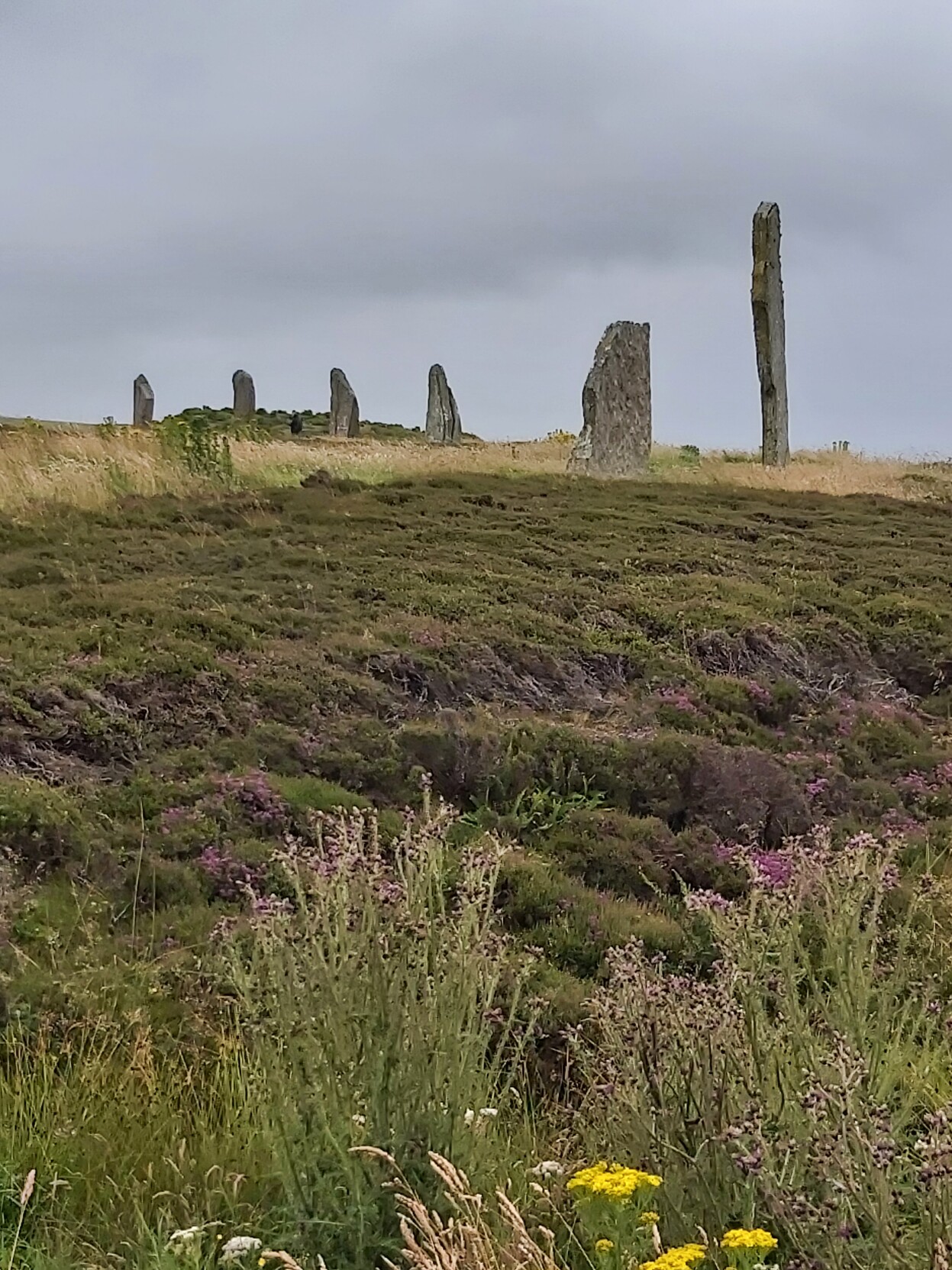
Better pictures to come! We had a wild, windy morning at the Ring of Brodgar.
Nick
boosted

Hey GnuPG people, can you help me figure something out? I'm trying to package torbrowser-launcher for Snapcraft. It uses PyGPGME to verify a PGP sig. I've installed gnupg2, libgpgme11, and python3-gpg from Ubuntu repos.
In an ubuntu:20.04 docker container:
>>> import gpg
>>> gpg.Context()
Context(armor=False, textmode=False, offline=False, signers=[], pinentry_mode=0, protocol=0, home_dir=None)
Inside a my Snapcraft shell:
>>> import gpg
>>> gpg.Context()
Traceback (most recent call last):
File "<stdin>", line 1, in <module>
File "/snap/torbrowser-launcher/x5/usr/lib/python3/dist-packages/gpg/core.py", line 220, in __init__
self.protocol = protocol
File "/snap/torbrowser-launcher/x5/usr/lib/python3/dist-packages/gpg/core.py", line 169, in __setattr__
super(GpgmeWrapper, self).__setattr__(key, value)
File "/snap/torbrowser-launcher/x5/usr/lib/python3/dist-packages/gpg/core.py", line 1123, in protocol
errorcheck(gpgme.gpgme_engine_check_version(value))
File "/snap/torbrowser-launcher/x5/usr/lib/python3/dist-packages/gpg/errors.py", line 129, in errorcheck
raise GPGMEError(retval, extradata)
gpg.errors.GPGMEError: GPGME: Invalid crypto engine
>>>
Any idea exactly what GPGME needs for PROTOCOL_OpenPGP to be a valid crypto engine?
Nick
boosted

My how quickly they spin around. (via Tumblr)
"I see Hollywood is now very into the idea of buying something once and then owning it forever and being able to make infinite copies. Which. Isn’t quite the message they imparted upon me in my childhood. In the spirit of their own long-held stance: YOU WOULDN'T DOWNLOAD AN ACTOR"
Nick
boosted

#Science funding agencies say NO to using #AI for #PeerReview
US’ #NIH Australia’s #ARC : 'NO’ to ChatGPT for peer-review
US' #NSF and Europe's #ERC mulling it over with working groups.
Concerns:
*Privacy/Piracy “the information becomes part of its training data. ” (why I don’t chatGPT though I really hate writing)
*Error ”AI-written reviews will be error-prone"
*Bias ”against non-mainstream views”
*Boring "lack … creativity “
Humans set the bar high
https://www.science.org/content/article/science-funding-agencies-say-no-using-ai-peer-review
Nick
boosted

It's an urban legend that Oppenheimer said "I am become death, destroyer of worlds" after witnessing the first successful atomic bomb detonation. What he actually said was "wow, this blew up, check out my soundcloud"
Nick
boosted

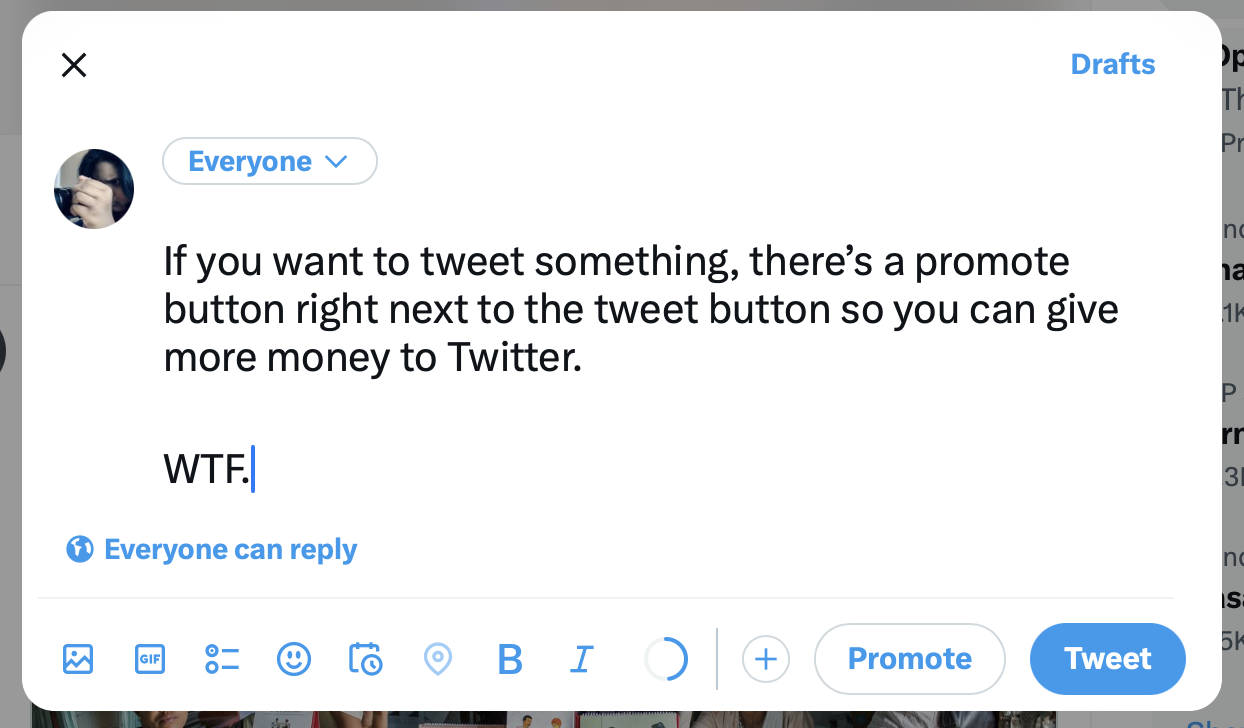
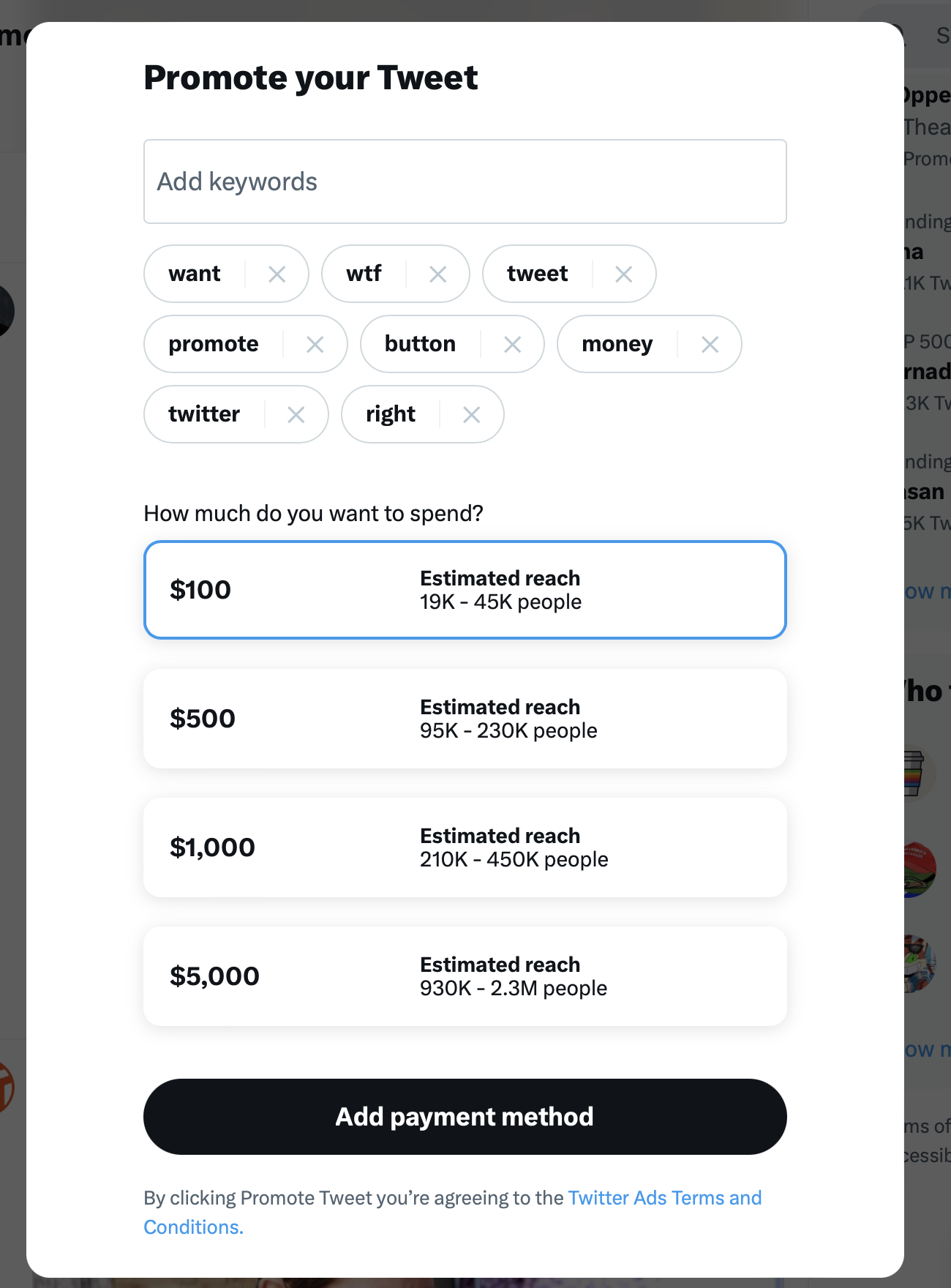

So, what's your view on how we should legally think about AI art models that use copyrighted art for training data? I'm not sure there's a compelling analogy?
Clearly this is what human artists do all day long, of course. And the question is in what way is that different form having an AI do it. Any thoughts? I'm particularly interested in people familiar with the most relevant law.
Nick
boosted
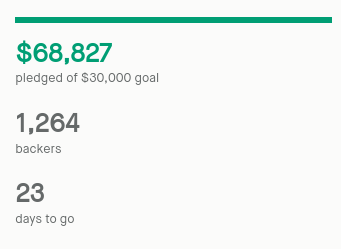
First 24 hours and we're past 200% of our goal! THANK YOU INTERNET!
https://www.kickstarter.com/projects/weiner/the-universe-abridged-beyond-the-point-of-usefulness?ref=6vghse
- Pronouns
- he/him/his
Theoretical physicist by training (PhD in quantum open systems/quantum information), University lecturer for a bit, and currently paying the bills as an engineer working in optical communication (implementation) and quantum communication (concepts), though still pursuing a little science on the side. I'm interested in physics and math, of course, but I enjoy learning about really any area of science, philosophy, and many other academic areas as well. My biggest other interest is hiking and generally being out in nature.
Joined Nov 2022
