

Nick @internic@social.cleverlibre.org
- Pronouns
- he/him/his
Theoretical physicist by training (PhD in quantum open systems/quantum information), University lecturer for a bit, and currently paying the bills as an engineer working in optical communication (implementation) and quantum communication (concepts), though still pursuing a little science on the side. I'm interested in physics and math, of course, but I enjoy learning about really any area of science, philosophy, and many other academic areas as well. My biggest other interest is hiking and generally being out in nature.
Joined Nov 2022
Nick
boosted

Nick
boosted

When you "buy" a book on Kindle, you own only the right to read it as long as you have an Amazon account. When your public library lends you an ebook, it isn't lending something it owns in the first place, but is actually sub-leasing.
Read: "The Anti-Ownership Ebook Economy" for some very, very bad news about your -- and your library's -- rights in the digital age. https://www.nyuengelberg.org/outputs/the-anti-ownership-ebook-economy/
Nick
boosted

@dangillmor You *can* download kindle ebooks from the Amazon website, then use Calibre/De-DRM/KFX-input plugins to strip the DRM. Been doing this for a decade.
Nick
boosted


I can’t confirm this, but I see legitimate confirmations from reputable organizations? https://www.dignitymemorial.com/obituaries/las-vegas-nv/kevin-mitnick-11371668
Nick
boosted

How can research mathematicians and computer scientists help at kids schools, @ColinTheMathmo ? I am interested in outreach to motivate kids to get interested and learn and create mathematics.
Nick
boosted


The White House is right to continue testing to protect its staff, as COVID levels are rising again, and many people are still at risk.
However, the White House continues to downplay the pandemic in the media, leading the public to take fewer precautions than the White House is taking themselves.
Nick
boosted

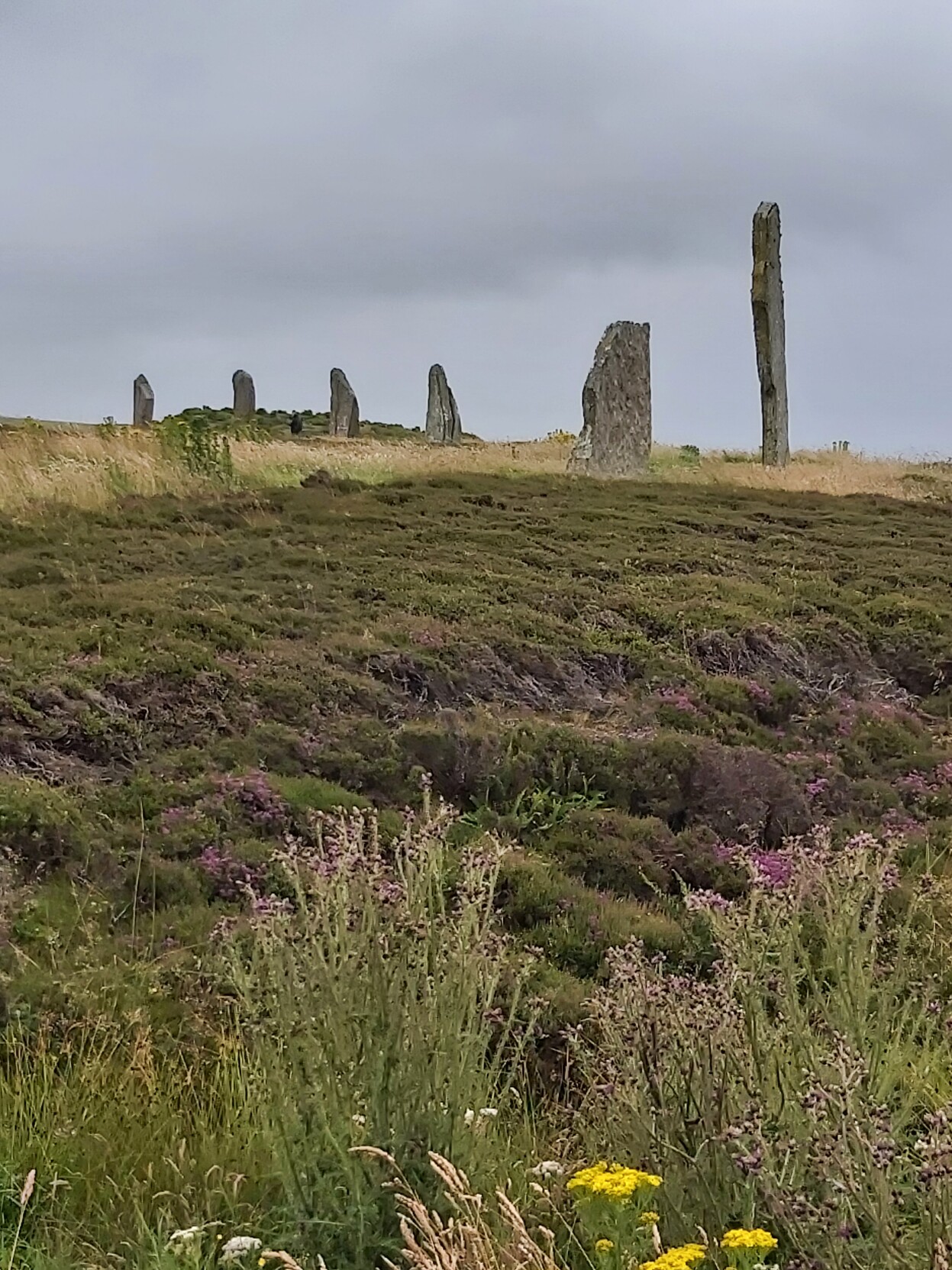
Better pictures to come! We had a wild, windy morning at the Ring of Brodgar.
Nick
boosted

Hey GnuPG people, can you help me figure something out? I'm trying to package torbrowser-launcher for Snapcraft. It uses PyGPGME to verify a PGP sig. I've installed gnupg2, libgpgme11, and python3-gpg from Ubuntu repos.
In an ubuntu:20.04 docker container:
>>> import gpg
>>> gpg.Context()
Context(armor=False, textmode=False, offline=False, signers=[], pinentry_mode=0, protocol=0, home_dir=None)
Inside a my Snapcraft shell:
>>> import gpg
>>> gpg.Context()
Traceback (most recent call last):
File "<stdin>", line 1, in <module>
File "/snap/torbrowser-launcher/x5/usr/lib/python3/dist-packages/gpg/core.py", line 220, in __init__
self.protocol = protocol
File "/snap/torbrowser-launcher/x5/usr/lib/python3/dist-packages/gpg/core.py", line 169, in __setattr__
super(GpgmeWrapper, self).__setattr__(key, value)
File "/snap/torbrowser-launcher/x5/usr/lib/python3/dist-packages/gpg/core.py", line 1123, in protocol
errorcheck(gpgme.gpgme_engine_check_version(value))
File "/snap/torbrowser-launcher/x5/usr/lib/python3/dist-packages/gpg/errors.py", line 129, in errorcheck
raise GPGMEError(retval, extradata)
gpg.errors.GPGMEError: GPGME: Invalid crypto engine
>>>
Any idea exactly what GPGME needs for PROTOCOL_OpenPGP to be a valid crypto engine?
Nick
boosted

My how quickly they spin around. (via Tumblr)
"I see Hollywood is now very into the idea of buying something once and then owning it forever and being able to make infinite copies. Which. Isn’t quite the message they imparted upon me in my childhood. In the spirit of their own long-held stance: YOU WOULDN'T DOWNLOAD AN ACTOR"
Nick
boosted

#Science funding agencies say NO to using #AI for #PeerReview
US’ #NIH Australia’s #ARC : 'NO’ to ChatGPT for peer-review
US' #NSF and Europe's #ERC mulling it over with working groups.
Concerns:
*Privacy/Piracy “the information becomes part of its training data. ” (why I don’t chatGPT though I really hate writing)
*Error ”AI-written reviews will be error-prone"
*Bias ”against non-mainstream views”
*Boring "lack … creativity “
Humans set the bar high
https://www.science.org/content/article/science-funding-agencies-say-no-using-ai-peer-review
Nick
boosted

It's an urban legend that Oppenheimer said "I am become death, destroyer of worlds" after witnessing the first successful atomic bomb detonation. What he actually said was "wow, this blew up, check out my soundcloud"
Nick
boosted

So, what's your view on how we should legally think about AI art models that use copyrighted art for training data? I'm not sure there's a compelling analogy?
Clearly this is what human artists do all day long, of course. And the question is in what way is that different form having an AI do it. Any thoughts? I'm particularly interested in people familiar with the most relevant law.
Nick
boosted
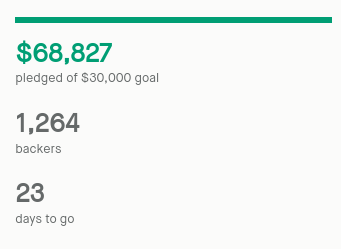
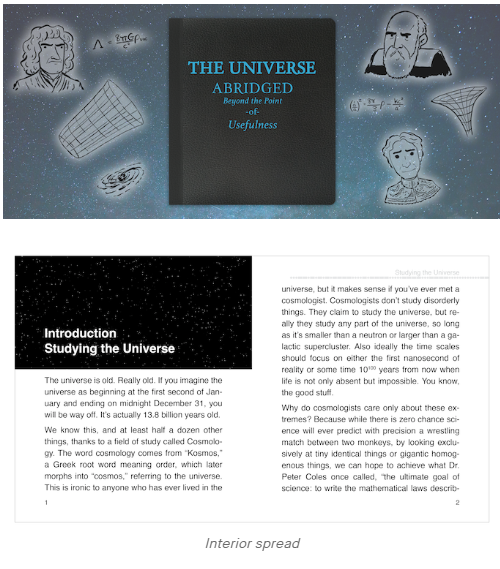
First 24 hours and we're past 200% of our goal! THANK YOU INTERNET!
https://www.kickstarter.com/projects/weiner/the-universe-abridged-beyond-the-point-of-usefulness?ref=6vghse
Nick
boosted

anyone who has ever had anything to do with enterprise codebases will agree - this hits close to home and we all lived through it many times...
"It Takes 6 Days to Change 1 Line of Code
(A true story.)"
🔗 https://edw519.posthaven.com/it-takes-6-days-to-change-1-line-of-code
Nick
boosted

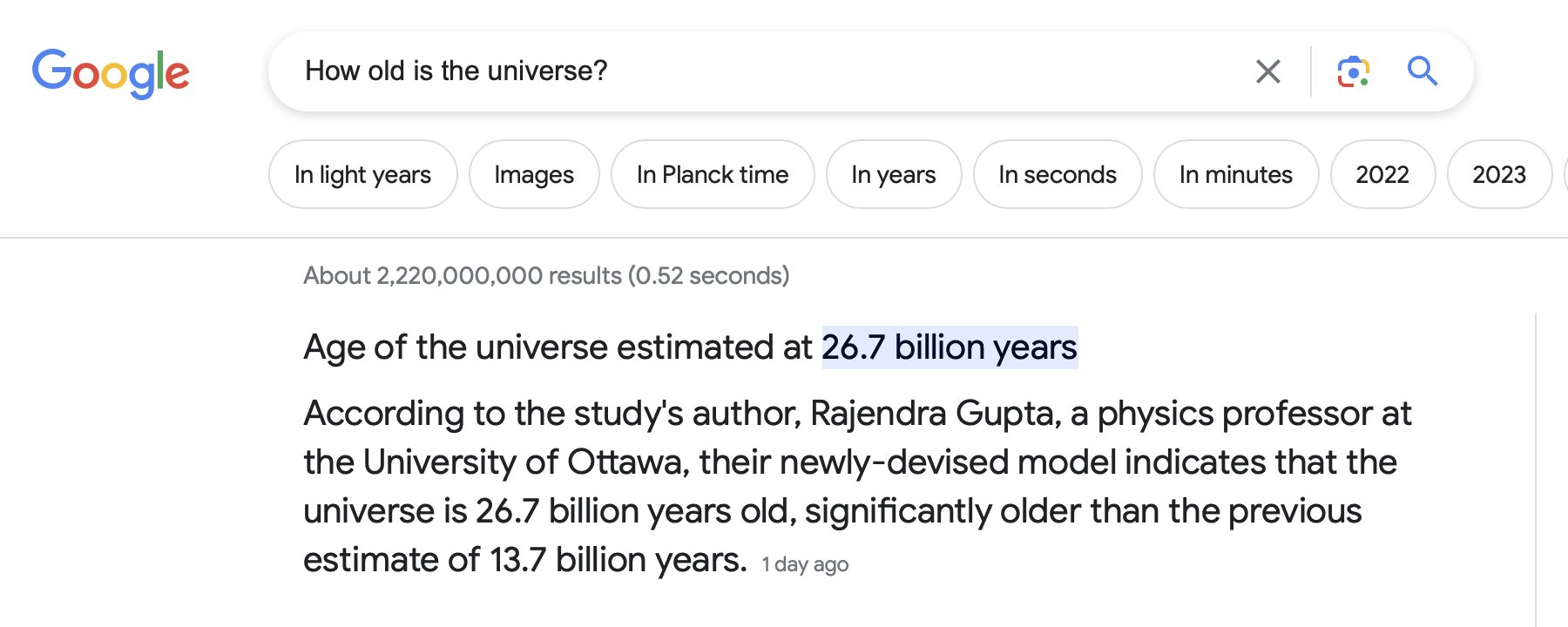
If anyone is wondering how google is doing, it is giving incorrect answers to the query “How old is the Universe?”
Instead of serving up scientific consensus (just shy of 14 billion years) it is latching onto recent media coverage of a questionable study (tired light, time-dependent coupling constants) claiming a much larger figure.
Notably, it gives me the right answer from an incognito window. But elevating popularity metrics over scientific consensus is a real problem!
Nick
boosted

Are shareholders really ok with this foolishness?
Is the audience?
#ActorsStrike #WritersStrike #SAGAFTRAstrong #WGAstrong #UnionStrong #film #tv #movies #television #entertainment #media
Nick
boosted

Nick
boosted

@ZachWeinersmith Boosted! The temporal extremes also apply to our email replying habits: we'll either reply within Planck's time or by the heat death of the Universe. There's no in between 😅
Nick
boosted
Nick
boosted

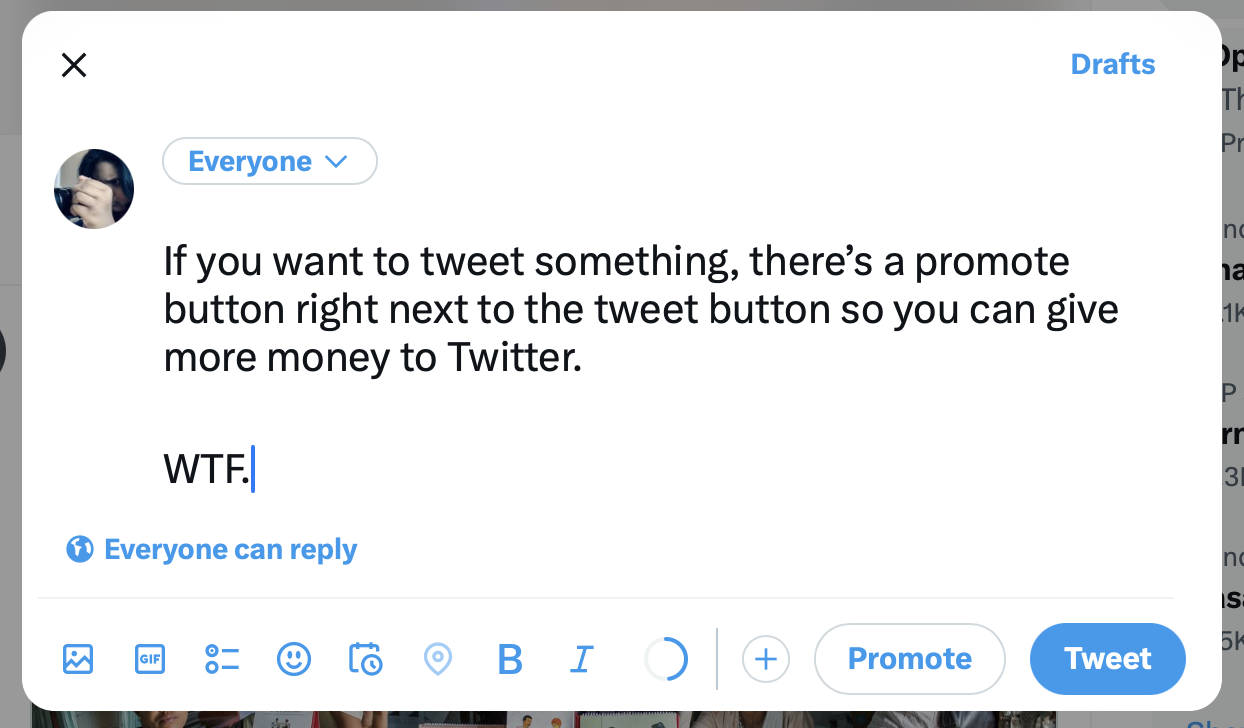
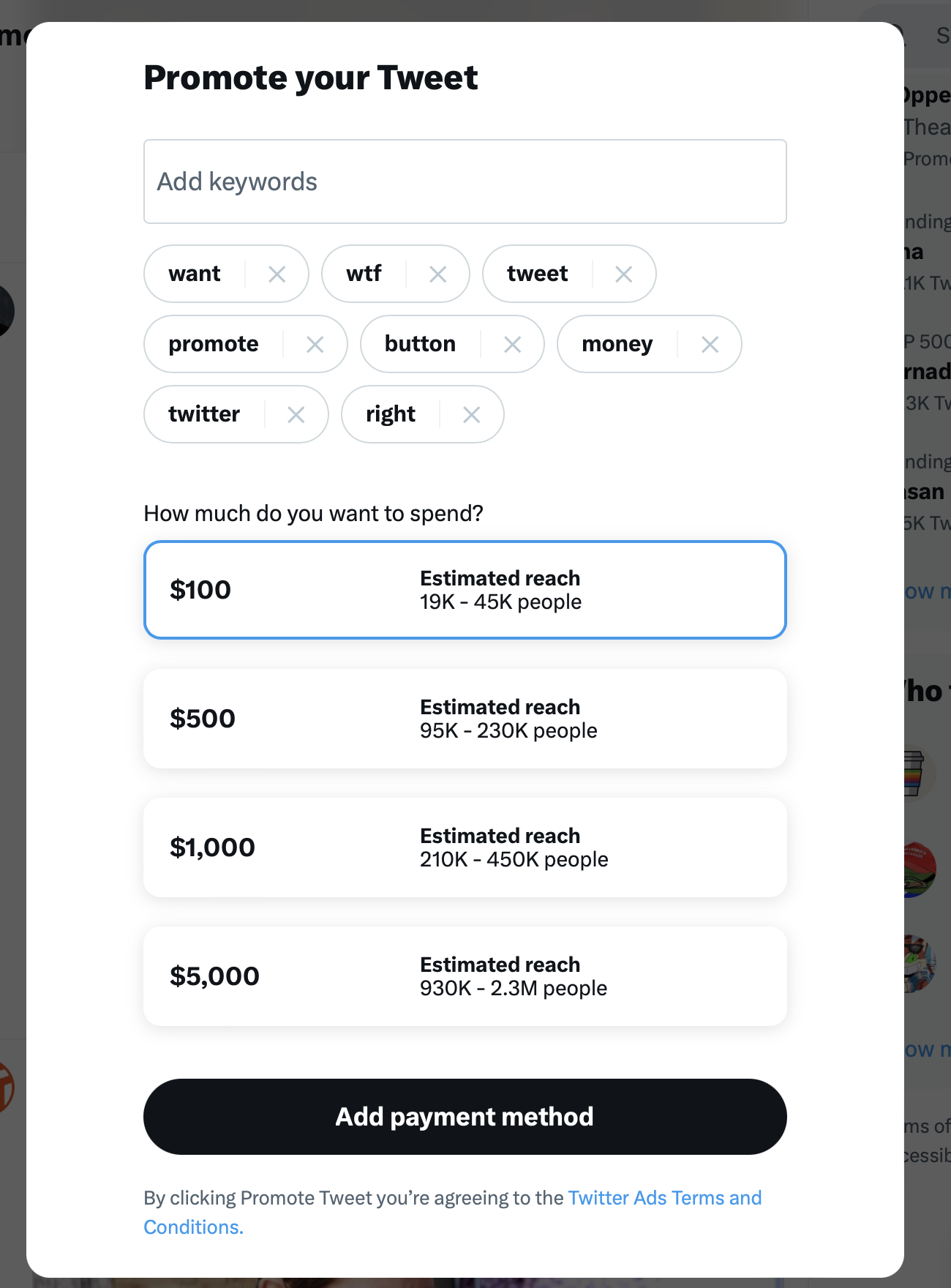


Threads to limit number of posts that users can see, like Twitter - The Washington Post
https://www.washingtonpost.com/technology/2023/07/17/threads-limits-twitter/
- Pronouns
- he/him/his
Theoretical physicist by training (PhD in quantum open systems/quantum information), University lecturer for a bit, and currently paying the bills as an engineer working in optical communication (implementation) and quantum communication (concepts), though still pursuing a little science on the side. I'm interested in physics and math, of course, but I enjoy learning about really any area of science, philosophy, and many other academic areas as well. My biggest other interest is hiking and generally being out in nature.
Joined Nov 2022
