

Jon Burton @jburton123@social.cleverlibre.org
Survey Manager for Understanding Society, the UK Household Longitudinal Study -
@usociety
- here in a personal capacity
Joined Nov 2022
The webinar is now available at https://youtu.be/hKoJLAgtS0s
Hi all, @iseressex at @Uni_of_Essex are also recruiting an Information Technology and Security Manager, perm. £54,949 - £61,823, to ensure that ISER maintains its ISO27001 certification. https://hrorganiser.essex.ac.uk/tlive_webrecruitment/wrd/run/ETREC107GF.open?VACANCY_ID=339965RQGk&WVID=9918109NEm&LANG=USA
Hi all, @iseressex at @Uni_of_Essex are recruiting a Systems Manager, permanent £54,949 - £61,823 per annum, to ensure ISER’s IT infrastructure and operations are robust to maintain ISO certification whilst modernising systems and processes to meet needs.
https://hrorganiser.essex.ac.uk/tlive_webrecruitment/wrd/run/ETREC107GF.open?VACANCY_ID=257851RQPQ&WVID=9918109NEm&LANG=USA
RT @MBenzeval
Come and work with us at the home of @usociety https://twitter.com/UoE_Vacancies/status/1593285907586682882
RT @usociety
As COP27 draws to a close, our latest blog asks: what do we think about climate change, and what are we doing about it? https://www.understandingsociety.ac.uk/blog/2022/11/17/climate-change-what-do-we-think-and-what-are-we-doing
RT @DemirevaNeli
And another brilliant NCRM course by @magda_bork on quant methods for estimating the impact of policy interventions. https://twitter.com/ncrmuk/status/1588155337076604929
Jon Burton
boosted

@klauspforr are you aware of any papers on panel/longitudinal surveys that use real time or event triggered data collection? i.e. lots of short surveys about recent experiences.
I know of the work done on Understanding Society in the UK but was wondering if anything similar has been tested in Germany or other countries
Jon Burton
boosted

A fun game to play is to put on your dressing gown and slippers, run out into the street, grab passers-by and ask them in befuddlement "WHAT YEAR IS THIS?!".
Latest @usociety podcast: Working from home, commuting and transport policy - looking at the tension between commuting and working from home - and how the two combined affect transport policy. With @dr_danwheatley @KironChatterjee @pete_dyson
https://www.understandingsociety.ac.uk/podcasts/working-from-home-commuting-and-transport-policy
RT @ReneeLuthra
A great job for a quant sociologist - feel free to DM any questions about the department or life in Essex / UK. Closing date Dec 11! https://twitter.com/MigEssex/status/1592762522956070912
A trailer for the new podcast episode, available from tomorrow.
---
RT @usociety
Our new podcast episode lands tomorrow, with @dr_danwheatley @UoB_Business, @KironChatterjee @UWE_GEM, and @pete_dyson talking about commuting, working from home, and transport policy. In this taster, Pete addresses one of the gaps in our knowledge...
https://twitter.com/usociety/status/1592514786574864385
RT @cathmcd11
More filming today @Uni_of_Essex - this time with @ReneeLuthra on why an understanding of how to work with #data is so important for #sociologists and #criminologists. #research @essexsociology @EssexSocSci
RT @Gabri_EllaConti
📢 Very happy to deliver the #keynote at the @RoyalEconSoc Easter Training School with the great Eric French in beautiful Bristol! 🤩
🟦 Who has an interest in #Health and #Public #Economics? 🙋🏻♀️
📌 More info 👇🏻 https://twitter.com/royaleconsoc/status/1592472509873389569
RT @usociety
“…further evidence that environmental and psychosocial risk factors for psychiatric disorders are influenced by the genetic risk for these disorders” – new research using our data and the National Child Development Study @CLScohorts https://doi.org/10.1038/s41398-022-02247-8
RT @cathmcd11
.@poppingorange is filming at @Uni_of_Essex with Professor Nick Allum on why gaining #quantitative skills that enable you to work with #data can help you see the world differently. #research @EssexSocSci
Jon Burton
boosted

If you download your Twitter archive it arrives wrapped as a static HTML page, which is not very useful for doing anything with, and worse: it requires the original account to be still active to do useful things like enlarge the images since they use t.co links.
So here's a Python script to convert a Twitter archive to markdown or other formats: https://github.com/timhutton/twitter-archive-parser
Now you can archive your tweets in any way you want.
RT @JulianLennon
It’s Amazing who you run into in an airport Lounge! None other than Uncle Paul….
So, so lovely, and what are the chances…
Thankful…. ❤️🙏🏻😘
RT @usociety
The latest episode of our podcast is out next week, with @dr_danwheatley @UoB_Business @KironChatterjee @UWE_GEM @pete_dyson talking about commuting, working from home, and transport policy. Here’s a taster: Dan, on what employers and employees can learn by talking to each other
Jon Burton
boosted


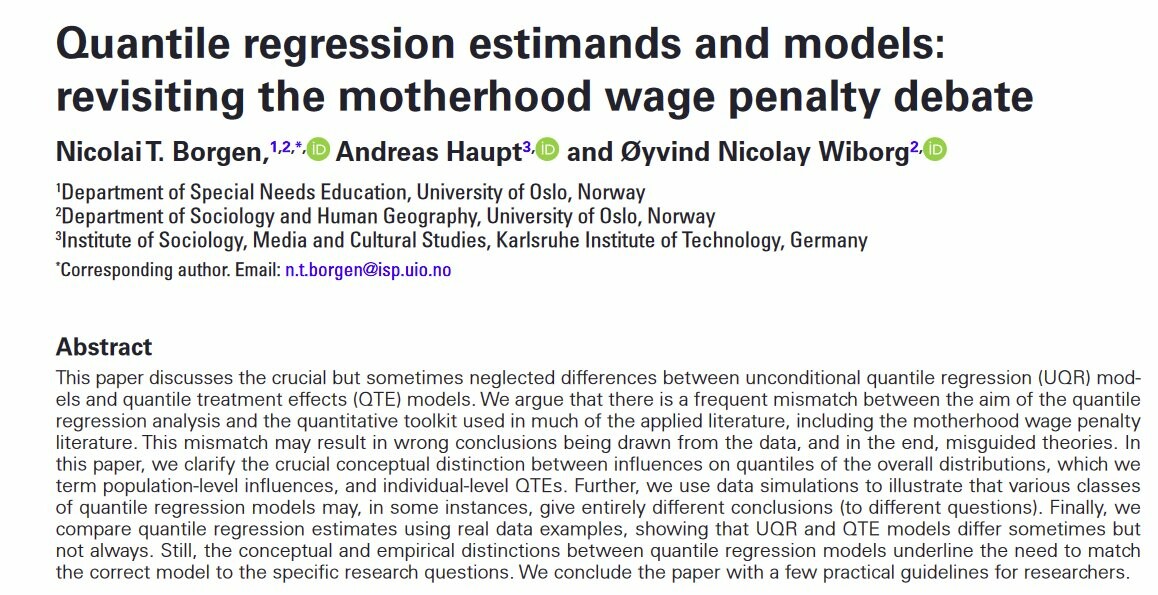
In case you have ever wondered which quantile model fits your research question best, Nicolai Borgen, Øvind Wiborg and I have some answers:
https://academic.oup.com/esr/advance-article/doi/10.1093/esr/jcac052/6815678
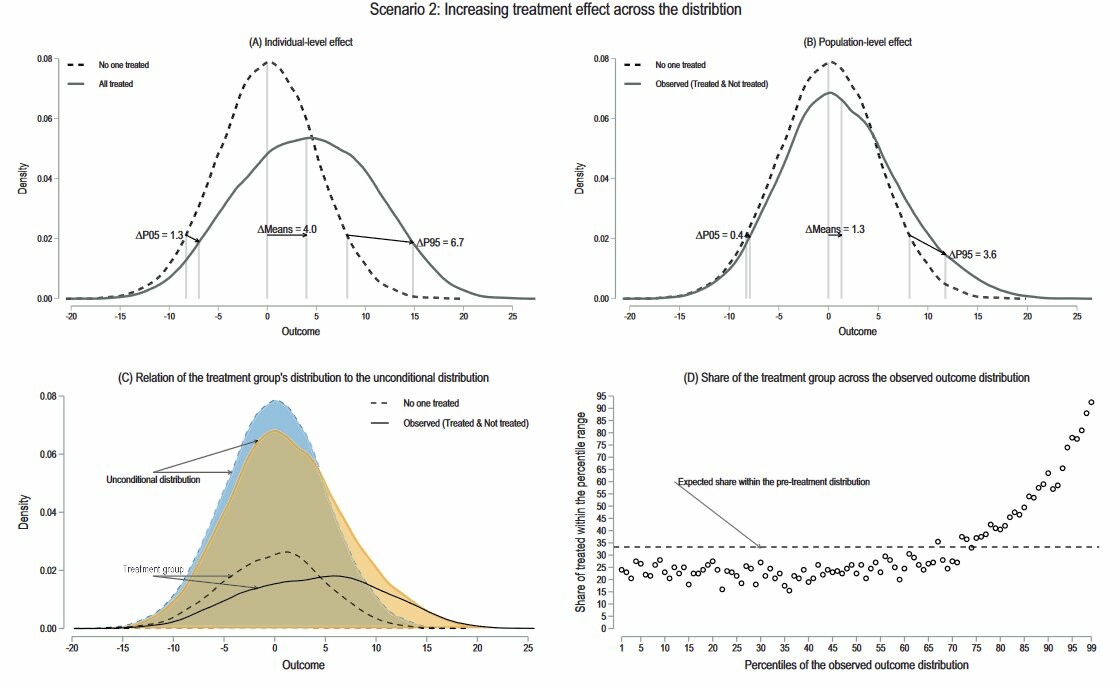
We give you some very non-technical discussions (some equations too if you like) about the different estimands we can care about in our theories and how they fit to recent quantile models.
(So, don't use the wrong type of quantile model for you research any more - if you did so...)
Survey Manager for Understanding Society, the UK Household Longitudinal Study -
@usociety
- here in a personal capacity
Joined Nov 2022
