

Jeffrey C. Erlich @jerlich@social.cleverlibre.org
Jeffrey C. Erlich
boosted

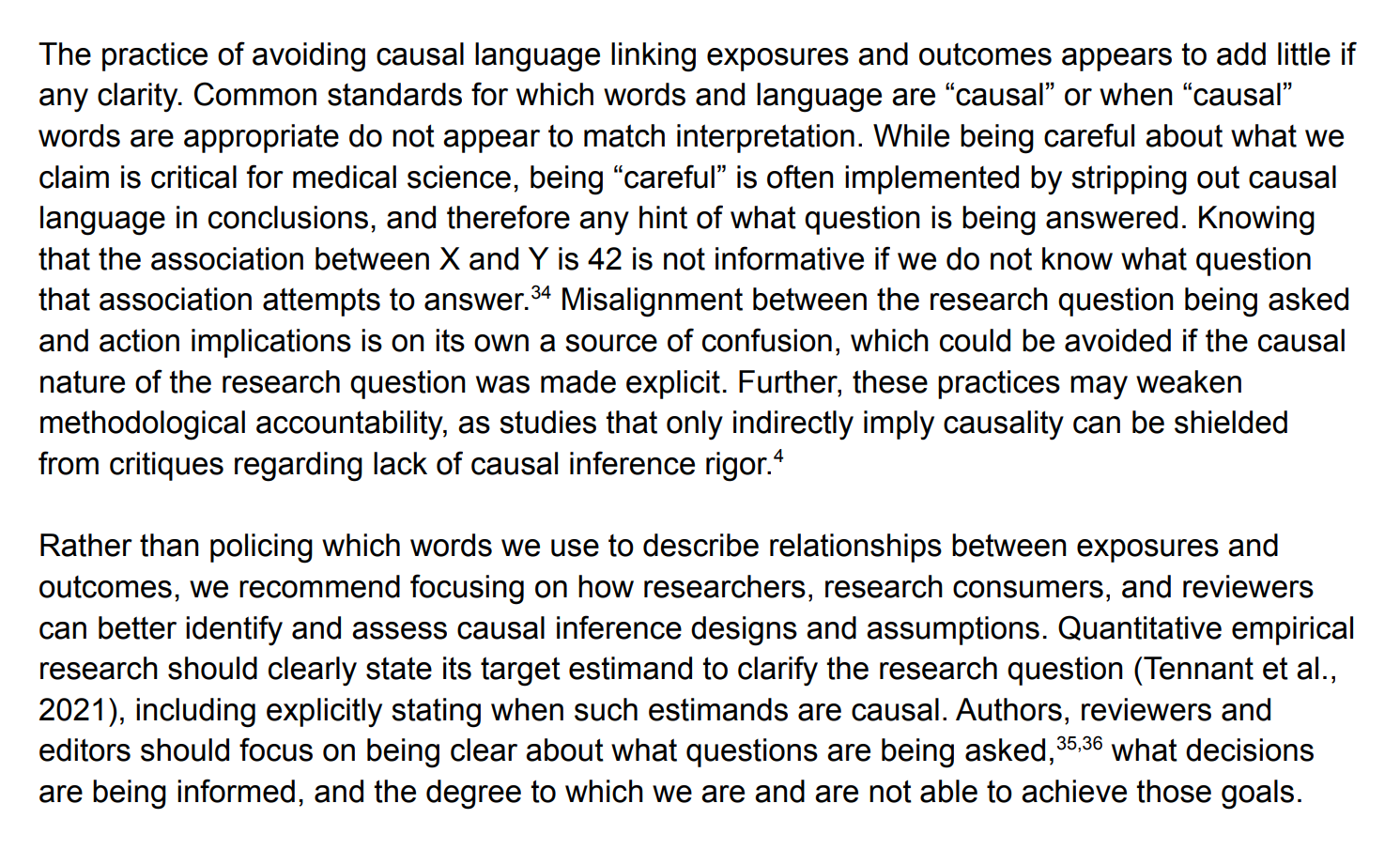
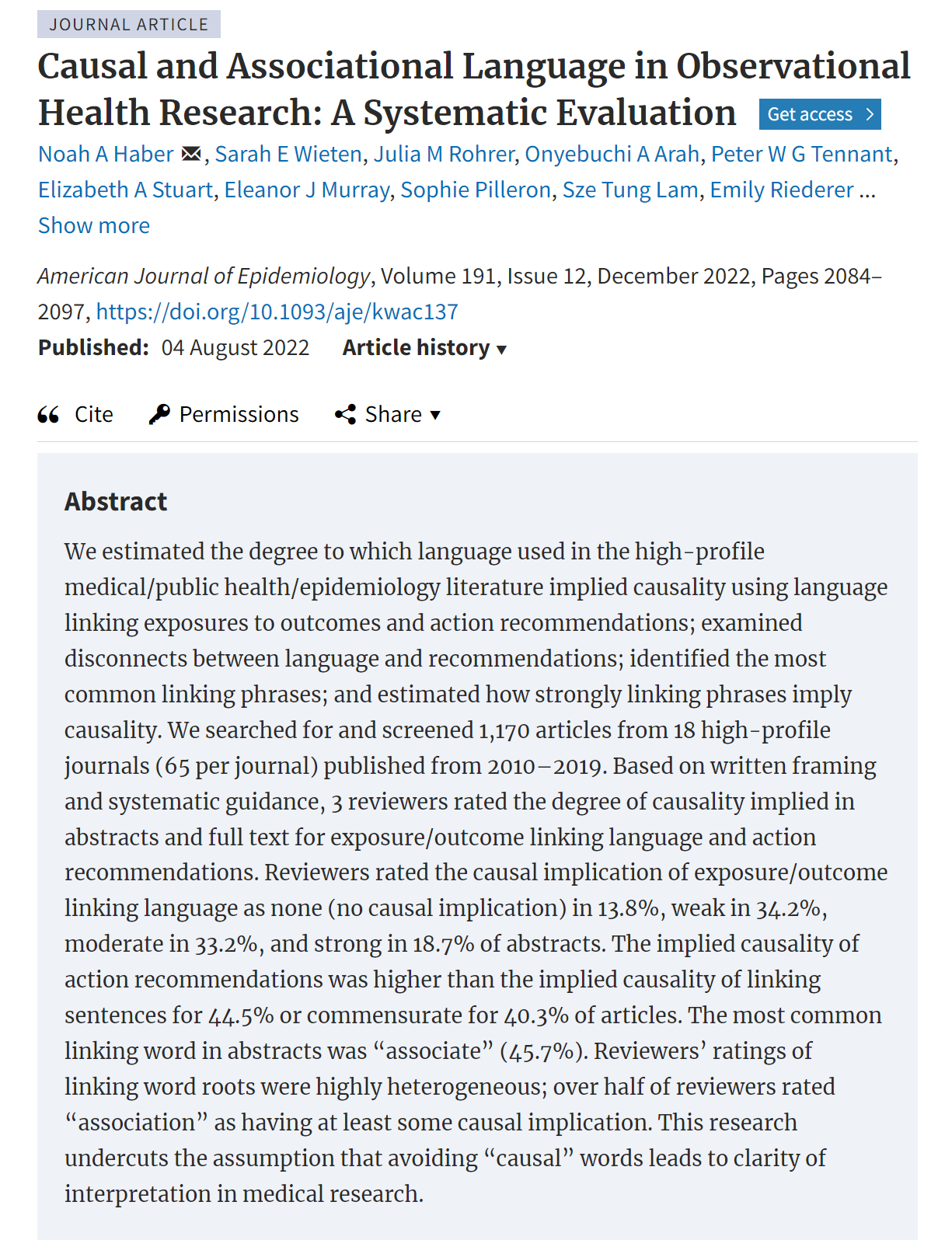
If you subscribe to the common trope that you should avoid "causal language," I strongly recommend getting all the way to the very final two paragraphs in the discussion of this paper.
There is a big plot twist there, and it might change your mind.
But to understand the potentially counterintuitive conclusion, you really really need to understand the framing and methods.
AJE pub: https://doi.org/10.1093/aje/kwac137
Near identical preprint version: https://doi.org/10.1101/2021.08.25.21262631
Jeffrey C. Erlich
boosted

Friends:
The men, women and children who perished in extermination camps had *lives*. They were grandparents, musicians, rabbis, schoolgirls, craftsmen, mothers, shopkeepers, toddlers, artists. They played, created, dreamed, wondered, wrote, cooked, studied, taught, cared for others, were imperfect, and were loved.
We must not forget them.
@auschwitzmuseum
Jeffrey C. Erlich
boosted

Hi all, instead of a re- #introduction after moving instances, I'd like to introduce you to my graduate student Peter Salvino, who passed away under tragic circumstances last week.
Because of his way too early passing, most of you didn't get to know him. So I wanted to make sure my #neuroscience community knows how brilliant and kind a scientist he was. Peter wore many hats in the lab. Being my very first student, he built with me, and knew the ins and outs of every bit of hardware and software. He was also a masterful engineer and inventor, and had a keen scientific mind. He knew what the big questions in the field were and was completely fearless in going after them. We will slowly publish all his great contributions, so you will read his name again.
Most importantly, he was so generous to his lab mates. He helped every single person in the lab, with such selflessness and genuine humbleness. He was really loved by all of us. This is such a huge loss to our field. He was destined to greatness.
Peter's family has set up a GoFundMe campaign to help support research similar to his at Northwestern. They welcome any contributions to honor the memory of this amazing human being.
Jeffrey C. Erlich
boosted

@IdahoLark @Flash Kathrin Swoboda https://novanaturephotography.com/
Jeffrey C. Erlich
boosted

@jerlich Re writings: this is a gentle introduction to my view of consciousness https://www.philosophersmag.com/essays/222-the-lure-of-the-cartesian-sideshow
This recent lecture is also fairly accessible:
https://www.youtube.com/watch?v=qfUPucMNvJE
Jeffrey C. Erlich
boosted

@NicoleCRust @albertcardona @matthewcobb
One of the things I've been struggling with recently is how the vast majority of papers (including most or arguably all of mine) don't propose an idea that could in principle get us closer to understanding how the brain does what it does. I have the feeling that there was this moment in time when people were coming up with tons of crazy theories. They were all wrong (probably) but it was exciting. Now we're just talking about how many dimensions a 'neural manifold' has and I just can't get excited about that (sorry manifold people). In my case, I think I've had a small handful of ideas that went in the direction I'd like neuroscience to be going in of proposing ideas that could scale to part of a full explanation of the brain, but I haven't pursued them because they were hard to define or get funding for. My resolution for 2023 is to focus more on those interesting questions and less on things that I think are easy to get published or get funding. For what it's worth, the biggest challenge to neuroscience I reckon is how it can operate in a stable way based on what seems to be a surprisingly unstable substrate (e.g. synaptic turnover). If I had a good idea about how to solve that problem, that's what I'd be working on.
Jeffrey C. Erlich
boosted

Wow, this is an amazing shortcut to understanding mixed (aka multilevel, hierarchical ...) models, both conceptually and with applications: https://m-clark.github.io/mixed-models-with-R/ #rstats #statistics #methods
Jeffrey C. Erlich
boosted

I wrote a tribute to Chuck Stevens, an incredible scientist who passed away recently. I was fortunate to work with, and learn from, him over the years. I will deeply miss him. https://www.cell.com/neuron/fulltext/S0896-6273(22)01074-1
Jeffrey C. Erlich
boosted

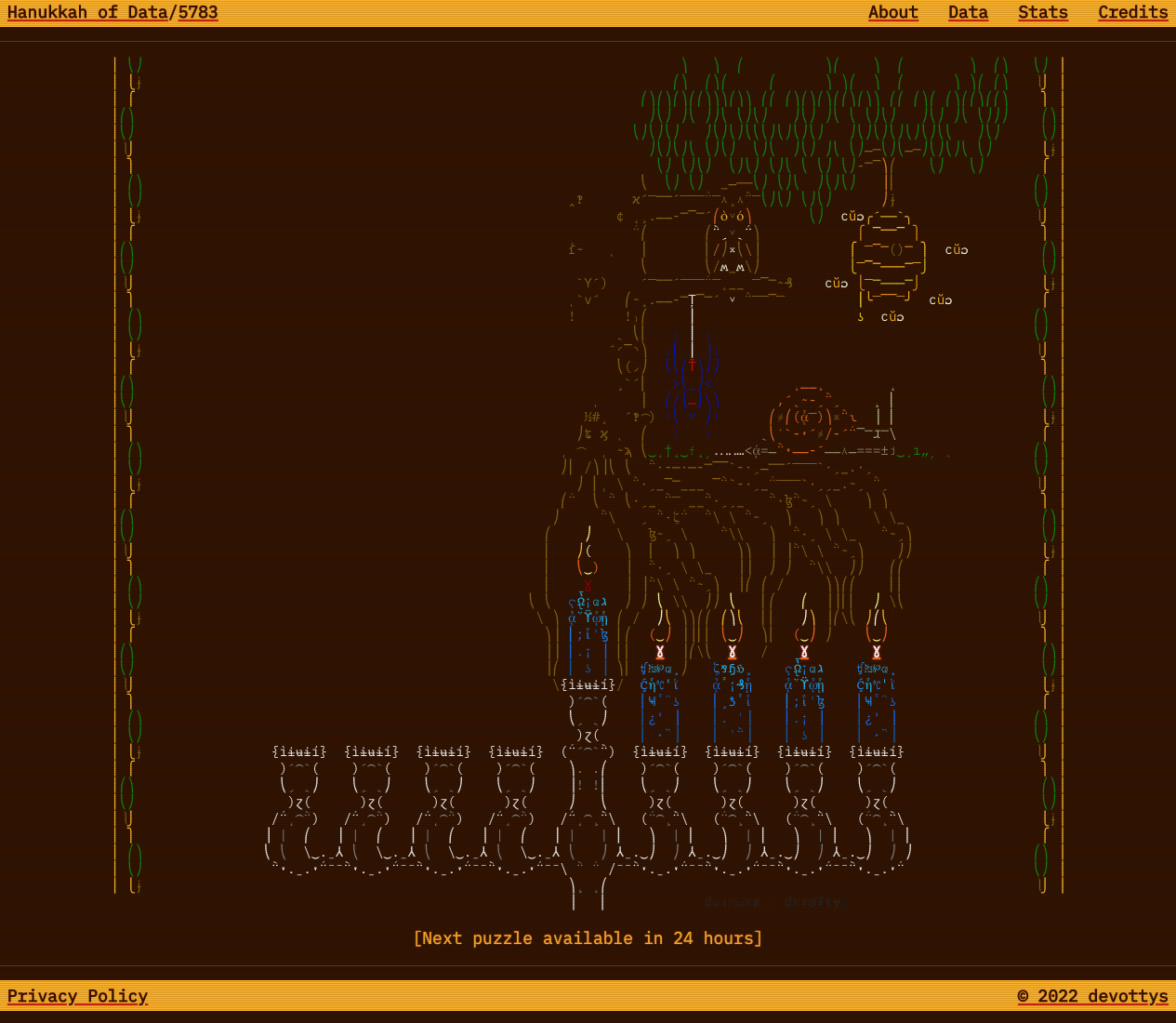
The Hanukkah of Data is going well!
https://hanukkah.bluebird.sh/5783/
#HanukkahOfData #AdventOfCode
Jeffrey C. Erlich
boosted

Jeffrey C. Erlich
boosted

'Why some animals can regenerate while many others cannot remains a fascinating question. Even amongst planarian flatworms, well-known for their ability to regenerate complete animals from small body fragments, species exist that have restricted regeneration abilities or are entirely regeneration incompetent. Towards the goal of probing the evolutionary dynamics of regeneration, we have assembled a diverse live collection of planarian species from around the world.'
Jeffrey C. Erlich
boosted
@jerlich It's more that I think we need to reconceptualize sentience, as we reconceptualized life
Jeffrey C. Erlich
boosted

 🖖
🖖
Jeffrey C. Erlich
boosted

And once again @djnavarro has made data beautiful https://blog.djnavarro.net/posts/2022-12-18_crayola-crayon-colours/index.html
Jeffrey C. Erlich
boosted


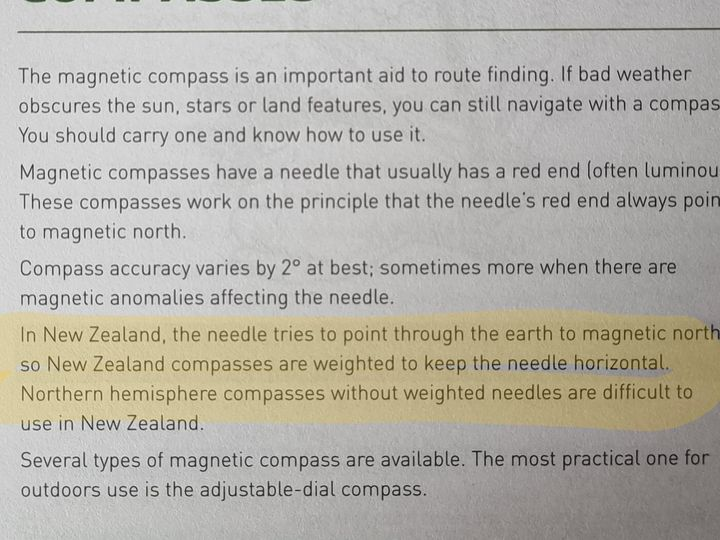
So here's a random thing that I learnt yesterday. Compasses are region-specific and the needle will "stick" if a normal compass is used in the wrong region! Australia and New Zealand are in magnetic zone 5. If you want a #compass that works anywhere in the world, it needs to have a "global needle", which is built a bit differently to account for the problem of the magnet aiming directly through the earth to magnetic north and dragging the needle down with it.
Jeffrey C. Erlich
boosted

I'm really going to miss #DarkSky when it goes. No other weather app has a fully adequate user interface, and I've tried a few. As for "use the iOS Weather app, it has all of Dark Sky's features!" - kindly jump in a lake. NO IT DOES NOT. It's horrible.
Jeffrey C. Erlich
boosted

It works!!!!!!!! An API Endpoint to post statuses directly into lists so people can make their own #DIYAlgorithms . Now some cleanup and a bit of UX stuff but i can't believe i actually wrote code in #Ruby i am proud of myself. :)
#MastoDev
Jeffrey C. Erlich
boosted

The Chronicle of Higher Education released an interesting tool that lets you look at who colleges/unis think their peers are, and which other schools think the same.
It's interesting to look at. Here are a couple of things I've observed...
https://www.chronicle.com/article/who-does-your-college-think-its-peers-are?
Jeffrey C. Erlich
boosted





My argument, at its core, is that to do that, we need to teach people why science deserves their trust – and this requires teaching how science works as a social institution. I've written about this in brief in a Science American article: https://www.scientificamerican.com/article/to-fight-misinformation-we-need-to-teach-that-science-is-dynamic/
It’s a lot easier to admit to being wrong (and changing your mind) if you have sense of humility all along. When are you are arsehole about being right it is very hard to admit you were wrong. So let’s start with everyone just being a bit more humble?
