

John BS @johnabs@social.cleverlibre.org
- Background
- Chem, NetSci, ML, Math
- Languages
- English
- Hobbies
- Fencing, Woodworking
- Religion & Philosophy
- Christian & Stoic
A previous analytical biochemist, (functional) programmer, industrial engineer, working on a PhD with a focus in complex systems.
Joined Dec 2020
Supercomputer access has boosted my productivity substantially, I might actually get my papers submitted this century 😩
@lucifargundam @trinsec My new post indicates not super enough 😭
Okay, so that supercomputer code crashed... It hit the RAM limit I assigned at 64 GB and only 22% completion...
Good news? I can likely complete the data generation phase within 24-48 hours.
Bad news? An estimated 300GB of just tabular text data that I get to sift through when I'm done. That I sure as hell can't load into RAM anywhere.
Im not sure how to feel about this 😶
On the bright side, I can take breaks and still feel productive while my jobs run in the background! 😄
@daeyoung Right, but Zea MAYS...maize...they're homophones. So maize is more specific than just corn 😋
@trinsec @lucifargundam Well regardless, the code is now running on the supercomputer, so all of the crises have been averted. Problem (hopefully) solved 😂
@trinsec @lucifargundam Yeesh, both of you are taking the "crisis actor" role a bit too seriously 😂
@trinsec Thanks for the reminder! Now I'll never forget 😂
@trinsec I'll keep you posted for sure 😄 I usually don't get motion sick though, so I'm not sure how much my input will be valuable, but we'll see!
@trinsec This looks pretty sick; I'm gonna try this out! Thanks Trinsec 😍
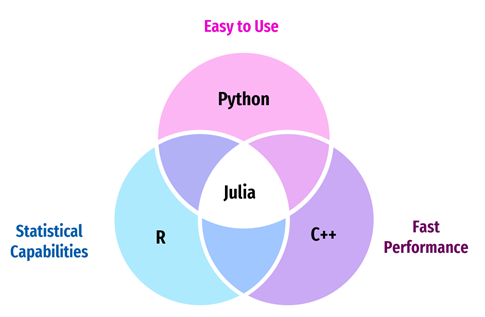
I'm finally able to run my Julia code on the supercomputer, as tech support got it working (mine failed due to a curl dependency error that I was unable to address, funnily enough).
It's glorious. Remind me to NEVER, under any circumstances, run code locally; it destroys my ability to multitask effectively when my 12 year old laptop screeches to a halt xD
@daeyoung Corn *technically* refers to any small seed or cereal crop, whereas maize is the plant that produces the corn which is colloquially known as "corn".
And of course they can't put crude oil in their car...they use PETROLeum jelly instead 😂
@leahdriel No problem; I totally get it, believe me. Just keep me in the loop, if you don't mind, and I'm sure we (and hopefully a few more cowork buddies!) can figure it out sometime 😄
Pooch Post! She was recently groomed for matting caused by her allergies, and now she's chilly and needs a vest and some blankets in her bed. She's so stinking cute, I can't take it 😍
@leahdriel Just wanted to let you know, I just got ready if/when you are! 😄
John BS
boosted



@freemo I think Snape was just practicing traversing the ring of integers modulo 2 😂
@leahdriel No worries; I'll keep you posted, but I'll go ahead and say I *should* be around barring any dog/wife related emergencies! 😄
@karthikakamath
I'm going to assume this is an actual question and not rhetorical, if I misread the context, please ignore me 😅
In the case of people, we can both empathize (e.g. simulate being in another person's position and evaluate if the person behaved reasonably) and request an explanation of a set of actions and their motivations, to determine if a legal, ethical, or moral code of conduct was breached. While certain decisions are made non-consciously, others are made consciously, and both can usually be explained post-hoc by the person in question, even if the explanation isn't perfect. In this case, liability can be established, and restitution made to victims if needed.
Systems entirely reliant upon black-box models makes determining liability a massive issue. Increasingly powerful actors on the global stage (e.g. Tesla, Waymo, etc) may be able to shirk responsibility when failures occur and/or foist blame onto others. Look into the Rafaela Vasquez case for more info; it's not entirely as cut and dry as many sources make it out to be IMO. There were failures on both parts, but the driver is now in the hot seat, despite the algorithm failing to alert to oncoming danger in a reasonable time.
Finally, I would say anytime you have code being used to control things IRL that can have serious ethical (driving cars), financial (trading algos), or life altering impacts (cancer diagnosis classifiers), you want to be damn sure that you understand exactly what the model is doing and why it's coming to a conclusion to make sure we are maximizing our accuracy and allowing other systems to cross-validate our results.
P.S. explainability may make it easier to prune or improve existing models with rules based approaches, rather than extensive training times, but that's a whole other thing, which I will humorously refer to with the following image.

- Background
- Chem, NetSci, ML, Math
- Languages
- English
- Hobbies
- Fencing, Woodworking
- Religion & Philosophy
- Christian & Stoic
A previous analytical biochemist, (functional) programmer, industrial engineer, working on a PhD with a focus in complex systems.
Joined Dec 2020
