

Kau))) @kau@social.cleverlibre.org
- https://www.instagram.com/holy_kau
- Paleo² Lab
- https://thirumalai.geo.arizona.edu
Earth/climate scientist at the #UniversityOfArizona (#Tucson).
📝 #GTD
🦜 #birds
🎹 #synths
🎸 #bassguitar
☀️ #mindfulness
📸 #photography
🌡️ #climate & #paleoclimate
🌊 #oceans & #paleoceanography
⚗️ #geochemistry & #biogeochemistry
Joined Nov 2022
At the #EOS Science Advisors meeting right now at #AGU22 & here is a list of the top 5 most popular scientist-authored articles of 2022. I sense a theme! #ice #climatechange #Antarctica
Link to EOS Magazine, if you don’t already know about it: https://eos.org/homepage
@simonjgoring For a second, I thought “suborbital” as in sub-Milankovitch-cycle climate change 😅
Now at S405a (#AGU22) - Central University of #Kerala Ph.D. student, Ammoose Jayan (also currently a Fulbright visitor at the #UniversityOfArizona), talks about #paleoceanography investigations in the Gulf of #Mannar (#IndianOcean) focusing on paleoproductivity changes across the late Holocene using #planktic #foraminifera. Main result: lower productivity in Gulf of Mannar along with a relatively weaker #Indian summer #monsoon winds during the Little Ice Age (#LIA), some ~500-700 years ago.
I wonder about the potential impact on coastal southern Indian societies & seafood intake during the time!
Now at #AGU22 (S405a): Tyler Winkler from #WHOI talks about using “blue holes” from the Bahamian archipelago to track North Atlantic tropical #cyclone variability over the last millennium - finds anomalously *intense* #tropicalcyclone activity (inferred from several blue hole records) during the Little Ice Age (#LIA) from 1500-1600 CE!
Interesting Monday morning (#paleoclimate) session at #AGU22 (S404) exploring the “nexus” of climate, environment, and humans. First few talks focused on the potential climatic implications for the trans-Eurasian Silk Route exchange.
@pdemenocal Many thanks, Peter! 🙏🏽
@cznbigdata Going to give it a go and see what happens!
Kau)))
boosted

The #Paleontology world is blowing up:
— Robert #DePalma is accused of faking data in dino-killing #astroid paper (to scoop Melanie During who was publishing on the same subject)
— claims he can’t get the original data as the person who had it passed away
— data transparency is essential & should already be a requirement of EVERY journal!
Read full article here: https://www.science.org/content/article/paleontologist-accused-faking-data-dino-killing-asteroid-paper?utm_medium=ownedSocial&utm_source=Twitter&utm_campaign=NewsfromScience
Kau)))
boosted

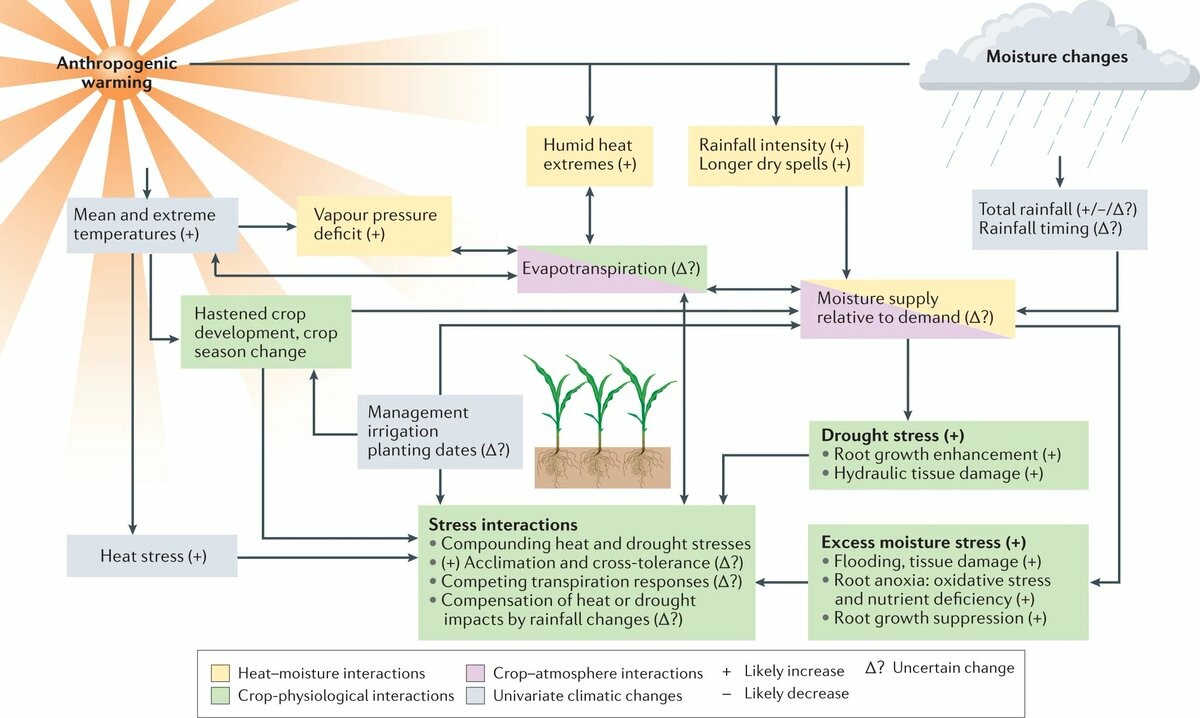
How does #agriculture respond to compound #climate #extremes, and what are the main areas of uncertainty?
We review it!
An integrated understanding of #heat and #water in soil–plant–atmosphere dynamics is needed to suitably adapt cropping systems to compounding climate impacts
Read more in the new review:
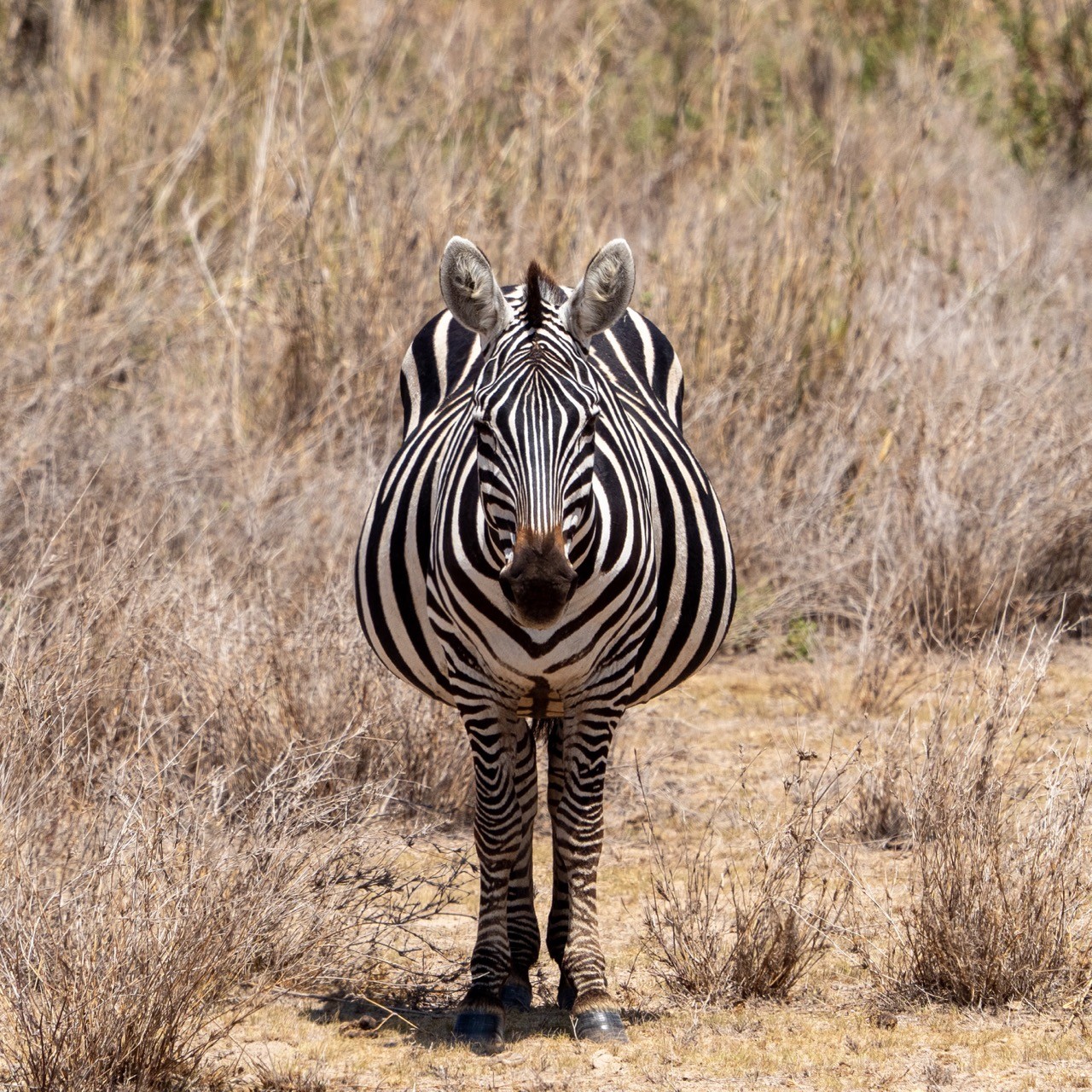
@DiBosco @HelensPhotos Thanks - and ooh - I didn't even consider the potential of this one carrying a little one!
@HelensPhotos Here are more stripes! This one seen in #Amboseli #Kenya
Kau)))
boosted

I’m recruiting MSc/PhD students to join my lab at #ClemsonUniversity in Fall ‘23! If you’re interested in #paleotempestology (#prehistoric #hurricanes), the hydro side of #paleoclimate, and/or records of #coastal or #hydrological #hazards, get in touch! We use multiple proxies, primarily #sediment & #treerings, to reconstruct #extreme events in the past. There are plenty of opportunities for #fieldwork & #labwork. If you’re going to #AGU22 & want to chat about this, let me know & we’ll meet up!
July 2022: A superb #Superb #Starling seen in #Amboseli, #Kenya.
#EastAfrica #Aves #Birds #Birding #BirdPhotography #FourThirds #Olympus #Zuiko
One of my favorite #birds to see out in the wild - an Indian Paradise Flycatcher- this one seen a few weeks ago at Hunasinakere in Hassan Taluk, #Karnataka. They seem so ethereal & otherworldly upon first sight!
#aves #birding #birdphotography #flycatcher #FourThirds #Olympus #India
July, 2022: Greater Flamingos in #flight (+ African #megafauna in the background) at Amboseli, Kenya.
#Africa #Birding #BirdPhotography #Flamingo #FourThirds #Olympus #Zuiko
I missed these birbs - here is a House #Crow at the banks of the #Kaveri River & confluence of its tributaries in #Srirangapatna, #Karnataka, chomping down on rice leftover from an ash scattering (death) ritual.
Kau)))
boosted

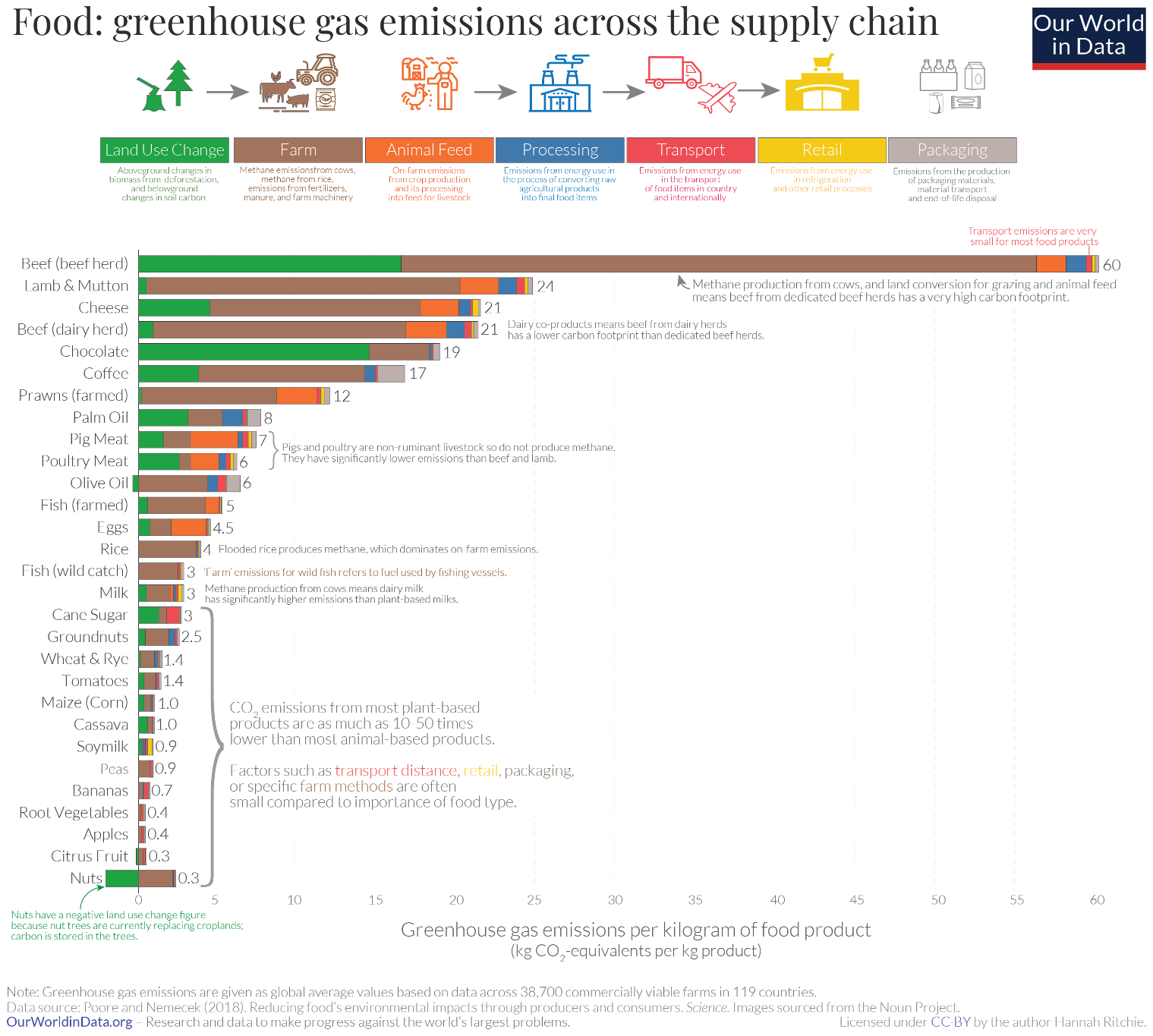
‘Eat local’ is a common recommendation to reduce the carbon footprint of your diet.
But transportation makes up a very small amount of the greenhouse gas emissions from food.
*What* you eat is far more important than *where* your food traveled from.
Kau)))
boosted

The Google doodle today is of Marie Tharp — pretty neat. Marie Tharp (July 30, 1920 – August 23, 2006) was an American geologist and oceanographic cartographer who, in partnership with Bruce Heezen, created the first scientific bathymetry map of the Atlantic Ocean floor while at #ldeo #columbia in the 1950’s. Lamont Doherty Earth Observatory has a visiting researcher fellowship in her name to this day. #womeninstem #geoscience #MappingMondays https://www.google.com/?fpdoodle=1&doodle=240342495&hl=en&gl=us&ictx=3&sa=X&ved=0ahUKEwjciuXz0L_7AhVcFjQIHVBdA5EQPQgR
Kau)))
boosted




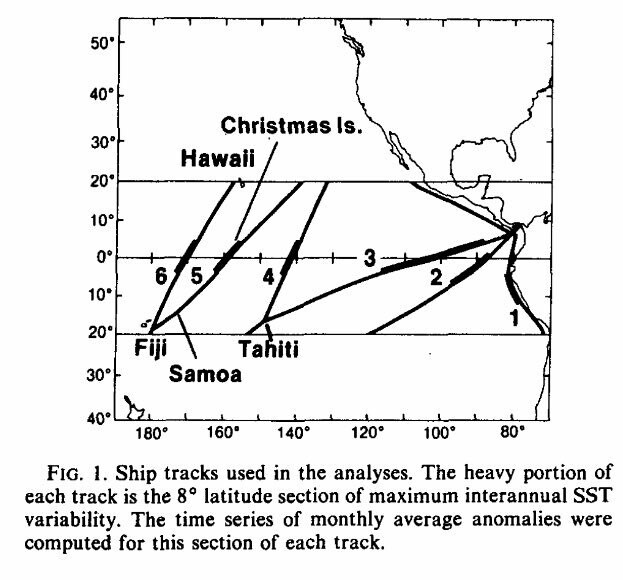
Ever wondered where the numbered ENSO indices come from?
Rasmussen & Carpenter (1982) numbered ship tracks going across the Pacific and these were adopted for the sub-regions that they crossed.
https://doi.org/10.1175/1520-0493(1982)110%3C0354:VITSST%3E2.0.CO;2
- https://www.instagram.com/holy_kau
- Paleo² Lab
- https://thirumalai.geo.arizona.edu
Earth/climate scientist at the #UniversityOfArizona (#Tucson).
📝 #GTD
🦜 #birds
🎹 #synths
🎸 #bassguitar
☀️ #mindfulness
📸 #photography
🌡️ #climate & #paleoclimate
🌊 #oceans & #paleoceanography
⚗️ #geochemistry & #biogeochemistry
Joined Nov 2022
