

kwitschas @kwitschas@social.cleverlibre.org
Biochemist and postdoc at Gent University
#neuroscience
#ScienceMastodon
#ionchannels
#Electrophysiology
#Biophysics
Joined Nov 2022
kwitschas
boosted

2022 saw a whirlwind of #neuroAI research. Brain Dall-E. Neurons in a dish playing pong. GPT predicts how brains process language. I read through a bunch of papers so you don't have to. Read my review of 2022. Featuring the work of @kordinglab , @tyrell_turing , @TimKietzmann and many others.
https://xcorr.net/2023/01/01/2022-in-review-neuroai-comes-of-age/
kwitschas
boosted

Mastodon friends! I will probably post this over on twitter next week, but you're special people and get a sneak peek :) We're hiring a bioimage analyst in my team! This is a "junior" position best suited for someone who knows an image analysis tool or two, can code to a novice/intermediate level, and wants to learn a lot. Remote work (in the US) possible depending on circumstances. Please share widely! https://thejacksonlaboratory.wd1.myworkdayjobs.com/External_JAX/job/Farmington-Connecticut/Systems-Analyst-I_JR002913
kwitschas
boosted

This is a great paper. A reminder - eukaryotes (cells with a nucleus) are a partnership between some likely motile predator cell and radical new "toxin exploiting" bacteria that not only could tolerate this new harsh chemical, molecular oxygen, in earth's atmophere, but use it.
RT @eLife@twitter.com
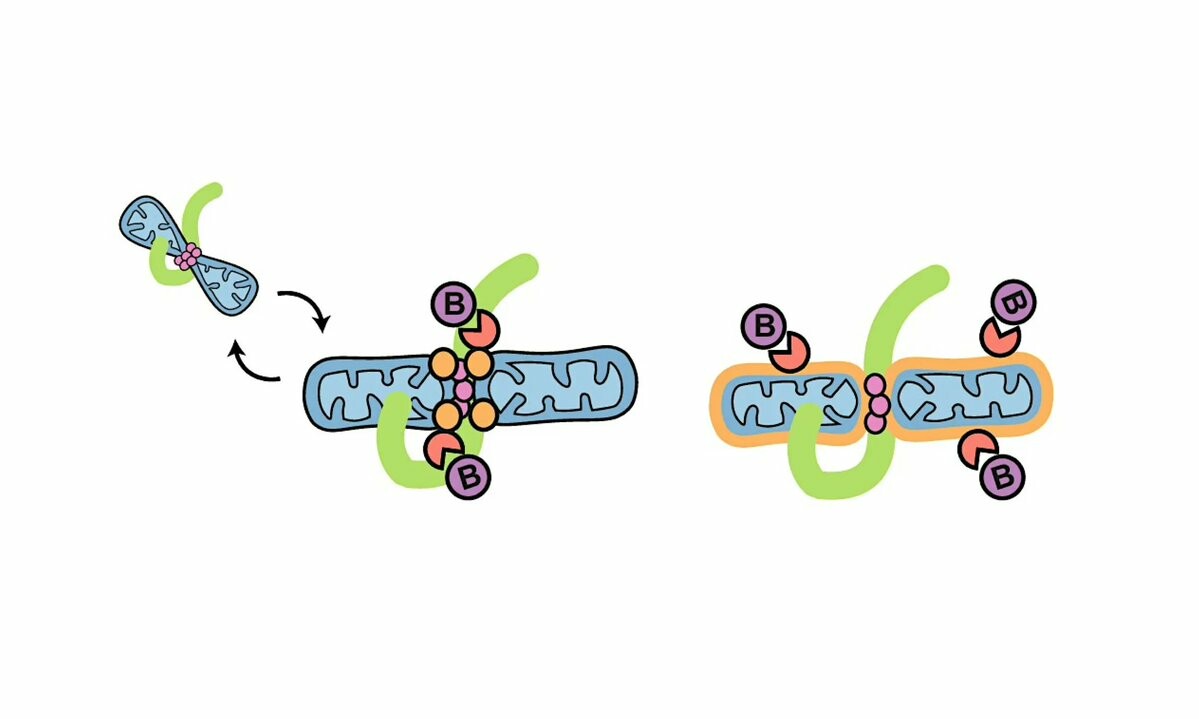
An ER phospholipid hydrolase drives ER-associated mitochondrial constriction for fission and fusion. https://elifesciences.org/articles/84279?utm_source=twitter&utm_medium=social&utm_campaign=organic
kwitschas
boosted

@ewanbirney we had an interesting conversation on the biological role of the fusion/fission cycle in #mitochondria with Orian Shirihai this summer on the #EMBOPodcast
It's about the Twig et al @embojournal paper that Nguyen & Voeltz cite in the opening of this @eLife piece:
"Cells maintain a characteristic mitochondrial architecture important for cellular metabolism and function. Mitochondria maintain their overall architecture and morphology by undergoing cycles of fission and fusion (Friedman et al., 2010; Twig et al., 2008; Youle and van der Bliek, 2012)."
https://www.embo.org/podcasts/fuse-or-die-a-conversation-with-orian-shirihai/
kwitschas
boosted

After a pause due to the holiday and moving disruption, I’ve updated the list of Earth Science folks on Mastodon - anyone who has submitted their details in the past couple of weeks should now show up.
https://all-geo.org/mastodon-earthsci/
We’re up to 320+ names - I’m wondering if I need to add some organisation/filtering to make it manageable.
If you’d like to add yourself (and haven’t already) go to:
kwitschas
boosted

The German word "rutschen" means to slip or slide.
But, if in December Germans wish you a "Guten Rutsch!" ("Good slide!") they don't want you to go on a slide or slip on black ice.
They wish you a nice New Year's Eve and turn of the year.
The complete saying is "Guten Rutsch ins neue Jahr!" ("Good slide into the new year!") but almost everyone just says "Guten Rutsch!"
(It's not the same as "Happy new year!" which would be "Frohes neues Jahr!")
So, enjoy our language - and your "Rutsch"!
kwitschas
boosted

I want to finish 2022 sharing my favourite paper of this year "Metabolically driven action potentials serve neuronal energy homeostasis and protect from reactive oxygen species" by Chaitanya Chintaluri and Tim P. Vogels. https://www.biorxiv.org/content/10.1101/2022.10.16.512428v1.abstract
I had been waiting to read it since I could attend an online seminar by Tim almost a couple of years ago and heard about this story. This work proposes a very interesting framework to understand spontaneous activity as a way of protecting against ROS and discusses it through the implementation of different models as well as generates multiple predictions (excessknowledge ftw).
On top of its scientific interest, I really enjoyed how the papers is organised and written!
kwitschas
boosted

#Postdoc in #CognitiveNeuroscience at Dartmouth College, in @cerw ‘s lab!
(Trying to add some hashtags to this postdoc offer, but not sure what is the best practice for this)
kwitschas
boosted

Hiring 1 Research Specialist and 1 Postdoctoral Fellow.
Competitive salaries.
Project Title, Epigenetic regulation of Cdk5 in cognition and emotion.
Let's do this.
kwitschas
boosted


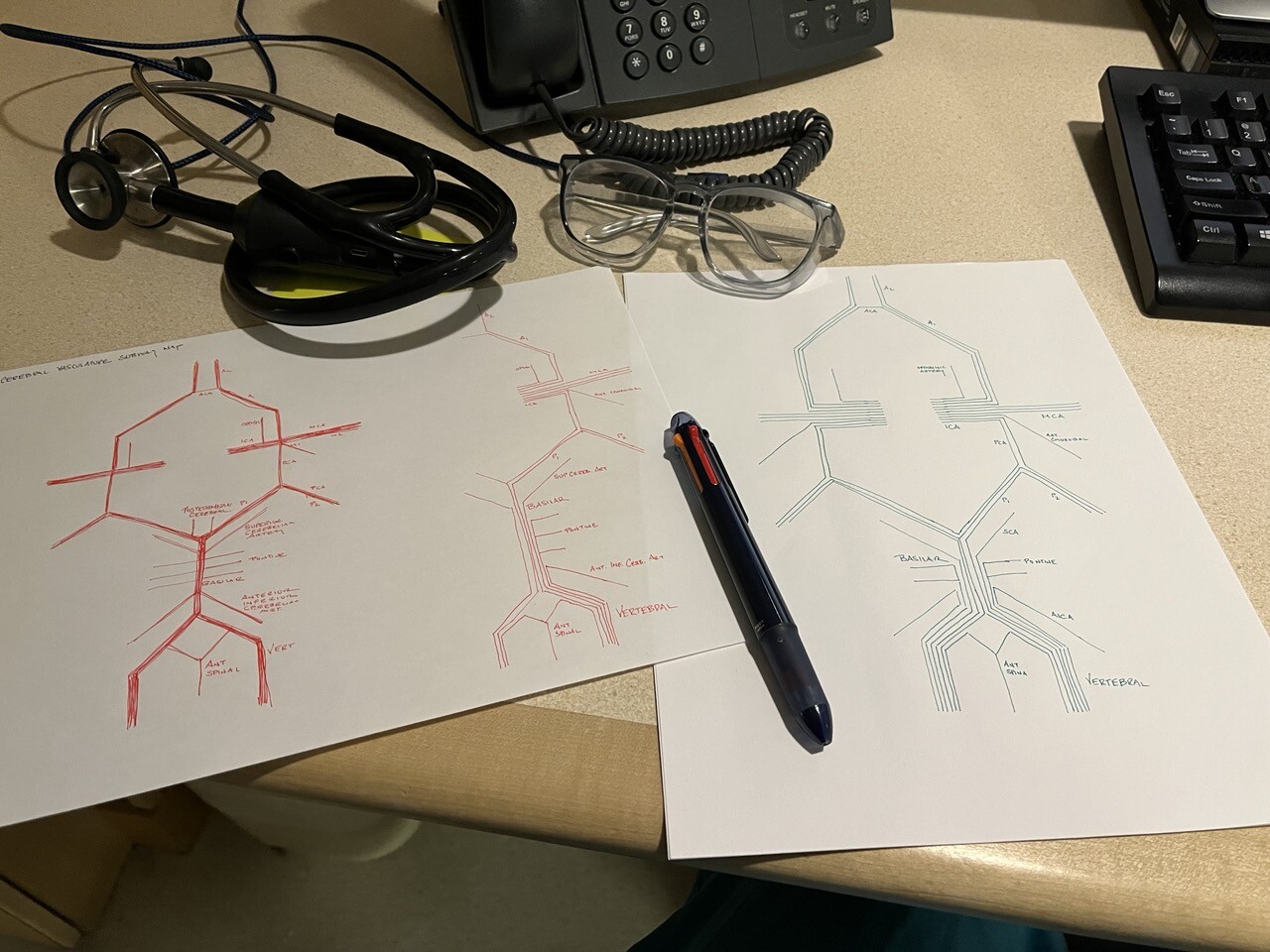
Draft of my next infographic Medical art: circle of Willis as subway line.
(And yes It’s not a crazy night in the ICU tonight)
kwitschas
boosted

RT @abhijit_MLab@twitter.com
Looking for someone with microfluidics/microfabrication experience for a JRF position. Some exposure is a must. Immediate recruitment. Converting into PhD after 6 months/1 yr is a possibility but not guaranteed. Pay as per ICMR/DST norm. Please RT.
🐦🔗: https://twitter.com/abhijit_MLab/status/1608541652486062085
kwitschas
boosted

Hey 👋...I just joined neuromatch.social, so I'm re-introducing myself on mastodon-- thanks for stopping by!
I'm an assistant professor of psychological and brain sciences at Dartmouth, and I run a research lab studying the brain network dynamics that support learning and memory.
I really like computational models, deep learning, natural language processing, ed tech, open science, data science, visualization, and neuroimaging. I love coding and puzzles too 🤓!
Wanna learn more about my lab, read our papers, download our software, take our MOOCs, watch our talks, etc.? Check out https://www.context-lab.com/
If you're a grad student, postdoc, or assistant professor, you may also want to take a look at the MIND computational summer school: http://mindsummerschool.org/
kwitschas
boosted

I'm asking a ton of questions this week...
How do you #license your #bioinformatics code? What about tools? Software packages? New analysis methods? Code you wrote specifically for one project?
Do you keep your repositories private or public before #publication?
Can we discuss #intellectualproperty of #code during and after the publication process? Do you fear someone might "steal" your idea if you work for a long time in public repos before publication?
kwitschas
boosted

RT @IMPRS_GS@twitter.com
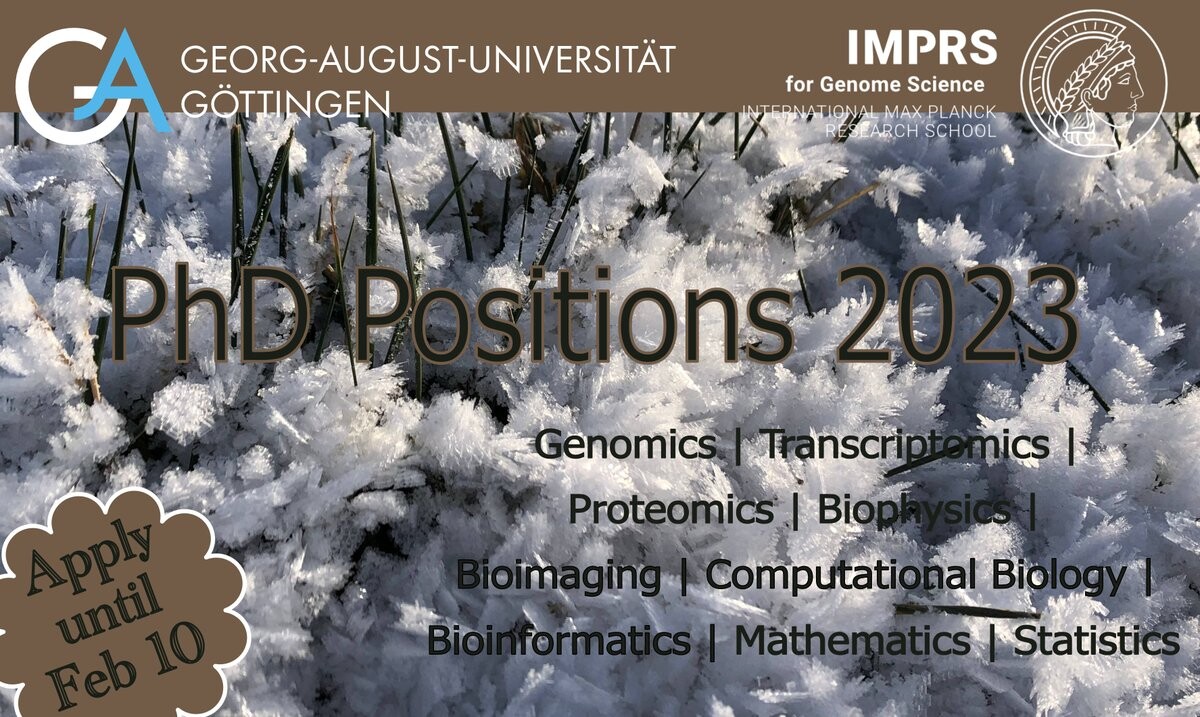
End of the year, winter in Germany. Time to retreat and think about the coming year. Interested in a career in science? We offer #PhD positions for fall 2023 or earlier. Find more information: https://www.uni-goettingen.de/de/556628.html #Genomics #Bioinformatics #Statistics @mpi_nat@twitter.com @uniGoettingen@twitter.com
kwitschas
boosted

Fully funded 4 year PhD in my group, supported by EPSRC available!
Come work on the cutting edge of understanding how mutations alter the aging tissue and influence cancer development. Study how mutant clones spread and interact in the tissue with a diverse set of computational methods.
Recent graduates have been highly successful taking positions in industry and academia.
See my lab web page to learn more about our work- https://www.hall-lab.com
https://ucl-epsrc-dtp.github.io/2023-24-project-catalogue/projects/2228bd1101.html
kwitschas
boosted

Discussed scientific texts generated by prompting ChatGPT with @kordinglab Can one integrate into one's own papers and grants? #ChatGPT #neurodon
kwitschas
boosted

My first mastodon post!
Interested in #neuralinterfaces #deeplearning and #brainimplants for the blind? Sharing our latest 🔥PRE-PRINT🔥"Biologically plausible phosphene simulation for
the differentiable optimization of visual cortical
prostheses" w Maureen van der Grinten,
@deRuyterJaap
et al. 1/
kwitschas
boosted

@MolemanPeter @NicoleCRust I think this has been my perspective from my time in neuroscience as well. I think we had a great period of advances from ~1970s to ~2000 built around the successful application of molecular biology to the brain. This was a time when new tools made a reductionist approach extremely powerful, to pick apart complex things to smaller and smaller pieces.
To me it seems like the biggest sea change of the past 10-15 years has been widespread acceptance that reductionism is not enough, that we need to go the other way and think about emergent explanations of lower-level phenomena. Predictive coding and the dynamical systems approach are two examples of this, in which the goal is to understand population activity, not individual neurons. I would say that the search for systems-level explanations has been the conceptual innovation of our time (with the caveat that no ideas are ever really new, and perhaps this is just the pendulum swinging back to the era before molecular biology).
Unfortunately I also think the search for multi-level explanations of the brain is much more ill-posed than the reductionist approach, a much harder problem, possibly even intractable. It's not even clear what it would mean to understand the brain at a systems level -- concretely, how would we even know if we succeeded? So maybe this is why we also feel like we're stagnating as a field. But I am glad we are looking at things this way even so :)
kwitschas
boosted

I recently joined Mastodon, and I found it jarring that it has very few discoverability features.
So I’ve built this little tool to help build connections with people: https://followgraph.vercel.app/
Check it out!
kwitschas
boosted

#MastodonNews Dec 28, 2022
Seems not everybody is willing to sell out to evil billionaires.
Financial Times: Twitter rival Mastodon rejects funding to protect non-profit status >>>
https://t.co/TXNmtIPV3O
Twitter rival Mastodon has rejected more than five investment offers from Silicon Valley venture capital firms... The platform’s non-profit status was “untouchable”... Mastodon will not turn into everything you hate about Twitter.
News Archive >>> https://docs.google.com/spreadsheets/d/1d5Q6oyzrlfXBEhHsLI9cxltdFV_XPrZWQj1mj8Ivc7Q/edit?usp=sharing
#twittermigration
Biochemist and postdoc at Gent University
#neuroscience
#ScienceMastodon
#ionchannels
#Electrophysiology
#Biophysics
Joined Nov 2022
