

kwitschas @kwitschas@social.cleverlibre.org
Biochemist and postdoc at Gent University
#neuroscience
#ScienceMastodon
#ionchannels
#Electrophysiology
#Biophysics
Joined Nov 2022
kwitschas
boosted

The latest episode of Quantitude gives a nice introduction to the idea of equivalence testing: https://quantitudepod.org/s4e15-equivalence/
It is nice this is rapidly becoming a thing we expect all scientists who perform hypothesis tests to know about. Long overdue.
If you want to learn more about equivalence testing, this chapter in my free textbook should get you to a point where you can perform equivalence tests in your own research: https://lakens.github.io/statistical_inferences/equivalencetest.html
kwitschas
boosted

#Jamie Walker @ime_walker No amount of AD pathology is “normal” per se, but pretty much everyone develops NFTs in their lifetime. Ever wonder what amount of Alzheimer-type pathology is “normal”-ish at any given age? The Spectrum of Alzheimer-Type Pathology in Cognitively Normal Individuals https://pubmed.ncbi.nlm.nih.gov/36502330/
kwitschas
boosted

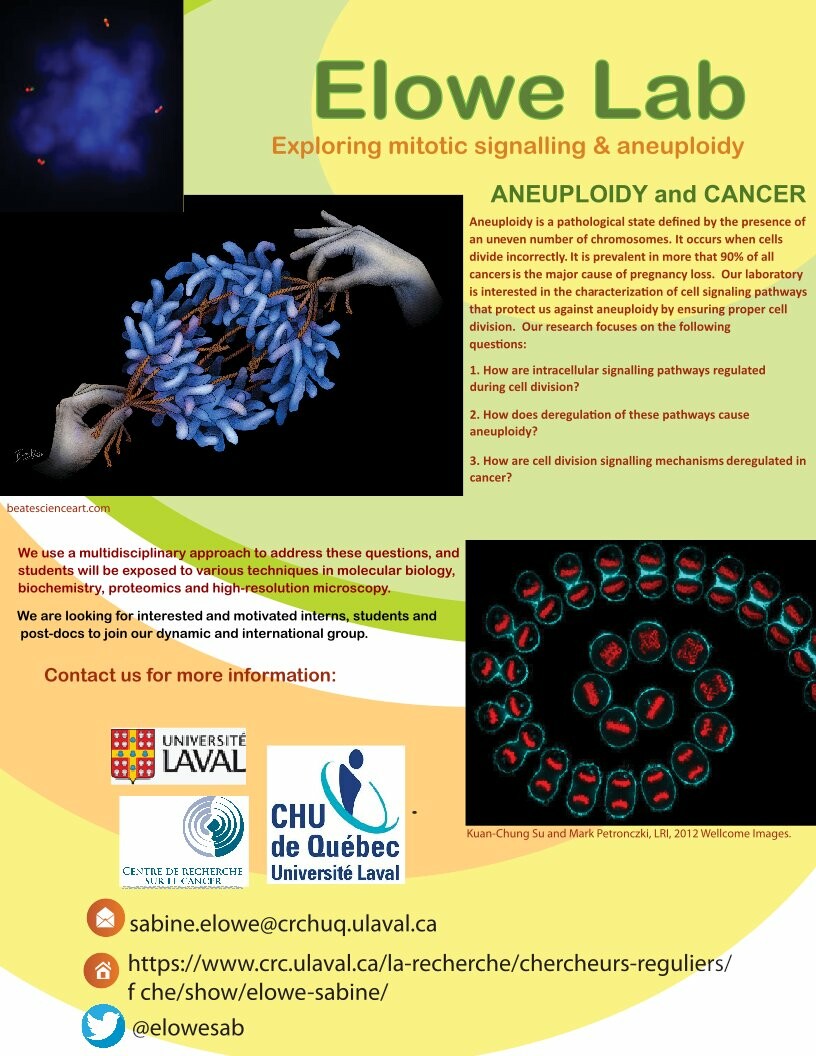
RT @elowesab@twitter.com
My Lab at the Université Laval is hiring students and post-docs. Check out the poster below for more information and how to apply. Come join us in beautiful Québec City!
Friends and colleague, thank you for the retweets.
kwitschas
boosted

RT @PaluchLab@twitter.com
Last day to submit an abstract for Physics of Life 2023. We have a great line up of speakers and sessions, short talk opportunities! Don’t miss the deadline! https://twitter.com/iop_conferences/status/1616161212806348815
🐦🔗: https://twitter.com/PaluchLab/status/1617475441370988544
kwitschas
boosted

Does the brain use algorithms or not? #neuroscience #algorithm
I read about computational or mathematical neuroscience and how the brain computates and/or applies algorithms. I am probably not smart enough what that really means. But how does that relate to the following?
"This means that in contrast to the algorithmic procedure described by information theory, […], once an agent formulates a prior intention, it is no longer necessary for that agent to consider every possible behavioral alternative, only a partitioned subset of those alternatives. The semantic space self-organized by (in) a prior intention automatically reduces the number of logically or physically possible behaviors to a more manageable set of now-meaningful options. Given the overall context established by the prior intention, the prior probability of each of the possible behavioral alternatives has suddenly changed."
Juarrero A (2002): Dynamics in Action: Intentional Behavior as a Complex System. E-book p. 202/329.
#neuroscience #algorithm
kwitschas
boosted

kwitschas
boosted

For those in #neuroscience or adjacent, I've made an instance at
https://synapse.cafe/
Come join us! We still have capacity for quite a bit more people.
kwitschas
boosted

RT @neuroccino
Wanted!
we've an international call for new PI positions @RWTH open to all disciplines we have at the university (requirements: doctorate completed within last three years, exceptions possible; 2y experience outside Germany). https://www.rwth-aachen.de/cms/root/Forschung/Angebote-fuer-Forschende/RWTH-Center-for-Young-Academics/~esarc/RWTH-Junior-Principal-Investigator-Fello/?mobile=1&lidx=1Please please RT! 1/2
kwitschas
boosted

When you follow someone on Mastodon, you'll see their posts appear in your Home timeline.
Optionally, you can also receive a notification every time they post, in order to make sure you don't miss what they say.
To switch on notification, log in through your server's website, go to the person's profile page and click the 🔔 bell icon. (The official apps don't show this option yet, but some third party apps do.)
This only works for profiles you are following.
kwitschas
boosted

RT @LMachesky
New imaging postdoc position available in my lab in Camrbidge Biochem Dept. Funded by HFSP and about motility and metabolism. #microscopy @focalplane_jcs @CamBiochem https://www.jobs.cam.ac.uk/job/39019/
kwitschas
boosted
Conference deadline approaching!
Physics of Life 2023
27-30 March, Harrogate, UK
Great speakers and programme
Abstract deadline 23 Jan
iop.eventsair.com/physics-of-life
kwitschas
boosted

My lab has a #vacancy for a #PostDoc working on a #MembraneTraffic project. It will be of interest to #microscopy people with an interest in neuronal cell biology. Closing 12th Feb.
Boosts appreciated!
kwitschas
boosted

RT @cian_neuro@twitter.com
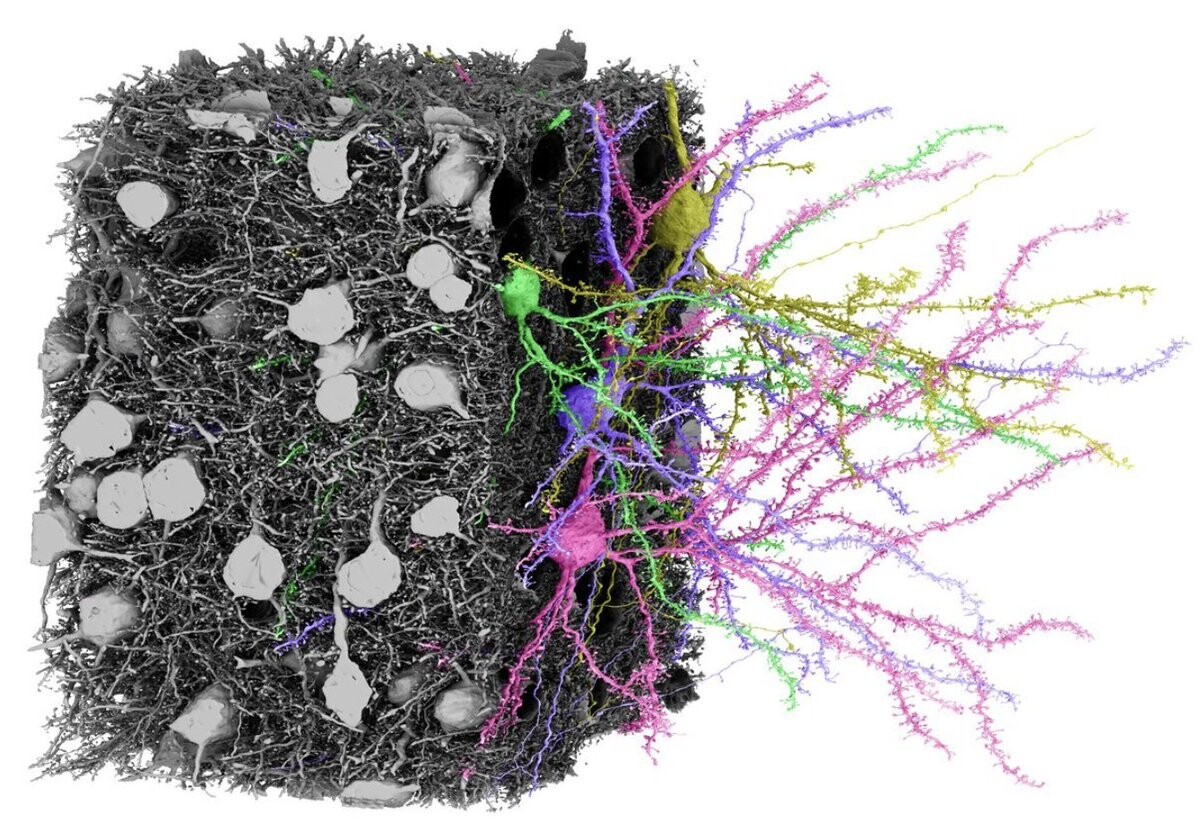
We're looking for a PhD student (09/23 start) to use computational modelling and deep learning to try to understand how the *physical spatial* arrangement of neurons, synapses & astrocytes contributes to brain learning: https://www.ulster.ac.uk/doctoralcollege/find-a-phd/1455716
(image from https://www.microns-explorer.org/phase1
🐦🔗: https://twitter.com/cian_neuro/status/1598679358314614786
kwitschas
boosted

RT @PSUCogAgingLab
For anyone looking for a postdoc in aging, Penn State's Center for Healthy Aging is accepting postdoc applications thru our T32 Training grant. We have an amazing collaborative team of aging researchers (myself included!) check us out and apply!
http://sites.psu.edu/healthyagingpa…
kwitschas
boosted

A great resource for Biologists! https://www.huber.embl.de/msmb/
kwitschas
boosted

RT @FMIscience
📢Please RT: We're hiring two tenure-track group leaders, one in Multicellular Systems and one in Genome Regulation/Structural Biology. Apply by March 19 at:
https://bit.ly/MulticellularSystemGL
or
https://bit.ly/StructuralBiologyGL
#AcademicTwitter
kwitschas
boosted

You can now watch the recorded material from #NeurIPS2022 online without registration at:
kwitschas
boosted

The Smithsonian has made over 4 MILLION images open source! You can create, copy, distribute, etc. This is amazing!
kwitschas
boosted

Please join us at UAB for the inaugural Neurogateways Symposium hosted by The Consortium for Neuroengineering and Brain-Computer Interfaces on Mar 30-31.
Travel awards are available (Deadline for applications Feb 10)
kwitschas
boosted





Heterogeneity of #bacterial #MembranePotential. During colony development of the human #pathogen N. gonorrhoeae, the population transitions from heterogeneous to collective membrane polarization dynamics, marking the onset of habitat diversity #PLOSBiology https://plos.io/3wgrMxT

Biochemist and postdoc at Gent University
#neuroscience
#ScienceMastodon
#ionchannels
#Electrophysiology
#Biophysics
Joined Nov 2022
