

LucifarGundam @lucifargundam@social.cleverlibre.org
- Buy Me A Coffee
- https://www.buymeacoffee.com/lucifargundam
- Politics\Religion
- Irrelevant
- Steam\IRC
- LucifarGundam | DerLG
- Matrix
- lucifargundam:matrix.org
Ask me about my keyboard
Joined Nov 2020

"Maybe you're talking too loudly?"
...
"In fact, the quieter I talk- the more attention you have to pay just to hear what I'm saying!" ~ Frosty The Snowman
LucifarGundam
boosted

LucifarGundam
boosted

LucifarGundam
boosted

This message probably won't reach anyone in East Texas but I want to try.
My mom and sister are fostering 6 cats. They can't find anyone to adopt them and don't really have the means to care for as many pets as they have.
The cats were (thankfully) neutered by a cat humane society.
If you want a cat and you can meet in Mount Vernon, Mount Pleasant, Winnsboro, or even any surrounding towns, please get in touch with me.
LucifarGundam
boosted

 :BlobhajTransPrideHeart:
LucifarGundam
boosted

> The [Apple Computer] garage is a bit of a myth. We did no designs there, no breadboarding, no prototyping, no planning of products. We did no manufacturing there.
> The work was being done—soldering things together, putting the chips together, designing them, drawing them on drafting tables—at my cubicle at Hewlett-Packard in Cupertino. That was an incredible time. It let me do a lot of side projects - Steve Wozniak
The Apple I computer was "slacking off at work" in action. Just imagine doing this today, good luck on not getting your copyright claimed by the company. #retrocomputing #apple
#nowplaying
Top 20 edm songs 2018
https://youtu.be/sJ6pEKWzTys
I just blocked someone- not because I was insulted, but because I didn't want to see that graphic content ever again.
I don't do this to often- I usually ignore people.
This was too cringe.
LucifarGundam
boosted

# On Publishing And Publishers
TLDR: a quick overview of the situation scientific publishers created and ways to partially solve the problem, or rather bypass it.
Tags: #qotojournal #sciense #publishing #essay
1. Introduction
There is a problem in our world, that is not widely talked about, especially on media. These are scientific journal publishers, or rather the system that they have established a long time ago and keep using (and monetizing) to this day. Don't get me wrong, I'm all for capitalism, it's when it gets in the way of important things when I get slightly disappointed.
Let's agree on the important stuff first: the era of lonely geniuses is long time over. The science and scientific advancements in the 21st century depend on cooperation of dozens, hundreds and thousands of people throughout the centuries. Information obtained years and decades ago is used to build new knowledge upon. A student in my faculty is required to have at least 20 citations in their coursework in the end of the first year, and it's not an issue - we usually approach 30 mentioned sources and research even more while doing the literature review. This is a bare minimum to become acquainted with the material. Scientific knowledge can be represented as a tree graph, with it's roots in ancient philosophy and it's leaves reaching into quantum physics and abstract algebra. To cherish the fruit of this tree, one needs to reach it's branches or, abstaining from the methaphore, to research everything that has already been done.
The access to this knowledge in the current model is pricey: one article costs between 30 and 50 dollars and journal subscriptions are expensive even for universities. Of course we violate the law and use Sci-hub extensively. This is very wrong, fundamentally wrong: people should be able to do their work legally, especially when this work is to solve humanities' problems and improve peoples' lives on the broadest scale possible. And don't get me started on the trouble it takes to do the fact-checking on all the articles that are on the web. It would have been so much easier to just read the source. Tough luck!
So there is, as I have mentioned, Sci-hub: illegal, but convenient and free way to obtain most of the articles, otherwise paywalled. For downloading textbooks and various books libgen is very handy and very illegal. Sometimes useng orchid or researchgate is possible to contact authors and request a full-text and even ask a few questions, but this is slow and inconvenient; not everyone is on these plaforms, which makes things worse. There is no way to quickly dismantle the "rule" of publishers, the have been around since the beginning of 20th century. They claim to be important because of the peer-review but I am unsure whether the peer-reviewing is that expensive, especially in modern world.
2. Analysis
So let's list the benefits of scientific publishing. There are some, obviously, and I'm not here to deny them.
1) Peer review. The most important step to keep most of the junk out of the system. Here I refer to pseudoscience and badly written papers as "junk" to save some space.
2) Verification of scientists and institution affiliations. This makes the industry exclusive, but keeps junk out of the system, again.
3) Storing articles and providing a way to access them via identification system (doi).
4) Keeping track of citations.
Now let's get to downsides. There is plenty, as mentioned above.
1) Paywalls.
2) Very slow system.
3) No way to communicate with authors.
4) Publishers have control over the entire thing.
Now It would be fair to have a look at alternatives and what they can provide. I'm writing this without references so please correct me if something is off.
Sci-hub: free way to bypass paywalls. Solves problem 1, creates legal problem.
Researchgate and orchid: a way to communicate with authors. Solves problem 3 partially.
oaDOI and similar sites: they keep track of open-access articles, this partially and legally solves prolem 1.
That's it for the most part. It's not like publishers are going anywhere, as well as doi system. Not in the near future. Maybe we'll come up with something better than sci-hub, maybe torrent-like system for rticles, who knows. Verification of articles can theoretically be done using blockchain technology. I have no idea what's next or how to solve the problem, but I am putting Alexandra Elbakyan in my "acknowledgements" list.
Dixi.
LucifarGundam
boosted

LucifarGundam
boosted

For FREE today only for Thanksgiving is a novel I want to get past the current gate-keepers to reach as many people as possible for an independently published book. Here it is: Magenta. 1984 for the 21st Century. If you read it, give it a review. And thanks for being great people to share a country with. Happy Thanksgiving! https://www.amazon.com/Magenta-Novel-Warren-Fahy-ebook/dp/B09773ZYDZ/ref=tmm_kin_swatch_0?_encoding=UTF8&qid=1624221638&sr=1-1
LucifarGundam
boosted


LucifarGundam
boosted
"Every class you break, every fix you fake, I'll be judging you"
submitted by wtfrayman
LucifarGundam
boosted

I just want you guys to know that the multiple *years* I've had my music on Spotify and iTunes have still made me less money than the first two weeks of the same albums on Bandcamp.
Please support artists directly if you can.
LucifarGundam
boosted


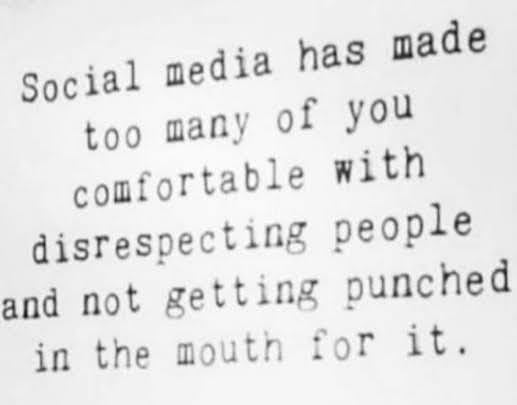




@Moon @freemo there was a good interview on a podcast of someone who's a moderator for tiktok and she talked about how absolutely horrible the things she has to watch are https://www.youtube.com/watch?v=A2-RffABu_g
>>Currently have 7 tabs open for some jobs
>>Have to reapply for 2 other jobs
<<Need more coffee and some pick-me-up of some sort...
LucifarGundam
boosted
#TIL Back in 2005, John Gilmore and Zooko (both are well-known cypherpunks) told Linus Torvalds he should avoid using SHA-1 in git right now before it's too late, since it was already theoretically unsound. Linus completely rejected this suggestion.  He said the attack is theoretical, and git's hash is not meant for security anyway - if you want to use git securely, you should only trust your local tree and never pull code from a public server.
This decision basically summarizes the upstream kernel community's historical attitude on security mitigations...
RT @bascule@twitter.com: 2005 John Gilmore vs Linus Torvalds on SHA1 "debate" in a nutshell https://www.metzdowd.com/pipermail/cryptography/2017-February/031623.html
RT @zooko@twitter.com: I, too, begged Linus not to use SHA1 and he (indirectly) mocked me for it. IIRC I suggested that they use Tiger-192 instead. If they had, it would still be working fine and would not require an upgrade.

- Buy Me A Coffee
- https://www.buymeacoffee.com/lucifargundam
- Politics\Religion
- Irrelevant
- Steam\IRC
- LucifarGundam | DerLG
- Matrix
- lucifargundam:matrix.org
Ask me about my keyboard
Joined Nov 2020
