

Daniel Dvorkin @medigoth@social.cleverlibre.org
Bioinformaticist / biostatistician, veteran medic and infantryman, armchair paleontologist, occasional science fiction author, vaccinated liberal patriot.
Joined Oct 2022
Look. I understand why people are skeptical about the latest #fusion news from #Livermore. But it's too easy for skepticism to slide into cynicism, "fusion power has been twenty years away for sixty years" and all that. Don't gloss over the very real, steady progress researchers have made.
We know it's possible, and as long as we keep trying, someone will be the first to make it work.
@technoshaman001@fosstodon.org you're welcome, and thank you!
I do think there will be a benefit to uploading your data. We've had some success with that kind of crowdsourced research: the American Gut Project <https://www.sciencedaily.com/releases/2018/05/180515092931.htm>, which was started by one of my professors, is a great example. What I'd love to see is a repository where anyone can share any kind of medical data they're comfortable making available. So far nothing like that seems to be in the works, unfortunately.
@technoshaman001@fosstodon.org Absolutely, but unfortunately I don't know much about it. My work is mostly respiratory and metabolic—this is one of the problems with modern science, that there's just so much to know about every subfield that researchers end up hyperspecializing.
That being said, here's one really good example in that realm: when I got out of patient care ~25 years ago, automated ECG and defibrillator interpretation was still kind of exotic and nobody really trusted it. You might take the machine's advice into account, but you'd still want to read the rhythm and made your own decisions. Now, of course, AEDs are everywhere and most emergency medical personnel admit that they do at least as good a job as human judgement. Even cardiologists trust the machine analyses most of the time.
I know there have been similar advances in EEG interpretation, but unfortunately I don't know a whole lot about what they are. One of these days maybe I'll catch up ...
Ever since the Human #Genome Project got rolling about thirty years ago (!) there's been a lot of hope, and a lot of hype, about "#personalized #medicine" or "#precision medicine." When it became clear that as always, the results weren't going to match the hype, a lot of the hope went away too. This is a mistake.
I'd like to talk about a quiet revolution in precision medicine: #genetic #dosage guidelines, a.k.a. #pharmacogenomic #labeling. The basic idea is that if you carry certain genetic #variants, you may need considerably more or less of a particular medication than the standard dose. Back in the '90s, the kind of genetic #analysis needed to make use of that information was far too expensive and time-consuming for #clinical practice. These days you can get a complete #sequence in a matter of hours, for the same cost as a battery of standard blood tests.
Fifteen years ago or so, the FDA approved the first pharmacogenomic labeling, for #warfarin. I was lucky enough to be in the room when the researchers made the announcement, and you could have heard a pin drop. Now it's routine, and there's a very long list: https://www.fda.gov/drugs/science-and-research-drugs/table-pharmacogenomic-biomarkers-drug-labeling
Everyone reacts to #medications differently. For most patients, most medications, and most diseases, there's a fairly broad range of clinical effectiveness between "too little to do any good" and "way too much." But for a substantial number of all of the above, the range is much narrower—and when you add up all the special cases, you get a hell of a lot of people!
A lot of #drugs never get approved, despite showing promise in clinical #trials, because they only help a portion of the study population. Regulatory bodies like the #FDA are notoriously resistant to #subgroup analysis, and I get why: it's very easy to cherry-pick those subjects in a clinical trial who happen to do well, and then come up with a post hoc explanation for why the test treatment worked for them but not for other participants. Some bad drugs have made it to market because of this kind of chicanery. But of course sometimes there's a real reason one group does better, and as long as genetic testing is part of the study design from the start, it's becoming possible to convince regulators that reason is valid.
My work is mostly upstream of this, in the drug #target #discovery phase: finding disease-related #genes and #proteins that might be modifiable with the right medication. Since it's part of the project from the start, that makes trial design easier, and the results more likely to be accepted. But I'd really like to see more #genomic analysis on drugs that *aren't* designed that way too, and I think we're getting there.
Genetic dosage guidelines, though, are making a real difference in current practice. There are still considerable debates over the merits of many labelings, driven partly by legitimate #statistical concerns and partly by ideology. But the principle is proven beyond reasonable doubt, and it's saving lives and relieving suffering right now, every day. Much more to come.
Note to self: when building a health survey which is going to be compared to an existing survey*, design your questionnaire to be as similar as possible to the existing one, even if it's not the way you'd do it. This will save you a lot of trouble down the road lining up all the data.
Oh well. Live and learn.
* #NHANES, in case you were wondering, which of course you were. https://wwwn.cdc.gov/nchs/nhanes/
I'm too tired to come up with any witty commentary about this. Just sad and disgusted.
Brief summary: paleontologist Robert #DePalma, who shares his cousin Brian's cinematic instincts, made a big spash a few years ago with the discovery of the "Tanis" site, which appears to preserve the day of the #Chicxulub impact. Since then he's milked it in the media for all it's worth. Well, as much as most scientists dislike that kind of behavior, it's how you keep the grant money rolling in. #Dinosaurs are maybe more popular than ever, but they're lousy at paying their own bills.
He's made many dubious claims before about the site, many carefully hedged so he could retract them later. It's a dangerous game. This time, it very much looks like he's done something much worse.
#Tanis is real, and it's a remarkable discovery. DePalma's inability to distinguish between flashy PR and outright fraud will accomplish nothing but tarnishing all the real #paleontology work done at the site, by anyone, for years to come. Good scientists like #During will suffer the consequences.
Yeah. Don't do that.
@orafifila Exactly this. He's one of the few Confederate leaders I can regard with much sympathy.
Too often things get worse. Sometimes they get better.
I continue to be amazed by the political shift in Muscogee County, Georgia, where with 67% of the vote counted, Warnock currently leads Walker 70%-30%. Of course it's possible that as votes come in from outlying areas, this lead will narrow. But Warnock seems almost certain to win the county handily.
Muscogee County is mostly two things, you see: the city of Columbus, named after you-know-who, and Fort Benning, named after a Confederate general of no particular note. (If they wanted a Georgian who *was* of note, they could have chosen Longstreet. Wonder why they didn't ... no, wait, I don't wonder at all.) When I was there, thirty-five years ago, it was still the CSA.
One of our drill sergeants was an Alabamian who grew up just across the state line. He warned us, "Now remember, boys, when y'all go out on pass ... around here you ain't in the Army. You in the *Yankee* Army." This was not a joke, and some of my barracks mates still have the scars to prove it.
Some years later, when I'd gone from green to blue, I had a friend at Minot AFB who had been born and raised in Columbus. He was a just enough younger than me, six or seven years, for there to be a meaningful generational divide. I told him that story, and he replied that although many people up to and including his older brother's age still thought that way, people his age and younger had rejected it. A bad old world, of which they wanted no part.
I was politely skeptical. Maybe, just maybe, I shouldn't have been.
Things can get better. Far too slowly. But they can.
@Marquestor Okay, you've found an altitude medicine question I can't definitively answer! But I'll answer anyway, because of course I will. 
My strong feeling is that yes, you can, based on the fact that you *definitely* get drunk faster on less alcohol when you're up a mountain. Hypoxia is a mind-altering drug in itself, and other such drugs amplify the effect. So while there's no way to know for sure, that's the way I'd bet.
@benborges and that's a tiny breakthrough, which no doubt cost much more in lives and equipment than they could possibly hope to gain strategically. The Russian obsession with Bakhmut is really weird, but as long as they're willing to keep spending blood and treasure there, I suppose Ukraine is happy to oblige.
Daniel Dvorkin
boosted


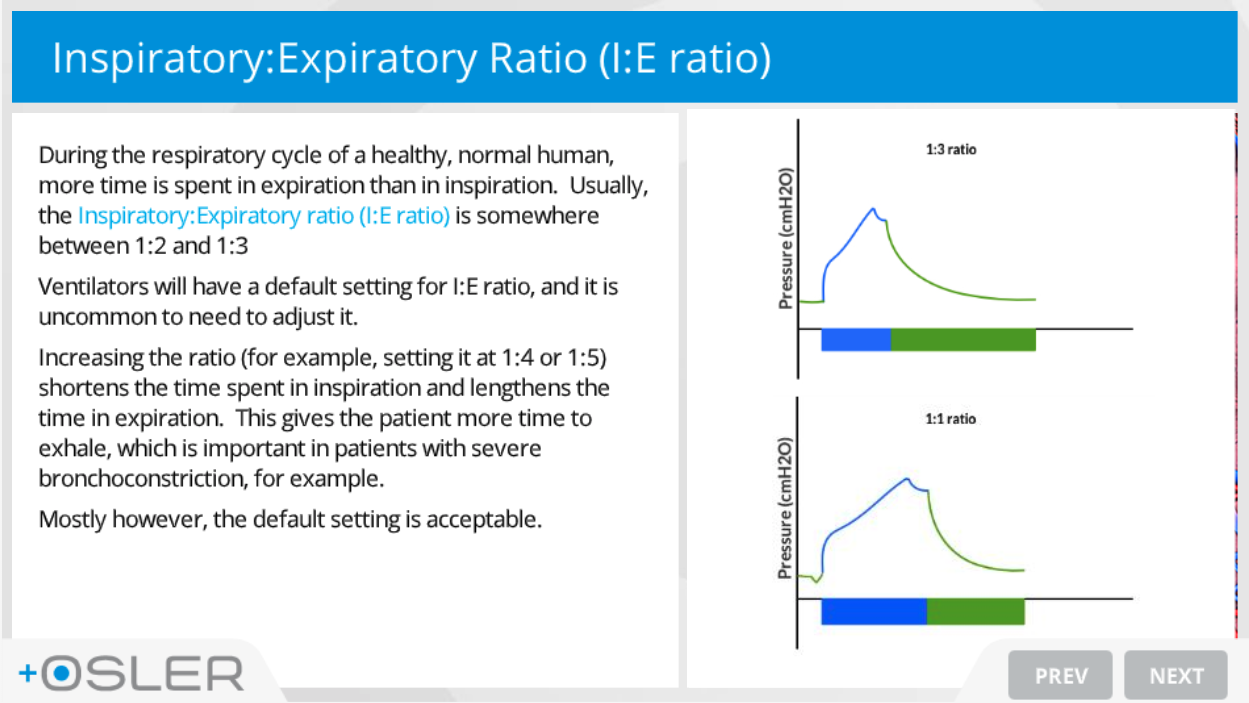
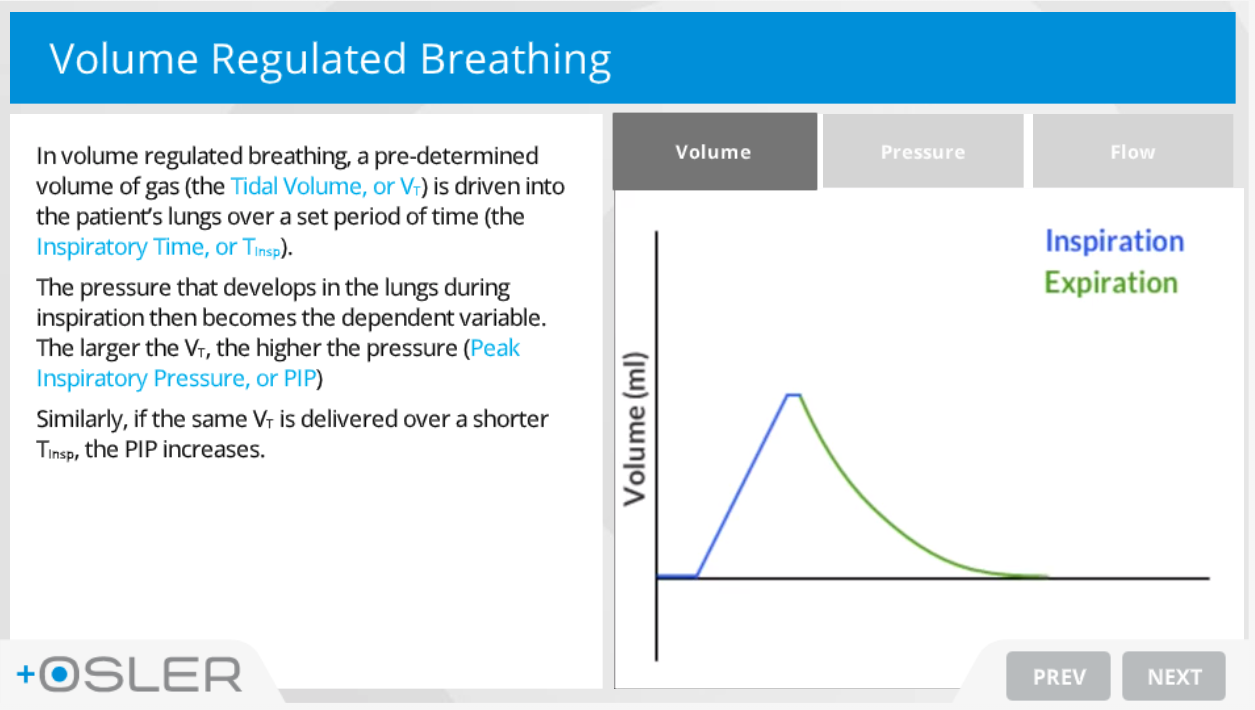
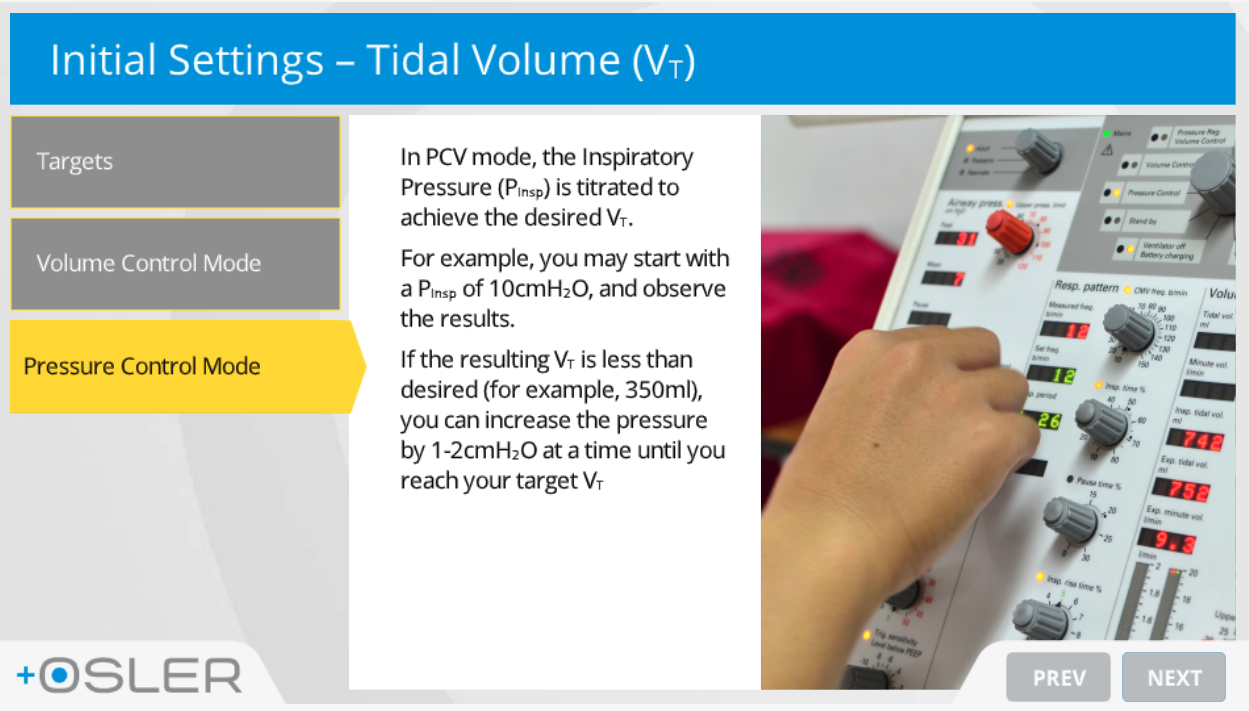
Many new starters in ICU struggle with mechanical ventilation - how does it work? What settings do you use? What on earth are all these three letter acronyms?
So this is module I made to help them understand
Please share it around with your newbies
https://osler.app.link/7PrBm1xRkvb
#medmastodon #icu #intensivecare #intensivist #juniordoctors #tipsfornewdocs #emergencymedicine #emergencyphysician #FOAMed #FOAMcc
Daniel Dvorkin
boosted

So far, 520 people, and counting, are running for mayor of Denver. I don't know anything about any of them, but judging from the e-mails they're sending me, each one is absolutely terrific. The choice will be difficult.
Daniel Dvorkin
boosted

Thread: 2.1/x
Some of the biggest questions we humans like to ask are, “Is there life out there in the universe?” and “Are there other solar systems out there with planets just like ours?” To answer these questions, astronomers have built larger & more advanced telescopes to try to find #Planets outside of our own neighborhood, specifically those similar to our own world.
*expand for photo info
#SpaceMastodon #Space #Astronomy #Astrodon #ScienceMastodon #Science #Exoplanets #ExtrasolarPlanets
Daniel Dvorkin
boosted



Having run my own test mastodon server, I can tell you that boosting is REALLY important. That's how posts propagate between servers that are not federated together.
I may get a bit technical, and it can be hard to describe but it's something like this:
Let's say that you have 2 servers, A and B that are not connected. They have their own federated timelines that is vastly different.
let's assume they have their users @a@A and @b@B that are mutuals. If user @a@A sees something interesting on theirs federated timeline and boosts it, user @b@B will see that on their own home page. But more importantly server B will now know about and download that post, and everyone else on B server will be able to see that post on their own federated timeline!
And that's why you boost, guys! It helps posts to spread.
Our ancestors were not stupid, part the nth. Humans have always liked tasty food with a fair amount of variety, and we've been finding ways to make it tastier and more varied for a very long time. Link to open-access journal article in the story.
https://phys.org/news/2022-11-real-paleo-diet-archaeological-evidence.html
@101101000 oh, you do like to live dangerously, don't you?
Friends, hear me now.
If at any point in your online discourse, you find yourself about to write "according to science," or "statistically speaking," or Archimedes help me, "scientists now believe" ...
Stop.
Choose another phrase. Language is versatile. You can do the thing. I believe in you. Super great.
Please. I'm begging here.
Bioinformaticist / biostatistician, veteran medic and infantryman, armchair paleontologist, occasional science fiction author, vaccinated liberal patriot.
Joined Oct 2022
