

Sylvain Miermont @miermont@social.cleverlibre.org
- Topics of interest
- electronics, open hardware, communications, energy, climate, mobility
- Location
- Grenoble, France
- Other account
- @miermont@mastodon.social [mostly fr]
Electronics engineer, PhD in #microelectronics (low-power digital systems architecture).
Significant experience in low-power wide area wireless networks (#LPWAN especially #LoRa and #LoRaWAN), #RF systems, #lowPower and #protocol design.
Joined Oct 2022
@arturo182 yep, not working. Clicking on the blurry preview downloads a zero-sized mp4.
Time for a short #bookReview 📖
I finished reading #TheDawnOfEverything by D. #Graeber and D. #Wengrow.
It's quite a long book that took me way more than a month to go through, but worth the read and the last fifth of the book, post conclusion, is notes and references that can be skipped without losing too much. Overall very interesting, I warmly recommend it, even if some chapters were going a little too deep into the archeological record for my non-specialist tastes.
It was illuminating, specially as I had previously read #GunsGermsAndSteel by J. #Diamond and #Sapiens by Y. N. #Harari, both very popular books, and both adopting a very deterministic view of past human history.
I'm not 100% convinced by the interpretations of Graeber & Wengrow, but they appear to make a real honest effort at understanding our past, they base their reflections on recent archeological records, and present a much more nuanced "story of the human civilizations" than the previously cited books.
The book doesn't really provide any actionnable advice on how we should collectively go forward, but at least it tries to set the record straight on what was previously attempted ... with various level of success.
Did you know that #CO2 can be used as a #refrigerant gas in #heatPumps? And that it's very efficient at it.
It requires significantly higher pressures than typical refrigerants gas but it doesn't require a chemical plan to fiddle with fluorinated products, and that seems to be a huge plus. Also, it is cheap, guaranteed not to have any undesirable effect we might discover later, non-flammable, non-toxic and has a GWP of 1.
With a COP above 3, the global #efficiency of a combined-cycle methane power plant + transmission loss + point of use COP gives a higher efficiency than burning the methane directly even in the best furnace money can buy.
And we know very well how to store hot water, so spreading daily peak heat demand without massive *electricity* storage is much more feasible.
@farhanasultana Hi 👋
It's also a unique occasion to set a new tone for #publicDiscourse. #Mastodon is not a blank slate, but with the new massive influx of people, it's also the perfect time to collectively settle on new #houseRules.
The lack of #algorithmic curation/fiddling will be both a blessing —no financial incentive to bubble-up enraging content to keep the userbase hooked— and a curse —#discoverability will take more effort without an algorithm spoon-feeding us more-or-less-relevant content—.
@straphanger As a long-time resident of #Grenoble, I can say that the 30 km/h #speedLimit is nearly always ignored and absolutely not enforced by the municipal #police force, nor by the national police. 
It's even ignored by the municipal buses. On paper it's the law, but in reality it's more like a mild suggestion. I think security gains came for other improvements in street and urban design.
Also, as a native of #Bordeaux, thank you for using this picture. I love seeing this "wireless" #tram, and hope more people can realize that public transit can be simultaneously useful and pretty if they get involved and fight for it. This tram, it's so elegant, like a plumb caterpillar meandering through the posh city center. 🚊
Sylvain Miermont
boosted

Things I've learned about Mastodon this week:
1. Photo captions are read by screenreaders for people who have impaired vision. The more descriptive you make them, the more people can appreciate your post.
2. Hashtags should be "camel style" which means you capitalize each word in the tag - this enables screen readers to identify different words in the tag,
3. Reblogging boosts posts and favourites do not.
4. Hashtags are way more important here than on the birdsite.
Mastodon, will probably be a tad slow for the coming days. Please post reasonably, and give everyone some time to settle.
Maybe you can repost, summarize, or reflect on the best posts you've seen on Twitter and other sites. Doing a compilation of some of the greatest stuff we've seen elsewhere is a good way to set the tone. 
@jks it's different, but I hope you'll find yourself comfortable here.
Sylvain Miermont
boosted

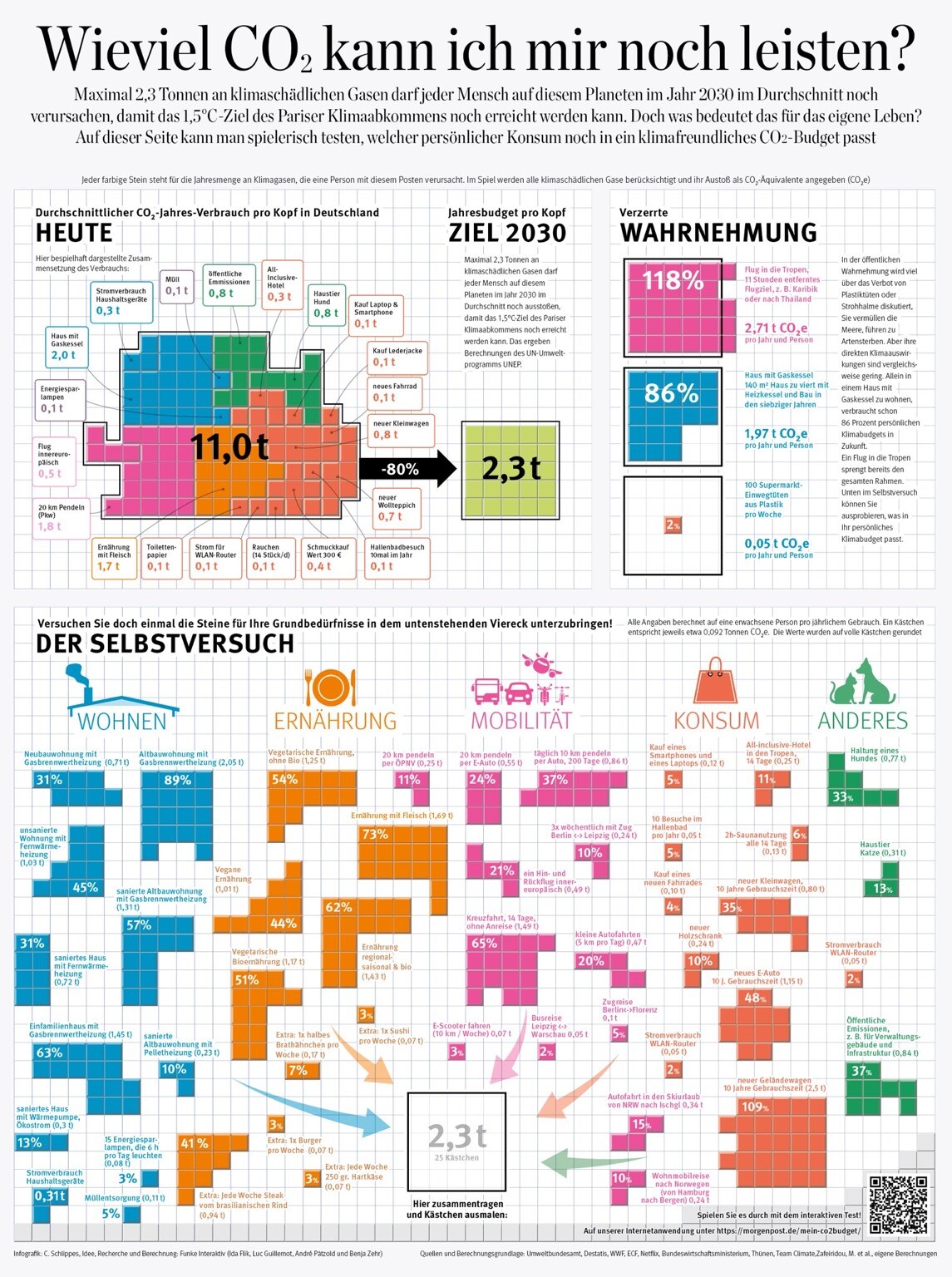
German #newspaper “Berliner Morgenpost” made a playful #visualisation about the personal #climate budget - it shows vividly where individuals quickly reach their limits and why politics urgently needs to act. There even is an interactive version: https://interaktiv.morgenpost.de/co2-budget-pro-kopf-testen-klimawandel/ #infographics #climatechange
Sylvain Miermont
boosted


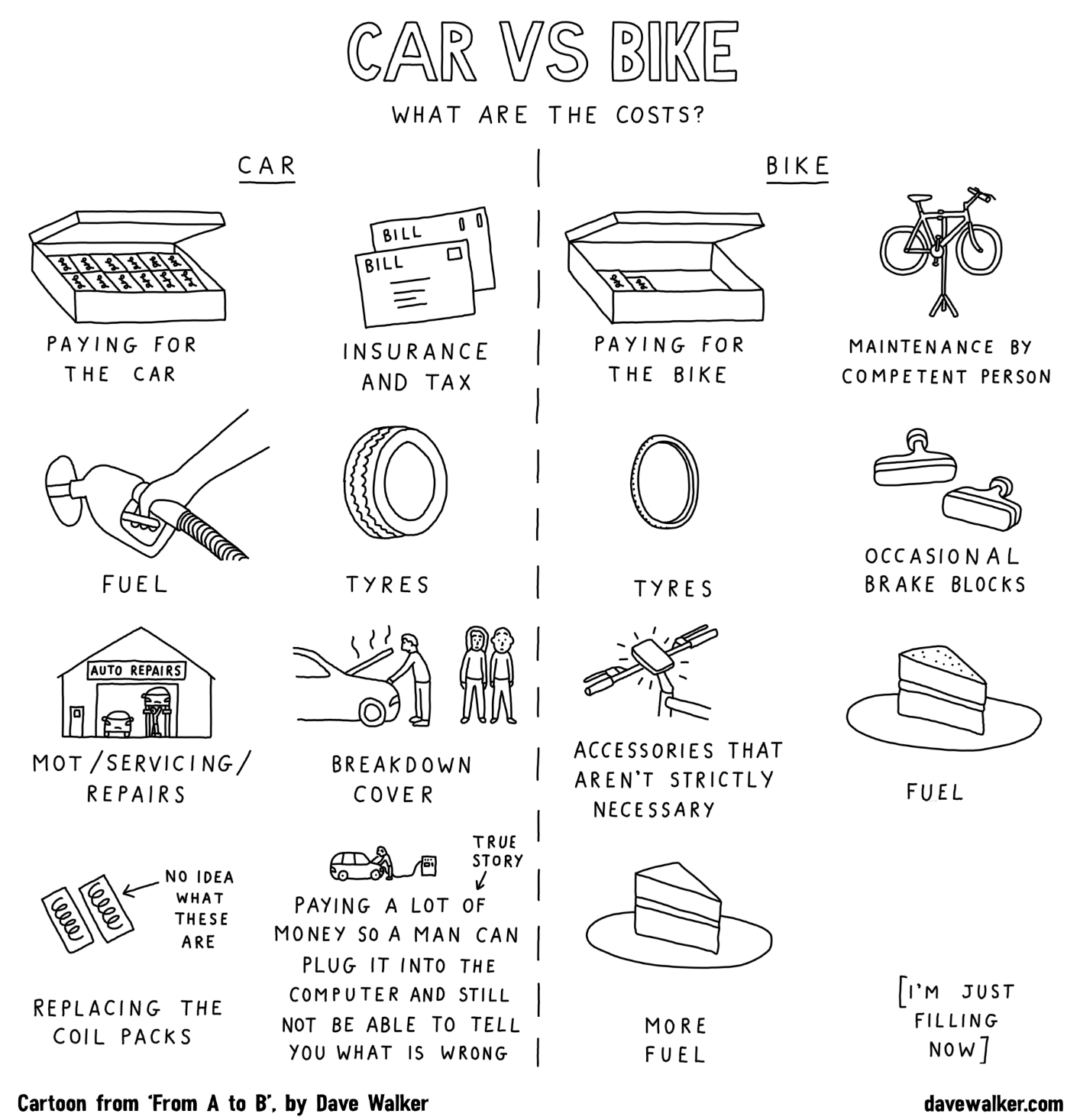
Car vs bike - what are the costs?
Diagram is from my book 'From A to B'. It's a nice book if you're interested in cycling as a form of transport.
Available on my website for reuse by members of my Diagram Club https://davewalker.com/diagram-club/
@daeyoung I think they burn all of the methane that boil-over in the engines of the boat so it's probably not that bad. OTOH, thousands and thousands of kilometers of pipe to bring gas to every last stoves in the country, leaks are unavoidable ...
@daeyoung they seem ready but, nonetheless, the whole LNG supply chain is bonkers. Giant "thermos" ships criss-crossing the oceans, humongous tanks that might be better used to to "liquid air energy storage", capillary networks bringing a potent greenhouse gas all around a country (with inevitable leaks). Bonkers.
@daeyoung right. Thank you for the the reminder :)
@daeyoung isn't that the *least confusing* option when the audience is a mix of people using commas and dots for decimal separators?
#Japan imports a lot of liquefied #methane (CH4), also called LNG.
Since 2013, this country hosts the single largest #LNG storage tank in the World: 60 meters high, with a useful diameter of 70 meters, it stores 250'000 cubic meter of cryogenic liquid, for a mass of 105 metric kilotons of CH4.
If that #CH4 was vented, that would be the equivalent of 8.5 megatons of #CO2 equivalent in GWP20 (1.5 times the #Nordstream leak).
https://www.youtube.com/watch?v=wDOqUFaPXsY
Because the storage capacity scales to the cube of dimensions, but thermal loss scales with the square of dimensions, physics favors such huge tanks. And because the soil is cooler than ambient air most of the year, there is also a benefit to having those tanks underground.
In total, Japan has a LNG storage capacity of 73 times this single tank.
- Topics of interest
- electronics, open hardware, communications, energy, climate, mobility
- Location
- Grenoble, France
- Other account
- @miermont@mastodon.social [mostly fr]
Electronics engineer, PhD in #microelectronics (low-power digital systems architecture).
Significant experience in low-power wide area wireless networks (#LPWAN especially #LoRa and #LoRaWAN), #RF systems, #lowPower and #protocol design.
Joined Oct 2022
