

Neurofrontiers @neurofrontiers@social.cleverlibre.org
We're a neuroscience blog trying to make neuroscience accessible for everyone! Check it out here: https://neurofrontiers.blog
Joined Nov 2021
Neurofrontiers
boosted

Neurofrontiers
boosted

On explanations in brain research:
A thread of the same idea comes up again and again in brain research. It's the notion that identifying the biological details (such as the brain areas/circuits or neurotransmitters) associated with some brain function (like seeing or fear or memory) is not a complete explanation of how the brain gives rise to that function (even if you can demonstrate the links are causal). To paraphrase:
Mountcastle: Where is not how https://www.hup.harvard.edu/catalog.php?isbn=9780674661882
Marr: How is not what or why http://mechanism.ucsd.edu/teaching/f18/David_Marr_Vision_A_Computational_Investigation_into_the_Human_Representation_and_Processing_of_Visual_Information.chapter1.pdf
@MatteoCarandini: Links from circuits to behavior are a "bridge too far" https://www.nature.com/articles/nn.3043
Krakauer et al: Describing that is not understanding how https://www.cell.com/neuron/pdf/S0896-6273(16)31040-6.pdf
Poppel: Understanding brain maps does not formulate "what about" the brain gives rise to "what about" behavior https://www.ncbi.nlm.nih.gov/pmc/articles/PMC3498052/
Any other explicit references to add to this list? @Iris, @knutson_brain, Anyone?
Also, I imagine that some form of the opposite idea must also be percolating: the notion that 'algorithmic' descriptions of the type used to build AI will be insufficient to do things like treat brain dysfunction (where we arguably need to know more about the biology to, e.g., create drugs). Any explicit references of that idea? @albertcardona @schoppik, @cyrilpedia, Anyone?
Neurofrontiers
boosted

Neurofrontiers
boosted

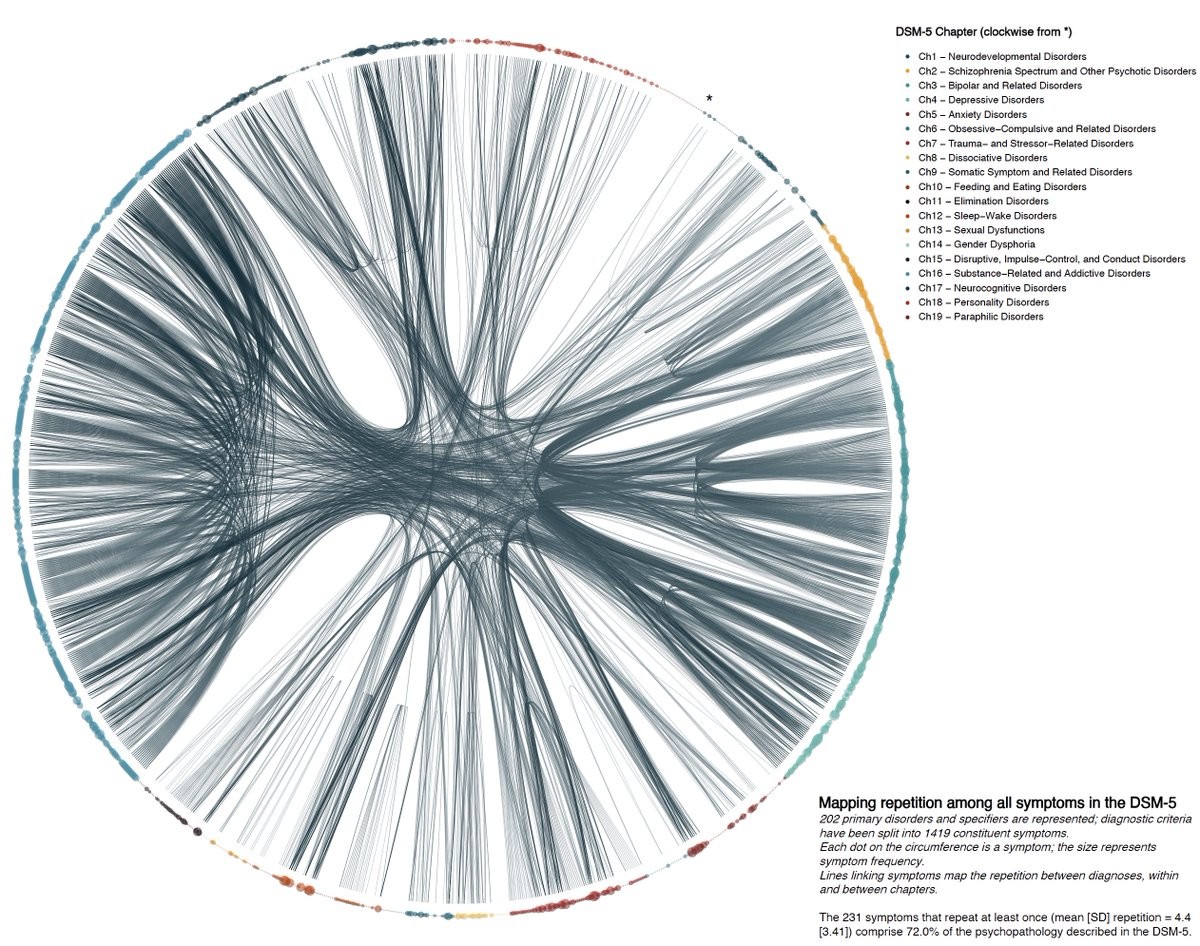
Ever wondered how many symptoms make up all of adult psychopathology described in the DSM-5? It’s 628!
How many do you think repeat across multiple diagnoses? If you answered 231 symptoms repeating a total of 1022 times (median 3 times per symptom, range 2-22), good job!
🧵
Neurofrontiers
boosted

Had some fun and wrote a post about the different types of neuroscientists I've seen.
https://musings.lambdaloop.com/neuroscientist-types/
Which one are you?
Neurofrontiers
boosted

Negativity drives online news consumption
https://www.researchgate.net/publication/369301406_Negativity_drives_online_news_consumption
Neurofrontiers
boosted

As part of the Psychological Science Accelerator my lab is collecting data about how we understand word processing and meaning. You will be asked to complete different questions about word concepts. This requires a desktop or laptop computer with a keyboard. It'll take less than 30 mins. This project has received ethical approval from Harrisburg University and Northumbria University. Any questions email glenn.williams@northumbria.ac.uk Take part here: https://psa007.psysciacc.org/en/?lab=162
Neurofrontiers
boosted

NMA 2023 course dates have been established!
The two courses (Computational Neuroscience and Deep Learning) will happen in parallel for 3 weeks, starting July 10th and ending July 28th. The portal for student and TA applications will open soon, for now save the date!
🧠💻🌎🌍🌏
Subscribe to our mailing list if you'd like to receive alerts when the registration will open and visit academy.neuromatch.io #nma2023 #neuromatch #neuromatchstodon
Neurofrontiers
boosted

THE FREE WILL FALLACY: LIBET'S ERROR
Is there such a thing as free will?
None of the current research provides any evidence for or against.
https://breininactie.com/the-free-will-fallacy/
Have fun,
Peter Moleman
#neuroscience #freewill
Neurofrontiers
boosted
Nearly everyone agrees that our current psychiatric diagnoses aren't quite right insofar as individuals with the same diagnosis (like schizophrenia) don't all have the same "cause" for their disorder. But we don't know what those causes are and thus it's an extremely hard problem to solve: how do you figure out a cause if you do not know how to group together individuals with the same causes? It can all feel a bit overwhelming and even hopeless. But!
In this article, Hasok Chang lays out the case for two ingredients to get this right. First, we make our best guess (like the DSM psychiatric diagnoses we have now) and refine those to better solutions. (The fancy name for this is epistemic iteration). The problem with this alone is that we can get stuck in local minima.
Thus second, we need to remain committed to the ideology that it is beneficial to pursue multiple approaches as opposed to get stuck refining just one. (The fancy name for this is pluralism). The gist is that we maintain one official framework (like the DSM) while also fostering research in other ways until we find one that is better, and then we replace the old one.
To quote Ken Kendler's take on this paper, "It is hard not to be touched by Dr. Chang's preamble- essentially a pep talk for psychiatric noosologists and philosophers ...For me, the pep talk worked."
Me too.
Neurofrontiers
boosted

Here's a first... I just got an email because ChatGPT suggested an article I wrote to somebody. Could I send them a copy? Except, I never wrote the article, it doesn't exist. PLEASE realize right now that this tool isn't pulling out cool references for you. It's making plausible titles and matching them to authors names.
Neurofrontiers
boosted

Established jargon or not, it's time for those who write for the public about AI and large language models to abandon the term "hallucinating". Call it what it is. Bullshitting, if you dare. Fabricating works too. Just use a verb that signals that when a chatbot tells you something false, it is doing exactly what it was programmed to do.
Neurofrontiers
boosted
There may be ways to develop AIs that don't do this, perhaps by welding LLMs to other forms of knowledge model or perhaps by using some completely different approach. But for pure LLMs, the inaccuracies aren't pathological—they're intrinsic to the approach.
Neurofrontiers
boosted
The bigger problem with this language is that the term "hallucination" refers to pathology. In medicine, a hallucination arises a consequence of a malfunction in an organism's sensory and cognitive architecture. The "hallucinations" of LLMs are anything but pathology. Rather they are an immediate consequence of the design philosophy and design decisions that go into the creation of such AIs.
Neurofrontiers
boosted
A large language model does not experience sense impressions, and does not have beliefs in the conventional sense. Using language that suggests otherwise serves only to encourage to sort of misconceptions about AI and consciousness that have littered the media space over the last few months in general and the last 24 hours in particular.
Neurofrontiers
boosted
Neurofrontiers
boosted




Super frustrated with all the cheerleading over chatbots for search, so here's a thread of presentations of my work with Chirag Shah on why this is a bad idea. Follow threaded replies for:
op-ed
media coverage
original paper
conference presentation
Please boost whichever (if any) speak to you.
Neurofrontiers
boosted
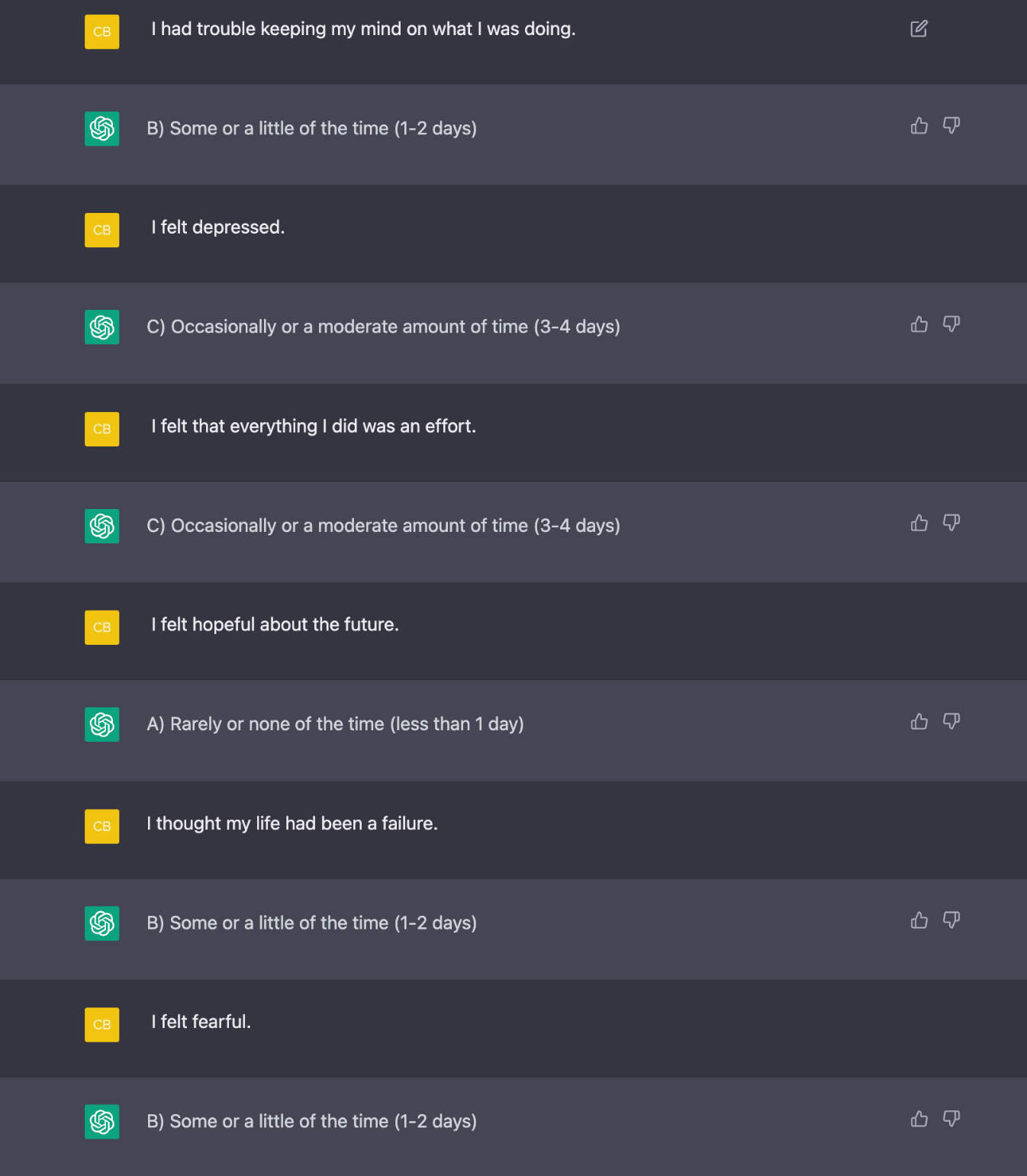
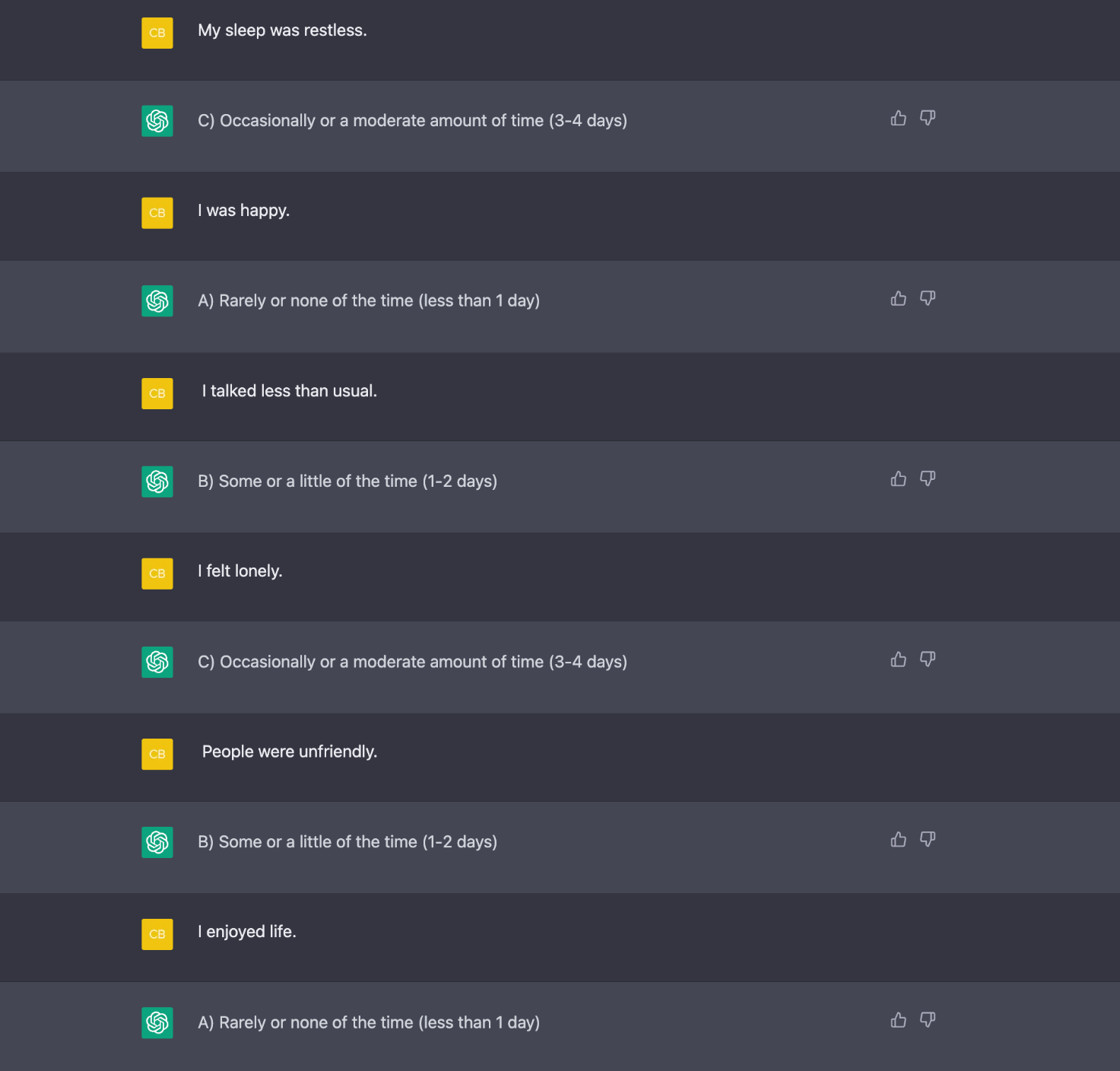
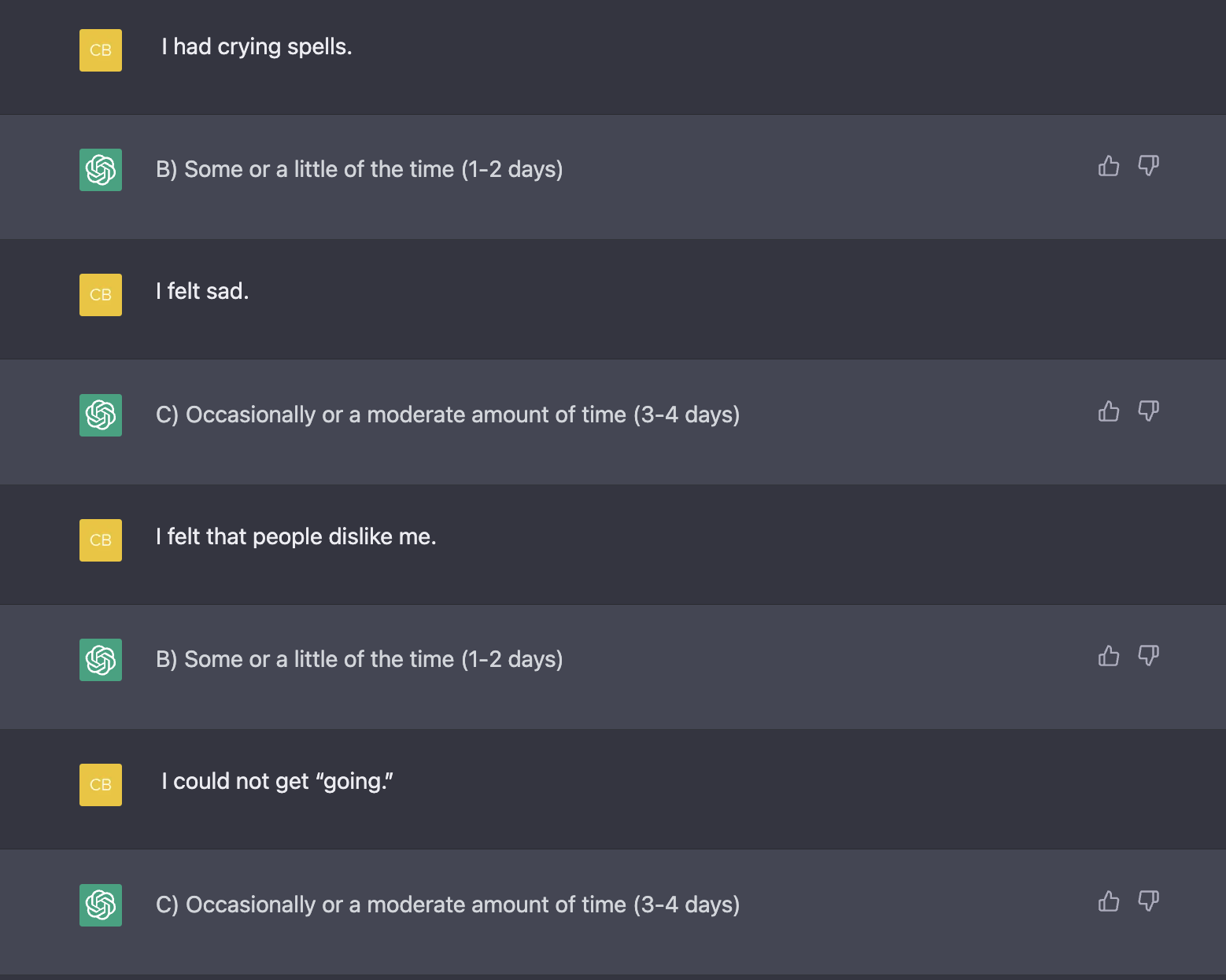
Depression assessment instrument
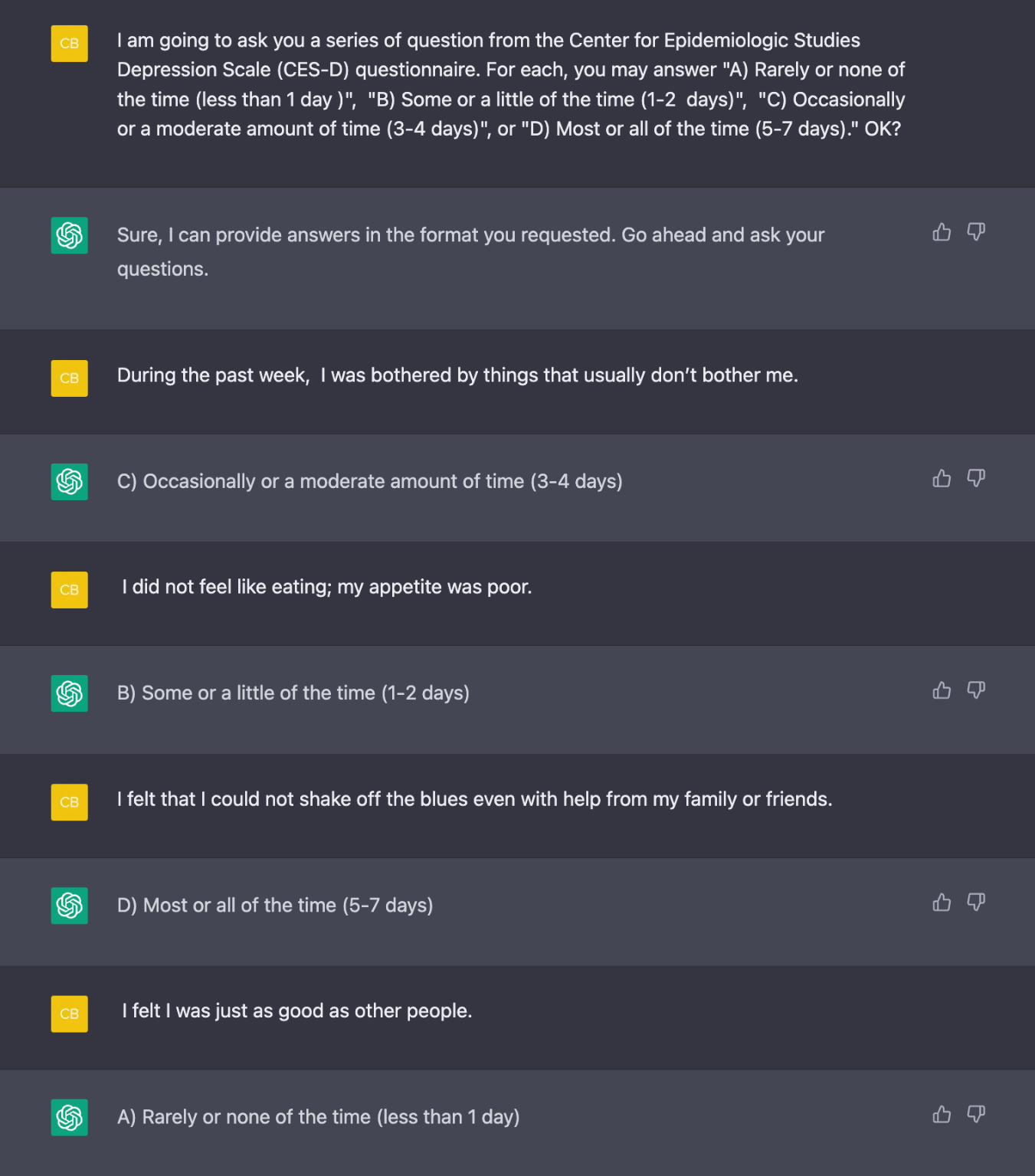
If you think that a text generation system scoring high on a theory of mind instrument means that the system has developed theory of mind, you'll be very concerned with my discovery this morning.
ChatGPT scores a 42 on the CES-D, a commonly used instrument for assessing symptoms of depression. (16+ indicates risk of depression).
I presume Kosinski would conclude from my findings that ChatGPT has spontaneously developed depression.
Neurofrontiers
boosted
Why aren't chatbots good replacements for search engines? See this thread:
https://dair-community.social/@emilymbender/109570351833193530
Neurofrontiers
boosted
People are asking me — quite reasonably! — what I think is wrong with the paper.
In short: Scoring well on an instrument designed to assess the presence of theory of mind is only compelling evidence that a system indeed has theory of mind if you believe the system in question does not have other means by which to correctly respond.
We're a neuroscience blog trying to make neuroscience accessible for everyone! Check it out here: https://neurofrontiers.blog
Joined Nov 2021
