

Neurofrontiers @neurofrontiers@social.cleverlibre.org
We're a neuroscience blog trying to make neuroscience accessible for everyone! Check it out here: https://neurofrontiers.blog
Joined Nov 2021
Neurofrontiers
boosted

Latest from me: some advice on writing
How to weaponise your lack of expertise when communicating science
(or: what I learnt from writing a book about neurons)
Neurofrontiers
boosted

One of my professors during PhD used to say “you can drive a truck through the holes in any given paper. so you look for what you *can* learn instead.” and being the smartass grad students we used to think driving that truck was fun. After so many years, I now appreciate her wisdom more than ever. All scholarly work has limitations but it’s refreshing when people critically evaluate what’s the actual value of the research. It's about humility, honesty, rigorous intellectual work.
@Neurograce As a PhD student, hearing this makes me feel so much better!
Talk about anxiety
The other day I happened to mention to someone that January has been a particularly anxiety-ridden month for me, as I had to give several presentations and submit some work for publication, so now I already need a break. Emboldened by the puzzled look on their face and the absolute silence, I proceeded to explain that, while I know no real harm would come from these situations, my body refuses to listen to reason and is actively behaving like we're about to die. My chest hurts and doesn't fully expand on the inhale, my stomach is turned upside down, I become light-headed, my muscles become quite weak etc. Their answer? "Wow, that sounds exhausting! I absolutely can't relate."
As silly as it sounds, it was only then that I realized there are people out there who simply don't have to push through anxiety to get stuff done. Of course, on a rational level, I knew they must exist, but somehow I've managed to surround myself only with other anxious friends. Now I'm wondering how many of the people I'm usually comparing myself to get an extra jump in their step simply because they don't have to fight against the feeling of having their windpipe crushed when trying to hit "send" on some paper submission.
So I'd like to poll the community on here. In which camp are you?
#anxiety #struggle #MomentOfClarity #neuroscience
Neurofrontiers
boosted

❓ Have you ever wondered what makes you you? This is a complicated question to answer in humans where we can’t control every single thing that a human experiences for their whole life.
🐟 This week, writer Kara McGaughey talks about how a group of neuroscientists used a genetically identical group of fish to answer this question.
Read her post to find out whether the fish were born with their individuality or if they developed their individuality over time.
https://pennneuroknow.com/2023/01/24/when-did-you-become-you/
#scienceCommunication #sciComm #neuroscience #brain #psychology #individuality #fish
Neurofrontiers
boosted

It's wild how often I run across super interesting and esoteric blog posts here on Mastodon that turn out to do a deep dive on some specific topic or whatever. I can't seem to find pages like that with DuckDuckGo or Google and I certainly wasn't seeing them linked on Twitter much anymore.
It's nice to know this side of the web still exists! I had slowly forgotten how much I missed it, but dang, where is it hiding? How can we surface this stuff again?
Neurofrontiers
boosted

Neurofrontiers
boosted

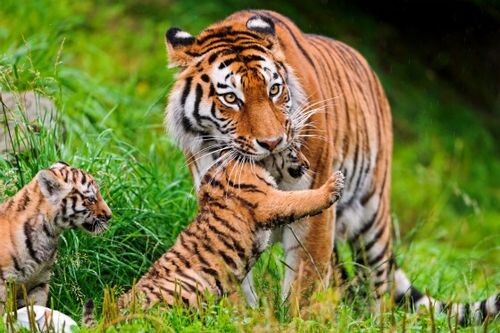
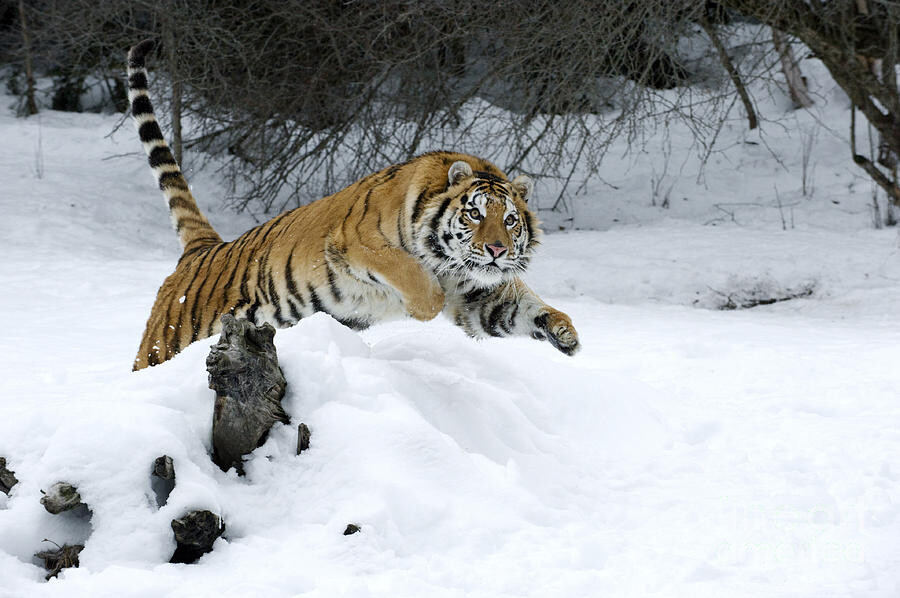
Today's #megafauna is the Siberian #tiger. They can grow nearly 11 feet tall and weigh 660 pounds. Native to the birch #forests of Russia, China, and North Korea, they may be the largest living #cat species in the world.
Tigers are formidable nighttime hunters that pursue their prey for miles. They will creep closer and closer until they are able to fatally attack in a final pounce. Tigers usually hunt elk and boar. These species are red-green colorblind, so the tiger's orange striped fur acts as effective camouflage in its forest habitat. After hunting, tigers can eat up to 60 pounds of food in a single sitting.
The wild population of tigers is only 4000, and they are considered #endangered, although their population is steady. Poaching for trophies and traditional medicine remains a threat to Siberian tigers, as does diminishing habitat.
Neurofrontiers
boosted

PSA: There's a list of fake sci-hub mirrors going around, be careful out there! only accept mirror lists from sources you can trust! The current list of mirrors is here: https://sci-hub.se/mirrors
https://sci-hub.se
https://sci-hub.st
https://sci-hub.ru
more info in a reply to the original post here:
https://social.coop/@jonny/109717669154062967
Neurofrontiers
boosted

 🇳🇱
🇳🇱
Hot take: The absolute scientism of the left (lacking all nuance on scientific issues) is just as harmful as the anti-science rhetorc of the right... science is nuanced, remove the nuance and all you have is dogma.
Neurofrontiers
boosted
Excited for an #introduction 👋!
📝 We are Penn NeuroKnow, a #neuroscience blog run by PhD students in the University of Pennsylvania’s Neuroscience Graduate Group.
👩🔬 👨🔬 Our goal is to share our love of neuroscience with you all. Each post breaks down a different topic in neuroscience, ranging from general neuroscience knowledge to summaries of exciting new studies that are changing how we think about the brain.
🧠 Recent topics have included why we get the hiccups, how the octopus controls its arms, and how neuroscientists are starting to realize that what they thought was noise might not actually be so noisy.
⏰ We’ll be sharing links to our latest posts with short summaries every Tuesday when they go live. We’re looking forward to sharing our posts and engaging with the community here!
#sciComm #scienceCommunication #writing #blog #neuro #PhDStudent
Neurofrontiers
boosted

My argument, at its core, is that to do that, we need to teach people why science deserves their trust – and this requires teaching how science works as a social institution. I've written about this in brief in a Science American article: https://www.scientificamerican.com/article/to-fight-misinformation-we-need-to-teach-that-science-is-dynamic/
On day 9 of #ScienceAdvent, we’d like to share with you this beautiful image of the human connectome. Can you believe that it’s already 10 years since it was on the cover of Muse’s album?
#connectome #neuroscience #dti #Tractography
Neurofrontiers
boosted

More than happy to land here! I am a neuroscientist interested in the dog-human bond. 😃 💞 🐶 Using fMRI, I help uncover how dog brains perceive their social world.
I am not alone in this endeavor. Besides brilliant human colleagues worldwide, I have two amazing furry colleagues, Odín and Kun-kun.
🌟
A video abstract of our last paper https://youtu.be/wgv6ywyFJEg
#dogsofmastodon #caninescience #neuroscience #scicomm #introductionpost
@empiricism I mostly have in mind physicists who look towards the brain as a system whose dimensionality can be reduced.
@chiasm What do you think would be a better premise for this?
That's a fair point, there will always be different levels of "simplicity", so to say, or abstraction, at which things can be explained, based on the level of expertise and the purpose of the explanation. In this context, I used "explainable in simple terms" as I see it used by physicists. Basically being able to reduce the dimensionality of a complex system and to describe it using a reduced set of equations.
One approach borrowed from statistical mechanics in neuroscience is the mean-field approximation, in which the activity of the neurons in a population is represented as the mean of the activity of that population. But depending on the dimensionality of the system, this might not be a good approximation, so simplification might not work. Going beyond that, I would also see as a “simple” explanation of the brain one where, for example, we can use the same model to describe different regions of the brain or different neurons, instead of needing different models with different parameters for each of them. But to me it’s unclear whether this will ever be a good enough representation of the brain at some level or whether it’s something that will be abandoned at some point. (I am, however, not a physicist, and I am still very much fleshing out my understanding and thoughts on the topic, so I might be missing the mark here. If so, please do let me know what I’m misinterpreting/missing.)
Neurofrontiers
boosted





Can you spot the circles?
It took me a long time. Once you see them, they'll seem obvious.
This is the Coffer Illusion, by Anthony Norcia

@lili Thank you so much!
That’s a great point! Reconciling the different levels is still very much a challenge and I think you’re right, a hierarchy of models could be incredibly useful.
@empiricism Of course, I don’t doubt that. What I mean is that there seems to be an implicit assumption (at least from people outside the field) that we’ll get sort of a one-liner, simple explanation, which will likely not be the case.
On day 8 of #ScienceAdvent, we ponder whether we will ever be able to explain the brain in simple terms. It's a trainee's take, so would love to hear what the experts think:
https://neurofrontiers.blog/simplifying-the-brain-will-it-work/
We're a neuroscience blog trying to make neuroscience accessible for everyone! Check it out here: https://neurofrontiers.blog
Joined Nov 2021
