

Nicola Romanò @nicolaromano@social.cleverlibre.org
Senior lecturer at ZJE and Edinburgh university.
I teach #imageanalysis & #dataanalysis with #RStats & #python. I study #heterogeneity in #pituitary (and other) cells.
Joined Oct 2022
Nicola Romanò
boosted

Inuit children invented their own system for writing numbers which makes arithmetic easier. Now its in Unicode.
Nicola Romanò
boosted

@notoriousiptg Interesting and maybe not surprising (?).
@requiem It seems to me like you are looking at it from the wrong point of view. I am sure you have found many other human-introduced bugs as well, and have also found good code written with the aid of Copilot. The problem is not Copilot (which works well in many cases), it is people misusing it and trusting the code without actually checking (or not being able to check) that it works.
@adamr Absolutely, I am not advocating never rejecting, and agree certain works can't be saved. However I think/hope those are not the vast majority. I found it bizarre that many journals boast their high rejection rate. It sounds like a reflection of an 'old-boys club' type of culture that we should work to get rid of.
@ecological_fallacy @albertcardona @eLife Honestly, I don't care too much for the short assessment... however I think we also have to be realistic and realise that grant and job applications panels won't stop looking at publications any time soon. And they are more likely to read 100 paragraphs than 100 papers.
Nicola Romanò
boosted

@nicolaromano This is refreshing to hear. I agree that we need to get real about peer review and its limitations. Our papers could all do with some deflation too. Right now any flaws are removed/minimised for fear that this will jeopardise the chance of publication (or negative data is simply left in the drawer). None of that is good for science.
I have been considering publishing my next article in #elife
I was not very convinced by their new #publishing method, but the more I think about it, the more I like it.
What convinced me is that I think of the way I review papers myself. I won't ever reject a paper unless there is something majorly wrong e.g. from an ethical point of view. Instead, I would rather spend time and give constructive and realistic feedback to improve the study.
This is because of two reasons:
1. If the study idea/methodology etc, is good but maybe is missing some key experiment, I think that the authors must have put a lot of effort, time and money into producing this. I have been through the "your work is not fancy enough for our prestigious journal" crap enough times that I will not engage in that. Ever. There is no reason your paper should not publish negative results if the study is well done.
Also, people's jobs and mental health depend on that, which is way more important.
Also, there are plenty of papers in "fancy journals" that are just piles of bs, so I really won't buy into shiny names (I have just spent an entire day trying to run code from several papers published in high-IF journals to no avail...).
2. If the study is poor, it is easy to say: "This is cr*p, straight reject". This just means the authors will submit elsewhere, hoping the next reviewer won't be bothered reading the paper in depth and will let it through. Even worse, this plays into the hands of #predatory journals. I would rather say this can be accepted after all of these major revisions.
The authors get useful feedback on how to improve their study; they might choose not to act on it, but at least I have made my part.
I would be interested in hearing other views on this.
Nicola Romanò
boosted

In the tidyverse, we work with a lot of people - each other and #rstats community members.
We wanted to document how we handle code review, so we've drafted a guide detailing our review principles!
We hope you find it useful, and we welcome your feedback!
Nicola Romanò
boosted

Nicola Romanò
boosted

Does anyone know of a piece of software to split multiple voices from a single audio file?
I know of things like lalal.ai to split vocals from music, and I can find a bunch of research papers about voice separation from Google and Facebook, but I'm struggling to find actual software I can run myself on my own audio files.
@digitalsreeni Haven't looked at that yet but on my to watch list!
Do you know if it could be used for 3D segmentation?
Nicola Romanò
boosted

Learn to segment your images with the Segment Anything Model (SAM) by Meta AI in just a few lines of #Python code! Check out my YouTube tutorial: https://youtu.be/fVeW9a6wItM
#imageSegmentation #MetaAI #segmentanything #microscopy
@kthornton @simonc@awscommunity.social @rgulick let's not forget the Ruanda policy and all the post-brexit shenanigans to kick out as many immigrants as possible...
Nicola Romanò
boosted

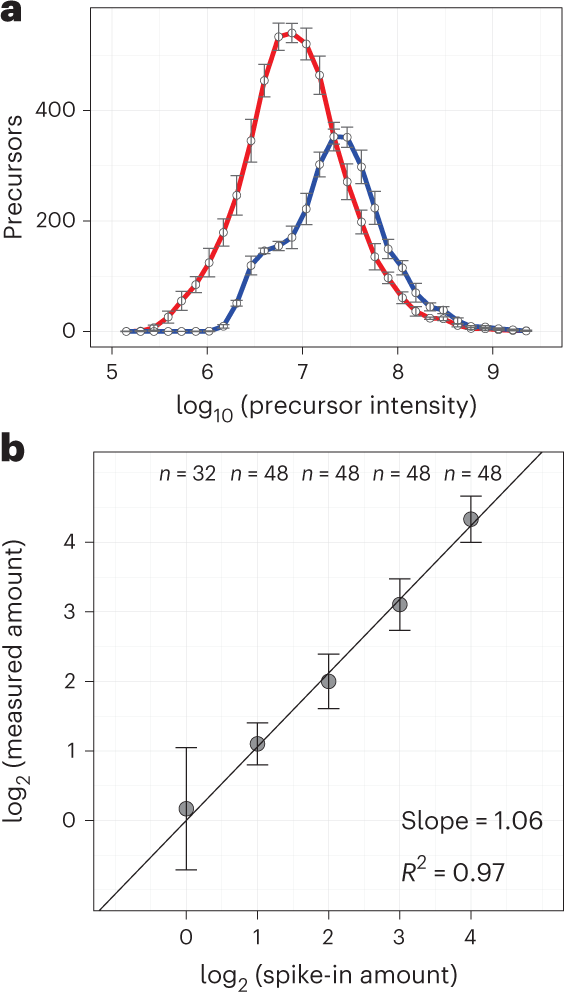
Extending the sensitivity, consistency and depth of single-cell proteomics | https://www.nature.com/articles/s41592-023-01786-2 #proteomics
@teralevin I'm definitely going to steal this idea!
Nicola Romanò
boosted

Teaching students to interpret data and write their first scientific paper can be hard!
Our new publication provides all the materials you need to teach these skills in graduate or upper-level undergraduate courses. 1/
https://doi.org/10.24918/cs.2023.14
After a long hiatus (because, life...) I have updated my blog!
I have been meaning to write about neural networks for a while, so here it is! Part 1 of ... a certain number😜
In this first episode, I will guide you through what is a neural network, with a bit of history on the topic!
https://www.nicolaromano.net/data-thoughts/intro-neural-networks-pt1/
Stay tuned because other posts will be showing up in the upcoming weeks... we'll see a bit more of the theory of how these networks are trained, and then we'll code our own network in #python!
#ai #machinelearning #neuralnetworks #statistics #artificialintelligence
Nicola Romanò
boosted



“‘It’s always done like this, whether getting women to champion other women’s oppression or Jews who supported Hitler, it’s absolutely essential to get a token member of the targeted group to promote the extremist agenda’” #MAGAFascism https://buckscountybeacon.com/2023/04/the-truth-about-maga-activist-scott-presler/
@BirdsinLatin One of my favourite birds (up there with stilts)! We often see them in a nearby park. While still a common sight here in Scotland, they have near-threatened status
Senior lecturer at ZJE and Edinburgh university.
I teach #imageanalysis & #dataanalysis with #RStats & #python. I study #heterogeneity in #pituitary (and other) cells.
Joined Oct 2022
