

R. A. Dehi @radehi@social.cleverlibre.org
I read a lot. Sometimes I learn things. I like making things. I think reading and doing are complementary.
Joined Nov 2022
R. A. Dehi
boosted

Hello new #API developers who've come here from Twitter.
I've written some guides to help you get started with the #MastdonAPI
Includes how to build #bots, grab conversations, and use search effectively.
Read them at: https://shkspr.mobi/blog/tag/mastodon/
R. A. Dehi
boosted

#Underline text in different lightweight markup languages:
Emacs #OrgMode  , Muse:
_this_
#DokuWiki:
__this__
There is no Markdown syntax for underlined text, but #pandoc's #Markdown reader treats the content of spans with class "underline" or "ul" as #underlined:
[important]{.underline}
[nota bene]{.ul}
"[Lossless Convexification of Nonconvex Control Bound and Pointing Constraints of the Soft Landing Optimal Control Problem](http://larsblackmore.com/iee_tcst13.pdf)", #controltheory paper by Behçet Açıkmese, John M. Carson III, and Lars Blackmore, the guy who got the #SpaceX rockets to land on their tails like CGI special effects.
Abstract: "*Planetary soft landing is one of the benchmark problems of optimal control theory and is gaining renewed interest due to the increased focus on the exploration of planets in the solar system, such as Mars. The soft landing problem with all relevant constraints can be posed as a finite-horizon optimal control problem with state and control constraints. The real-time generation of fuel-optimal paths to a prescribed location on a planet’s surface is a challenging problem due to the constraints on the fuel, the control inputs, and the states. The main difficulty in solving this constrained problem is the existence of nonconvex constraints on the control input, which are due to a nonzero lower bound on the control input magnitude and a nonconvex constraint on its direction. This paper introduces a convexification of the control constraints that is proven to be lossless; i.e., an optimal solution of the soft landing problem can be obtained via solution of the proposed convex relaxation of the problem. The lossless convexification enables the use of interior point methods of convex optimization to obtain optimal solutions of the original nonconvex optimal control problem.*"
R. A. Dehi
boosted

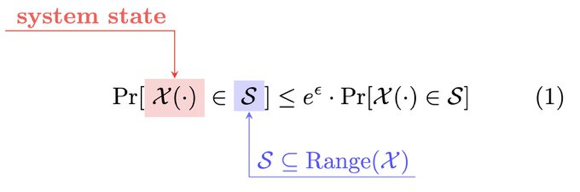
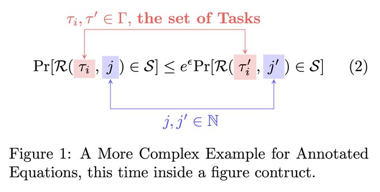
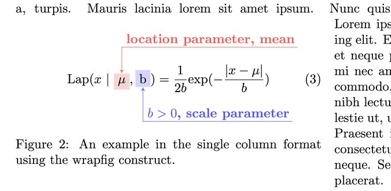
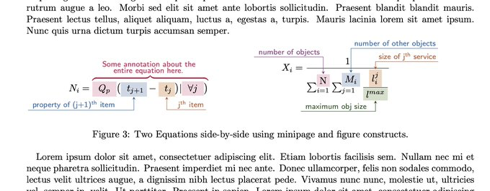
I've been using #AnnotatedEquations in my recent papers. I think it really adds to the readability and understanding of the math.
Here are some examples. It uses #tikz in #latex.
Let me know if you like it. Happy for any feedback.
R. A. Dehi
boosted

One of my pals told me my Twitter comments were as viscous as AOC and Nancy Pelosi. I though everyone’s were like that! I just got used to it. As much as you can. It’s nothing short of astounding to me that I can just post and engage on here and people respond in a way that seems normal and real. The Twitter comments world is distorted and dangerous. I don’t see how twitter can be fixed. We’re better off here. ❤️
Birdsite
https://nitter.net/TechEmails/status/1575588277700026368 has the purported conversation between Dorsey and Musk from March about how Twitter should become "an open source protocol, funded by a foundation of sorts that doesn't own the protocol, only advances it". Purportedly the thread was made evidence in the Twitter v. Musk lawsuit.
If that's the plan, firing most of Twitter's employees does seem like a good first step.
R. A. Dehi
boosted

Sad news from UNC Chapel Hill Computer Science — Fred P. Brooks, the founder and long-time chair of the department (and a major influence on my professional outlook) passed away a few hours ago.
R. A. Dehi
boosted
@alcinnz Well, so, the effect of any finite-length string on a particular DFA is a finite map from possible states at the beginning of the string to resulting states at the end of the string. For the empty string it is the identity function.
You can compute the effect of a concatenation of strings by composing these maps. If you do this bottom-up on a long string, starting from all its one-character substrings and then consolidating them into a tree of substrings of length 2, 4, 8, etc., each exhaustively covering the original string, you have a log-time parallel algorithm for DFA evaluation on the string. The final step is to apply the finite map computed for the entire string to the initial state defined by the DFA.
Then, if desired, you can propagate the results back down the tree to find the state of the DFA at every character.
Is precisely the parallel prefix-sum algorithm, with the monoid operation being function composition rather than, for example, integer addition.
Does that make sense? I don't know how to evaluate the clarity of my explanation in part because I don't know how familiar you are with the background.
R. A. Dehi
boosted

"The whole problem with the world is that fools and fanatics are always so certain of themselves, but wiser people are so full of doubt." – Bertrand Russell, paraphrased from The Triumph of Stupidity”, Mortals and Others: Bertrand Russell's American Essays, 1931-1935
https://twitter.com/MNateShyamalan/status/1592287177542696963
R. A. Dehi
boosted

Switched out Serial for PPP and ... we can now also use all the on device internet tools like it's 1999. Can telnet to the host with Hermes, so nothing lost.
It's broken. Nothing works. Everything wants https and 50MB downloads.
However this all works the way I want it now. Another revision of the lid and I'll print the final version.
Quoting [a post on the orange site](https://news.ycombinator.com/item?id=33639015):
*Me and my colleagues will be affected by the end of Z library and co related projects.*
*Here in Brazil and for sure in most second and third world countries, people don't have money to spend in books.*
*You can argue that people can go to the library, but in most cases it's even expensive to take a bus or taxi even a Uber.*
*I'm a law student at an university in brazil. Law books are really expensive. Even though my university have a library, sometimes it doesn't have the books that the professors ask us to read.*
*Since I found z library I could have access to most of books that I needed.*
*I do know that the writers and publishers have costs and they need to make money, but I don't agree with the fact that we have to pay to have knowledge. It's more like if we don't have money, we can't have knowledge.*
Sad #piracy news, Z-Library founders arrested in South America: https://www.justice.gov/usao-edny/pr/two-russian-nationals-charged-running-massive-e-book-piracy-website
R. A. Dehi
boosted

Questions to ask about your infinite scroll / things that suck about infinite scroll
* can you navigate to the footer?
* can you use control/command f to locate elements on the “page”
* can you bookmark what you’re looking at
* does the URL automatically update to reflect the content you are looking at
* can you share what you’re looking at by copying and pasting the URL in the address bar?
(1/♾)
R. A. Dehi
boosted

This one is for all the new people on #Mastodon: did you know that the #fediverse has more than just a microblogging replacement? And that they can all interoperate with your Mastodon account?
Check them out!
Facebook replacement: Friendica
Instagram replacement: Pixelfed
YouTube replacement: PeerTube
Spotify replacement: Funkwhale
MeetUp replacement: Mobilizon
Reddit replacement: Lemmy
Podcasting replacement: Castopod
GoodReads replacement: BookWyrm
R. A. Dehi
boosted

@radehi being at peace, now there's a skill worth having
R. A. Dehi
boosted

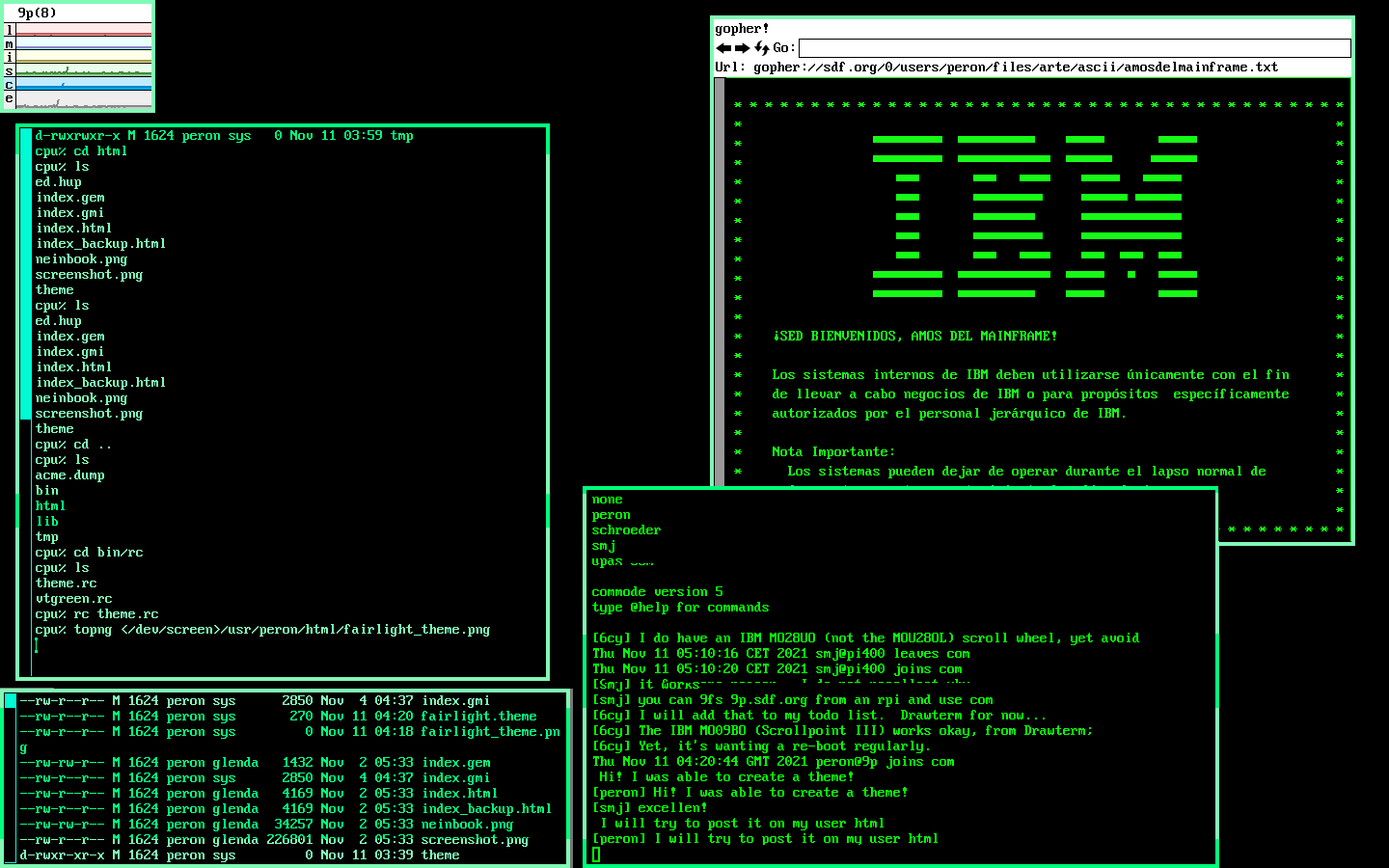
#plan9 from Bell Labs is a research operating system developed at Bell Labs starting in the late 1980s.
Its original designers and authors were Ken Thompson, Rob Pike, Dave Presotto, and Phil Winterbottom. They were joined by many others as development continued throughout the 1990s to the present.
R. A. Dehi
boosted

I just presented Art Spiegelman with the National Book Award Medal for Distinguished Contribution to American Letters, on the same day that PENAmerica put out a letter signed by Art and Margaret Atwood and me, among others, protesting the latest round of book bannings.
https://pen.org/spiegelman-atwood-sign-pen-america-letter-against-missouri-book-bans/
R. A. Dehi
boosted

If you download your Twitter archive it arrives wrapped as a static HTML page, which is not very useful for doing anything with, and worse: it requires the original account to be still active to do useful things like enlarge the images since they use t.co links.
So here's a Python script to convert a Twitter archive to markdown or other formats: https://github.com/timhutton/twitter-archive-parser
Now you can archive your tweets in any way you want.
R. A. Dehi
boosted




@radehi
Yeah.
I don't have the one I did for Xanadu up, since it's not open sourced yet, but here's something that translates between a span-based format and tkinter's mark-based format: https://github.com/enkiv2/misc/tree/master/mtv
(It's more complicated than it needs to be, because tkinter has a coordinate system for text positions that's fiddly and underspecified.)
R. A. Dehi
boosted
Layout is really counterintuitive.
Then, when you have an algorithm to do a "good enough" job at it (like an HTML renderer has), all the knobs for changing default behavior end up being even more counterintuitive, because other behaviors will interact with whatever you change in unexpected ways.
I worked on ZZOGL, which had a very simple layout system that I quite like, but it was tough to get grid-like patterns with it unless you created invisible objects that overlapped visible ones (which I introduced to the spec specifically to make these layouts easier).
I read a lot. Sometimes I learn things. I like making things. I think reading and doing are complementary.
Joined Nov 2022
