

sojournTime @sojournTime@social.cleverlibre.org
- GitHub (Personal)
- https://github.com/dataNerd23
Data Science PhD Student
Likes math, stats, space, and board games (especially Dominion: https://dominion.games/).
⬛️⬛️⬛️⬛️⬛️✨⬛️⬛️⬛️⬛️⬛️⬛️
⬛️✨⬛️⬛️⬛️⬛️⬛️⬛️⬛️⬛️✨⬛️
⬛️⬛️⬛️⬛️🛰️⬛️⬛️⬛️✨⬛️⬛️⬛️
⬛️⬛️⬛️⬛️⬛️🌎⬛️⬛️⬛️⬛️⬛️⬛️
⬛️⬛️🌒⬛️⬛️⬛️⬛️⬛️⬛️✨⬛️⬛️
⬛️⬛️⬛️⬛️⬛️⬛️✨⬛️⬛️⬛️⬛️⬛️
Joined Apr 2022
sojournTime
boosted

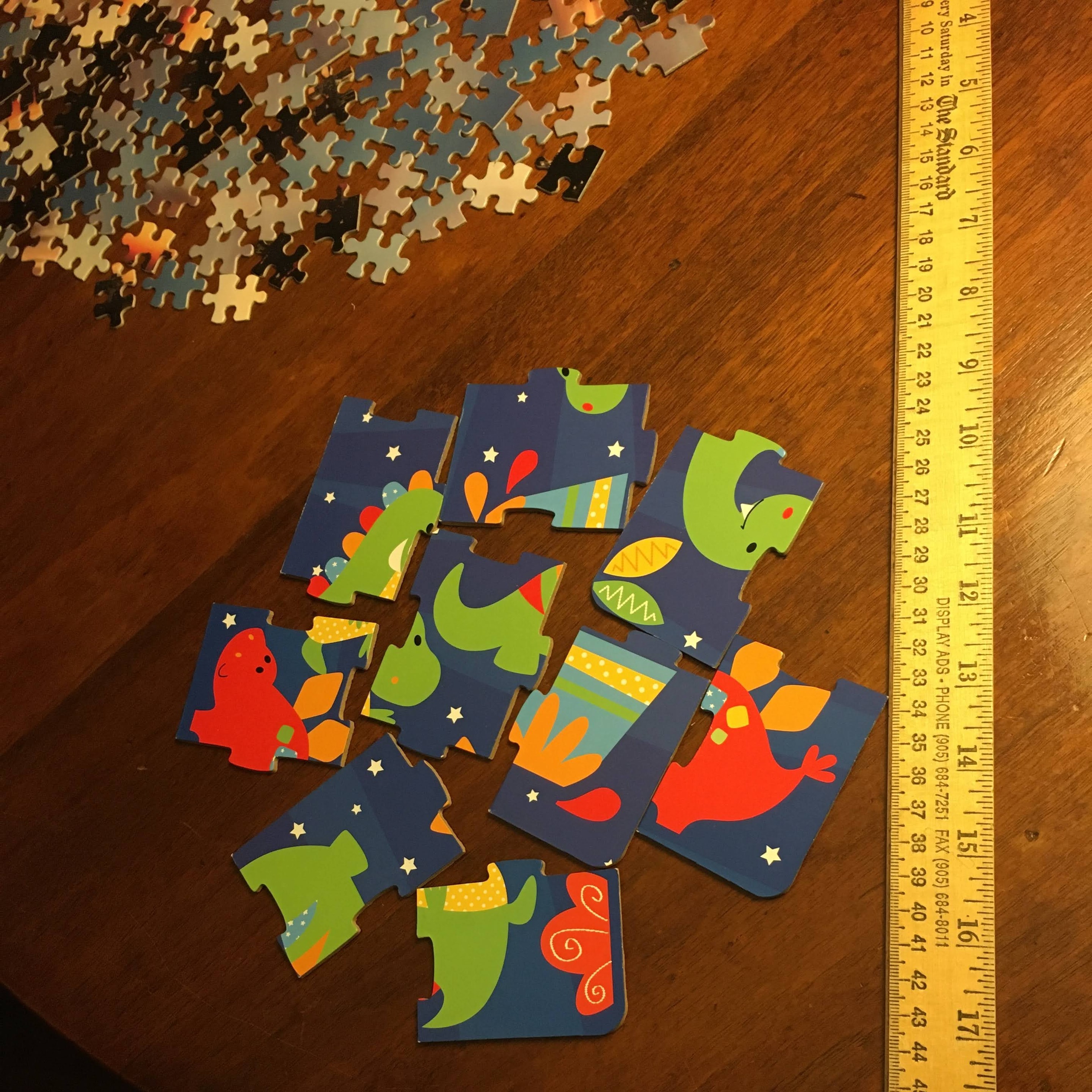
We were surprised that the unassembled area didn't depend on the number of puzzle pieces. The intuition is this: if you have a small number of large pieces, the gaps between pieces are big, but this is multiplied by a small total number of pieces, and vice versa for small pieces.
sojournTime
boosted
So there you have it: you'll need a puzzle table just under twice as big as your assembled puzzle in order to not resort to the box lid or that random side table. Grab a puzzle and impress your relatives this holiday season with your predictive powers!
sojournTime
boosted

@vicgrinberg that green camel has his world turned upside down 🙃
Interesting Nature paper from Google DeepMind on using LLMs for solving mathematical problems that are easy to evaluate but difficult to solve:
https://www.nature.com/articles/s41586-023-06924-6
Their procedure, which they call FunSearch, applies an islands model genetic algorithm using the Codey LLM on the cap set problem and online bin packing.
This seems in line with my personal theory that we should view LLMs similarly to MCMC methods, i.e., they are closer to random number generators and should be optimized for sampling.
sojournTime
boosted

It is that time in discrete math when I share this video once again.
@caten if you're bio is correct, there seems to be a copy at the University of Denver's library:
@caten
It appears that Open Library does not have a copy but may have relevant links/info:
https://openlibrary.org/books/OL4279716M/Finite_embedding_theorems_for_partial_designs_and_algebras
@tedpavlic they should call UX designers that do this for a living "Dabblers in the dark patterns":
https://en.m.wikipedia.org/wiki/Dark_pattern
https://www.deceptive.design/
sojournTime
boosted

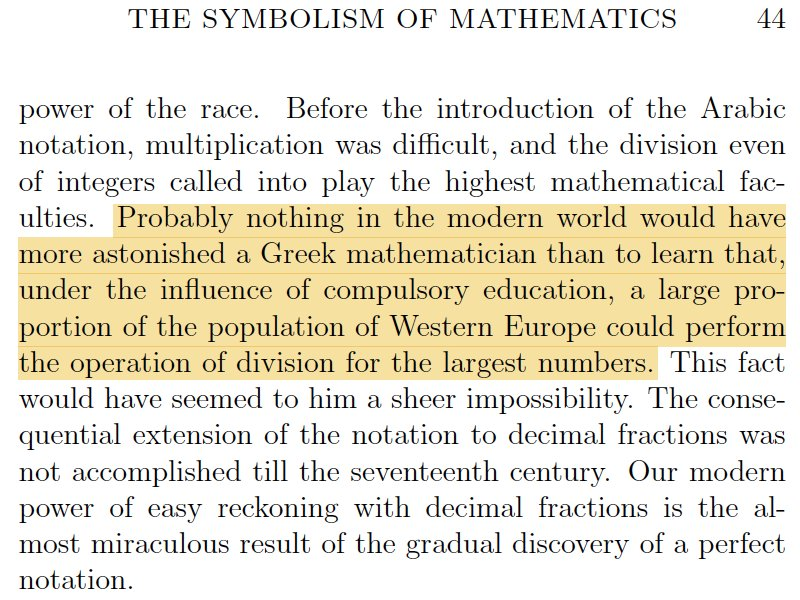
@highergeometer @monsoon0 I second emphasizing the history and progressive nature of math. Here's a wonderful quotation from Alfred North Whitehead's 'An Introduction to Mathematics'
https://www.gutenberg.org/ebooks/41568
sojournTime
boosted

@drkatemarvel wrote a somewhat hopeful op-ed
Click the link, not the preview to bypass the paywall.
#Climate #ClimateCrisis #GiftArticle
https://www.nytimes.com/2023/11/18/opinion/climate-change-report-us.html?unlocked_article_code=1._Uw.wyb0.-_l7RGdzmKEW
sojournTime
boosted

Was doing a joke about a modern Jacob and Esau but I think the reference is too obscure?
@peterluschny What I meant by mathematical programming was optimization (https://en.m.wikipedia.org/wiki/Mathematical_optimization). However, I think you're right that the quote is referring to computer programming. I believe this is the letter that contains this quote, in which Dijkstra clearly is referring to computer programming:
https://www.cs.utexas.edu/users/EWD/transcriptions/EWD04xx/EWD498.html
sojournTime
boosted

who called it "legend of zelda speedrunning" and not "link-time optimization"
@peterluschny Programming in this context is mathematical programming, not computer programming, correct?
sojournTime
boosted

#Django is the Superman framework
1. Comes from a small town in Kansas
2. First job was for a newspaper
3. Works for a perfectionist boss with a perpetual deadline
sojournTime
boosted

Eldest has been pumpkin carving for ages. Came bouncing in to show me this
sojournTime
boosted
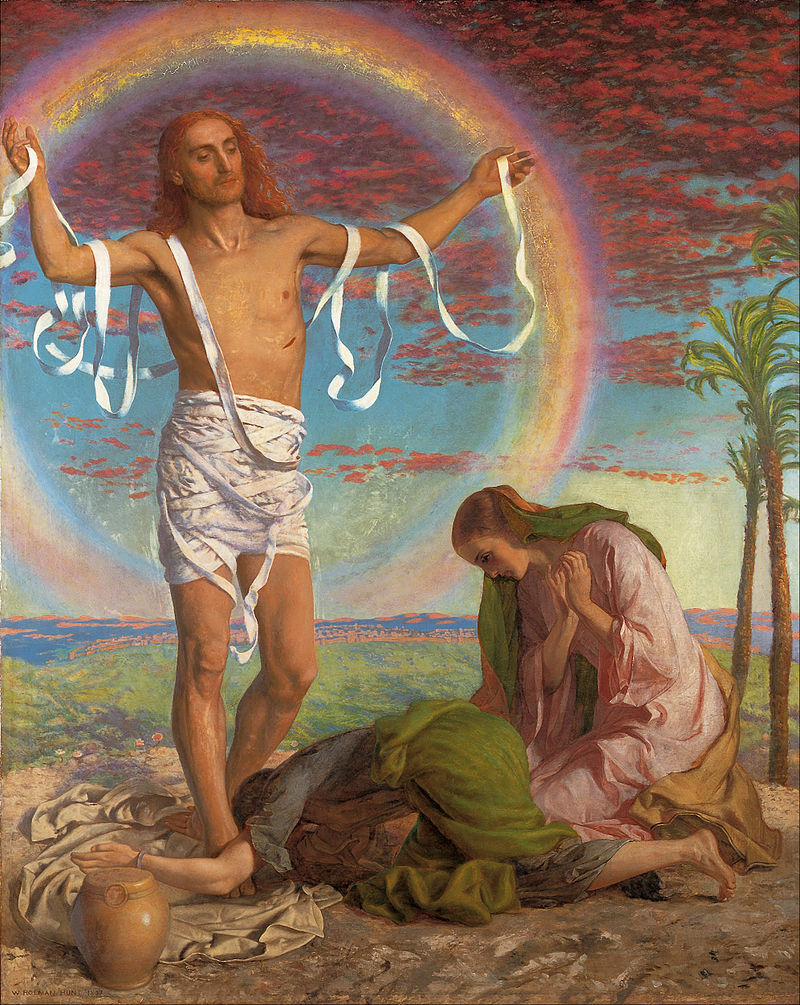
Love his William Holman Hunt allegorical painting for Turing's 1936 paper in which he invents the universal computer, which runs on a single infinitely long piece of tape. I believe the two figures bowing at his feet are the muses of logic and engineering.
sojournTime
boosted

sojournTime
boosted






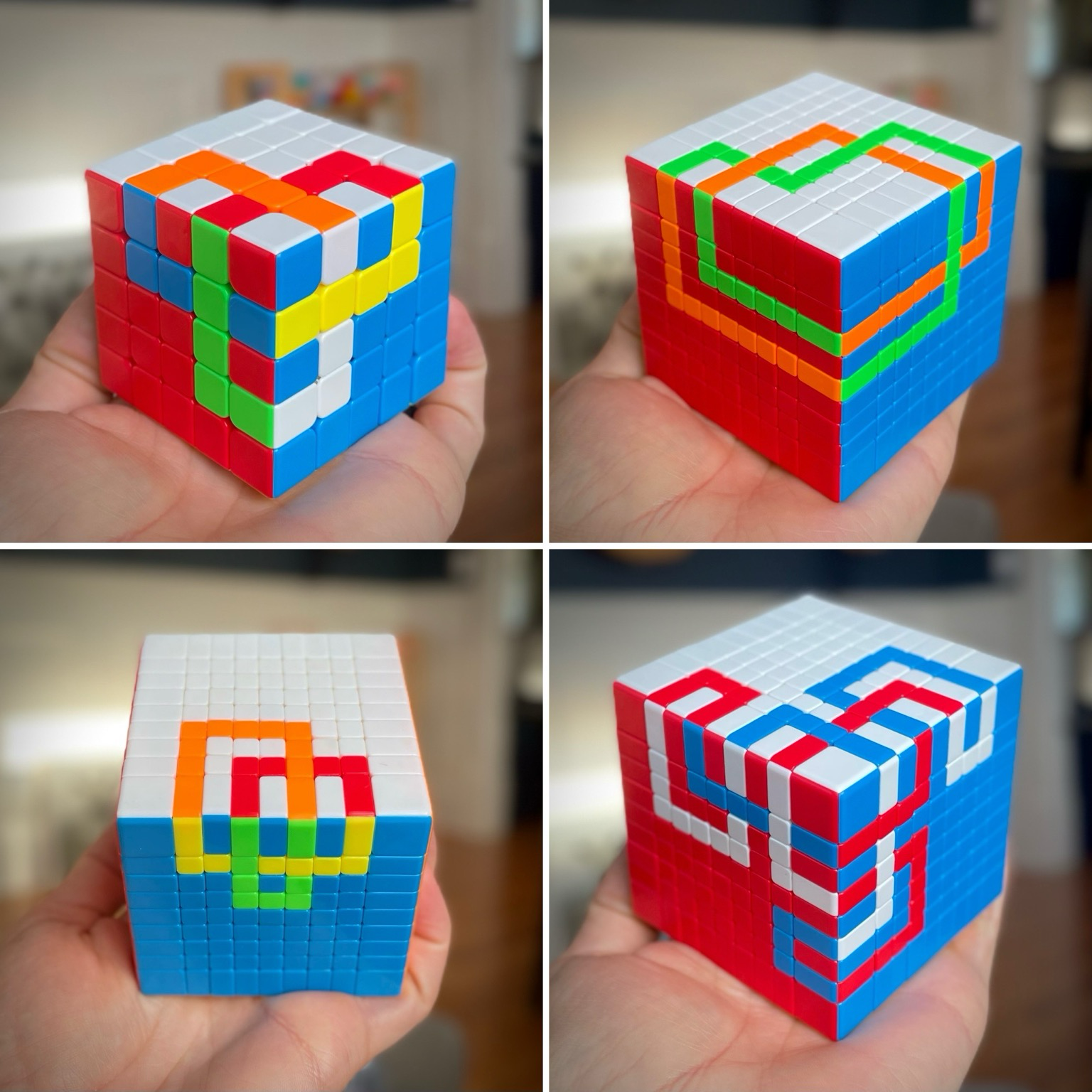
Here are four ways I’ve found to solve an nxnxn cube to embed a trefoil knot. Five layers is the smallest cube I’ve been able to put this knot on. On a 9cube, I’ve found solutions that use 2 colors of thread, 2 faces, and a solution that leaves the reverse side solved as solid colors.
- GitHub (Personal)
- https://github.com/dataNerd23
Data Science PhD Student
Likes math, stats, space, and board games (especially Dominion: https://dominion.games/).
⬛️⬛️⬛️⬛️⬛️✨⬛️⬛️⬛️⬛️⬛️⬛️
⬛️✨⬛️⬛️⬛️⬛️⬛️⬛️⬛️⬛️✨⬛️
⬛️⬛️⬛️⬛️🛰️⬛️⬛️⬛️✨⬛️⬛️⬛️
⬛️⬛️⬛️⬛️⬛️🌎⬛️⬛️⬛️⬛️⬛️⬛️
⬛️⬛️🌒⬛️⬛️⬛️⬛️⬛️⬛️✨⬛️⬛️
⬛️⬛️⬛️⬛️⬛️⬛️✨⬛️⬛️⬛️⬛️⬛️
Joined Apr 2022
