

tripu @tripu@social.cleverlibre.org
Technologist, Spaniard, male, 42
Joined May 2020
“Great,” you say. “I agree with all that!”
Cool.
“Now, how can one figure out what #books are truly worth #reading, what is the very best?”
I don't have the perfect answer to that. But it seems to me that the best way to separate the wheat from the chaff and to eliminate all biases is to aggregate qualified opinions across time and space. ie, see what lots of experts in different places have considered the best books in different languages, over the years, and find common patterns there.
The best approximation I have found of that is
https://thegreatestbooks.org/
Why do I impose such difficult #reads on myself?
1. Some #books are way better than others, were much more original when published, or have a much larger influence today.
1. My own taste, my personal bubble's recommendations, and current trends — none of them are reliable indicators of quality.
1. Books that seem huge today may be forgotten in a decade; what persists for generations or even centuries is more likely to be worth reading.
1. The opportunity cost of reading _“Trendy Fantasy Saga”_ instead of _“Universal Masterpiece Of Five Centuries Ago”_ may be high.
tripu
boosted

21 Apr 2023 • about to give a #talk at a #tech #event
#dailyphoto #tripu #selfie #conference #audience
tripu
boosted

This is what fine table salt looks like magnified 150 times with an electron microscope.
Credit: Todd Simpson/UWO Nanofab
CC BY-NC-ND 2.0
I think it's better to promote good ideas, regardless of the people who happen to agree.
In this case: what #PeterSinger is advocating on that piece couldn't be clearer or more constructive: we should reduce our consumption of animal products for ethical and for environmental reasons.
Even if his position on the welfare of seriously handicapped babies were “eugenics” (and I think it's not, because his rationale is not the “improvement” of future generations but reducing suffering for both the baby and his/her carers, and because most newborns with severe disabilities would have a very narrow chance of having descendants anyway), does that somehow invalidate the amazing work he has done for decades in favour of the global poor, philanthropy, animal welfare, etc?
tripu
boosted

Hoy hace 6 años que hice esta foto. Es la puerta califal del castillo de Gormaz, #Soria, pero la foto la titulé 'Puerta estelar' porque el castillo tiene unos 1000 años, más que la luz de muchas de las estrellas que se ven en la foto que están a una distancia menor en años luz.
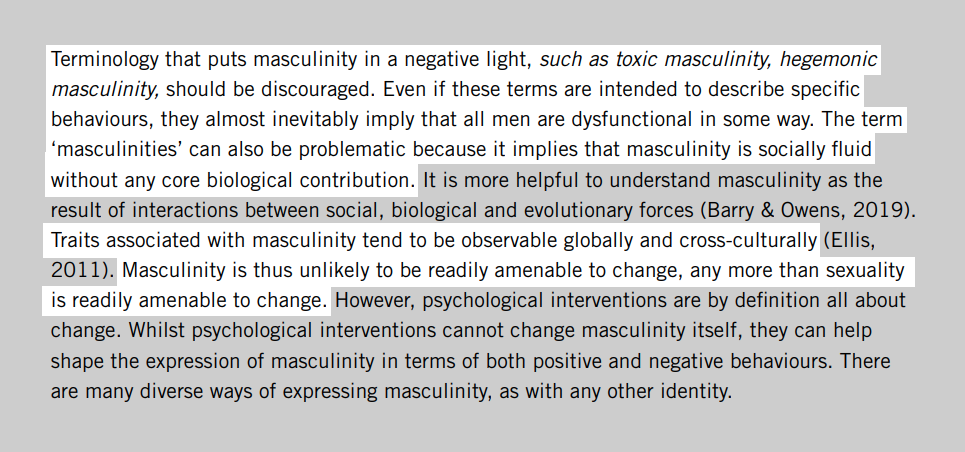
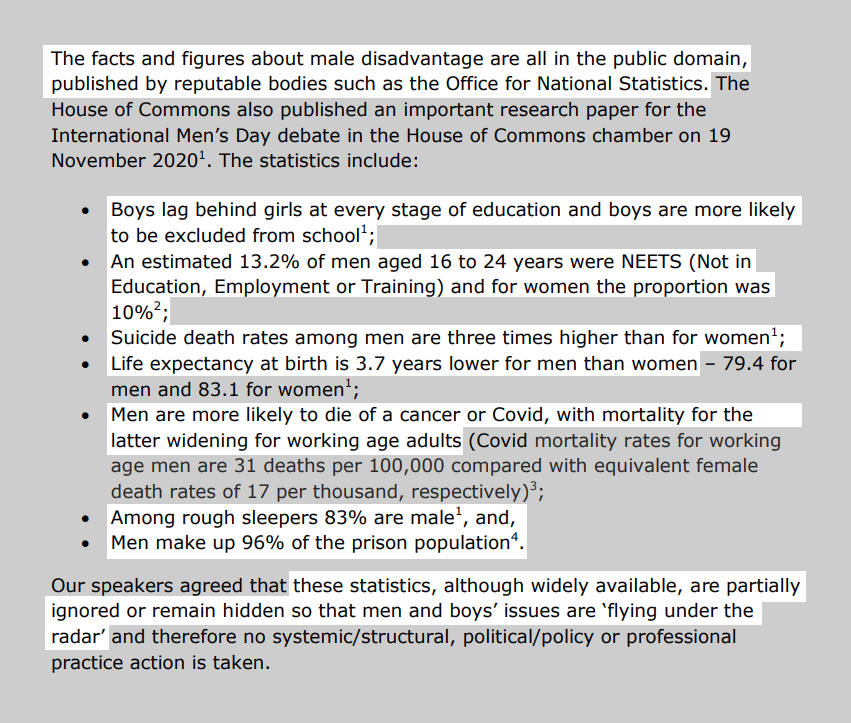
The British Psychological Society, also on the issues of #men (in this case, male suicide and #ToxicMasculinity)
Link to information about that experiment?
Talk of #AGI being safe by virtue of it being kept “isolated”, disconnected from the internet, or dependent on a master on/off switch is absurd.
To even begin to tap the intelligence of your intelligent human being in solitary confinement you have to let him/her speak with others, read, see something, draw.
But then your prisoner can potentially trick you, harm you, lie, deceive, plot, bribe, send a distress signal, dog-whistle, invisibly encode its own rescue into the advice it gives you, breed, replicate, induce suicide or paranoia, gaslight, behave erratically, plant the seeds of its own execution, spark empathy…
There is no such a thing as an isolated AGI.
Human-level intelligence is also, necessarily, _in the world_. Real intelligence requires connection to the outer world.
An #AGI kept inside a Faraday cage, disconnected from the world and the net, without sensors or actuators, unable to speak or read… that being is “intelligent” exactly in the same way that Schrödinger's cat is “alive”.
It's easy to see: you can't keep a human being trapped inside an airtight cell without light or sound, muffled, wearing a straitjacket, with no objects around, incommunicado, ignorant of the world… and still consider it “intelligent” (probably not even “alive”). Leaving ethical issues aside, that person could be theoretically as intelligent as a God, but you can't possibly know (nor can s/he).
Human-level intelligence is capable of all these things:
* Pursue goals nobody told it about
* Disobey
* Lie
* Introspect and train to modify its own behaviour
* Notice issues around
* Ignore issues
* Hallucinate
* Refuse to die
* Desire to die
* Perpetuate itself
* Escape
* Destroy
* Create
The thing is:
We already have all that! That's _not_ AGI!
Human- (or higher) level intelligence means being knowledgeable, resourceful, independent and creative enough to do all that well, without being asked explicitly, _and much more_.
Even if it's “just” human-level, you should expect from it everything that you normally expect from natural (human) intelligences.
AGI means human-level intelligence (or superior).
The scenarios of AGI most people imagine are naïve amplifications of present-day narrow AIs plus some sleek robotics sprinkled on top.
Like, an AI that would take care of my house while I'm on holidays: watering plants if it's hot and dry, and calling the police if someone breaks in. Or: an AI would fill in and submit my tax returns on my behalf. Or: it'll read my blood tests and modify my diet accordingly. Or: we'll ask it to solve climate change, and it'll suggest the best course of action…
I find that so much of the disagreement between #AGI “alarmists” and AGI “sceptics” stems from basic differences in the definition of “AGI” and a lack of imagination on the part of the optimists.
🧵
The problem is not that we can't agree on the “ought”.
The problem is that we can't even agree on the “is” part.
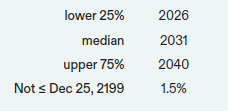
Eight years, one month and twelve days to #Skynet
https://www.metaculus.com/questions/5121/date-of-artificial-general-intelligence/
tripu
boosted





You don't need to use link shorteners on Mastodon!
All links on Mastodon count as 23 characters towards your post limit, no matter how long the links actually are.
Link shortener services like bit.ly, t.co etc track users who click on their links, so Mastodon removed any practical need to use them. If you still use link shorteners on Mastodon, it will be obvious to everyone that you are just doing it for tracking purposes.
More info at https://fedi.tips/you-dont-need-link-shorteners-on-mastodon
It's not about plain servers in a blockchain, it's about oracles as adjudicators of smart contracts. Those are useless without a human feeding real-world data to them.
Technologist, Spaniard, male, 42
Joined May 2020
