

Michael Piotrowski @true_mxp@social.cleverlibre.org
Associate professor of digital humanities, University of Lausanne, Switzerland
Professeur associé en humanités numériques, Université de Lausanne, Suisse
Joined Nov 2022
Michael Piotrowski
boosted

Babbage Patch Finds--a daily deep dive into the CBI Archives
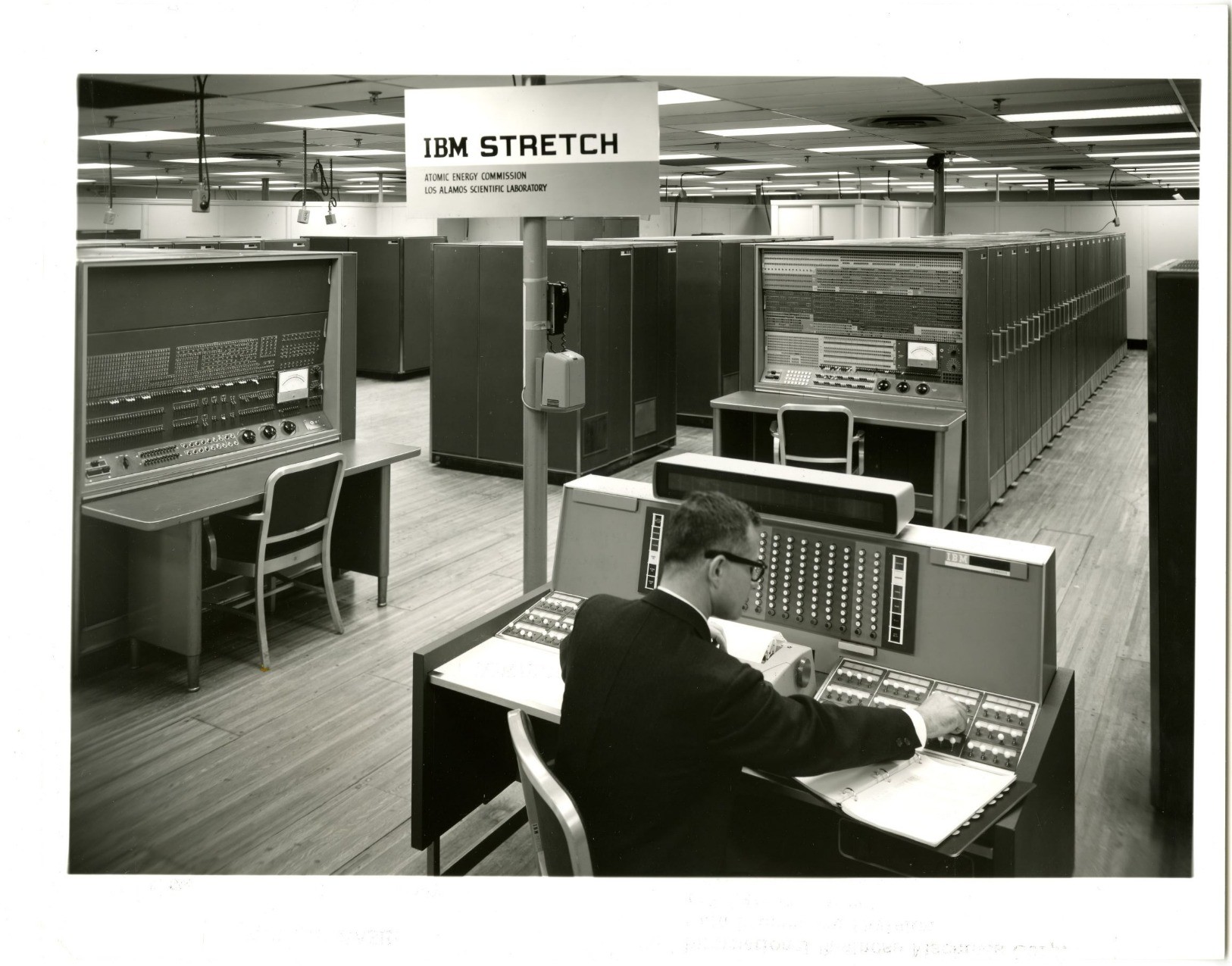
IBM STRETCH 1961
Iconic photo of IBM Stretch at Los Alamos Nat. Lab in 1961. Stretch, both a triumph as the fastest computer in the world & failure to meet promised specs--$13.5M price cut to $$7.8 A proj. led by Steve Dunwell that incl. Stretch for Los Alamos & Harvest for NSA. CDC 6600 a few years later far outperformed it & to many scientists & historians is 1st supercomputer.
Right, so this explains why I couldn’t access various #emacslisp projects all day… Funny, they don’t seem to block microsoft‧com despite being known to distribute malware.
Michael Piotrowski
boosted

Michael Piotrowski
boosted

Quick reminder: JCLS has started publishing its first rolling issue. You can find 9 already published articles on our website, several more are coming: https://jcls.io/issue/84/info/
Also, the call for the next issue is currently open, both for our journal-only track (submit at any time) and our conference+journal track submit until Jan. 11). See: https://jcls.io/site/cfp/
Enjoy reading and do consider submitting your research for the next issue!
Since I’ve just gotten another reminder that #OAuth2 will be required to access UNIL’s #MicrosoftExchange server, I decided to give it another try.
This time I let #mbsync sync to a new, empty directory. It ran into the same problem as last time:
IMAP error: unable to parse INTERNALDATE format
Apparently something is different with #davmail that makes mbsync think that lines in the body that start with “Date:” are headers… The solution seems to be to turn off the “CopyArrivalDate” option in the mbsync configuration (which is actually the default value).
The first run is not finished, but so far, things are looking good… Phew!
Michael Piotrowski
boosted

The Ultimate Notebook Computer (Creative Computing Magazine, 1984)
Michael Piotrowski
boosted

Lingo.lol – a mastodon instance for linguists, philologists, and other language lovers – is now accepting members! 
#linguistics #philology @linguistics@a.gup.pe
Michael Piotrowski
boosted

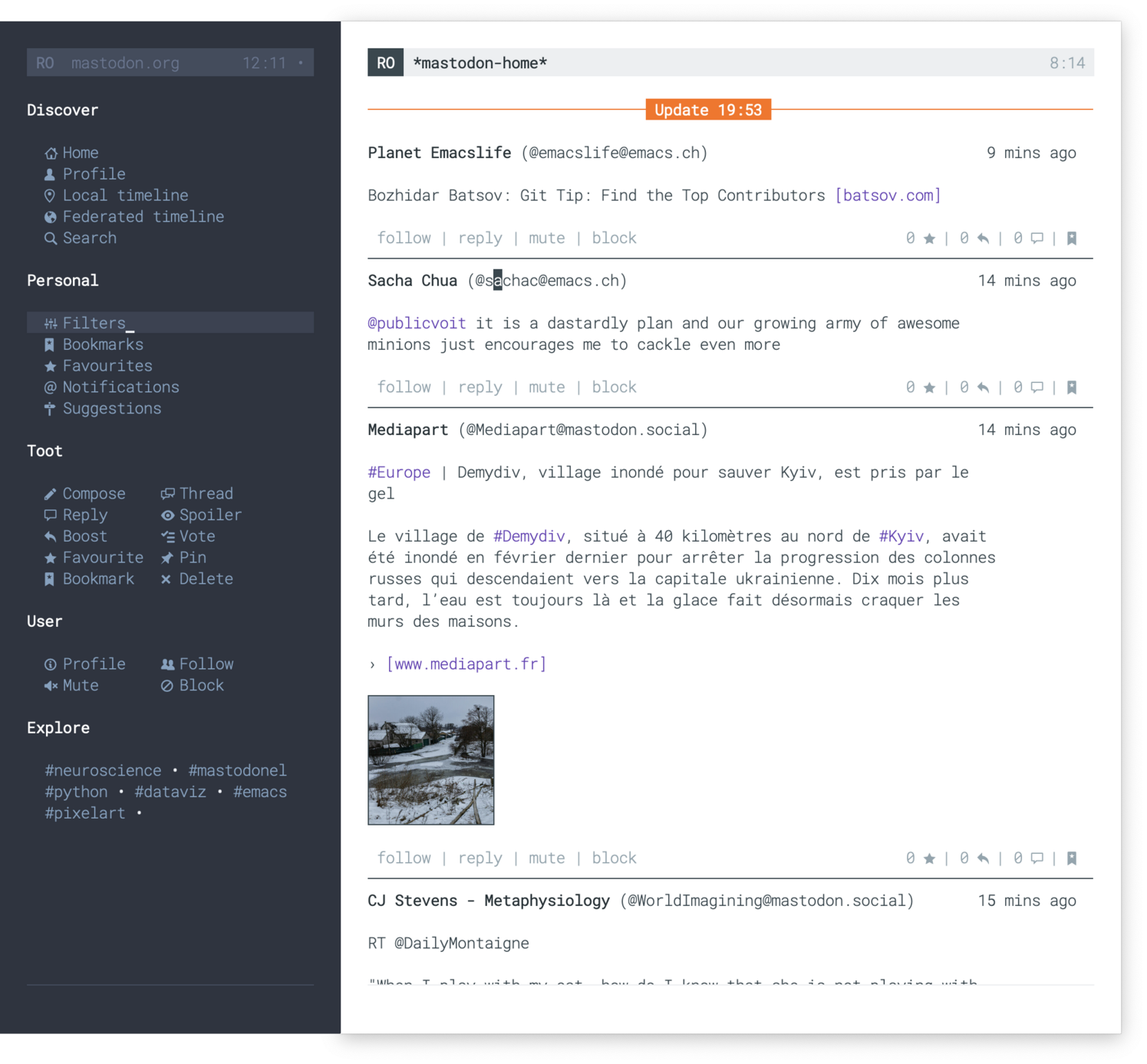
#emacs #mastodonel Almost done with my revamped mastodon layout. Code at
https://codeberg.org/rougier/mastodon.el/src/branch/alt-timeline/lisp/mastodon-alt-tl.el (pull request ongoing)
When asking reviewers
Does the submission meet all formal criteria (abstract length, citation style, formatting etc.)?
it would be a good idea to provide reviewers with a link to the guidelines for authors. In fact, for #DH2023, I can’t find any instructions related to these points, except for the length in words.
Michael Piotrowski
boosted

Der Bundesrat aus den Klein- und Mittelstädten.
https://www.zoonpoliticon.ch/blog/25978/der-bundesrat-der-kleinstaedte
Michael Piotrowski
boosted

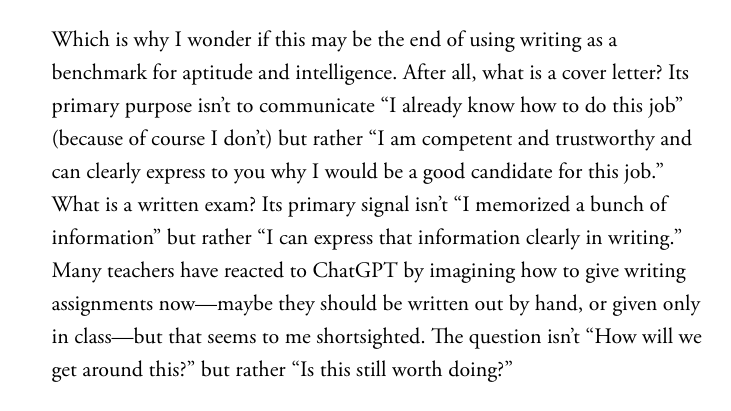
An article that gets beyond fears of "cheating" to an issue that may be more foundational: which is that, if language models do succeed in leveling writing skills upward, they will erase a huge amount of social capital. It seems possible that's what really disturbs us. https://www.theatlantic.com/technology/archive/2022/12/openai-chatgpt-writing-high-school-english-essay/672412/
Michael Piotrowski
boosted

I've been adding a bunch of snippets to my Emacs configuration to make
it easier for me to do stuff in Mastodon. Now I have a snippet to compose
a toot buffer with a link to the relevant section of my configuration
file or to the relevant blog post if specified ( https://sachachua.com/dotemacs/#mastodon-toot-config ), and one for boosting a post and saving it to the Emacs News section of my Org file ( https://sachachua.com/dotemacs/#mastodon-news ). It's so nice to be able to hack little things like these into the tools I use.
Michael Piotrowski
boosted

A very insightful, well-informed and nuanced interview with historian and activist Hanna Perekhoda on Ukrainian identity, the role of Russian language in the war, and the particular history of the Donbas. Highly recommended. http://links.org.au/people-liberated-kherson-are-greeting-ukrainian-soldiers-russian-hanna-perekhoda-ukrainian-identity
#ukraine #history #donbass #imperialism #UkraineWar
Je me suis réjoui quand j’ai récemment découvert qu’il existe une #traduction officielle en français d’un texte de #Stachowiak <https://unesdoc.unesco.org/ark:/48223/pf0000002382_fre>, mais malheureusement, la traduction a pas mal de défauts. Elle se base sur la version en anglais <https://unesdoc.unesco.org/ark:/48223/pf0000002382> (rédigé par Stachowiak lui-même ?), mais la meilleure référence est certainement son livre « Allgemeine Modelltheorie » en allemand.
Un exemple des déformations dans la version française. La première caractéristique des modèles est introduite comme suit :
(A) Caractéristiques du tracé de la carte. Les modèles sont toujours des modèles de quelque chose, des représentations de certains « originaux » (ou « prototypes ») naturels ou artificiels qui peuvent eux-mêmes redevenir des modèles.
Caractéristique du tracé de la carte ? C’est une traduction de l’anglais « characteristic of mapping », mais elle ne fait évidemment pas sens dans ce contexte. Dans l’original, cette caractéristique s’appelle « Abbildungsmerkmal », donc la bonne traduction serait « caractéristique de projection ».
Le deuxième problème dans ce paragraphe est la phrase « qui peuvent eux-mêmes redevenir des modèles ». A priori, c’est une traduction correcte de la phrase anglaise « which themselves can be models again », mais celle-ci est une traduction incorrecte de la formulation allemande « die selbst wieder Modelle sein konnen ». Il est clair du contexte que le mot « wieder » signifie simplement « pour sa part » ou « eux-mêmes » sans impliquer une répétition.
Troisièmement, je me demande pourquoi la version française utilise le pluriel « caractéristiques » plutôt que le singulier comme en anglais et allemand.
Une meilleure version serait donc :
(A) Caractéristique de projection. Les modèles sont toujours des modèles de quelque chose, des représentations de certains « originaux » (ou « prototypes ») naturels ou artificiels qui peuvent eux-mêmes être des modèles.
J’insiste sur ce genre de problème parce qu’ils rendent les idées obscures. Ils montrent aussi qu’il est important de pouvoir lire les œuvres philosophiques dans la langue originale.
Also in #French: Word’s grammar checker for French is pretty useless. (Not my text, I don’t use Word.)
@CerstinMahlow @mpe I really like the analysis, but reading the mention of keyboards and the various keys related to pages (in particular Page Up and Page Down) I think it’s important to remember that other systems also used different labels (e.g., Prev and Next) and that the keys (when present) were sometimes arranged horizontally. I think one also should discuss block-mode terminals, which—unlike character-oriented and bitmap-oriented displays do have an intrinsic notion of “page.”
Very interesting article by @mpe: “New Leaves: Riffling the History of Digital Pagination” https://muse.jhu.edu/pub/1/article/872063
A great complement to @CerstinMahlow’s and my reflection on “Academic writing and publishing beyond documents” https://doi.org/10.1145/3558100.3563840
Michael Piotrowski
boosted

AI's Jurassic Park moment - and 4 things we might do about it:
https://garymarcus.substack.com/p/ais-jurassic-park-moment
Michael Piotrowski
boosted

The other kind of web.





Associate professor of digital humanities, University of Lausanne, Switzerland
Professeur associé en humanités numériques, Université de Lausanne, Suisse
Joined Nov 2022
