
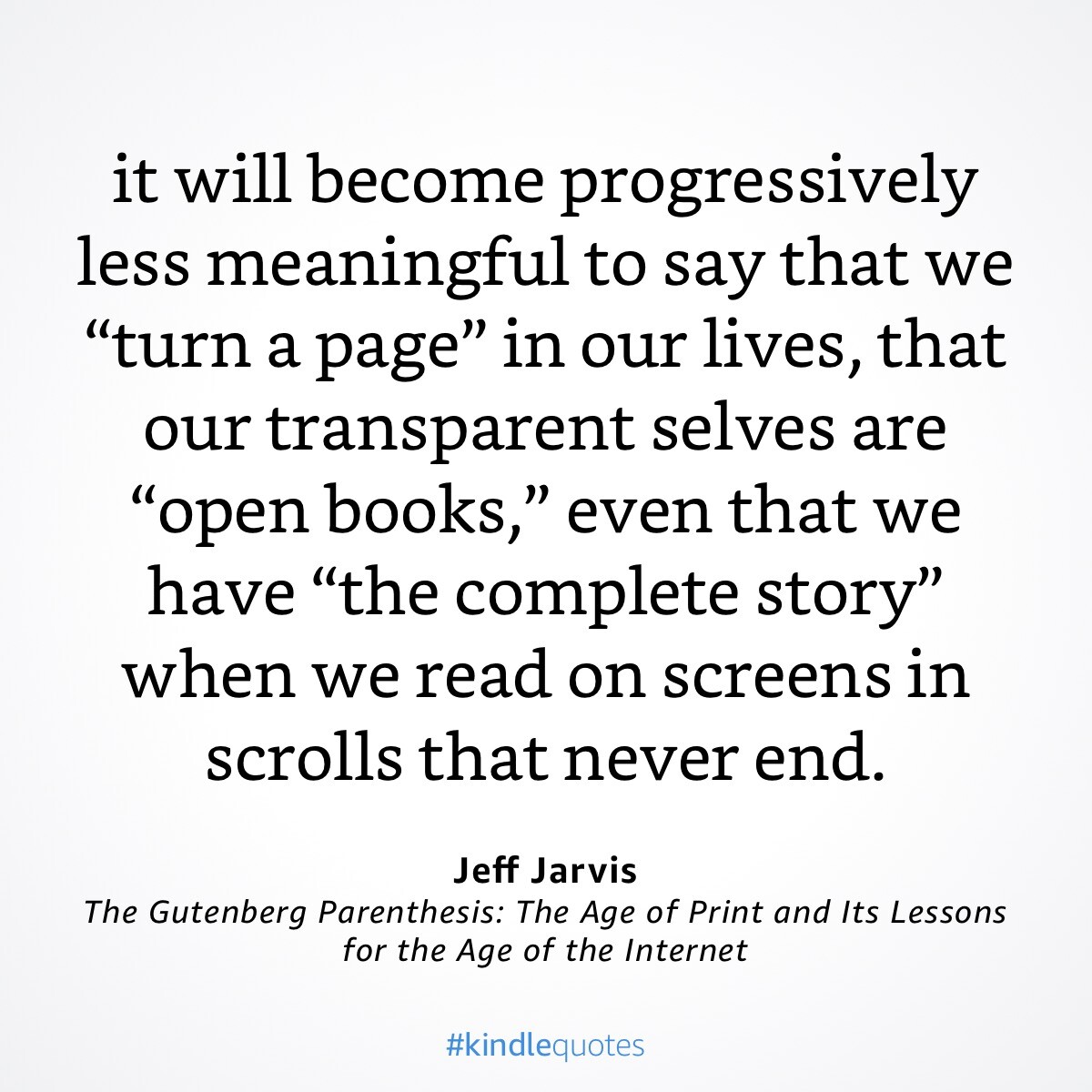
In The Gutenberg Parenthesis, @jeffjarvis writes about the demise of “open books” and “the complete story.”
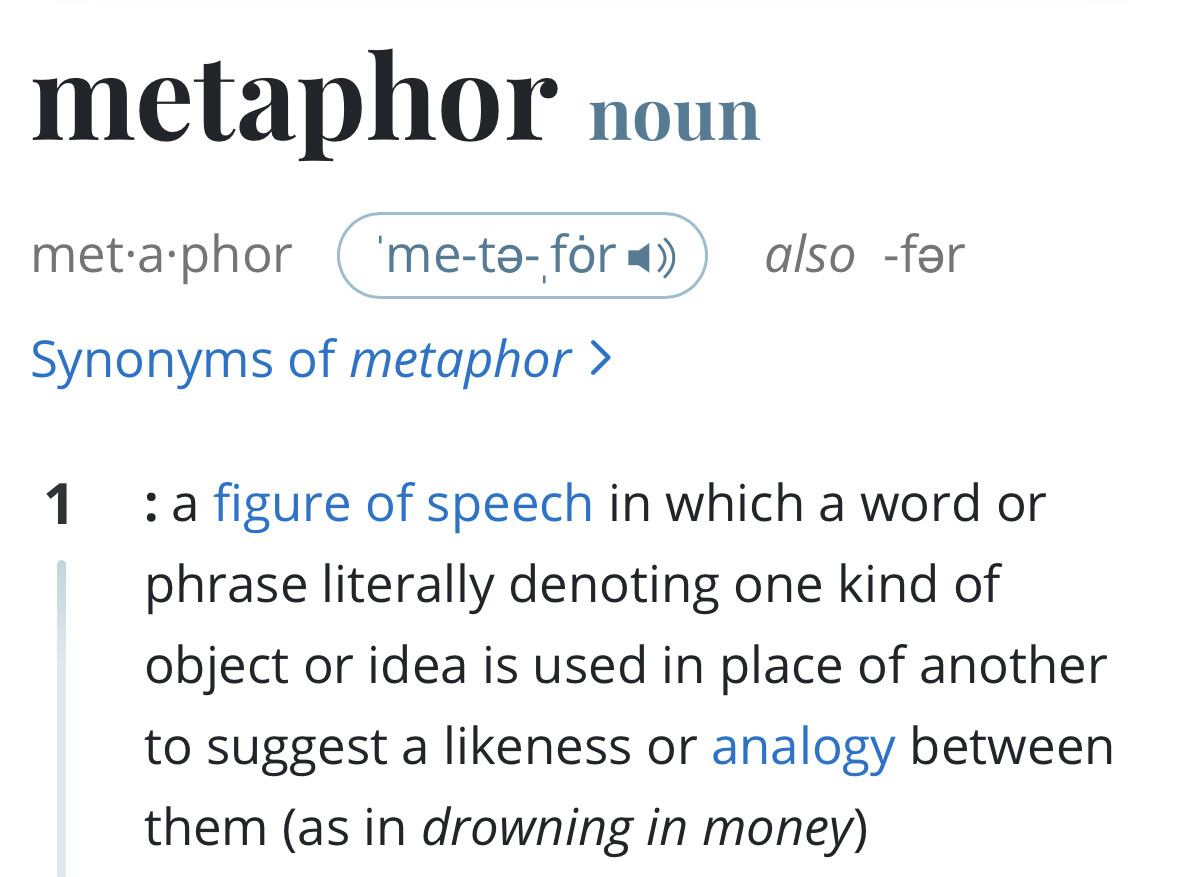
In other words, Jarvis suggests that the “Metaphors We Live By” will change as the ‘age of print’ transitions to the next form.
My mind jumped to a different metaphor, the fixed/rigid nature of the printed word. And then to those who adhere to two ritualistic and literal readings: the Bible and the US Constitution. This transition is already a rocky one.



@jeffjarvis @kegill And TV was the same way. "It rots your brain." Yet there's a massive modern demand for good documentaries, and having important events on video is huge for historians.
Using AI to learn, store, and contextualize knowledge will likely be the next one. In part because it's terrible at that now, so the trust will be slow, even when it is eventually capable of doing so with far greater accuracy.
I’m uncertain of the point.
Socrates (469-399 BCE is clearly part of the oral society on the “other side” of Gutenberg’s invention and the opening parenthesis referenced in Jeff’s book.
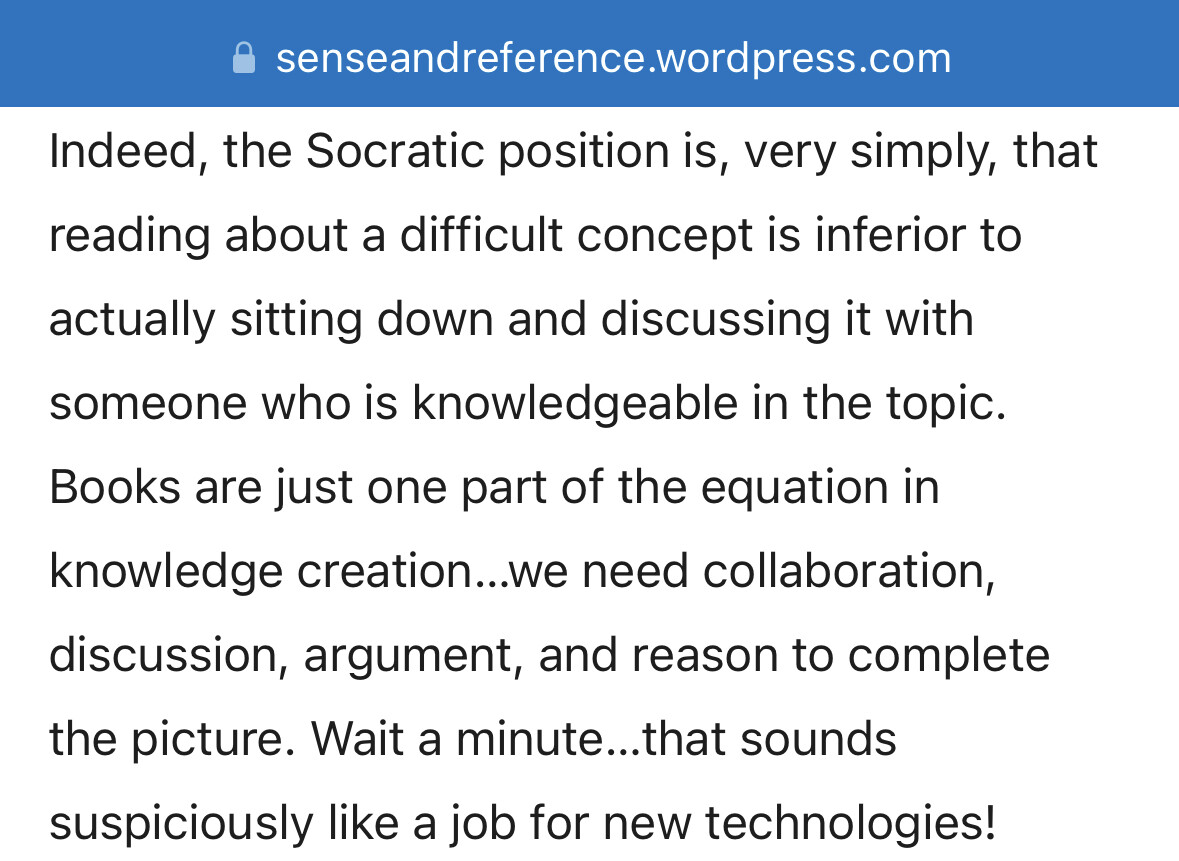
Socrates pointed out that the written word is fixed, incapable of explaining itself anymore than a painting can explain the intention of an artist. For true understanding, solitary reading pales compared to discussion. (See book clubs.)
https://senseandreference.wordpress.com/2010/10/27/reading-writing-and-what-plato-really-thought/
Louis, I was thinking about TV and film being part of the transition from print. Still linear and one-to-many, but also oral and visual.

@LouisIngenthron
Socrates believed that writing was not an effective means of communicating knowledge. To him, face-to-face communication was the only way one person could transmit knowledge to another.
@jeffjarvis @kegill