

 🇳🇱
@seachanger That does seem rather incomplete and not really doing the topic justice, I agree.
That said I do think acting like its an ordinary cold and flu season is pretty close to good advice. The only exception I'd state is to be extra careful around the elderly and those with compromised immune systems. If your visiting a nursing home, for example, mask up and be careful to wash your hands. But otherwise, live your life, its not healthy obsessing over what viruses or colds are out there, youll spend your whole life in fear and gain very little from it.

@freemo @seachanger You may not realize this, but it's a lot more "not healthy" to get covid and have a 1 in 10 chance of symptoms that affect your life for years than it is to get a cold or flu with a tiny chance of symptoms that affect your life for years.
I'd rather spend less than a minute a day thinking about remembering my mask as well as my keys and gain a lifetime of continued cognitive function than pretend covid=flu and lose it.
> You may not realize this, but it's a lot more "not healthy" to get covid and have a 1 in 10 chance of symptoms that affect your life for years than it is to get a cold or flu with a tiny chance of symptoms that affect your life for years.
Considering I am a research scientist who has worked on COVID for several years now I can assure you I know this. I also never said anything to the contrary.
COVID is worse than a cold or flu in terms of risk, yes.
Also few things about your statements that could use some clarification.
> you may not realize this, but it's a lot more "not healthy" to get covid and have a 1 in 10 chance of symptoms
Its important to note two things.. first off COVID hasnt been around long enough with enough studies to make conclusions like this conclusively. But even if you could its misleading.
Even if a study showed clearly a person who catches COVID has a 1 in 10 chance of perminant injury, that doesnt mean its a 1 in 10 chance every time you catch it. If you caught it and got out with relatively minimal complications chances are you will next time too. I have had covid 7 confirmed times so far without any problems.
> I'd rather spend less than a minute a day thinking about remembering my mask
This isnt the reality for most people who are bothered by masks. For many of us every minute with a mask on is extremely uncomfortable. When masks were mandatory I couldnt do any of the things I loved because I found it so uncomfortable. I wear glasses so I could never see, and breathing was very uncomfortable.
@freemo @seachanger
First, per the WHO, our best estimate is that LC happens 1 in 10 *infections*. The evidence we have is that reinfection *increases*, not decreases, your chance of long covid, just as covid increases risk across the board for a number of other diagnoses like heart disease and diabetes.
If your glasses fog, you haven't found a mask that fits properly - if it's sealing correctly, it shouldn't fog your glasses nor should it be uncomfortable to breathe.
No you misunderstood what I said.
> First, per the WHO, our best estimate is that LC happens 1 in 10 *infections*
First off, yes the average across all infections might be 1 in 10, that does not mean your first infection is 1 in 10 as is your second infection. It means when you average it all out it will be 1 in 10. Most studies are looking at the overall average and not differentiating if its your first or second infection.
> The evidence we have is that reinfection *increases*, not decreases, your chance of long covid, just as covid increases risk across the board for a number of other diagnoses like heart disease and diabetes
Yes this is true, nor contrary to what I said.
If you have been infected twice you are, obviously, at a higher risk for having a long term complication than being infected once. That doesnt contradict the idea that on your second infection your risk of long term harm is less than on your first.
I'll give an arbitrary example that is easy to understand. If on your first infection of covid you have a 1 in 5 chance of long term complications, then on your second infection you have a 1 in 15 chance. Then a person who has been infected twice still has an overall chance of long term complications of about 1 in 4 (so higher than someone infected once). Carry this out to multiple infections and while each infection does increase the risk the risk from any one individual infection is less.
Of course any of this is mostly speculation considering we dont have enough data yet to really make long term conclusions.
> If your glasses fog, you haven't found a mask that fits properly - if it's sealing correctly, it shouldn't fog your glasses nor should it be uncomfortable to breathe.
Any mask that seals enough not to fog my glasses is still extremely uncomfortable for many other reasons. I am not wearing hazmat equipment for the rest of my life, full stop.

Persistent elevated monocytes on a standard blood assay with no other explanation (any kind of infection) are a possible indication.
Also, while the original article has been taken down, smokers are at higher risk of acute CV symptoms (unsurprising), but significantly lower risk of PASC - and nicotine seems to promote apoptosis of the zombie monocytes. (But what dose is required?)
@freemo @seachanger You say "even if a study showed clearly". In addition to casting doubt, this indicates both that you are unacquainted with how research accumulates into knowledge and that you have not, in fact, looked for such a study.
As a research scientist, I assume you are capable of doing a literature survey. If you take the time to look for papers on sequelae prevalence in reinfection, you will find ample evidence supporting my statements.
> You say "even if a study showed clearly". In addition to casting doubt, this indicates both that you are unacquainted with how research accumulates into knowledge and that you have not, in fact, looked for such a study.
I am a COVID-19 research scientist who has been working on the disease for over 2 years now. Lets not go there with the personal attacks, it makes you look unprofessional and ignorant.
While there are lots of studies that show long-covid and talk about the odds, any honest scientist will tell you COVID is new and our data still very limited. No studies on long-term permanent effects are conclusive this early on in a disease.
> As a research scientist, I assume you are capable of doing a literature survey. If you take the time to look for papers on sequelae prevalence in reinfection, you will find ample evidence supporting my statements.
Have and do, and yes there are studies that both support and reject many of your assumptions. As is to be expected with such a new disease where the data is still emerging. You can find studies to support almost any invalid assumption you want, the key is understanding the entire body of knowledge and weighing it accordingly.
The funny thing is with my 7 confirmed COVID cases if 1 in 5 was every single infection the chance of me not being permanently disabled would be statistically impossible. Yet here I am perfectly fine... That alone proves the 1 in 5 chance is not compounded across each infection naively.

I can't tell you how many of those I've seen on the sidewalk, in the gutter, on the floor in shops. Even tiny towns looked like NYC in the 70s with how much litter those things produced.

Latest news from CDC;
https://www.youtube.com/watch?v=xXUQqghzPB0
Covering wow many hospitalizations are prevented by new jabs.
You are welcome!

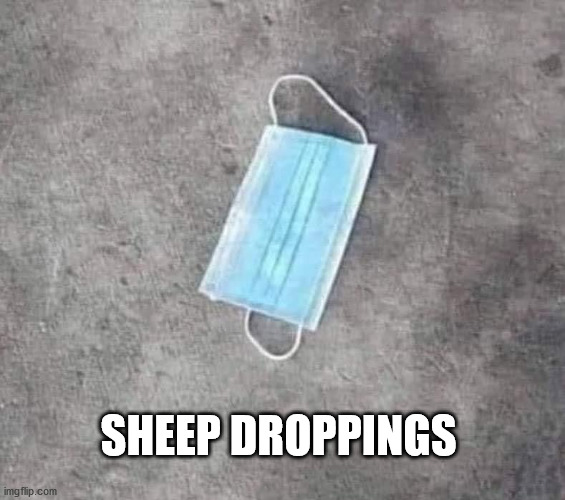

@freemo @seachanger I feel I've already gained quite a bit from not getting sick at all since 2019 and as a result I will continue masking in public forever.
Your framing covid cautious people as "living in fear" is out of touch with reality. I'm not afraid of getting covid. I'm calmly and rationally avoiding giving other people covid, because I could be asymptomatic.
Your attitude is harmful, ignorant, selfish, and evil. You are doing the virus's dirty work for it.

@seachanger
Well I blocked "Dr" freemo who is not a medical doctor, and who lacks some life experiences. We don't feel insane. 'Threatened' might be another word that expresses it? A natural and normal response given our life experiences and our evolved brains.