
Colonization of planets (and much more likely, space habitats) off Earth *could* help rein in global warming, in the mid-term, by moving heavily polluting industrial activity off earth. I'd guess we're, best case, 200 years off being able to really move people off Earth in sufficient numbers to matter. We need to solve the problem before then.
But I object to the idea that it's all-or-nothing. We can curb population. We can restrain the release of carbon and methane into the atmosphere. We can recapture carbon. We can put sunshades in the atmosphere, or in orbit. We almost certainly *will* do all of those things.
But it's dreadfully, probably fatally short-sighted, to skip the colonization of the solar system while we're at it. 350 10-million capacity O'Neill's could move half the current population of the planet off Earth. A space elevator would make it possible to get them there, for a reasonable price. Even if, by the time we get there, the population pressures have ceased? What, we gave the human race a future off Earth when we didn't desperately have to? I can live with that.

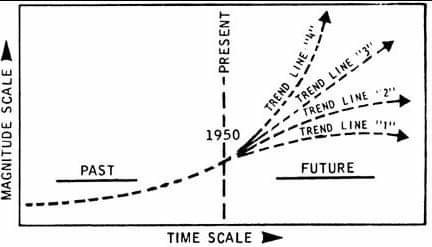
@fatsam The steepening of the curve is obvious to old geezers like me. Look at where medical science was in 1990 versus today. Hah! We were wondering how we might sequence the human genome. If we line up hundreds of machines and also build a supercomputer to crunch the data, and let it run for six months we might be able to sequence most of one genome. Maybe. In a few years. We hope.
In the early 90s I was designing some specialized hardware for number crunching and working with the latest chips from TI that could churn through 40 million floating point operations per second, whoo hoo, phenomenal, and they consumed a lot of power. But it was basically a Cray I on a chip. Stunning.
The machine I'm typing on right now is nothing special and it's 325 times faster on floating point calculations than one of those amazing chips from TI. Wat?
The curve is breathtaking and accelerating.
