

Empiricism @Empiricism_Reloaded@social.cleverlibre.org
- Experience
- Conservation Biology
- Experience
- Psychology
Conservation Biologist. Tooting about #science #ecology #sustainability #evolution #psychology & whatever subject takes my interest.
Empiricism aims (intentions) are to promote accurate evidence-based information. The general theme of this account is related to promoting #sustainable development. Sustainable development requires mitigating ecological degradation therefore also mitigating #ClimateChange & its associated drivers such as pollution & habitat degradation. This account will not “sugar-coat” the required level of changes needed for humanity to reverse the trend of human-caused ecological degradation.
Historically, & presently, climate change is mitigating humanity (e.g., increases in the frequency & intensity of heatwaves, droughts, wildfires, sea level rise, flash floods, pathogen outbreaks, etc)
Since no one person be informed of all the scientific literature, if a reader thinks that Empiricism makes a statement that is not backed up by the general scientific literature, please refer Empiricism to the relevant peer-reviewed science publication (e.g., paper or website)
Because a Mastodon instance can close down without warning or a Mastodon admin can suspend an account without warning - Empiricism regularly backups the “follows” & “followers” lists. Therefore, if Empiricism can not access this account (e.g., a suspension means the account can’t be moved to another instance), Empiricism will open an account on another Mastodon instance & re-follow the follows list and contact (e.g., direct message) the follower's list (e.g., requesting if people would like to re-follow)
I use The Empirical Perspective blog on WordPress as a digital signature - so that people can be more confident that it’s the same “Empiricism”
Here is the link to Empiricism digital signature https://empiricalperspective.home.blog/2023/06/04/empiricism-on-mastodon-verification-post/
#music #nature #wildlife
#science #climate #ClimateChange #CleanAir
#sustainability #ecology #AgroEcology
#psychology #SocialPsychology #EvolutionaryPsychology
#justice #AntiBigotry
Joined Jun 2023
Empiricism
boosted

Heather setting up the logging system on the mast from which turbulent fluxes are measured.
Empiricism
boosted

You might have heard that the company that owns Instant Pot has filed for bankruptcy. The makers of Instant Pot did something horribly wrong: they made a really good product that works very well and does not need to be replaced frequently. This means that owners of Instant Pots might only need to buy one and rarely replace it, if at all.
This is a great success from the perspective of *industry,* in Veblen’s sense, but terrible for *business.* The makers of Instant Pot failed to sufficiently sabotage their product by, say, building in intentional obsolescence. Maybe they should have used cheaper parts that wear out faster, or installed software that requires regular updates, or deliberately inserted components designed to make it fail.
But they didn’t, and so sales were stagnant. The firm that owns Instant Pot borrowed lots of money in an attempt to make a new version of Instant Pot they somehow hoped to sell to consumers of Instant Pot. It was too much; the firm did not earn enough differential profits—profits at a faster rate than its competitors—and so the firm is failing, despite the success of the product.
https://thetakeout.com/instant-pot-maker-parent-brand-file-for-bankruptcy-2023-1850534708
6/8
Empiricism
boosted
There was a stretch when Elon Musk took over twitter and started charging for blue checks (lmao) and some of his sycophants started talking about “Veblen goods.”
A Veblen good is something for which demand *increases* as price increases, in contact to the neoclassical orthodoxy that demand decreases axiomatically with price.
Veblen goods are things that rich people buy to signal their wealth and status. Jewelry, fancy watches, yachts, Ivy League degrees. Things that cost many thousands or millions of dollars.
The idea that an $8 verification on twitter would ever be a status symbol for the rich was fucking ludicrous.
1/8
Empiricism
boosted

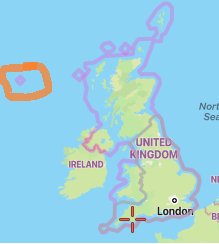
Britains most turd-free swimming spot highlighted in orange.
Empiricism
boosted

‘Countries are drowning’: climate expert calls for urgent rethink on scale of aid for developing world
Persaud breaks this down further, estimating that about $1.4tn a year will be needed from mainly the private sector, for the green transformation of poor countries; about $300bn will be needed to help them adapt to the effects of the climate crisis; and about $100bn a year must go to “loss and damage”, which is the rescue of countries stricken by climate catastrophe
Empiricism
boosted

what a great excuse to stop pulling up the weeds in the cracks; random acts of art!
Empiricism
boosted

So, we’re importing wood pellets from the US to burn in a UK power station and claiming it is energy efficient! Not in my name!
What #wales is doing today, the world will do tomorrow.
The story of how one small nation responded to global climate issues by radically rethinking public policy for future generations
https://janedavidson.wales/book
‘A truly pioneering Act that puts sustainability at the heart of every governmental decision combined with a country seeking to reimagine itself – the story of this revolutionary engine for change holds enormous possibility and is a true beacon of hope.’ (MICHAEL SHEEN OBE, actor and UNICEF ambassador)
#sustainability #culture #climate #ecology #politics #economics #ClimateMitigation #ClimateAdaptation
Empiricism
boosted

Between Mastodon and Lemmy I cannot see a reason to visit the corporate owned alternatives. I'm done being their product.
Sustainability is an international, cross-disciplinary, scholarly, peer-reviewed and open access journal of environmental, cultural, economic, and social sustainability of human beings. https://www.mdpi.com/journal/sustainability
#sustainability #ecology #technology #systemsthinking
#climate #mitigation #adaptation
The Dangerous Ideas of “Longtermism” and “Existential Risk”
Despite being disproportionately responsible for the climate catastrophe, the super-rich will be the least affected by it........Astoundingly, Reid Hoffman, the multi-billionaire who cofounded LinkedIn, reports that “more than 50 percent of Silicon Valley’s billionaires have bought some level of ‘apocalypse insurance,’ such as an underground bunker. https://www.currentaffairs.org/2021/07/the-dangerous-ideas-of-longtermism-and-existential-risk
#news #business #economics #politics #ClimateChange #psychology
Empiricism
boosted

It seems amazing to me that the Land Workers Alliance is only ten years young - they have done so much for #Agroecology, #FoodSovereignty, #LandUse, #SmallScaleFarmers and #laviacampesina
Please support them if you can.
https://landworkersalliance.org.uk/10-years-of-the-lwa/
Empiricism
boosted

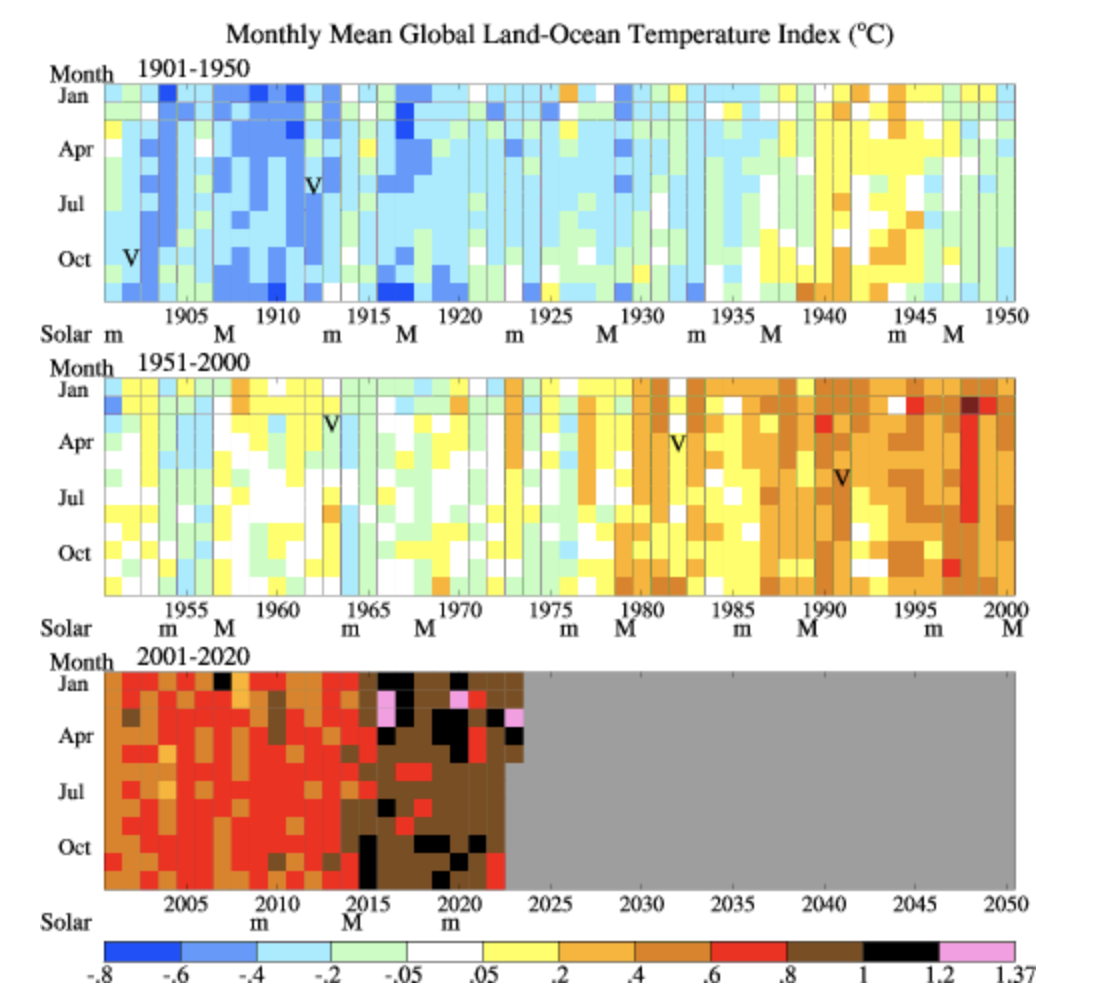
Global temperature anomalies by month through May 2023. I find this type of data much more concerning than brief regional extreme graphs.
Note: M = sunspot cycle max, m = sunspot cycle min, V = volcano
+ Data from https://data.giss.nasa.gov/gistemp/
+ Graphic was created by http://columbia.edu/~mhs119/Temperature/T_moreFigs/
Empiricism
boosted

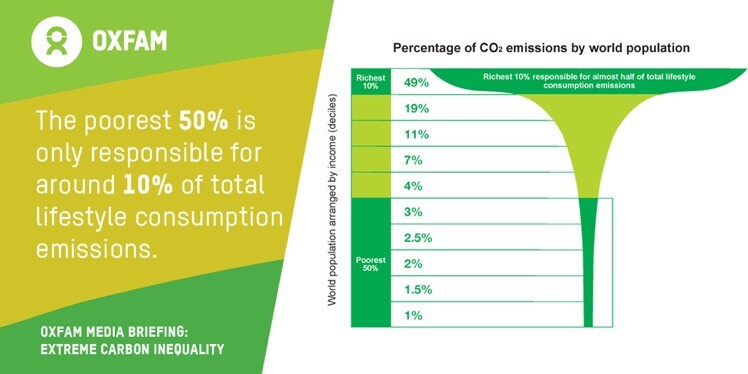
The wealthiest 10% are responsible for 1/2 of global CO2 emissions.
Empiricism
boosted

“Every year, our demand for ecological resources exceeds what the Earth can regenerate in the same year. We are living beyond the limits of our planetary boundaries and this will lead us to collapse.”
Marta Messa, Secretary General of the global Slow Food movement
https://www.fairplanet.org/story/beyond-growth-conference-gdp-solutions/
Can we trust the media? The written and spoken language \ information on the internet, TV, Radio, or newspapers?
Trust and understanding are not the same qualities. Some people have learned (understand) how to perform heart surgery and some people trust that some people understand how to perform heart surgery. Generally, we can demarcate the media into social information (e.g., general news & politics) and empirical evidence (science). Empirical evidence is scientific information based on experimental data. For example, anyone can (eventually) develop a basic scientific experiment such as measuring the temperature at 12 am every day of the week & calculating the average temperature for that week (at 12 am). In that context, they'd follow a method that would mean they were personally confident of the results of the experiment (if they understood the right methods to use and the accuracy of the instruments. e.g., a calibrated thermometer). I described that example of a basic experiment as a basis to show how science (experiments) is the most accurate (reliable) method to collect real-world data.
However, there are people that are not interested in science and or don’t want other people to be informed of the science. On social media, many problems occur because there are less or more trustworthy intermediaries (agents) between that scientific information and the general audience (the population of people). So, even if a person was sincere and wanted to be informed of that data (science), a biased agent may try to misinform people about the science - as often happens with climate science because there is a lot of money, business interests, and lifestyle bias, associated with ecological degradation (i.e., corruption & biased personal agendas in general). Or laypeople may misconstrue the science they read and pass on misinformation (unintentionally).
I'd advise sincere people to go directly to the source of the science. That being the scientific publications (The abstracts provide a general overview). Or an established scientific organization's website. Science journalism may also be a credible source of information (if the articles are well-referenced with scientific publications). Be cautious of sciencey-sounding social media that does not reference scientific publications.
Science Journals peer review and publish scientists' research. Browse, search, and explore journals indexed in the Web of Science https://mjl.clarivate.com/home
Be cautious of science-sounding posts or toots on Twitter, Mastodon, Facebook, YouTube, etc. Especially in the context of ecological sustainability (e.g., “climate”, “ecology”), there are many social media posts from people that write science-sounding narratives. Many of these people will believe in their own sciencey-sounding rhetoric. The folk rhetoric tends to be caused by a mix of cherry-picked science (confirmation bias), personal beliefs, & biased agendas caused by a lifestyle preference (e.g., work and money-related personal biases that cause confirmation bias). Folk “science” or pseudoscience is a ratio of science journalism, wishful thinking, denial, thoughtlessness, virtue signaling, and more explicit forms of dishonesty (not including those that deny all science). Layperson bias or folk science is even more pronounced In the context of environmental sciences such as climate science. The environmental sciences' core message (consensus) is that many people, especially in technologically developed countries such as the USA (most greenhouse gases per capita), need to change their consumerism lifestyles (not a popular message). In other words, the general evidence infers that many people will have to change their lifestyles if we are to mitigate climate change (e.g., reduce greenhouse gases, etc.). On social media (i.e., the “mainstreams” social narratives) the signs are that the majority of people are, well, like the majority of countries, advocating an unsustainable lifestyle (their personal lifestyles).
How to develop a sustainable culture https://empiricalperspective.home.blog/2023/06/08/one-planet-sustainability/
The (published) evidence about climate change is the general scientific literature (the consensus). A random person's opinion or a post on social media is not a trusted source of information (they maybe trustworthy. But how do you know that? unless you know them personally). Not even a climatologist (a scientist who studies the climate) on social media should be a person's only source of trusted information about the climate. Scientists are people, and some people can be bought or adjust their views due to their own financial situation. The point is to be aware (informed) of the general scientific consensus on a subject such as climate change. And be aware that there are many people that don’t want that consensus to be generally known.
For nearly three decades, many of the world's largest fossil fuel companies have knowingly worked to deceive the public about the realities and risks of climate change. https://www.ucsusa.org/resources/climate-deception-dossiers
There are a few, but popular (influential), celebrity scientists or talk show hosts on Youtube that disagree with the scientific consensus on climate change. The fact that some people are believing in the opinions of individual scientists that are not even qualified in climatology just shows how people, in general, tend to believe what they want to believe. That's why many people "cherry" pick the science they like and disregard & or deny the science that they don't like (who likes the fact that human activities, for example, buying sports cars, fast fashion or the latest “must-have” technology, is damaging the planet's ecosystems, therefore, causing climate change?)
Besides science, the other source of information is generally social media (whilst science is also a social enterprise, however, fundamentally, science is the data). Social media such as news and political information. People's opinions, beliefs and views, etc., are a more or less accurate source of information. Social media news may be biased towards only reporting certain news and political agendas. However, having a broad (e.g., not only technology-related) scientific education helps in all walks of life. It's never too late to learn more science. I'd recommend that a person starts with the philosophy of science (i.e., the epistemology of science) alongside learning the subjects of science. A rudimentary understanding of chemistry, biology, ecology (life science), and physics can inoculate people against misinformation and help them make better personal choices (e.g., health-related choices). The only reason why people can be, for example, greenwashed, is because they haven't developed a sufficient understanding of the relevant science subjects and they trust those who are either misinformed themselves or out to disinform them (e.g., generally industries if the prevailing science doesn't align with their profit agendas. In the context of the environmental science, it rarely does).
The only substitute for knowledge is faith. Even in science, we have to have some faith that the paper we are reading has not been based on intentionally false data. However, as scientists we learn to cross-reference our understanding and base our understanding on multitudes of converging data sources (interdisciplinary research). For example, if I reference one scientific paper that's only because it references the general literature that I have already studied. One paper's new discovery should always be considered tentative evidence. In other words, scientists don't report a novel new discovery as a fact - if that fact is only based on one research paper. Though laypeople often do. (And possibly some naive scientists). The general scientific consensus is the most reliable source of information. Of course, new discoveries are made (science updates), however, the point is that established science is and always will be based on the consensus. For example, Darwin and Wallace independently developed a hypothesis termed evolution. At that time (1800's) evolution was a novel discovery. Now, evolution is the general scientific consensus. It would be odd for a biologist to not accept the theory of evolution as all the evidence indicates that evolution is how life evolved (But, as mentioned, the odd scientists can be bought. i.e., charlatans (go rogue) or believe in their own misunderstandings.
We could also take the same cross reference of information sources approach regarding our news feeds. Don't rely on only one source of information (e.g., one News provider). Depending on the country that could be more of a problem (e.g., state-owned media is by definition a biased and restricted source of information). That's the other important point, who owns and controls the media? (a free press is fundamental for a healthy democracy). People that only watch Fox News (USA) or only read the DailyMail (UK) are not the most informed people (to understate it). Recently, people began leaving #Twitter because the new owner is explicitly using the social platform for his own business and (geo)political agenda (corporations tend to spread virtuous-sounding narratives so as to manage their social reputation). In this context, #mastodon is more robust because it's connected to a less centralized #fediverse network - so information can flow more freely as there isn't one corporation controlling what information is and is not regulated. Though the quality (reliability or usefulness) of information that is spread throughout the #fediverse network is dependent on the people using it & the instance moderators.
As for a person's personality. A sincere person that is diligently trying to find out the facts - is what good scientists, investigative journalists, etc., are. An insincere person that is trying to spread misinformation (lies \ fraud) – is less of a useful individual (though could be very rich. e.g., a fossil fuel executive or shareholder)
#climate #science #news #tv #twitter #mastodon #philosophy #epistemology #chemistry #biology #ecology #psychology
Climate change mitigation and climate change adaptation. The less civilization does of the former (e.g., reducing Greenhouse gas emissions), the more civilization will be forced to try and do the latter (e.g., deal with the consequences)
#climate #ClimateChange #ecology #unsustainability #sustainability
#ClimateMitigation #ClimateCrisis #adaptation #PolyCrisis
You probably have heard someone saying to you that "you don't understand economics!" or perhaps that someone is you.
What they're really trying to do is misinform you that only their idea of economics is the right one.
Upstream: Ep 1: The Sharing Economy? (Documentary)
Episode webpage: https://traffic.libsyn.com/secure/bb336368-b933-4b06-88b6-e51256ac6d81/245696777-upstreampodcast-the-sharing-economy.mp3
Empiricism
boosted

Bernie Krause: The sound ecologist capturing a disappearing world: ‘70% of habitats I recorded are gone’
"His personal library of more than 5,000 hours of recordings holds snapshots of a rapidly deteriorating world....
Where in the 1960s, 10 hours in the field were enough to produce one hour of usable material, the time it takes today is now closer to 1,000 hours"
#SoundscapeEcology #Biodiversity #Soundscapes #EnvironmentalStudies #EnvHist
#Climate_Change #noise
https://www.theguardian.com/artanddesign/2023/jun/14/bernie-krause-sound-ecologist-disappearing-world
Introduction (of a science paper)
Rarely does a research finding in Cognitive Psychology become part of the common parlance. The Dunning-Kruger effect (DK) is an exception (Dunning, Johnson, Ehrlinger, & Kruger, 2003; Kruger & Dunning, 1999). Named after the psychological scientists who discovered the phenomenon, the DK refers to the inverse relationship between one's actual aptitude and one's ability to accurately estimate said aptitude. In other words, while people generally exhibit some positive bias in assessing their own ability, this bias is heightened in those at the lower end of the distribution. It is thought that the second component of this “double curse” (Dunning et al., 2003) of inaccurate self-assessment, occurs due to a deficit in meta-cognition. This deficit in meta-cognition results in the failure to grasp what one knows and does not know.
Curtis S. Dunkel, Joseph Nedelec, Dimitri van der Linden,
Reevaluating the Dunning-Kruger effect: A response to and replication of Gignac and Zajenkowski (2020),
Intelligence,
Volume 96, 2023, 101717, ISSN 0160-2896,
https://doi.org/10.1016/j.intell.2022.101717



- Experience
- Conservation Biology
- Experience
- Psychology
Conservation Biologist. Tooting about #science #ecology #sustainability #evolution #psychology & whatever subject takes my interest.
Empiricism aims (intentions) are to promote accurate evidence-based information. The general theme of this account is related to promoting #sustainable development. Sustainable development requires mitigating ecological degradation therefore also mitigating #ClimateChange & its associated drivers such as pollution & habitat degradation. This account will not “sugar-coat” the required level of changes needed for humanity to reverse the trend of human-caused ecological degradation.
Historically, & presently, climate change is mitigating humanity (e.g., increases in the frequency & intensity of heatwaves, droughts, wildfires, sea level rise, flash floods, pathogen outbreaks, etc)
Since no one person be informed of all the scientific literature, if a reader thinks that Empiricism makes a statement that is not backed up by the general scientific literature, please refer Empiricism to the relevant peer-reviewed science publication (e.g., paper or website)
Because a Mastodon instance can close down without warning or a Mastodon admin can suspend an account without warning - Empiricism regularly backups the “follows” & “followers” lists. Therefore, if Empiricism can not access this account (e.g., a suspension means the account can’t be moved to another instance), Empiricism will open an account on another Mastodon instance & re-follow the follows list and contact (e.g., direct message) the follower's list (e.g., requesting if people would like to re-follow)
I use The Empirical Perspective blog on WordPress as a digital signature - so that people can be more confident that it’s the same “Empiricism”
Here is the link to Empiricism digital signature https://empiricalperspective.home.blog/2023/06/04/empiricism-on-mastodon-verification-post/
#music #nature #wildlife
#science #climate #ClimateChange #CleanAir
#sustainability #ecology #AgroEcology
#psychology #SocialPsychology #EvolutionaryPsychology
#justice #AntiBigotry
Joined Jun 2023
